
Robert Henri (1865–1929)
Author of The Art Spirit
About the Author
Disambiguation Notice:
Birth name: Robert Henry Cozad
Image credit: Credit: Gertrude Käsebier, ca. 1900 (LoC Prints and Photographs Division, LC-DIG-ppmsca-12043)
Works by Robert Henri
Os grandes processos da história 11 copies
O Advogado (Em Portuguese do Brasil) 5 copies
John Sloan/Robert Henri : their Philadelphia years (1886-1904), October 1 to November 12, 1976, Moore College of Art Gallery (1976) 1 copy
Associated Works
Theories of Modern Art: A Source Book by Artists and Critics (1968) — Contributor — 859 copies, 6 reviews
Tagged
Common Knowledge
- Birthdate
- 1865-06-25
- Date of death
- 1929-07-12
- Gender
- male
- Education
- Pennsylvania Academy of the Fine Arts
Académie Julian
École des Beaux Arts - Occupations
- painter
artist - Organizations
- National Institute of Arts and Letters (Art, 1908)
- Nationality
- USA
- Birthplace
- Cincinnati, Ohio, USA
- Places of residence
- Cozad, Nebraska, USA
Denver, Colorado, USA
Atlantic City, New Jersey, USA
Philadelphia, Pennsylvania, USA
Paris, France - Place of death
- New York, New York, USA
- Disambiguation notice
- Birth name: Robert Henry Cozad
- Associated Place (for map)
- USA
Members
Reviews
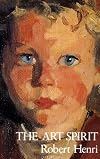
This brilliant book is a master class on art and life by American teacher and master painter, Robert Henri (1865-1929). He wrote it in response to his students requests. He opens with a forward that explains that "no effort has been made toward the form of a regular book," and "the opinions are presented more as paintings are hung on the wall, to be looked at at will and taken as rough sketches for what they are worth."
I read The Art Spirit on Kindle, but I think it would be much better as a show more coffee table book that you pick up, open and read a passage, and then go on with your day inspired by this bright, authentic spirit who is charmingly enthusiastic about art and the state of creating.
Henri is generous in spirit towards other artists, (I looked up and saved ninety paintings while reading this book), presents a good slice of art history, and is instructive down to how to mix paints. His wise and pragmatic words feel like a hug from a dear friend.
Here are ten of my favorite quotes from the book-
"Cherish your emotions and never undervalue them. We are not here to do what has already been done."
"A good painting is a remarkable feat of organization. Every part of it is wonderful in itself because it seems so alive in its share in the making in the unity of the whole, and the whole is so definitely one thing."
"Do whatever you do intensely. The artist is the man who leaves the crowd and goes pioneering. With him there is an idea which is his life.”
"The real artist’s work is a surprise to himself.”
“A work of art is the trace of a magnificent struggle.”
“Some one has defined a work of art as a 'thing beautifully done.' I like it better if we cut away the adverb and preserve the word 'done,' and let it stand alone in its fullest meaning. Things are not done beautifully. The beauty is an integral part of their being done.”
"I have no sympathy with the belief that art is the restricted province of those who paint, sculpt, make music and verse. I hope we will come to an understanding that the material used is only incidental, that there is artist in every man; and that to him the possibility of development and of expression and the happiness of creation is as much a right and as much a duty to himself, as to any of those who work in the especially ticketed ways.”
"All my life I have refused to be for or against parties, for or against nations, for or against people. I never seek novelty or the eccentric; I do not go from land to land to contrast civilizations. I seek only, wherever I go, for symbols of greatness, and as I have already said, they may be found in the eyes of a child, in the movement of a gladiator, in the heart of a gypsy, in twilight in Ireland or in moonrise over the deserts.”
"We must paint only what is important to us, must not respond to outside demands. They do not know what they want, or what we have to give."
And a quote for AI, "An artist must have imagination. An artist who does not use his imagination is a mechanic."
What a gift Robert Henri gave us through his paintings, life, and teachings. The Art Spirit is a new favorite book. show less
I read The Art Spirit on Kindle, but I think it would be much better as a show more coffee table book that you pick up, open and read a passage, and then go on with your day inspired by this bright, authentic spirit who is charmingly enthusiastic about art and the state of creating.
Henri is generous in spirit towards other artists, (I looked up and saved ninety paintings while reading this book), presents a good slice of art history, and is instructive down to how to mix paints. His wise and pragmatic words feel like a hug from a dear friend.
Here are ten of my favorite quotes from the book-
"Cherish your emotions and never undervalue them. We are not here to do what has already been done."
"A good painting is a remarkable feat of organization. Every part of it is wonderful in itself because it seems so alive in its share in the making in the unity of the whole, and the whole is so definitely one thing."
"Do whatever you do intensely. The artist is the man who leaves the crowd and goes pioneering. With him there is an idea which is his life.”
"The real artist’s work is a surprise to himself.”
“A work of art is the trace of a magnificent struggle.”
“Some one has defined a work of art as a 'thing beautifully done.' I like it better if we cut away the adverb and preserve the word 'done,' and let it stand alone in its fullest meaning. Things are not done beautifully. The beauty is an integral part of their being done.”
"I have no sympathy with the belief that art is the restricted province of those who paint, sculpt, make music and verse. I hope we will come to an understanding that the material used is only incidental, that there is artist in every man; and that to him the possibility of development and of expression and the happiness of creation is as much a right and as much a duty to himself, as to any of those who work in the especially ticketed ways.”
"All my life I have refused to be for or against parties, for or against nations, for or against people. I never seek novelty or the eccentric; I do not go from land to land to contrast civilizations. I seek only, wherever I go, for symbols of greatness, and as I have already said, they may be found in the eyes of a child, in the movement of a gladiator, in the heart of a gypsy, in twilight in Ireland or in moonrise over the deserts.”
"We must paint only what is important to us, must not respond to outside demands. They do not know what they want, or what we have to give."
And a quote for AI, "An artist must have imagination. An artist who does not use his imagination is a mechanic."
What a gift Robert Henri gave us through his paintings, life, and teachings. The Art Spirit is a new favorite book. show less
Six-word review: The seeing and doing of art.
Extended review:
You won't see many unqualified raves from me, but here is one. This book is wonderful and amazing. If you have any interest in art, whether it be Art or simply the art of doing something--anything--well, this book is rich with treasures for you. It grants insight as summer rain grants refreshment, as surrender grants grace.
The Art Spirit is not a conventional book in the sense of a sustained and integrated argument conceived as a show more unified whole. Rather, it's a compilation of articles, talks, correspondence, critiques, class notes, and other words of an inspiring teacher who was first of all a renowned and distinguished painter in his time, about a century ago. The whole expresses the understanding of art and the act of creation as he practiced them and as he taught them to a generation of students, among whom many were fanatically devoted to their teacher.
It's the sort of book one can open to any page and find something worth reading and worth thinking about. Epigrammatic in style, it makes memorable impressions, whether discussing the meaning of art and the place of art in the world or the importance of the shadow beneath the upper eyelid. At once abstract and concrete, it discusses with equal passion the role of attitude in the life and work of the artist and the technique of creating background space by applying pigment to canvas.
Although I ought to have heard of Robert Henri before, his name* was new to me when I began the fall series of adult-education drawing classes on September 8th. The instructor read an excerpt from the book at the first session, and I promptly ordered it from Amazon. I was halfway through reading it--and it's a fun read, calling for lots of underscores and penciled marginalia from an interactive reader like me--when, utterly coincidentally, I received an event notice from the nearby San Jose Museum of Art, where I'm a member: a three-hour portrait-drawing workshop on September 28th in conjunction with a special exhibit of portrait paintings of Robert Henri.
I made haste and finished the book by the night before the workshop.
On Sunday I went two hours early and saw the exhibit, searching in every painting for the very things he'd talked about in the book. Already my way of seeing was much affected. By the time I sat down in the classroom with a live model before me, my entire approach to drawing had changed. Following Henri's advice, I spent the first five minutes quietly looking at the model without a pencil in my hand, seeking awareness of what was beautiful about him and what excited my interest, and also looking for themes and dominant lines. I thought about the idea that I wanted to capture and convey.
While I drew, I sustained conscious attention to such things as that the space behind the model is mostly air; that the chair supports the body and the neck supports the head, solidly, in a weight-bearing way, with bulk and gravity; that the nose is relatively dark except for the highlight at the tip, which reveals the contour; and that I should make the folds of garments and draperies look like a landscape I want to visit. Every stroke of the graphite was informed by what I had read and seen.
One of the things I noticed right away was that the model, a grey-bearded man in his sixties with faraway eyes, was very aware of me drawing him. At break time he came over to see what I'd done. Henri's book made me think about an important way in which drawing from life creates a reciprocal relationship between artist and model, something you can't have when you work from a photograph: namely, the model's showing a sense of being seen in some deeper way than just superficial appearance.
When I'd finished my first two renderings, the instructor came by and called them "beautiful." I was astonished. Truly, I've always seen what's wrong with my drawings and never once thought they were "good" in any way that a loyal friend or relative wouldn't see. A group of students clustered around and looked, and one of them said, "You must have been doing this for a long time, to draw like that." In fact, until I started that very lightweight adult ed class during the summer, the last formal art instruction I'd had outside of public school--and the last time I'd worked from a live model--was a 10-week museum class when I was 14. I've done a lot of sketching in the past, on my own, though I hadn't drawn anything but random doodles for years; but I never had real help in finding the goodness in my faulty sketches, not until I read the Henri book. Suddenly it all just seems to work differently.
That's a powerful lesson.
As a retired person, I'm not about to embark on a full-scale art program or even undertake a modest second career. But I find my interest renewed in an activity I enjoyed as a teenager, and for $8.95 plus tax and shipping I've received an education delivered by a master. Whether you're a museum-goer or not, I think you can learn something exciting about whatever you do like to do from the teachings of a man who thoroughly grasped the marriage of knowing and doing.
----
*A note on the artist's name: despite its French appearance, it's not ahn-REE. It's HEN-rye. Really. Robert Henry Cozad (24 June 1865 – 12 July 1929) was born in Cincinnati. After his father became involved in a fatal shooting in a Nebraska town, he and other family members relocated and changed their names to escape the scandal. Robert chose the spelling and pronunciation of his new name. show less
Extended review:
You won't see many unqualified raves from me, but here is one. This book is wonderful and amazing. If you have any interest in art, whether it be Art or simply the art of doing something--anything--well, this book is rich with treasures for you. It grants insight as summer rain grants refreshment, as surrender grants grace.
The Art Spirit is not a conventional book in the sense of a sustained and integrated argument conceived as a show more unified whole. Rather, it's a compilation of articles, talks, correspondence, critiques, class notes, and other words of an inspiring teacher who was first of all a renowned and distinguished painter in his time, about a century ago. The whole expresses the understanding of art and the act of creation as he practiced them and as he taught them to a generation of students, among whom many were fanatically devoted to their teacher.
It's the sort of book one can open to any page and find something worth reading and worth thinking about. Epigrammatic in style, it makes memorable impressions, whether discussing the meaning of art and the place of art in the world or the importance of the shadow beneath the upper eyelid. At once abstract and concrete, it discusses with equal passion the role of attitude in the life and work of the artist and the technique of creating background space by applying pigment to canvas.
Although I ought to have heard of Robert Henri before, his name* was new to me when I began the fall series of adult-education drawing classes on September 8th. The instructor read an excerpt from the book at the first session, and I promptly ordered it from Amazon. I was halfway through reading it--and it's a fun read, calling for lots of underscores and penciled marginalia from an interactive reader like me--when, utterly coincidentally, I received an event notice from the nearby San Jose Museum of Art, where I'm a member: a three-hour portrait-drawing workshop on September 28th in conjunction with a special exhibit of portrait paintings of Robert Henri.
I made haste and finished the book by the night before the workshop.
On Sunday I went two hours early and saw the exhibit, searching in every painting for the very things he'd talked about in the book. Already my way of seeing was much affected. By the time I sat down in the classroom with a live model before me, my entire approach to drawing had changed. Following Henri's advice, I spent the first five minutes quietly looking at the model without a pencil in my hand, seeking awareness of what was beautiful about him and what excited my interest, and also looking for themes and dominant lines. I thought about the idea that I wanted to capture and convey.
While I drew, I sustained conscious attention to such things as that the space behind the model is mostly air; that the chair supports the body and the neck supports the head, solidly, in a weight-bearing way, with bulk and gravity; that the nose is relatively dark except for the highlight at the tip, which reveals the contour; and that I should make the folds of garments and draperies look like a landscape I want to visit. Every stroke of the graphite was informed by what I had read and seen.
One of the things I noticed right away was that the model, a grey-bearded man in his sixties with faraway eyes, was very aware of me drawing him. At break time he came over to see what I'd done. Henri's book made me think about an important way in which drawing from life creates a reciprocal relationship between artist and model, something you can't have when you work from a photograph: namely, the model's showing a sense of being seen in some deeper way than just superficial appearance.
When I'd finished my first two renderings, the instructor came by and called them "beautiful." I was astonished. Truly, I've always seen what's wrong with my drawings and never once thought they were "good" in any way that a loyal friend or relative wouldn't see. A group of students clustered around and looked, and one of them said, "You must have been doing this for a long time, to draw like that." In fact, until I started that very lightweight adult ed class during the summer, the last formal art instruction I'd had outside of public school--and the last time I'd worked from a live model--was a 10-week museum class when I was 14. I've done a lot of sketching in the past, on my own, though I hadn't drawn anything but random doodles for years; but I never had real help in finding the goodness in my faulty sketches, not until I read the Henri book. Suddenly it all just seems to work differently.
That's a powerful lesson.
As a retired person, I'm not about to embark on a full-scale art program or even undertake a modest second career. But I find my interest renewed in an activity I enjoyed as a teenager, and for $8.95 plus tax and shipping I've received an education delivered by a master. Whether you're a museum-goer or not, I think you can learn something exciting about whatever you do like to do from the teachings of a man who thoroughly grasped the marriage of knowing and doing.
----
*A note on the artist's name: despite its French appearance, it's not ahn-REE. It's HEN-rye. Really. Robert Henry Cozad (24 June 1865 – 12 July 1929) was born in Cincinnati. After his father became involved in a fatal shooting in a Nebraska town, he and other family members relocated and changed their names to escape the scandal. Robert chose the spelling and pronunciation of his new name. show less
The Art Spirit: Notes, Articles, Fragments of Letters and Talks to Students, Bearing on the Concept and Technique of Picture Making, the Study of Art Generally, and on Appreciation. by Robert Henri
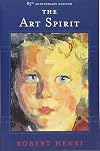
"Art when really understood is the province of every human being."
Thus begins one of the most remarkable books ever written on the subject.
The Art Spirit is comprised of various letters, articles, speeches, notes, and fragments of artist and art teacher Robert Henri. Ranging from several pages to single sentences and arranged somewhat haphazardly, these teachings nevertheless add up to a fairly comprehensive view of the purpose of art and the nature of the artist. He discusses technique, but show more emphasizes that technique is only a means to the end of artistic expression, not an end or expression in itself. Being an artist is about having a certain relationship to existence, a unique perspective on reality. Art is value-laden, and that's what makes it meaningful. Art isn't about simply making the best copy of nature, it's about seeing beyond the surface impressions and finding the deeper meaning of things, and selectively using what's given in nature to express that meaning: "The great artist has not reproduced nature, but has expressed by his extract the most choice sensation it has made upon him...The artist who does not use his imagination is a mechanic."
Even when he's discussing technique, Henri's teaching will greatly enhance anyone's appreciation of art. And much of what he says about technique is applicable at least by analogy to other art forms (such as literary expression or musical composition), and some of it to any kind of creative work.
The book's form makes it perfect for reading straight through, or for dipping in at random. A truly remarkable book. show less
Thus begins one of the most remarkable books ever written on the subject.
The Art Spirit is comprised of various letters, articles, speeches, notes, and fragments of artist and art teacher Robert Henri. Ranging from several pages to single sentences and arranged somewhat haphazardly, these teachings nevertheless add up to a fairly comprehensive view of the purpose of art and the nature of the artist. He discusses technique, but show more emphasizes that technique is only a means to the end of artistic expression, not an end or expression in itself. Being an artist is about having a certain relationship to existence, a unique perspective on reality. Art is value-laden, and that's what makes it meaningful. Art isn't about simply making the best copy of nature, it's about seeing beyond the surface impressions and finding the deeper meaning of things, and selectively using what's given in nature to express that meaning: "The great artist has not reproduced nature, but has expressed by his extract the most choice sensation it has made upon him...The artist who does not use his imagination is a mechanic."
Even when he's discussing technique, Henri's teaching will greatly enhance anyone's appreciation of art. And much of what he says about technique is applicable at least by analogy to other art forms (such as literary expression or musical composition), and some of it to any kind of creative work.
The book's form makes it perfect for reading straight through, or for dipping in at random. A truly remarkable book. show less
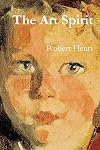
This is when star ratings are useless. Did I read this in one sit? No. Was it unputdownable? No. Amazing narrative and yada yada? LOL! No. Was it an amazing book? YES *_* it made my brain hurt and had to restrain myself from procrastinating several times. I didn't enjoy the experience of reading it, but I fell in love with what Robert Henri had to say. It resonated within me. Not everything, nuh uh, and those parts where 10 times harder to read.
It felt like going on a car trip: everyone show more told you it would be a superb experience, but from the beginning the road was in bad condition and you bounced off your seat the whole trip. There was no road signs and you got lost soooo many times that you almost felt like giving up. But despite a sore back and a bad headache you admit that the view was awesome, it was one of a kind experience and had the best sunset you have seen in your entire life.
This book is a compilation of letters and notes, even the foreword says "No effort has been made toward the form of a regular book". Yep, I noticed, my bad, i tried to read it as a book. My advice would be to read it like those books with inspirational quotes. Just read a chunk and get your artistic inspiration of the day. Too bad it doesn't have an index (even if the foreword says there is one at the end >-> there is none) so, you have no clue what he will be talking about in each chunk.
It is highly philosophical, abstract and focuses mainly on concepts. It will inspire you if you are already following an artistic path and bore you to death if your artistic background consists only of "how to draw manga in easy steps" books. It does have practical and technical advice for figure drawing, use of colors and composition, but keep in mind that this is by no means meant to teach you anything practical, they are mainly letters and critiques given to art students.
Some subjects he talks about:
- What to pay attention to when drawing portraits.
- Truly do art and not just copy what is in front of you.
- Use techniques and medium to transmit that emotion you want to transmit.
- Proper figure drawing.
- Things to consider when using color.
- Dont just follow what you are taught and never stop self-learning.
- Paint the world as you see it and not as others wants to. show less
It felt like going on a car trip: everyone show more told you it would be a superb experience, but from the beginning the road was in bad condition and you bounced off your seat the whole trip. There was no road signs and you got lost soooo many times that you almost felt like giving up. But despite a sore back and a bad headache you admit that the view was awesome, it was one of a kind experience and had the best sunset you have seen in your entire life.
This book is a compilation of letters and notes, even the foreword says "No effort has been made toward the form of a regular book". Yep, I noticed, my bad, i tried to read it as a book. My advice would be to read it like those books with inspirational quotes. Just read a chunk and get your artistic inspiration of the day. Too bad it doesn't have an index (even if the foreword says there is one at the end >-> there is none) so, you have no clue what he will be talking about in each chunk.
It is highly philosophical, abstract and focuses mainly on concepts. It will inspire you if you are already following an artistic path and bore you to death if your artistic background consists only of "how to draw manga in easy steps" books. It does have practical and technical advice for figure drawing, use of colors and composition, but keep in mind that this is by no means meant to teach you anything practical, they are mainly letters and critiques given to art students.
Some subjects he talks about:
- What to pay attention to when drawing portraits.
- Truly do art and not just copy what is in front of you.
- Use techniques and medium to transmit that emotion you want to transmit.
- Proper figure drawing.
- Things to consider when using color.
- Dont just follow what you are taught and never stop self-learning.
- Paint the world as you see it and not as others wants to. show less
Lists
Awards

You May Also Like


Associated Authors
Statistics
- Works
- 24
- Also by
- 1
- Members
- 916
- Popularity
- #27,999
- Rating
- 4.1
- Reviews
- 7
- ISBNs
- 20
- Languages
- 2
- Favorited
- 3
