
Wassily Kandinsky (1866–1944)
Author of Concerning the Spiritual in Art
About the Author
Series
Works by Wassily Kandinsky
Wassily Kandinsky and Gabriele Münter: Letters and Reminiscences, 1902-1914 (1994) — Letters, Artist — 83 copies, 1 review
Kandinsky : Russian and Bauhaus years, 1915-1933 [cat. exp., New York, The Solomon R. Guggenheim Museum, Nov. 1983] (1983) 43 copies
Kandinsky: trente peintures des musées soviétiques: [cat. exp., Paris, Musée national d'art moderne, 1er février-26 mars 1979] (1979) 11 copies
Les Cahiers du Musée national d'art moderne, Hors série : Kandinsky - Albers. Une correspondance des années trente (1998) 8 copies
Kandinsky 8 copies
Vasily Kandinsky, 1866-1944, in the collection of the Solomon R. Guggenheim Museum, New York (1972) 6 copies
Kandinsky: Hauptwerke aus dem Centre Georges Pompidou Paris : Kunsthalle Tübingen, 2. April bis 27. Juni 1999 (German Edition) (1999) 5 copies
Kandinsky, the Bauhaus years: April-May 1966, Marlborough-Gerson Gallery ... New York, Marlborough Fine Art ... London, (1966) 4 copies
Kandinsky : the road to abstraction 4 copies
Tutti gli scritti vol. 2 - Dello spirituale nell'Arte - Scritti critici e autobiografici - Teatro - Poesie, (1989) 4 copies
Kandinsky, una retrospectiva : [20 de octubre 2015-28 febrero 2016, CentroCentro Cibeles] (2015) 4 copies
Wassily Kandinsky. Die erste sowjetische Retrospektive. Gemälde, Zeichungen und Graphik aus sowjetischen und westlichen Museen. (1989) 4 copies
Kandinskij: I colori dell'entusiasmo, dall'espressionismo, all'astratto (ArtBook) (Italian Edition) (1999) 3 copies
Vasilij Kandinskij: [saggi critici, Giorgio Cortenova ... et al. ; apparati, Tulliola Sparagni] (Italian Edition) (1993) 3 copies
Watercolors, drawings, writings 3 copies
Kandinsky; œuvre gravé 3 copies
O Futuro da Pintura - eBook 2 copies
Important 20th century paintings, watercolors & drawings, including 47 works by Vasily Kandinsky. 2 copies
Formens problem 2 copies
zz3 CRITICA Kandinsky Wassily 1976, Tutti gli scritti. Punto e linea nel piano / Articoli teorici / I corsi inediti al Bauhaus (2015) 2 copies
Kandinsky nelle collezioni svizzere =: Kandinsky in den Schweizer Sammlungen = Kandinsky dans les collections suisses (1995) 2 copies
Scritti intorno alla musica 1 copy
Yellow Red Blue 1 copy
The Great Artists : Their lives, works and inspiration : 80 : Kandinsky (1986) — Illustrator — 1 copy
Small Pleasures 1 copy
PUNTO E LINEA NEL PIANO 1 copy
Punto linea superficie 1 copy
Sanatta Tinsellik Üzerine 1 copy
Kandinsky e il Blaue Reiter 1 copy
Cavaliere azzurro (Il) 1 copy
Vassily Kandinsky Collection 1 copy
Das kleine Buch zur Zeit 1 copy
Kandinsky und Gabriele Münter Werke aus fünf Jahrzehnten ; Städtische Galerie München, Lenbachpalais, 19. Februar bis 31. März 1957 — Artist and Author — 1 copy
Kandinsky: [exposition de dessins de Kandinsky à la Galerie Claude Bernard en mars/avril 1963] 1 copy
Kandinsky: Watercolors and drawings, 1911-1943 : [exhibition] March 10-4 April 1973, the Pace Gallery (1973) 1 copy
Kandinsky, die gesammelten Schriften, Band 1: Autobiographische, Ethnographische and Juristische Schriften (German Edition) (1980) 1 copy
Improvization 35 1 copy
The Yellow Sound 1 copy
Kandinsky in Russland und am Bauhaus, 1915-1933 : Kunsthaus Zürich, 30. Mai bis 15. Juli 1984 1 copy
Kandinsky : 1896-1921 1 copy
Τέχνη και καλλιτέχνες 1 copy
Collected Works of Kandinsky 1 copy
Associated Works
Theories of Modern Art: A Source Book by Artists and Critics (1968) — Contributor — 856 copies, 6 reviews
Kandinsky : The path to abstraction : Tate Modern : 22 June - 1 October 2006 (2006) — Artist — 1 copy
Tagged
Common Knowledge
- Legal name
- Канди́нский, Васи́лий Васи́льевич
- Birthdate
- 1866-12-16
- Date of death
- 1944-12-13
- Gender
- male
- Education
- University of Moscow, Moscow, Russia
Academy of Fine Arts, Munich, Germany - Occupations
- painter
art theorist - Organizations
- The Phalanx (founder)
Neue Künstlervereinigung München (NKVM)
Blauer Reiter (founder)
Department of Fine Arts, People's Commissariat for Cultural Education (IZO NARKOMPROS)
Free State Art Workshops (SVOMAS)
Moscow Institute for Artistic Culture (INChUK) (show all 7)
The Bauhaus - Relationships
- Kandinsky, Nina (wife)
Münter, Gabriele - Nationality
- Russia
- Birthplace
- Moscow, Russia
- Places of residence
- Moscow, Russia
Odessa, Russia
Munich, Germany
Weimar, Germany
Berlin, Germany
Paris, France (show all 8)
Neuilly-sur-Seine, France
Murnau, Germany - Place of death
- Neuilly-sur-Seine, France
Members
Reviews
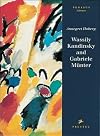
In this book Annegret Hoberg has collected many of the letters sent between Wassily Kandinsky and Gabriele Mϋnter over the course of their relationship, which lasted from 1902 to 1916. The pair met when Mϋnter enrolled in an art class taught by Kandinsky; he was 36 and married, and she was 25. Kandinsky would eventually divorce his wife, but years before he did, he and Mϋnter were travelling all over Europe and living together, each encouraging the other’s art. The relationship show more gradually frayed, and then as Mϋnter was pressing him to marry her, Kandinsky left her in an ambiguous state, found someone much younger to marry in Russia, and “ghosted” her, not returning her letters and only informing her he had married again through a lawyer years later, as they tussled over the paintings he had left behind in her possession. Mϋnter was devastated for 7-8 years and lived a very secluded life before involving herself in the art world once again and meeting someone new. It’s a story I’ve always found compelling and sad, so I liked finally tracking down this book and getting a chance to read it.
The reader has to interpolate between the points in the letters when there is either no correspondence because the couple was together, or because the letters are no exist, but like the pair’s paintings, the feelings and impression of their lives come through. I have to say, I found myself more sympathetic to Kandinsky than I previously had been, as Mϋnter comes across as gloomy, dour, and often irritable towards him when she has no cause to be.
Editorially, I thought that Hoberg could have done a little better job at trimming content and filling in more of the story. At times the letters dip into mundane detail, which reminds us that even great people are simple humans, but which becomes a little tedious at times. Meanwhile there are larger things that aren’t expanded on about their lives or the world. One example is her alluding to Kandinsky’s writing about the direction the Russo-Turkish War was taking but then not including any of it, something I think would have been interesting. Another is in not mentioning that their friend Franz Marc, who we see referred to and in pictures, would die at the battle of Verdun in WWI.
On the other hand, what she pulled together here give us rare insight, and the paintings and photos she includes are not only fantastic but well placed in the text. It’s a handsome book, and for fans of either artist, well worth seeking out.
Quotes:
On art, from Mϋnter in 1911, writing of her breakthrough a few years before:
“After a short period of agony I took a great leap forward – from copying nature – in more or less Impressionist style – to feeling the content of things – abstracting – conveying an extract.”
And this one, which she wrote in 1957 at the age of 80; I love the analogy:
“Then I saw the Berggeist inn down below & the way the road climbed up & the blue mountain behind & little red clouds in the evening sky. I quickly sketched the picture that presented itself to me. Then it was like I woke up & had the sensation as if I were a bird that had sung his song.”
On causing pain, from Kandinsky in 1911:
“With all my heart (words are always so stupid and feeble) I hope that you feel well in every sense, that you are recovering from me, and are in good, cheerful spirits. It grieves my heart (even though I am sometimes able to suppress it) that I make life so unpleasant for you. What’s the use of telling you and myself that I cannot help it? Years ago I seriously thought of going to Siberia & freeing the people I love from me. It would be better if these people were to abandon me and I were alone and could do no damage…”
On improving and continuing to evolve, from Kandinsky in 1912:
“…I hope we will not remain like bottled preserves, but continue to evolve until our dying day.”
On Russia, from Kandinsky in 1910:
“But how Russian and yet also un-Russian I feel! How some things almost move me to tears and some things make my heart beat louder. How different the people are. Why is life here…more intense and gripping?”
And this from later in the same year:
“I wonder when the Russ. Impressions will begin to wear off & whether they will be well reflected in my art. In point of fact Moscow has always been the cornerstone, the leitmotiv, of my art: the conflict & the contrasts, the displacement, the mishmash, have their real origin here.” show less
The reader has to interpolate between the points in the letters when there is either no correspondence because the couple was together, or because the letters are no exist, but like the pair’s paintings, the feelings and impression of their lives come through. I have to say, I found myself more sympathetic to Kandinsky than I previously had been, as Mϋnter comes across as gloomy, dour, and often irritable towards him when she has no cause to be.
Editorially, I thought that Hoberg could have done a little better job at trimming content and filling in more of the story. At times the letters dip into mundane detail, which reminds us that even great people are simple humans, but which becomes a little tedious at times. Meanwhile there are larger things that aren’t expanded on about their lives or the world. One example is her alluding to Kandinsky’s writing about the direction the Russo-Turkish War was taking but then not including any of it, something I think would have been interesting. Another is in not mentioning that their friend Franz Marc, who we see referred to and in pictures, would die at the battle of Verdun in WWI.
On the other hand, what she pulled together here give us rare insight, and the paintings and photos she includes are not only fantastic but well placed in the text. It’s a handsome book, and for fans of either artist, well worth seeking out.
Quotes:
On art, from Mϋnter in 1911, writing of her breakthrough a few years before:
“After a short period of agony I took a great leap forward – from copying nature – in more or less Impressionist style – to feeling the content of things – abstracting – conveying an extract.”
And this one, which she wrote in 1957 at the age of 80; I love the analogy:
“Then I saw the Berggeist inn down below & the way the road climbed up & the blue mountain behind & little red clouds in the evening sky. I quickly sketched the picture that presented itself to me. Then it was like I woke up & had the sensation as if I were a bird that had sung his song.”
On causing pain, from Kandinsky in 1911:
“With all my heart (words are always so stupid and feeble) I hope that you feel well in every sense, that you are recovering from me, and are in good, cheerful spirits. It grieves my heart (even though I am sometimes able to suppress it) that I make life so unpleasant for you. What’s the use of telling you and myself that I cannot help it? Years ago I seriously thought of going to Siberia & freeing the people I love from me. It would be better if these people were to abandon me and I were alone and could do no damage…”
On improving and continuing to evolve, from Kandinsky in 1912:
“…I hope we will not remain like bottled preserves, but continue to evolve until our dying day.”
On Russia, from Kandinsky in 1910:
“But how Russian and yet also un-Russian I feel! How some things almost move me to tears and some things make my heart beat louder. How different the people are. Why is life here…more intense and gripping?”
And this from later in the same year:
“I wonder when the Russ. Impressions will begin to wear off & whether they will be well reflected in my art. In point of fact Moscow has always been the cornerstone, the leitmotiv, of my art: the conflict & the contrasts, the displacement, the mishmash, have their real origin here.” show less

Über das Geistige in Kunst is a slim monograph presenting a philosophy of art by a working artist. The post-Impressionist modernism of Kandinsky is now more than a century old, but it has been influential, and it successfully forecasted (and provoked) subsequent trends. M. T. H. Sadler, the English translator of this book, was not only a collector of the artist's work, but a personal friend and longtime correspondent.
Sadler characterizes Kandinsky as Gauguin's successor (xviii) in a show more "Symbolist" tradition, opposing it to a complementarily perennial "Naturalism," where the two traditions are grounded in psychological subjectivity and objectivity respectively. Kandinsky himself in the text does not profess an allegiance to the Symbolist school per se, although he quotes Peladan approvingly (55). He definitely emphasizes the subjective aspect in his notions of the mystical essence of art, which he grounds in a threefold "inner need" compounded from the individual need of the artist, the collective need of contemporary society, and the eternal need of art as a whole. It is the third ingredient which is truly "spiritual," while the first two find their expression in the elements of "personality" and "style" (33-4).
Beyond the staunch subjectivism that in his case even aspires to free itself entirely from pictorial representation, Kandinsky shares with the modern Symbolists a sort of progressive aesthetic vanguardism, in which individual artists and schools transcend their contemporaries on the path of artistic emancipation. The author sets this schema forth in one of his earliest chapters "The Movement of the Triangle" (6-9), which reminded me of other esoteric writings on the propagation of genius in society: Karl von Eckartshausen's The Cloud Upon the Sanctuary and Aleister Crowley's 1906 essay "Eleusis."
Although the second and longer of the book's two sections is "About Painting," Kandinsky is concerned throughout the text to consider analogies among the various arts in terms of their development. He gives particular attention to music and theater, and implies that the "triangle" of progress in painting is merely a cross-section of a more substantial artistic pyramid. "Every man who steeps himself in the spiritual possibilities of his art is a valuable helper in the building of the spiritual pyramid which will some day reach to heaven" (20).
Thelemites are likely to find Kandinsky's ideas congenial. When he writes that "the artist is not only justified in using, but it is his duty to use only those forms which fulfil his own need" (53), it is hard not to hear an echo of "So with thy all, thou hast no right but to do thy will" (CCXX I:42). show less
Sadler characterizes Kandinsky as Gauguin's successor (xviii) in a show more "Symbolist" tradition, opposing it to a complementarily perennial "Naturalism," where the two traditions are grounded in psychological subjectivity and objectivity respectively. Kandinsky himself in the text does not profess an allegiance to the Symbolist school per se, although he quotes Peladan approvingly (55). He definitely emphasizes the subjective aspect in his notions of the mystical essence of art, which he grounds in a threefold "inner need" compounded from the individual need of the artist, the collective need of contemporary society, and the eternal need of art as a whole. It is the third ingredient which is truly "spiritual," while the first two find their expression in the elements of "personality" and "style" (33-4).
Beyond the staunch subjectivism that in his case even aspires to free itself entirely from pictorial representation, Kandinsky shares with the modern Symbolists a sort of progressive aesthetic vanguardism, in which individual artists and schools transcend their contemporaries on the path of artistic emancipation. The author sets this schema forth in one of his earliest chapters "The Movement of the Triangle" (6-9), which reminded me of other esoteric writings on the propagation of genius in society: Karl von Eckartshausen's The Cloud Upon the Sanctuary and Aleister Crowley's 1906 essay "Eleusis."
Although the second and longer of the book's two sections is "About Painting," Kandinsky is concerned throughout the text to consider analogies among the various arts in terms of their development. He gives particular attention to music and theater, and implies that the "triangle" of progress in painting is merely a cross-section of a more substantial artistic pyramid. "Every man who steeps himself in the spiritual possibilities of his art is a valuable helper in the building of the spiritual pyramid which will some day reach to heaven" (20).
Thelemites are likely to find Kandinsky's ideas congenial. When he writes that "the artist is not only justified in using, but it is his duty to use only those forms which fulfil his own need" (53), it is hard not to hear an echo of "So with thy all, thou hast no right but to do thy will" (CCXX I:42). show less
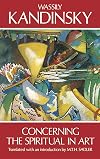
It's always a pleasure to read the words of someone who is passionate about something.
Kandinsky was clearly really passionate about painting, a researcher, an explorer of new ideas.
He exposes his views in this book.
To me it was a hard read because I have not the sensibility he had and at times I felt disconnected from his explanation.
You may not understand art much better but you would understand his mind.
Kandinsky was clearly really passionate about painting, a researcher, an explorer of new ideas.
He exposes his views in this book.
To me it was a hard read because I have not the sensibility he had and at times I felt disconnected from his explanation.
You may not understand art much better but you would understand his mind.
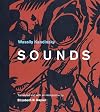
Sounds by Wassily Kandinsky is a reissue of a classic in art history and theory, particularly with regard to abstract art. It also speaks directly to the interplay between different art forms, in this case, poetry and painting (or woodcuts).
This translation is very good. Poetry, especially poetry that plays with words and sounds, can be very difficult to translate. There is no perfect translation but this one does, I think, capture the essence of what each poem is doing, both individually show more and in concert with the other poems and the images.
From previous experience with an earlier edition of this book I would say that this will appeal to a wide range of readers but within each type of reader there will be a wide range of opinions. I'll try to explain what I mean. Among artists and those interested in art history and theory, many will find this both an inspiring and an eyeopening book. It is this group for whom the book is probably most valuable since it is one of the few cases where the text and the images are the work of the same person. As a transitional work into abstract art, this speaks to both the what and the why behind it. That said, I have known people in this group who simply don't find much of value here. They are in the minority but enough to be worth mentioning. That said, they do grudgingly accept that it is still an essential work for what it does. Among the group of people who simply enjoy art, even those who like Kandinsky, this book is often hit or miss. Between the wordplay and the woodcuts that represent Kandinsky's own transitional period the book sometimes just doesn't appeal to what the person wants. Again, I have found these to be in the minority but significant enough to mention. In other words, like anything that is new (at the time) and tries to straddle lines (of art forms in this case) it won't speak to everyone.
Having said all that, I think this edition will have fewer people who don't find a way into it. That will largely be because of an excellent introduction from Elizabeth R Napier, the translator. She helps the reader to connect both what is happening within each poem as well as how that relates to the artwork. This provides many more avenues into the work, especially for those of us who are not well-versed in the theory of art or poetry.
All in all I would recommend this to anyone with an interest in art, especially abstract art. This will also interest anyone who enjoys the borderland between various art forms. While this speaks primarily to poetry and painting with a nod to music the way of thinking and approaching the border can apply to other such borders. And make no mistake, these are open borders with every side benefiting from the exchange.
Reviewed from a copy made available by the publisher via NetGalley. show less
This translation is very good. Poetry, especially poetry that plays with words and sounds, can be very difficult to translate. There is no perfect translation but this one does, I think, capture the essence of what each poem is doing, both individually show more and in concert with the other poems and the images.
From previous experience with an earlier edition of this book I would say that this will appeal to a wide range of readers but within each type of reader there will be a wide range of opinions. I'll try to explain what I mean. Among artists and those interested in art history and theory, many will find this both an inspiring and an eyeopening book. It is this group for whom the book is probably most valuable since it is one of the few cases where the text and the images are the work of the same person. As a transitional work into abstract art, this speaks to both the what and the why behind it. That said, I have known people in this group who simply don't find much of value here. They are in the minority but enough to be worth mentioning. That said, they do grudgingly accept that it is still an essential work for what it does. Among the group of people who simply enjoy art, even those who like Kandinsky, this book is often hit or miss. Between the wordplay and the woodcuts that represent Kandinsky's own transitional period the book sometimes just doesn't appeal to what the person wants. Again, I have found these to be in the minority but significant enough to mention. In other words, like anything that is new (at the time) and tries to straddle lines (of art forms in this case) it won't speak to everyone.
Having said all that, I think this edition will have fewer people who don't find a way into it. That will largely be because of an excellent introduction from Elizabeth R Napier, the translator. She helps the reader to connect both what is happening within each poem as well as how that relates to the artwork. This provides many more avenues into the work, especially for those of us who are not well-versed in the theory of art or poetry.
All in all I would recommend this to anyone with an interest in art, especially abstract art. This will also interest anyone who enjoys the borderland between various art forms. While this speaks primarily to poetry and painting with a nod to music the way of thinking and approaching the border can apply to other such borders. And make no mistake, these are open borders with every side benefiting from the exchange.
Reviewed from a copy made available by the publisher via NetGalley. show less
Lists
You May Also Like


Associated Authors
Statistics
- Works
- 159
- Also by
- 17
- Members
- 3,488
- Popularity
- #7,289
- Rating
- 3.8
- Reviews
- 24
- ISBNs
- 282
- Languages
- 19
- Favorited
- 1


