
Virginia Sorensen (1912–1991)
Author of Miracles on Maple Hill
About the Author
Virginia Sorensen (1912-1991) was born in Utah. Her great-grandfathers came to Utah in covered wagons on Brigham Young's great trek of 1846, and it was their stories that influenced her early novels of the American West. Ms. Sorensen traveled extensively, and all of her books are set in places show more where she once lived show less
Works by Virginia Sorensen
Where Nothing Is Long Ago: Memories of a Mormon Childhood (Signature Mormon Classics) (1963) 20 copies
The proper gods 4 copies
The Neighbors 1 copy
Paa denne Jord 1 copy
Associated Works
Utah Historical Quarterly - Vol. 40, No. 4, Fall 1972 - Seventy-Fifth Anniversary Year (1972) — Contributor — 1 copy
Dialogue: A Journal of Mormon Thought - Volume 13, Number 3 (Fall 1980) (1980) — Contributor — 1 copy
Tagged
Common Knowledge
- Birthdate
- 1912-02-17
- Date of death
- 1991-12-24
- Gender
- female
- Education
- Brigham Young University (BS|1934)
- Occupations
- teacher
- Organizations
- The Church of Jesus Christ of Latter-day Saints
- Awards and honors
- Guggenheim Fellowship (1946, 1954)
- Relationships
- Waugh, Alec (husband)
Waugh, Evelyn (brother-in-law)
Waugh, Arthur (father-in-law)
Saffle, Sue (niece) - Nationality
- USA
- Birthplace
- Provo, Utah, USA
- Places of residence
- Provo, Utah, USA
Terre Haute, Indiana, USA
Manti, Utah, USA
Tangier, Morocco
Palo Alto, California, USA - Place of death
- Hendersonville, North Carolina, USA
- Associated Place (for map)
- USA
Members
Reviews
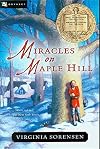
Sixty years after it was first published, Virginia Sorenson’s Miracles on Maple Hill remains as fresh as it was when it was first released in 1956. How is it that I had never even heard of this Newbery Award-winning book until it was an Amazon Daily Deal?
In a time of Iraq- and Afghanistan-induced PTSD, modern readers will completely identify with 10-year-old Marly, her shell-shocked former POW father, Dale, and her patient but overwhelmed peace-keeping mother, Lee. Lee hopes that moving show more into her own grandmother’s farmhouse, Maple Hill — “Up here, there’s all outdoors!” Grandma used to say — will help Dale heal and end the sullenness, tiredness and flashes of temper that have bedeviled the family. And it’s no spoiler to say that Maple Hill transforms the family and its dynamics. Hey, it’s right in the title! But the novel is never cloying, and readers — young and old — will adore every bit. Highly, highly recommended! show less
In a time of Iraq- and Afghanistan-induced PTSD, modern readers will completely identify with 10-year-old Marly, her shell-shocked former POW father, Dale, and her patient but overwhelmed peace-keeping mother, Lee. Lee hopes that moving show more into her own grandmother’s farmhouse, Maple Hill — “Up here, there’s all outdoors!” Grandma used to say — will help Dale heal and end the sullenness, tiredness and flashes of temper that have bedeviled the family. And it’s no spoiler to say that Maple Hill transforms the family and its dynamics. Hey, it’s right in the title! But the novel is never cloying, and readers — young and old — will adore every bit. Highly, highly recommended! show less

Marly's mother used to visit her grandmother on Maple Hill, where there was all the outdoors to play in, and where you might say that miracles happen. Now, Marly's mother has inherited the little house on Maple Hill, and Marly and her family are going to spend some time there -- weekends, and then the summer -- and Marly is hoping for a miracle. Her father came home from the war with deep psychological wounds, and life in their city apartment is not helping him recover. Maybe at Maple Hill, show more where there is work to be done in the fresh country air, their family can come together and be as they once were. Arriving in the early spring, Marly's family is introduced to the almost magical (but labor-intensive) process of collecting maple sap and converting it into syrup. They learn this, and many other useful things about country life, from their neighbor, Mr. Chris. Are there still miracles on Maple Hill? Marly is about to find out.
I enjoyed this book for a lot of reasons. It's what some people think of as a "typical" Newbery (though there are plenty that break the mold): female protagonist, rich writing and character development, not a lot of plot. I like that sort of story if the writing is truly good enough to draw you in, and it certainly is in this case. However, readers who enjoy a more action-packed narrative might get impatient with this story, which reads like a long, leisurely hike through the woods. I also appreciated the wealth of detail about maple sugaring (a process I have been involved in at my own grandparents' Pennsylvania farm, so I can attest to the accuracy of the description) and all of the nature description. The writing reminded me of Madeleine L'Engle -- perhaps not surprising, since this is a story from a similar era; only five years separate this book and A Wrinkle in Time. (L'Engle usually has a bit more in they way of plot, though, I would say.) I'm not sure how well or poorly this book handles the depiction of Marly's father's PTSD, since I don't have a great deal of knowledge on the subject. I will say, though, that any improvement he saw was not immediate, but was a slow process, aided, perhaps, by peace and work. Judging by the year of the book's publication, I'm guessing that the war her father served in was the Korean War, though I suppose it might have been WWII. My grandfather served in Korea, so that was another personal connection I made with this book. It was just the right book for me, so I would recommend it to readers who like the same sorts of contemplative, character-driven narratives that I enjoy. show less
I enjoyed this book for a lot of reasons. It's what some people think of as a "typical" Newbery (though there are plenty that break the mold): female protagonist, rich writing and character development, not a lot of plot. I like that sort of story if the writing is truly good enough to draw you in, and it certainly is in this case. However, readers who enjoy a more action-packed narrative might get impatient with this story, which reads like a long, leisurely hike through the woods. I also appreciated the wealth of detail about maple sugaring (a process I have been involved in at my own grandparents' Pennsylvania farm, so I can attest to the accuracy of the description) and all of the nature description. The writing reminded me of Madeleine L'Engle -- perhaps not surprising, since this is a story from a similar era; only five years separate this book and A Wrinkle in Time. (L'Engle usually has a bit more in they way of plot, though, I would say.) I'm not sure how well or poorly this book handles the depiction of Marly's father's PTSD, since I don't have a great deal of knowledge on the subject. I will say, though, that any improvement he saw was not immediate, but was a slow process, aided, perhaps, by peace and work. Judging by the year of the book's publication, I'm guessing that the war her father served in was the Korean War, though I suppose it might have been WWII. My grandfather served in Korea, so that was another personal connection I made with this book. It was just the right book for me, so I would recommend it to readers who like the same sorts of contemplative, character-driven narratives that I enjoy. show less

This 1957 Newbery medal winner is a delightful, slow walk into a time when old fashioned values were the norm -- a time when children were polite; a time when children respected parents; a time when neighbors helped one another; a time when there was less focus on "me" and more focus on "us".
Yet, the book is timeless in addressing issues that are still with us today. Marly's father returns from the war, while the specific war isn't mentioned, one can assume WWII. Marly's father was a POW and show more is deeply emotionally tramatized with post tramatic stress.
Leaving the city life behind, the family moves back to the family home in rural Pennsylvania. They arrive during the time when the maple sugar is flowing from the trees. A gentle neighbor friend shows them the joys of capturing the maple and processing it.
While the book is corny and perhaps some would say hokey, I enjoyed it for the wonderful message of the healing powers of nature and the joys of life simply embraced when leaving behind the chaos of a frantic life style. show less
Yet, the book is timeless in addressing issues that are still with us today. Marly's father returns from the war, while the specific war isn't mentioned, one can assume WWII. Marly's father was a POW and show more is deeply emotionally tramatized with post tramatic stress.
Leaving the city life behind, the family moves back to the family home in rural Pennsylvania. They arrive during the time when the maple sugar is flowing from the trees. A gentle neighbor friend shows them the joys of capturing the maple and processing it.
While the book is corny and perhaps some would say hokey, I enjoyed it for the wonderful message of the healing powers of nature and the joys of life simply embraced when leaving behind the chaos of a frantic life style. show less
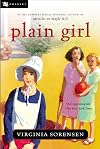
Beautifully written, with engaging characters. Esther really comes alive. The issues she faces are real, and portrayed in realistic complexity. There's humor, and drama, and even disobedience (secrets & lying).
It's just so engaging: by the end I even came to emphasize with Father a little.
That was difficult though as I firmly believe that he should have given Esther some guidance on how to deal with the other schoolchildren, *how* to remain aloof while still being courteous... but maybe show more he didn't know and couldn't figure it out himself. And I don't agree with the part of the Bible that he chose to quote, about the water fountain being a metaphor saying that people cannot be bad and good at the same time. Of *course* they can! Nobody is perfect!
Home-schooled children, and immigrants, and those who need to learn of their perspectives, will benefit from this look at someone who comes from a different culture.
Sorensen's Newbery book, [b:Miracles On Maple Hill|2911651|Miracles On Maple Hill|Virginia Sorensen|https://i.gr-assets.com/images/S/compressed.photo.goodreads.com/books/1328915605l/2911651._SX50_.jpg|811840], is also about issues that are deeper and more complex than what was explored by most children's stories written back in the day. I will look for more by her. show less
It's just so engaging: by the end I even came to emphasize with Father a little.
That was difficult though as I firmly believe that he should have given Esther some guidance on how to deal with the other schoolchildren, *how* to remain aloof while still being courteous... but maybe show more he didn't know and couldn't figure it out himself. And I don't agree with the part of the Bible that he chose to quote, about the water fountain being a metaphor saying that people cannot be bad and good at the same time. Of *course* they can! Nobody is perfect!
Home-schooled children, and immigrants, and those who need to learn of their perspectives, will benefit from this look at someone who comes from a different culture.
Sorensen's Newbery book, [b:Miracles On Maple Hill|2911651|Miracles On Maple Hill|Virginia Sorensen|https://i.gr-assets.com/images/S/compressed.photo.goodreads.com/books/1328915605l/2911651._SX50_.jpg|811840], is also about issues that are deeper and more complex than what was explored by most children's stories written back in the day. I will look for more by her. show less
Lists
Awards


You May Also Like


Associated Authors
Statistics
- Works
- 16
- Also by
- 6
- Members
- 5,966
- Popularity
- #4,133
- Rating
- 3.8
- Reviews
- 59
- ISBNs
- 50
- Languages
- 1
- Favorited
- 3