
Wolfgang Hildesheimer (1916–1991)
Author of Mozart
About the Author
Works by Wolfgang Hildesheimer
Mitteilungen an Max über den Stand der Dinge und anderes. Mit einem Glossarium und 6 Tuschzeichnungen des Autors. (1983) — Author and Illustrator — 46 copies
Interpretationen: James Joyce, Georg Buchner, Zwei Frankfurter Vorlesungen. (1969) — Author — 5 copies
Herrn Walsers Raben 3 copies
Betrachtungen über Mozart 2 copies
Endlich Allein: Collagen mit einer Einführung des Kunstlers: Die Ästhetik der Collage (1984) 2 copies
Das Opfer Helena zwei Hörspiele 2 copies
The jewishness of Mr. Bloom =: Das Judische an Mr. Bloom : englisch, deutsch (Edition Suhrkamp) (1984) 2 copies
Mary Stuart : eine historische Szene 2 copies
Bett-Fuge 1 copy
Nocturno im Grandhotel 1 copy
Vier Fernsehspiele — Contributor — 1 copy
Associated Works
The Art of the Tale: An International Anthology of Short Stories (1986) — Contributor — 381 copies, 3 reviews
Die Geschichtenerzähler: Neues und Unbekanntes von Allende bis Zafón (suhrkamp taschenbuch) (2008) — Contributor — 5 copies
Der Zauberspiegel. Phantastische Erzählungen der Weltliteratur — Contributor — 2 copies
Tagged
Common Knowledge
- Canonical name
- Hildesheimer, Wolfgang
- Birthdate
- 1916-12-09
- Date of death
- 1991-08-21
- Gender
- male
- Occupations
- painter
writer
interpreter - Organizations
- Group 47
- Awards and honors
- Georg Büchner Prize (1966)
- Nationality
- Germany
- Birthplace
- Hamburg, Germany
- Place of death
- Poschiavo, Switzerland
- Associated Place (for map)
- Germany
Members
Reviews
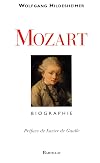
The 1977 biography of Wolfgang Hildesheimer, "Mozart," is a noteworthy and frequently contentious addition to our knowledge of the renowned composer. A complex, difficult, and profoundly human portrait of Wolfgang Amadeus Mozart is presented by Hildesheimer, who avoids an unduly romanticized or hagiographic approach. Decades after its publication, this portrait still sparks debate and reexamination.
Hildesheimer's work is fundamentally a demythologization. He removes the façade of the show more carefree genius who creates masterpieces with ease, the porcelain prodigy. Rather, he explores Mozart's imperfections, fears, and eccentricities by using a psychoanalytical lens to delve into the composer's mind. As demonstrated by the biography's candid discussion of Mozart's notorious scatological humor in his letters, this "Mozart" is not always a comfortable character; at times, he can come across as perplexing, aloof, and even uncivilized.
One of the most unique aspects of the book is that it is a "meta-biography." Hildesheimer is not satisfied with merely narrating Mozart's life story. He actively participates in and critiques the biographical writing process itself, especially the customs that have molded Mozart's reputation over the ages. He criticizes earlier biographers for projecting their own ideals onto their subject, being sentimental, and having wishful thinking. This critical attitude includes challenging long-held beliefs and conducting a thorough analysis of sources.
It is a theme-based biographical analysis of Mozart's life. Using excerpts from Mozart's letters, the author creates an engaging, though never hagiographic, account of his life and music. Mozart fans will enjoy this entertaining and well-written biography. show less
Hildesheimer's work is fundamentally a demythologization. He removes the façade of the show more carefree genius who creates masterpieces with ease, the porcelain prodigy. Rather, he explores Mozart's imperfections, fears, and eccentricities by using a psychoanalytical lens to delve into the composer's mind. As demonstrated by the biography's candid discussion of Mozart's notorious scatological humor in his letters, this "Mozart" is not always a comfortable character; at times, he can come across as perplexing, aloof, and even uncivilized.
One of the most unique aspects of the book is that it is a "meta-biography." Hildesheimer is not satisfied with merely narrating Mozart's life story. He actively participates in and critiques the biographical writing process itself, especially the customs that have molded Mozart's reputation over the ages. He criticizes earlier biographers for projecting their own ideals onto their subject, being sentimental, and having wishful thinking. This critical attitude includes challenging long-held beliefs and conducting a thorough analysis of sources.
It is a theme-based biographical analysis of Mozart's life. Using excerpts from Mozart's letters, the author creates an engaging, though never hagiographic, account of his life and music. Mozart fans will enjoy this entertaining and well-written biography. show less

". . . standing among cloth-draped cages in the nocturnal dimness of the bird shop. The owner asked me what I would like.
"An owl, please," I said.
"Aha," he said, winking, as if relishing the shrewd expertise of his client. "You're a connoisseur. Most customers make the mistake of selecting an owl in the daylight. Should I gift-wrap it?"
"No. It's for me. I'd like to carry it to Athens."" (pp 79-80)
What imagination could conjure the "owl of Athena", not literally but as the basis for a short show more story? The stories of Wolfgang Hildesheimer try to contain the imagination of the author who pens tales like this. This is the first English-language appearance for 19 stories, most of them very short, by the witty, whimsical author of a controversial Mozart biography (1982) and four novels. Many of the pieces here take the form of literary/academic parodies, with provocative views of culture emerging indirectly, but effectively.
In writing them Hildsheimer shares the journey of a man carrying the owl (owlet, to be exact) along with an amazing panoply of other characters in this small book. There is the retired magician who goes out in what some might call "Keatsian" glory, and a concert Pianist whose dream occupation turns on end the real-life struggles of so many famous composers and performers. The response of the owner of the bird shop in the excerpt above from "I Carry an Owl to Athens" captures the epitome of Hildesheimer's style. "I Am Not Writing a Book on Kafka" satirizes the little world of biographical scholars, clinging like parasites to their chosen subjects. "1956--A Pilz Year" pays hilarious centenary tribute, complete with footnotes, to one Gottlieb Theodore Pilz, little-known apostle of sloth ("the pioneer of sitting in the sun"), whose contribution to Western civilization "was expressed in the non-existence of works which never came into being thanks to his courageous, self-sacrificing interference." (In 1836, for instance, "at the height of his powers," he "managed to talk Delacroix out of painting a series of colossal pictures of various jungle scenes.") Several stories explore the notion of a self-divided artist: in "Portrait of a Poet," it is revealed that Nobel-winning poet Sylvan Hardemuth was really literary critic Alphons Schwerdt, who wrote all those pseudonymous poems--intentionally awful, crassly derivative--in order to give himself a target for scathing, witty reviews; and one very Woody Allenish entry tells of the famous pianist who's secretly a frustrated insurance agent ("a double talent of unwonted proportions"). Hildesheimer sometimes pens an existential fable, often with surreal touches reminiscent of (among others) Donald Barthelme. One man, desperate for solitude (a recurring theme throughout the collection), turns himself into a nightingale; another builds himself a tiny apartment many stories up, virtually in thin air--a doomed experiment in sell-sufficiency.
The strength of which is in his ability to turn the world upside down, to create a story out of a throw-away line, to dwell masterfully on the metaphors of the world and our lives in it. Readers with a taste for cross-cultural drollery and dark whimsy will find this an impressive performance. I found the result of his imaginings to be delightful, often humorous stories of people that I know I would like to meet, and, fortunately, thanks to Wolfgang Hildesheimer (and the excellent translation of his stories by Joachim Neugroschel) I already have. show less
"An owl, please," I said.
"Aha," he said, winking, as if relishing the shrewd expertise of his client. "You're a connoisseur. Most customers make the mistake of selecting an owl in the daylight. Should I gift-wrap it?"
"No. It's for me. I'd like to carry it to Athens."" (pp 79-80)
What imagination could conjure the "owl of Athena", not literally but as the basis for a short show more story? The stories of Wolfgang Hildesheimer try to contain the imagination of the author who pens tales like this. This is the first English-language appearance for 19 stories, most of them very short, by the witty, whimsical author of a controversial Mozart biography (1982) and four novels. Many of the pieces here take the form of literary/academic parodies, with provocative views of culture emerging indirectly, but effectively.
In writing them Hildsheimer shares the journey of a man carrying the owl (owlet, to be exact) along with an amazing panoply of other characters in this small book. There is the retired magician who goes out in what some might call "Keatsian" glory, and a concert Pianist whose dream occupation turns on end the real-life struggles of so many famous composers and performers. The response of the owner of the bird shop in the excerpt above from "I Carry an Owl to Athens" captures the epitome of Hildesheimer's style. "I Am Not Writing a Book on Kafka" satirizes the little world of biographical scholars, clinging like parasites to their chosen subjects. "1956--A Pilz Year" pays hilarious centenary tribute, complete with footnotes, to one Gottlieb Theodore Pilz, little-known apostle of sloth ("the pioneer of sitting in the sun"), whose contribution to Western civilization "was expressed in the non-existence of works which never came into being thanks to his courageous, self-sacrificing interference." (In 1836, for instance, "at the height of his powers," he "managed to talk Delacroix out of painting a series of colossal pictures of various jungle scenes.") Several stories explore the notion of a self-divided artist: in "Portrait of a Poet," it is revealed that Nobel-winning poet Sylvan Hardemuth was really literary critic Alphons Schwerdt, who wrote all those pseudonymous poems--intentionally awful, crassly derivative--in order to give himself a target for scathing, witty reviews; and one very Woody Allenish entry tells of the famous pianist who's secretly a frustrated insurance agent ("a double talent of unwonted proportions"). Hildesheimer sometimes pens an existential fable, often with surreal touches reminiscent of (among others) Donald Barthelme. One man, desperate for solitude (a recurring theme throughout the collection), turns himself into a nightingale; another builds himself a tiny apartment many stories up, virtually in thin air--a doomed experiment in sell-sufficiency.
The strength of which is in his ability to turn the world upside down, to create a story out of a throw-away line, to dwell masterfully on the metaphors of the world and our lives in it. Readers with a taste for cross-cultural drollery and dark whimsy will find this an impressive performance. I found the result of his imaginings to be delightful, often humorous stories of people that I know I would like to meet, and, fortunately, thanks to Wolfgang Hildesheimer (and the excellent translation of his stories by Joachim Neugroschel) I already have. show less
The Problems of Absurdity
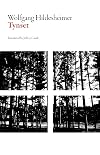
Hildesheimer's "Tynset" records a man's nocturnal ramblings, both in his mind and around his house, during one sleepless night. It has absurdist or surrealist moments -- a man frozen in his car, a narrator who used to dial people at random and tell them they should be afraid, a harmonium playing out of tune in a cavernous space, a Renaissance bed that slept seven people -- but those moments are rendered ineffective by the novel's framing: after all, a sleepless show more night, filled with miscellaneous memories, is going to be full of leaps and incongruities. If such a novel is going to work, then, it needs something other than playful absurdity or surprise to hold it together (or to demonstrate that it is fragmented, like its narrator's mind).
The title is the name of an actual town in Norway, a few hours south of Trondheim. The narrator has picked it a random from a train schedule, which he reads, along with phone books, as an engine for his imagination. It's a thin conceit by definition, and it never becomes poignant. The book has two or three long set pieces: a party, during which hymns are sung; an extended Boccaccian fantasy about seven people who one slept on the narrator's antique bed; and an inventory of the house.
The problem here is that set-pieces, especially in a narrative structure that will by its own definition be looking for coherence and thematic continuity, need to be magnetic: they need to work to pull the novel together (or to provide proof it is fragmented). These do neither.
"Tynset" is undecided between two more promising poles: a thronged, purposeless, desperately lonely night spent with an anti-social insomniac; and an entertaining, stream-of-consciousness showpiece of the novelist's (and the insomniac's) bursting imagination. Or, to add a pole: the novel could also have drawn us, hopelessly, toward the chimera of Tynset, the place that the narrator had never visited, planned to visit, but would in fact never visit. It's too bad this wasn't reworked in one of those directions, or in some other, because as it stands it's an indecisive mixture, afraid of deep despair, infatuated with colorful stories, inconstant in its allegiance to its narrator's empty life. show less
Hildesheimer's "Tynset" records a man's nocturnal ramblings, both in his mind and around his house, during one sleepless night. It has absurdist or surrealist moments -- a man frozen in his car, a narrator who used to dial people at random and tell them they should be afraid, a harmonium playing out of tune in a cavernous space, a Renaissance bed that slept seven people -- but those moments are rendered ineffective by the novel's framing: after all, a sleepless show more night, filled with miscellaneous memories, is going to be full of leaps and incongruities. If such a novel is going to work, then, it needs something other than playful absurdity or surprise to hold it together (or to demonstrate that it is fragmented, like its narrator's mind).
The title is the name of an actual town in Norway, a few hours south of Trondheim. The narrator has picked it a random from a train schedule, which he reads, along with phone books, as an engine for his imagination. It's a thin conceit by definition, and it never becomes poignant. The book has two or three long set pieces: a party, during which hymns are sung; an extended Boccaccian fantasy about seven people who one slept on the narrator's antique bed; and an inventory of the house.
The problem here is that set-pieces, especially in a narrative structure that will by its own definition be looking for coherence and thematic continuity, need to be magnetic: they need to work to pull the novel together (or to provide proof it is fragmented). These do neither.
"Tynset" is undecided between two more promising poles: a thronged, purposeless, desperately lonely night spent with an anti-social insomniac; and an entertaining, stream-of-consciousness showpiece of the novelist's (and the insomniac's) bursting imagination. Or, to add a pole: the novel could also have drawn us, hopelessly, toward the chimera of Tynset, the place that the narrator had never visited, planned to visit, but would in fact never visit. It's too bad this wasn't reworked in one of those directions, or in some other, because as it stands it's an indecisive mixture, afraid of deep despair, infatuated with colorful stories, inconstant in its allegiance to its narrator's empty life. show less

Tynset is considered among the best literary works of the German author Wolfgang Hildesheimer. Foremostly trained as an artist in the plastic arts, a career he never gave up, Hildesheimer turned to writing at a later age. He was a member of Gruppe 47 (Group 47), and his first collections of short stories and novels were published during the 1950s. As a playwright, Hildesheimer belonged to the German avant-garde in the "Absurd" or "New Theater" movement, together with other members of the show more Gruppe 47, such as Günter Grass and Peter Weiss, likewise born in 1916. Wolfgang Hildesheimer was of Jewish descent. The traumatic experience of the war made him leave Germany permanently after 1957, settling in Switzerland and Italy. The nausea experienced living in post-war Germany is an important motive in the novel Tynset.
Although the author has repeatedly referred to Tynset as a novel, literary critics regard the work as a long piece of lyrical prose. The influence of the theatre of the absurd can be clearly felt, and it would not be far-fetched to compare Tynset to, for instance, Beckett's Waiting for Godot.
Tynset is an internal monologue or a sleepless man. The story covers a time of about six hours, although some of the reminiscences and thoughts of the man extend the time frame over a longer period. A large part of the novel is taken up relating how the man used to spend sleepless hours reading telephone directories and railway timetables. Reading the telephone directories led to making telephone calls to strangers, and confronting these strangers through insinuation with their gruesome past. From a light entertainment this develops into such a scary game that the man develops and existential fear. Further thoughts, then, focus on leaving Germany, by train, to the Norwegian township Tynset. The Scandinavian connection brings the man to think about his father, thoughts which become connected with the Hamlet-motive of the indecisive son versus the absent, ghostly father. Apart from drinking a bottle of wine in the middle of the night, nothing ever happens.
Tynset is not a boring book. It is very well written, and the telephone game really conveys the sense of nausea and fear, what the German would call das Unheimliche, of the obscure tension between the offenders and the victims in post-war Germany. The complete impotence of the sleepless man is present throughout the novel, finding a climax in the absurd of the man believing to trigger cocks crowing all over Greece. This section of "die Hähne Attikas" is an unforgettable prose fragment. show less
Although the author has repeatedly referred to Tynset as a novel, literary critics regard the work as a long piece of lyrical prose. The influence of the theatre of the absurd can be clearly felt, and it would not be far-fetched to compare Tynset to, for instance, Beckett's Waiting for Godot.
Tynset is an internal monologue or a sleepless man. The story covers a time of about six hours, although some of the reminiscences and thoughts of the man extend the time frame over a longer period. A large part of the novel is taken up relating how the man used to spend sleepless hours reading telephone directories and railway timetables. Reading the telephone directories led to making telephone calls to strangers, and confronting these strangers through insinuation with their gruesome past. From a light entertainment this develops into such a scary game that the man develops and existential fear. Further thoughts, then, focus on leaving Germany, by train, to the Norwegian township Tynset. The Scandinavian connection brings the man to think about his father, thoughts which become connected with the Hamlet-motive of the indecisive son versus the absent, ghostly father. Apart from drinking a bottle of wine in the middle of the night, nothing ever happens.
Tynset is not a boring book. It is very well written, and the telephone game really conveys the sense of nausea and fear, what the German would call das Unheimliche, of the obscure tension between the offenders and the victims in post-war Germany. The complete impotence of the sleepless man is present throughout the novel, finding a climax in the absurd of the man believing to trigger cocks crowing all over Greece. This section of "die Hähne Attikas" is an unforgettable prose fragment. show less
Lists
Awards


You May Also Like


Associated Authors
Statistics
- Works
- 61
- Also by
- 13
- Members
- 1,020
- Popularity
- #25,252
- Rating
- 3.9
- Reviews
- 8
- ISBNs
- 122
- Languages
- 10
- Favorited
- 6