
Scott Mackay
Author of The Meek
Series
Works by Scott Mackay
Associated Works
These United States: Original Essays by Leading American Writers on Their State within the Union by John Leonard (1995) — Contributor — 101 copies, 1 review
Northern Suns : The New Anthology of Canadian Science Fiction (1999) — Contributor — 69 copies, 1 review
Tesseracts Ten: A Celebration of New Canadian Speculative Fiction (2006) — Contributor — 26 copies, 2 reviews
Tagged
Common Knowledge
- Birthdate
- 20th Century
- Gender
- male
- Organizations
- Science Fiction and Fantasy Writers of America
- Nationality
- Canada
- Places of residence
- Toronto, Ontario, Canada
- Associated Place (for map)
- Ontario, Canada
Members
Reviews
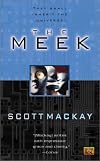
Achei uma história fantástica. Ao fazer a investigação do asteróide Ceres para o tornar habitável uma equipa liderada por Cody (com imensas parecenças a Jake Sully de Avatar) descobrem umas criaturas transformadas e mutantes que resistem a todas as tentativas de serem afastadas dali. A história desenvolve-se com uma quantidade de dilemas morais sobre as consequências daquilo que criámos e de que forma podemos resolver os problemas sem destruir raças inteiras. Vale mesmo a pena ler.
From Amazon:
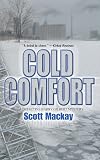
In the midst of a February cold snap and the political maneuverings of a new government that threatens the jobs of good officers including his young partner, Detective Barry Gilbert of the Metropolitan Toronto Police Force Homicide Squad is called to investigate the murder of Cheryl Latham, the stepdaughter of a prominent government official. Cheryl, her body frozen, is found on a snow-swept pier at the harbor with a bullet in her chest. Autopsy reveals a bizarre clue -- Cheryl show more froze to death first and was shot later, after she was already dead. So begins a baffling trail of evidence. As the strange and perplexing evidence mounts, Gilbert feels he's being led from clue to clue by an outside ringmaster. Probing deeper in Cheryl's dark past, he discovers the terrible secret she's hidden all her life. He's forced to confront his own values, and learns that even the best detectives can lose their judgment at the most crucial moments -- often with the deadliest of consequences.
My Thoughts:
This was an excelled police procedural novel. Barry Gilbert, the underpaid homicide detective, felt like a really well-made comfortable old shoe. The Toronto setting was realistic without sounding like the author spent his whole day on Google Maps. This was the first book I had read by this author and will certainly give him another try. show less
In the midst of a February cold snap and the political maneuverings of a new government that threatens the jobs of good officers including his young partner, Detective Barry Gilbert of the Metropolitan Toronto Police Force Homicide Squad is called to investigate the murder of Cheryl Latham, the stepdaughter of a prominent government official. Cheryl, her body frozen, is found on a snow-swept pier at the harbor with a bullet in her chest. Autopsy reveals a bizarre clue -- Cheryl show more froze to death first and was shot later, after she was already dead. So begins a baffling trail of evidence. As the strange and perplexing evidence mounts, Gilbert feels he's being led from clue to clue by an outside ringmaster. Probing deeper in Cheryl's dark past, he discovers the terrible secret she's hidden all her life. He's forced to confront his own values, and learns that even the best detectives can lose their judgment at the most crucial moments -- often with the deadliest of consequences.
My Thoughts:
This was an excelled police procedural novel. Barry Gilbert, the underpaid homicide detective, felt like a really well-made comfortable old shoe. The Toronto setting was realistic without sounding like the author spent his whole day on Google Maps. This was the first book I had read by this author and will certainly give him another try. show less
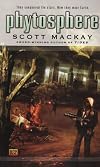
Phytosphere is a tale of alien invasion and postapocalyptic survival in the distant future. And, why yes, it is a good combination.
When negotiations for immigration rights fail, the alien Tarsalans surround the Earth with a mysterious green, light-blocking shroud, dubbed the phytosphere. The Tarsalans consider the phytosphere a teaching tool, while Earth considers it a declaration of war. The action follows the Thorndike brothers, Gerry and Neil, as they try to discover a way to eliminate show more the phytosphere. Gerry is on the moon when the Phytosphere is put into place while Neil is on the Earth. Also stuck on the Earth is Gerry's family, wife Glenda and their two children.
The group on the moon trying to discover a way to eliminate the phytosphere follows Gerry's leadership at first, while on the Earth, Neil, Gerry's arrogant brother and scientific advisor to the president, summarily discounts any information that comes from the moon, believing he is the only one who could possibly discover a solution. The back and forth debate on how to destroy the phytosphere between the brothers could have easily become boring but Mackay keeps the story moving along by following Glenda and her children's harrowing tale of survival amidst chaos as society breaks down. Glenda's story really is the more compelling one until the end, and it creates some real tension and a sense urgency for one of the brother's to discover a solution.
Personally, I appreciated the hard science fiction elements along with the postapocalyptic tale. Mackay expertly wove the stories of the various characters together. The main characters were well developed and the suspense kept building right up to the end. (While I could get nit-picky over a few minor details, following my suggestions wouldn't have made the story any better.)
Highly Recommended; http://shetreadssoftly.blogspot.com/ show less
When negotiations for immigration rights fail, the alien Tarsalans surround the Earth with a mysterious green, light-blocking shroud, dubbed the phytosphere. The Tarsalans consider the phytosphere a teaching tool, while Earth considers it a declaration of war. The action follows the Thorndike brothers, Gerry and Neil, as they try to discover a way to eliminate show more the phytosphere. Gerry is on the moon when the Phytosphere is put into place while Neil is on the Earth. Also stuck on the Earth is Gerry's family, wife Glenda and their two children.
The group on the moon trying to discover a way to eliminate the phytosphere follows Gerry's leadership at first, while on the Earth, Neil, Gerry's arrogant brother and scientific advisor to the president, summarily discounts any information that comes from the moon, believing he is the only one who could possibly discover a solution. The back and forth debate on how to destroy the phytosphere between the brothers could have easily become boring but Mackay keeps the story moving along by following Glenda and her children's harrowing tale of survival amidst chaos as society breaks down. Glenda's story really is the more compelling one until the end, and it creates some real tension and a sense urgency for one of the brother's to discover a solution.
Personally, I appreciated the hard science fiction elements along with the postapocalyptic tale. Mackay expertly wove the stories of the various characters together. The main characters were well developed and the suspense kept building right up to the end. (While I could get nit-picky over a few minor details, following my suggestions wouldn't have made the story any better.)
Highly Recommended; http://shetreadssoftly.blogspot.com/ show less
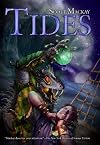
An explorer on the order of Columbus, Magellan, Cook, or Shackleton, Hab is a man trapped by a moral system that he feels is suffocating his world. All of his fellow men on the verdant but isolate continent of Paras live by a code of 28 Rules of the Formulary. The Formulary’s highest goal is honesty, and its rules ensure that all men are forced to be honest, even if they do so by prevarication, obfuscation, or other such methods. But never is a man allowed to lie, or at least to be caught show more at it. If he is, that man is forced to the penitentiary Island of Liars to live out his days scrabbling to survive on volcanic rock and ash.
When Hab learns that his continent may not be as isolated as was once thought, he is forced to confront the system of honesty head on. The collision nearly breaks him, but circumstances teach him something of subjugating one’s own morality for a greater good, when he meets a member of a species whose greatest virtue is falsehood.
Tides was a great deal of fun to read. Mackay brilliantly weaves science fiction, a survival story, and high seas adventure together. And yet, at the same time, he addresses the themes of honesty and dishonesty, of pragmatism and the moral code, and the subtle war between them. Hab Miquay becomes a character who is as deeply human as all of us, and whose flaws are very much our own. He, like many of us, is forced to determine if the ends justify the means. If you pass this novel up, you will have missed what I think is one of the best novels of speculative fiction currently in print.
Full Review at Grasping for the Wind show less
When Hab learns that his continent may not be as isolated as was once thought, he is forced to confront the system of honesty head on. The collision nearly breaks him, but circumstances teach him something of subjugating one’s own morality for a greater good, when he meets a member of a species whose greatest virtue is falsehood.
Tides was a great deal of fun to read. Mackay brilliantly weaves science fiction, a survival story, and high seas adventure together. And yet, at the same time, he addresses the themes of honesty and dishonesty, of pragmatism and the moral code, and the subtle war between them. Hab Miquay becomes a character who is as deeply human as all of us, and whose flaws are very much our own. He, like many of us, is forced to determine if the ends justify the means. If you pass this novel up, you will have missed what I think is one of the best novels of speculative fiction currently in print.
Full Review at Grasping for the Wind show less
Lists
Awards


You May Also Like


Associated Authors
Statistics
- Works
- 17
- Also by
- 7
- Members
- 612
- Popularity
- #41,085
- Rating
- 3.3
- Reviews
- 15
- ISBNs
- 33
- Languages
- 1