
Josephine Wilson
Author of Extinctions
About the Author
Works by Josephine Wilson
DAWN TO DUSK 2 copies
Tagged
Common Knowledge
- Gender
- female
Members
Reviews
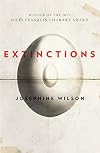
Extinctions, by Josephine Wilson, won the 2015 Dorothy Hewett Award for an Unpublished Manuscript, and I am not surprised: it is an utterly absorbing novel that I was sorry to finish. Do not let this book slip under your radar just because you’re busy with the Silly Season!
Professor Frederick Lothian, a man so given to discontentment that he complains about his own name, is a retired engineering expert on concrete and a pompous hoarder of modernist furniture. He has finally given in to the show more exhortations of his daughter Caroline and moved into a retirement village but he hates it and he despises all the other ‘inmates’, all moving inexorably towards the annihilation of aged care, and death. (He’s only 69!) And as we read on, we realise that the way he has quarantined himself from any relationships in the village is exactly what he has done throughout his life, even in his own home…
His wife, Martha, is dead, but Wilson’s pen makes her a lively character through Fred’s memories. Based on his experience with the evidently long-suffering Martha, Fred is fond of making generalisations about women, and his default mode is criticism. But there is much more to Fred than being a ‘crusty old gent’, and before long the reader is puzzling about what’s gone wrong in his relationship with Caroline, and about what might have happened to his son. Since the narrative offers only Fred’s perspective we soon realise that he is suppressing his thoughts so much that often he cannot even mention the boy’s name. And in his loneliness he is starting to lose his grip on reality:
To read the rest of my review please visit https://anzlitlovers.com/2016/12/11/extinctions-by-josephine-wilson/ show less
Professor Frederick Lothian, a man so given to discontentment that he complains about his own name, is a retired engineering expert on concrete and a pompous hoarder of modernist furniture. He has finally given in to the show more exhortations of his daughter Caroline and moved into a retirement village but he hates it and he despises all the other ‘inmates’, all moving inexorably towards the annihilation of aged care, and death. (He’s only 69!) And as we read on, we realise that the way he has quarantined himself from any relationships in the village is exactly what he has done throughout his life, even in his own home…
His wife, Martha, is dead, but Wilson’s pen makes her a lively character through Fred’s memories. Based on his experience with the evidently long-suffering Martha, Fred is fond of making generalisations about women, and his default mode is criticism. But there is much more to Fred than being a ‘crusty old gent’, and before long the reader is puzzling about what’s gone wrong in his relationship with Caroline, and about what might have happened to his son. Since the narrative offers only Fred’s perspective we soon realise that he is suppressing his thoughts so much that often he cannot even mention the boy’s name. And in his loneliness he is starting to lose his grip on reality:
Stalked by the ghost of his own unoriginality. Every day it was the same. He woke up – if he had slept at all – with an uneasy feeling in the pit of his stomach, and the distinct sense that there was something obscure, malevolent and obsessive lying in wait for him, ready to ambush him when he was at his weakest. Thoughts were ghosts. They were zombies. They wafted about in the white heat and dark stillness of St Sylvan’s Retirement Village, tapping on windows, whispering forgotten lines, staging scenes that were supposed to have been deleted from the script long ago. (p.93)
To read the rest of my review please visit https://anzlitlovers.com/2016/12/11/extinctions-by-josephine-wilson/ show less
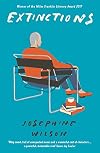
I must admit that how the book would eventually develop I did not foresee after reading the first initial pages. The book central character is a retired academic engineer called Fred Lothian who is living in a retired village in Perth Western Australia. He is living a deliberately solitary life and is consumed by regrets at the life he has chosen and by the consequences of his past actions. His failure to confront the past which he must ultimately do to achieve some semblance of peace and show more self awareness is characterised by surrounding himself with clutter and the detritus of his former life that he is unable to discard. When Jan a friendly and loquacious neighbour unexpectedly enters the scene Fred must reassess and confront the secrets, half truths and lies that have consumed his previous life.
This is a story of redemption and coming to terms with the past and the extinction referred to in the title relates to the personal as well as the natural. I liked the way the narrative developed as like peeling an onion we gradually got to learn little by little the true events that shaped and perhaps in some ways traumatised Fred's life and accounted for his subsequent actions.
The interesting photographs and drawings that accompanied the text lead us to question the meaning of what extinction is and whether we are heading or retreating from this. The full range of emotions from humour to despair are encountered here and the book is beautifully written leaving the reader to question the meaning of existence. It is also an indictment of our treatment of lost cultures and nature and the consequences for members of Australia's Stolen Generations as personified by the character of Caroline.
Sometimes light and sometimes dark this is a novel that will stay in the mind for some time and the ending leaves many questions unanswered which perhaps due to the underlying subject matter is how it should be. I believe this is well worth a read and lends itself for much discussion for a book group. show less
This is a story of redemption and coming to terms with the past and the extinction referred to in the title relates to the personal as well as the natural. I liked the way the narrative developed as like peeling an onion we gradually got to learn little by little the true events that shaped and perhaps in some ways traumatised Fred's life and accounted for his subsequent actions.
The interesting photographs and drawings that accompanied the text lead us to question the meaning of what extinction is and whether we are heading or retreating from this. The full range of emotions from humour to despair are encountered here and the book is beautifully written leaving the reader to question the meaning of existence. It is also an indictment of our treatment of lost cultures and nature and the consequences for members of Australia's Stolen Generations as personified by the character of Caroline.
Sometimes light and sometimes dark this is a novel that will stay in the mind for some time and the ending leaves many questions unanswered which perhaps due to the underlying subject matter is how it should be. I believe this is well worth a read and lends itself for much discussion for a book group. show less
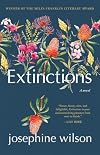
4.5 Fred is in the latter part of his sixties, living in a senior village, and not very happy about that fact. His wife has died, and though we know he has two children, their is a rift between them, though the details are not yet apparent. Those are revealed as we read further. His thoughts are at times amusing, but he seems stuck on himself, or within himself. Quite pompous, and wants to keep away from most of the other residents, not get involved in this life he now finds himself show more within.
This is one of those questionsuiet books, that slowly works it's way into the heart of the reader. A family, missed opportunities, regrets, blindness, and an inability to see what went wrong. This changes as almost against his will he is bull dozered by the wonderful elderly lady who lives in the small house, next to his. Jan, is amazing, doesn't let Fred off with his excuses, but eventually has a most positive influence on his life. Quite amusing at times, sad too, when we find out more about his past.
Alienation, the sense of never belonging. Australia's indigenous people, and the harm done to them in the past, that carried into the present. Strong characters, strong writing. A story of moving forward, finding ones place, and finally forgiving oneself. A lovely, heartfelt story.
ARC from Edelweiss show less
This is one of those questionsuiet books, that slowly works it's way into the heart of the reader. A family, missed opportunities, regrets, blindness, and an inability to see what went wrong. This changes as almost against his will he is bull dozered by the wonderful elderly lady who lives in the small house, next to his. Jan, is amazing, doesn't let Fred off with his excuses, but eventually has a most positive influence on his life. Quite amusing at times, sad too, when we find out more about his past.
Alienation, the sense of never belonging. Australia's indigenous people, and the harm done to them in the past, that carried into the present. Strong characters, strong writing. A story of moving forward, finding ones place, and finally forgiving oneself. A lovely, heartfelt story.
ARC from Edelweiss show less
In my opinion, this is a very fine work. It is a multi-level story and every level is thoroughly engaging and worthwhile. It deals with issues of guilt, forgiveness, discrimination, self-esteem, parent-child relationships over three generations, aging, and much more. I was alerted to this book by jeniwren flagging the 2017 Miles Franklin Prize short list, in which this work is included - thanks jeniwren! It is very Australian in its orientation and setting however, and non-Australian readers show more might be a little confused by some cultural references. My only significant criticism (and this may reflect my declining brain function rather than Wilson's writing) is that sometimes I was momentarily confused by unannounced changes in time setting. I guess the book will also appeal much more to older readers and readers who have struggled with the guilty feelings of their inadequate parenting or partnering. show less
Lists
Awards


You May Also Like


Associated Authors
Statistics
- Works
- 5
- Members
- 175
- Popularity
- #122,546
- Rating
- 3.8
- Reviews
- 11
- ISBNs
- 14