
Amanda Lohrey
Author of The Labyrinth
About the Author
Amanda Lohrey is the author of A Short History of Richard Kline which made the Queensland Literary Awards 2015 shortlist in the fiction category. This same title was shortlisted for the Margaret Scott Prize for best book by a Tasmanian writer 2015. (Bowker Author Biography)
Image credit: Black Inc.
Works by Amanda Lohrey
Associated Works
Tagged
Common Knowledge
- Birthdate
- 1947-04-13
- Gender
- female
- Education
- University of Tasmania
University of Cambridge - Occupations
- novelist
short story writer
essayist - Awards and honors
- Patrick White Award (2012)
Miles Franklin Award (2021) - Nationality
- Australia
- Birthplace
- Hobart, Tasmania, Australia
- Places of residence
- Brisbane, Queensland, Australia
- Associated Place (for map)
- Australia
Members
Reviews
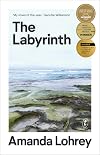
In her fascinating new novel, Amanda Lohrey returns to the (fictional) small coastal town of Garra Nalla which featured in her novella Vertigo (2008, see my thoughts here). But unlike Vertigo's young couple swapping high house prices in Sydney for what they think is a pastoral idyll, the central character in The Labyrinth is Erica, an older woman, alone and very troubled. Although less naïve than Luke and Anna in Vertigo, Erica shares their belief that the environment significantly affects show more well-being and this yearning for a salve to her misery seems to be all she has at this time. She has settled in Garra Nalla to be near her only child, Daniel, who is in prison, but she hopes that the small community will not connect her with him because his crime weighs very heavily on her.
My understanding of what this might mean has been influenced by Margaret Merrilees excellent debut novel The First Week (Wakefield Press, 2013) which explored the confusion, denial, blame, guilt and horror of a parent whose child has committed a grievous crime. Erica, however, has moved beyond the initial distraught reaction and is trying to reestablish some equilibrium in her life while also trying to help her son whose mental health is a grave concern. With no plans to renovate, she buys a rustic old shack built with reclaimed materials on the coastal edge, in marked contrast to the soul-destroying environment of the prison:
But Erica's coastal retreat is no Eden. There are vandals and louts on the beach, and she plants wattles to screen out an annoying neighbour. Plagued by horrific dreams, she begins the task of following her son's command to burn his books.
She makes a small ceremony of this, just doing one book a day, and like all booklovers, I know why. Our books are a mirror of our lives and a window into our souls. Burning Daniel's books is like annihilating him. Later, when she employs Lexie, a young girl at a loose end who needs to save up the money to make her escape to Sydney (because there is no work for young people in Garra Nalla), she elongates the time for this task by having Lexie sort the books into alphabetical order. Lexie is a slow and dreamy worker, but even so, there must be hundreds of these books to be unpacked from the boxes because Lexie is only up to the letter M by the time the novel ends...
Time, like different kinds of madness, is a recurring motif in the novel.
To read the rest of my review please visit https://anzlitlovers.com/2020/09/13/the-labyrinth-by-amanda-lohrey/ show less
My understanding of what this might mean has been influenced by Margaret Merrilees excellent debut novel The First Week (Wakefield Press, 2013) which explored the confusion, denial, blame, guilt and horror of a parent whose child has committed a grievous crime. Erica, however, has moved beyond the initial distraught reaction and is trying to reestablish some equilibrium in her life while also trying to help her son whose mental health is a grave concern. With no plans to renovate, she buys a rustic old shack built with reclaimed materials on the coastal edge, in marked contrast to the soul-destroying environment of the prison:
The metallic walls of the prison glint above the frost-covered fields. Along the denuded mining ridge of the hills the wind turbines stand like elegant guards, their blades becalmed in the harsh light. (p. 26)
The walls of the visitors' room are a violent mustard yellow, On one wall there is a huge mural of crudely drawn trees and boulders in shades of muddy orange and greenish brown. It has the quality of sludge. Two warders escort me to a steel table, bolted to the floor, and I sit on a steel chair, also bolted to the floor. Everything here is steel and concrete; even the air has a metallic taste. (p.27)
But Erica's coastal retreat is no Eden. There are vandals and louts on the beach, and she plants wattles to screen out an annoying neighbour. Plagued by horrific dreams, she begins the task of following her son's command to burn his books.
She makes a small ceremony of this, just doing one book a day, and like all booklovers, I know why. Our books are a mirror of our lives and a window into our souls. Burning Daniel's books is like annihilating him. Later, when she employs Lexie, a young girl at a loose end who needs to save up the money to make her escape to Sydney (because there is no work for young people in Garra Nalla), she elongates the time for this task by having Lexie sort the books into alphabetical order. Lexie is a slow and dreamy worker, but even so, there must be hundreds of these books to be unpacked from the boxes because Lexie is only up to the letter M by the time the novel ends...
Time, like different kinds of madness, is a recurring motif in the novel.
To read the rest of my review please visit https://anzlitlovers.com/2020/09/13/the-labyrinth-by-amanda-lohrey/ show less
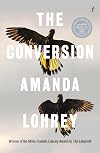
Ah, I do love a clever title. A conversion can refer to a religious conversion, a change of heart about something or someone, or property conversion where a building is repurposed into something else. Amanda Lohrey's sparkling new novel The Conversion plays with all of these, but begins with the repurposing of a church.
As the novel starts Zoe and her husband Nick have been sideswiped by the financial crash. It bleeds money out of their assets, and they are going to have to sell their show more handsome Federation villa they had worked on with such loving care. Nick, ever the optimist, turns this disaster into an opportunity to reinvent themselves. They have become stale and complacent, he says, an established middle-class couple trundling along in their comfortable cocoon, tut-tutting at the television and taking expensive holidays. But they can start over, he says. He can set up a part-time practice as a psychologist, and she won't need to return to her work as a solicitor.
As Nick bombards Zoe with his proposal to sell up in Sydney and move to one of those charming little towns that in recent years were being revitalised, the power dynamic in this marriage is revealed. He's sixty-three but she still fancies him, and over the course of a long marriage she has learned to expect that his enthusiasms would wane, soon to be replaced by something else. For his part, he can count on her inertia and her inability to come up with an alternative solution to their straitened circumstances, to get his own way despite her doubts.
Nick is not only oh-so-persuasive, he is also sly. Something that Zoe has yet to learn about him. When they make their way to the countryside to view a church as a potential home, it takes a while for her to realise that this trip is not just the impulse he had implied.
The setting is recognisable as the Hunter Valley, home to coal mines and vineyards and tourism. Not too far from Sydney, it's gentrifying as the nation's economy de-carbonises and the coal industry has to adjust.
And then, before anything has been resolved, Nick dies — in circumstances that reveal his feet of clay.
To read the rest of my review please visit https://anzlitlovers.com/2023/11/22/the-conversion-2023-by-amanda-lohrey/ show less
As the novel starts Zoe and her husband Nick have been sideswiped by the financial crash. It bleeds money out of their assets, and they are going to have to sell their show more handsome Federation villa they had worked on with such loving care. Nick, ever the optimist, turns this disaster into an opportunity to reinvent themselves. They have become stale and complacent, he says, an established middle-class couple trundling along in their comfortable cocoon, tut-tutting at the television and taking expensive holidays. But they can start over, he says. He can set up a part-time practice as a psychologist, and she won't need to return to her work as a solicitor.
Nick has always been about the possibility of the new. The world was there to be remade, over and over, and anything less was stagnation. If friends began to talk earnestly about their family tree, as they seemed increasingly to do as they aged, he would look at Zoe and roll his eyes. He had little interest in history and above all he despised nostalgia: nostalgia was a form of weakness, emotional and spiritual laziness. The secret of life was to live in a dynamic present illuminated by the light of the possible. (p.11)
As Nick bombards Zoe with his proposal to sell up in Sydney and move to one of those charming little towns that in recent years were being revitalised, the power dynamic in this marriage is revealed. He's sixty-three but she still fancies him, and over the course of a long marriage she has learned to expect that his enthusiasms would wane, soon to be replaced by something else. For his part, he can count on her inertia and her inability to come up with an alternative solution to their straitened circumstances, to get his own way despite her doubts.
Nick is not only oh-so-persuasive, he is also sly. Something that Zoe has yet to learn about him. When they make their way to the countryside to view a church as a potential home, it takes a while for her to realise that this trip is not just the impulse he had implied.
The setting is recognisable as the Hunter Valley, home to coal mines and vineyards and tourism. Not too far from Sydney, it's gentrifying as the nation's economy de-carbonises and the coal industry has to adjust.
And then, before anything has been resolved, Nick dies — in circumstances that reveal his feet of clay.
To read the rest of my review please visit https://anzlitlovers.com/2023/11/22/the-conversion-2023-by-amanda-lohrey/ show less
Erica was brought up in an asylum, not as a patient, her father was a doctor. She has returned after many years as she wants to walk the labyrinth but things have changed as the asylum is now closed. She is able to visit anonymously, not being questioned by true crime junkies about her father who was killed in a gruesome manner by a patient. As Erica explores she notes the changes that the church has become a cafe and discovers the labyrinth has been uprooted. Having tried to revisit the show more past Erica now confronts her future. She is looking to move to a coastal town in NSW, so that she been close to her son who is in prison.
Lohrey has crafted a story that is quite simply sublime. It is heavily layered, with wonderfully realised characters and fabulous descriptions. Erica is a woman of complexity, as you walk alongside her, you slowly begin to realise the traumas she has experienced. You appreciate Erica's ability to keep moving forwards and develop friendships. It is no surprise when she decides the build a labyrinth in her own backyard.
I don't want to give anything away, as the joy in the reading is the reveal of motivations and actions. show less
Lohrey has crafted a story that is quite simply sublime. It is heavily layered, with wonderfully realised characters and fabulous descriptions. Erica is a woman of complexity, as you walk alongside her, you slowly begin to realise the traumas she has experienced. You appreciate Erica's ability to keep moving forwards and develop friendships. It is no surprise when she decides the build a labyrinth in her own backyard.
I don't want to give anything away, as the joy in the reading is the reveal of motivations and actions. show less
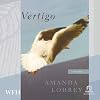
Luke and Anna are a millennial couple, professionals from Sydney. Bored and unsettled by city life they decide on a sea change. After a cursory inspection of coastal towns they decide on the remote settlement of Gar Nalla. They have no experience of life in the bush and start off enthusiastically, As the couple try to adapt to the bush the reader can see that they are doomed to setbacks if not failure. Starting off Luke buys all sorts of high-tech equipment, and a book about birds as he has show more decided to become a bird watcher.
After reading Roisin O'Donnell’s Nesting I was a bit sick of the bird scene, but writer Amanda Lohrey does it well.
and now he is in deep sleep, lost in a dream of birds making one of their wild raids on the gardens and diving at dusk. The glossy black cockatoos screech from their perch and a pair of black oysters-catchers glide along the tide-line, their black wings and red beaks against the white sand while out to sea a flock of gulls feed on the ripple surface of the ocean.
The book is well written, evocative of the Australian bush. I thought it would have been better expanded to a novel . There is a lot packed in and there are too many rabbit holes, such as descriptions of Luke finding and reading a very old book about a writer’s visit to pre 1948 Palestine. These diversions are interesting in themselves but don’t seem to make any sense in such a short book.
Early on in the book, there’s the introduction of “the boy “. There’s no references to the couple tending to the boy, and he is described as flittering around here and there, disappearing altogether, but always coming back. He’s a boy with no name and is referred to only as “the boy”. Is he their son? Or is he someone they’ve just picked up? Who is this boy and how is he related to the couple? This mystery along with with the excellent writing, kept me reading to the end, when all becomes clear.
The book is set during a drought season which Australians call “The Dry”. This is not so important in city life but is threatening to life in the bush. A bush fire approaches Gar Nalla and then couple are ill- prepared for the consequences.
I liked the way the characters were described. Lohrey knows her country men. At a fireless BBQ Anna watches the men
elbows resting on the warm brick, sees how intimately they lean toward one another as to what is being said, and this is something she loves this intimacy when men are away from women
In the author’s end-note she acknowledges references to Henry Lawson’s poem “The Fire at Ross’s Creek”. Huge bush fires were raging in the Australian state of Victoria at the time I was reading, and this. lead me to reread the poem. I was overcome with nostalgia.
I recommend this book and look forward to reading more from this writer. 4 stars show less
After reading Roisin O'Donnell’s Nesting I was a bit sick of the bird scene, but writer Amanda Lohrey does it well.
and now he is in deep sleep, lost in a dream of birds making one of their wild raids on the gardens and diving at dusk. The glossy black cockatoos screech from their perch and a pair of black oysters-catchers glide along the tide-line, their black wings and red beaks against the white sand while out to sea a flock of gulls feed on the ripple surface of the ocean.
The book is well written, evocative of the Australian bush. I thought it would have been better expanded to a novel . There is a lot packed in and there are too many rabbit holes, such as descriptions of Luke finding and reading a very old book about a writer’s visit to pre 1948 Palestine. These diversions are interesting in themselves but don’t seem to make any sense in such a short book.
Early on in the book, there’s the introduction of “the boy “. There’s no references to the couple tending to the boy, and he is described as flittering around here and there, disappearing altogether, but always coming back. He’s a boy with no name and is referred to only as “the boy”. Is he their son? Or is he someone they’ve just picked up? Who is this boy and how is he related to the couple? This mystery along with with the excellent writing, kept me reading to the end, when all becomes clear.
The book is set during a drought season which Australians call “The Dry”. This is not so important in city life but is threatening to life in the bush. A bush fire approaches Gar Nalla and then couple are ill- prepared for the consequences.
I liked the way the characters were described. Lohrey knows her country men. At a fireless BBQ Anna watches the men
elbows resting on the warm brick, sees how intimately they lean toward one another as to what is being said, and this is something she loves this intimacy when men are away from women
In the author’s end-note she acknowledges references to Henry Lawson’s poem “The Fire at Ross’s Creek”. Huge bush fires were raging in the Australian state of Victoria at the time I was reading, and this. lead me to reread the poem. I was overcome with nostalgia.
I recommend this book and look forward to reading more from this writer. 4 stars show less
Awards


You May Also Like


Associated Authors
Statistics
- Works
- 19
- Also by
- 5
- Members
- 687
- Popularity
- #36,815
- Rating
- 3.6
- Reviews
- 23
- ISBNs
- 66
- Languages
- 1
- Favorited
- 1