
Jeanne-Marie Leprince de Beaumont (1711–1780)
Author of Beauty and the Beast
About the Author
Image credit: Portrait anonyme peint sur ivoire, XVIIIe siècle. Collection particulière. Photo M. Urtado.
Works by Jeanne-Marie Leprince de Beaumont
Beauty and the Beast and Other Fairy Tales (Dover Children's Thrift Classics) (1994) 66 copies, 1 review
The Young Misses Magazine; Containing Dialogue Between a Governess and Several Young Ladies of Quality, Her Scholars (1998) 7 copies, 1 review
La Belle et la Bête et autres contes 2 copies
The Young Misses Magazine; Containing Dialogues Between a Governess and Several Young Ladies of Quality, Her Scholars. Vol. I (2010) 2 copies
Bibliocollège - La Belle et la Bête et autres contes: Bibliocollège - La Belle et la Bête et autres contes - n° 68 (2023) 2 copies
Nuevos cuentos morales 1 copy
La Bella e la Bestia 1 copy
La fee aux Nefles 1 copy
La Belle et la Bête Edition pédagogique commentée et complétée de Notes, Belin Boussole) (1740) — Author — 1 copy
Les Americaines, Ou La Preuve de la Religion Chretienne Par Les Lumieres Naturelles, Vol. 1 (Classic Reprint) (French Edition) (2017) 1 copy
Contes 1 copy
Trois histoires de la Belle et la Bête racontées dans le monde (Le tour du monde d'un conte) (French Edition) (2010) 1 copy
Anne of Green Gables 1 copy
Associated Works
The Great Fairy Tale Tradition: From Straparola and Basile to the Brothers Grimm [Norton Critical Edition] (2001) — Contributor — 391 copies, 1 review
The Blue Book of Fairy Tales: Rapunzel, Beauty and the Beast, Toads and Diamonds (1959) — Contributor — 188 copies, 4 reviews
Beauty and the Beast: Classic Tales About Animal Brides and Grooms from Around the World (2017) — Contributor — 132 copies, 2 reviews
The Graphic Canon of Children's Literature: The World's Greatest Kids' Lit as Comics and Visuals (2014) — Contributor — 100 copies, 1 review
Beauty and the Beast: The Broadway Musical (Piano/Vocal/Songbook) (1994) — Orginal story — 73 copies, 1 review
Ravel : Alborada del gracioso + Barque sur l'océan + Boléro + Mother Goose + Rapsodie espagnole {sound recording} {Boulez/Berlin Philharmonic} (1993) — Original story — 11 copies
Tagged
Common Knowledge
- Canonical name
- Leprince de Beaumont, Jeanne-Marie
- Other names
- Leprince de Beaumont, Marie
Le Prince de Beaumont, Marie
Madame Leprince de Beaumont - Birthdate
- 1711-04-06
- Date of death
- 1780-09-08
- Gender
- female
- Occupations
- educator
children's writer
woman of letters
fairy tale writer
journalist - Relationships
- Mérimée, Prosper (great-grandson)
- Short biography
- Jeanne-Marie Leprince de Beaumont was born in Rouen, France, the eldest daughter of Jean-Baptiste-Nicolas Le Prince, a master sculptor, and his wife Marie-Barbe Plantart. Her mother died when she was 11 years old, after which she and her younger sister were sent to the convent school of Sacré-Coeur d'Ernemont near Rouen for their education. In 1736, Jeanne-Marie joined her father in Metz and obtained a prestigious position as a singing teacher to the children of the Duke of Lorraine at his court in Lunéville. Documentation of her marriage or two marriages is lacking, but it appears that in 1743 she married or took the name of Antoine Grimard de Beaumont, with whom she had a daughter. The couple separated and in 1748, Madame Leprince de Beaumont left France to become a governess to high society families in London, where she remained for about 15 years. There she wrote more than a dozen fairy tales, among them an abridged version of "Beauty and the Beast," adapted from Madame de Villeneuve's original. She published a moralistic novel, The Triumph of Truth (Le Triomphe de la vérité), and contributed articles to the British newspaper The Spectator. In 1763, she left England with her daughter and son-in-law and lived first in Savoy, near the city of Annecy, then moved to Avallon near Dijon. She published approximately 70 volumes during her literary career, which included her "magasins," or instructional handbooks for the parents and educators of children and teenagers, and young ladies about to be married. She was one of the first to include folk tales as moral and educational tools in her writings.
- Nationality
- France
- Birthplace
- Rouen, France
- Places of residence
- Rouen, France
London, England, UK
Savoy, France - Place of death
- Chavanod, near Annecy, France
- Associated Place (for map)
- France
Members
Reviews

Beauty and the Beast, illustrated by Hilary Knight.
Originally published in 1756, as part of her Magasin des enfants, ou dialogues entre une sage gouvernante et plusieurs de ses élèves, which was then translated into English in 1757 ("The Young Misses Magazine, or, Dialogues Between a Discreet Governess and Several Young Ladies of the First Rank Under Her Education"), Mme. Le Prince de Beaumont's Beauty and the Beast is the version of this popular story with which most modern readers are show more familiar. Although not the first written version of the tale - Gabrielle-Suzanne Barbot de Villeneuve published a much lengthier version in 1740, as part of her La jeune ameriquaine, et les contes marins (translations of both versions can be found in Jack Zipes' excellent Beauties, Beasts and Enchantments: Classic French Fairy Tales) - it was the one to survive in the popular mind, the one that was most influential, in the evolution of the story over time.
This picture-book contains the complete original story by Le Prince de Beaumont, translated by Richard Howard, and illustrated by the celebrated American artist, Hilary Knight. It also includes a brief afterword by French filmmaker Jean Cocteau, whose black and white film adaptation of this story is considered a classic of the genre. As always, I enjoyed the story, being struck, in the course of this reading, by the presence of Beauty's three loving brothers. I don't think I'd ever really considered them before (some retellings leave them out altogether), but suddenly I found myself wondering about them, and whether any revisionist take had ever concentrated on them...
In any case, despite my enjoyment of the text - not the best translation ever, but readable enough - I wasn't that taken with Knight's illustrations. I was surprised by this, as I did appreciate his retelling of Cinderella, but somehow, this artwork just wasn't for me. I found the Beast here interesting - he had a sort of horned, "Green Man" appearance - but I can't say that the rest of it, from human figures to background settings, appealed to me greatly. In fact, I found some scenes rather repellent - not so much because they were grotesque, but because they departed so thoroughly from my own internal vision of the tale. Still, tastes vary, so fans of the illustrator might still want to peruse this particular illustrated edition. They might also want to seek out the versions (also fairly faithful to the original narrative) illustrated by Diane Goode or Binette Schroeder, to see how other artists have dealt with the same themes. show less
Originally published in 1756, as part of her Magasin des enfants, ou dialogues entre une sage gouvernante et plusieurs de ses élèves, which was then translated into English in 1757 ("The Young Misses Magazine, or, Dialogues Between a Discreet Governess and Several Young Ladies of the First Rank Under Her Education"), Mme. Le Prince de Beaumont's Beauty and the Beast is the version of this popular story with which most modern readers are show more familiar. Although not the first written version of the tale - Gabrielle-Suzanne Barbot de Villeneuve published a much lengthier version in 1740, as part of her La jeune ameriquaine, et les contes marins (translations of both versions can be found in Jack Zipes' excellent Beauties, Beasts and Enchantments: Classic French Fairy Tales) - it was the one to survive in the popular mind, the one that was most influential, in the evolution of the story over time.
This picture-book contains the complete original story by Le Prince de Beaumont, translated by Richard Howard, and illustrated by the celebrated American artist, Hilary Knight. It also includes a brief afterword by French filmmaker Jean Cocteau, whose black and white film adaptation of this story is considered a classic of the genre. As always, I enjoyed the story, being struck, in the course of this reading, by the presence of Beauty's three loving brothers. I don't think I'd ever really considered them before (some retellings leave them out altogether), but suddenly I found myself wondering about them, and whether any revisionist take had ever concentrated on them...
In any case, despite my enjoyment of the text - not the best translation ever, but readable enough - I wasn't that taken with Knight's illustrations. I was surprised by this, as I did appreciate his retelling of Cinderella, but somehow, this artwork just wasn't for me. I found the Beast here interesting - he had a sort of horned, "Green Man" appearance - but I can't say that the rest of it, from human figures to background settings, appealed to me greatly. In fact, I found some scenes rather repellent - not so much because they were grotesque, but because they departed so thoroughly from my own internal vision of the tale. Still, tastes vary, so fans of the illustrator might still want to peruse this particular illustrated edition. They might also want to seek out the versions (also fairly faithful to the original narrative) illustrated by Diane Goode or Binette Schroeder, to see how other artists have dealt with the same themes. show less
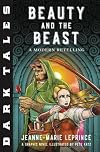
I was surprised by the differences to the story as I remember it, this version was quite the read! I loved Belle's fierceness and determination, though she still retained her bookish nature and loving heart. I also enjoyed the curious nature of the castle in which they live (which was not simply filled with enchanted talking servants!) and the horrible evil that lived side by side in the shadows. ~shudders~ It was definitely different than the Disney versions many of us know, but equally show more memorable!
**copy received for review show less
**copy received for review show less
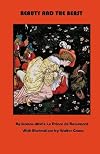
A quick read. The point seemed to be that good things happen to kind hard working young women especially if they seek out ugly dull men (or, at least, men not overcome with their own beauty and wit) with kind hearts, good temperments and being a little overdramatic about the actions of others. Threatening to kill, no, promising to kill a man for taking a rose, unless that man gave up a daughter to die in his place. Later starving himself because the woman he kind of likes is late returning show more by three days.
Written in another era, Beast would be seen as an overly dramatic overly emotional bully. Emo.
Beauty being overly selfless, intelligent, hard working young woman.
A match made in heaven, I'm sure. show less
Written in another era, Beast would be seen as an overly dramatic overly emotional bully. Emo.
Beauty being overly selfless, intelligent, hard working young woman.
A match made in heaven, I'm sure. show less

Beauty and the Beast, illustrated by Diane Goode
A little more than a year ago, inspired by scholar Betsy Hearne's Beauties and Beasts - a fabulous collection of twenty-seven folktales from around the world, drawn predominantly from tales types 425 ("The Search for a Lost Husband"), 425A ("The Monster or Animal as Bridegroom"), 425C ("The Beauty and the Beast"), and 402A ("The Quest for a Lost Bride") in the Aarne-Thompson folklore classification system - I decided to track down as many show more picture-book retellings of this classic fairy-tale (and all its variants) that I could. Naturally (this being me), I was soon distracted by other projects, and got sidetracked for a time. But now here I am, with at least ten Beauty and the Beast retellings lined up to read, poised to finally begin again...
This picture-book retelling by Diane Goode presents a fairly faithful translation of Mme. Leprince de Beaumont's original La Belle et la Bête, first published in 1756 (itself a revision of a lengthier tale, by the same name, published by Mme. de Villeneuve in 1740), together with Goode's full-page illustrations, mostly in color, but a few in black and white. I don't think I would have stumbled upon it casually, since it is long out of print, and not on my local library's shelves, but as it was listed in Hearne's appendices, I requested it from another branch. Hurray for cooperative library systems!
I love this story, and am always happy to see a full translation of the Leprince de Beaumont text - the version of the story that is "the" Beauty and the Beast we currently know - so I enjoyed reading Goode's book. The artwork, on the other hand, was something of a mixed bag for me. I loved the black and white pencil drawings, particularly the two-page spread in which Beauty's father is riding through the snowy woods, and the portrait of Beauty herself, in profile, looking into her mirror, but some of the color illustrations weren't quite as successful. The eyes, in particularly, seemed awkwardly done, and I found it rather distracting. Still, this is a solid retelling of the tale, one I would recommend to readers interested in a fairly faithful retelling, with the full Leprince de Beaumont text. show less
A little more than a year ago, inspired by scholar Betsy Hearne's Beauties and Beasts - a fabulous collection of twenty-seven folktales from around the world, drawn predominantly from tales types 425 ("The Search for a Lost Husband"), 425A ("The Monster or Animal as Bridegroom"), 425C ("The Beauty and the Beast"), and 402A ("The Quest for a Lost Bride") in the Aarne-Thompson folklore classification system - I decided to track down as many show more picture-book retellings of this classic fairy-tale (and all its variants) that I could. Naturally (this being me), I was soon distracted by other projects, and got sidetracked for a time. But now here I am, with at least ten Beauty and the Beast retellings lined up to read, poised to finally begin again...
This picture-book retelling by Diane Goode presents a fairly faithful translation of Mme. Leprince de Beaumont's original La Belle et la Bête, first published in 1756 (itself a revision of a lengthier tale, by the same name, published by Mme. de Villeneuve in 1740), together with Goode's full-page illustrations, mostly in color, but a few in black and white. I don't think I would have stumbled upon it casually, since it is long out of print, and not on my local library's shelves, but as it was listed in Hearne's appendices, I requested it from another branch. Hurray for cooperative library systems!
I love this story, and am always happy to see a full translation of the Leprince de Beaumont text - the version of the story that is "the" Beauty and the Beast we currently know - so I enjoyed reading Goode's book. The artwork, on the other hand, was something of a mixed bag for me. I loved the black and white pencil drawings, particularly the two-page spread in which Beauty's father is riding through the snowy woods, and the portrait of Beauty herself, in profile, looking into her mirror, but some of the color illustrations weren't quite as successful. The eyes, in particularly, seemed awkwardly done, and I found it rather distracting. Still, this is a solid retelling of the tale, one I would recommend to readers interested in a fairly faithful retelling, with the full Leprince de Beaumont text. show less
Lists
Awards


You May Also Like


Associated Authors
Statistics
- Works
- 67
- Also by
- 29
- Members
- 1,365
- Popularity
- #18,834
- Rating
- 4.1
- Reviews
- 38
- ISBNs
- 187
- Languages
- 14
- Favorited
- 1