
About the Author
Image credit: http://lareviewofbooks.org/contributor/bob-blaisdell
Works by Bob Blaisdell
The Communist Manifesto and Other Revolutionary Writings: Marx, Marat, Paine, Mao, Gandhi, and Others (2003) — Editor — 491 copies, 2 reviews
Creating Anna Karenina: Tolstoy and the Birth of Literature's Most Enigmatic Heroine (2020) 28 copies, 1 review
Great Short Stories by African-American Writers (Dover Thrift Editions) (2009) — Editor — 27 copies, 3 reviews
The Dover Anthology of American Literature, Volume I: From the Origins Through the Civil War (Dover Thrift Editions) (2014) 22 copies, 1 review
Infamous Speeches: From Robespierre to Osama bin Laden (Dover Thrift Editions) (2011) — Editor — 21 copies
The Dover Anthology of American Literature, Volume II: From 1865 to 1922 (Dover Thrift Editions) (2014) 20 copies
Great Short Stories by Contemporary Native American Writers (Dover Thrift Editions) (2013) 19 copies, 1 review
The Wit and Wisdom of Abraham Lincoln: A Book of Quotations (Dover Thrift Editions) (2012) 17 copies, 1 review
Essential Documents of American History, Volume I: From Colonial Times to the Civil War (Dover Books on History, Political and Social Science) (2016) 11 copies
Associated Works
The Celebrated Jumping Frog of Calaveras County [short story] (1865) — Editor, some editions — 303 copies, 1 review
The United States Constitution: The Full Text with Supplementary Materials (Dover Thrift Editions) (2009) — Editor, some editions — 29 copies
Tagged
Common Knowledge
- Birthdate
- 1959-11-19
- Gender
- male
- Occupations
- translator
Members
Reviews
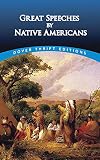
Anyone who thinks they know American history needs to read this book. Those who don't understand why the white men are hated also need to read it. In a nutshell, it's a testimonial of exploitation, lies, and aggression, which has been the norm on the part of supposed "civilized" nations for millennia. Seeing indigenous people as inferior, savages, and uncivilized based on their lifestyle and thus treating them no better than animals has a sordid and long history.
This book chronicles the show more treatment of the Indigenous Americans from the first contact by the Pilgrims in the 1600s through the 20th century. The lies and aggression are nothing short of shameful and an embarrassment to any honest person. Those of us who grew up playing "cowboys and Indians" and watching similar TV shows were not seeing things as they really are.
In most cases, the Indigenous Americans only wanted peace. Some had the foresight to see the problems that were coming. They saw the land as sacred, given to them by The Great Spirit, and they treated Mother Earth with respect and gratitude. They may not have had the white man's technology, but their societal norms were often far more advanced than "civilized" nations. The wholesale slaughter and exploitation of these people in the name of Christianity is a national disgrace.
Besides the actual slaughters, their children were often taken away, essentially kidnapped, and sent to boarding schools where their native culture was derided while they were indoctrinated with supposedly white civilization's values. Their women were often sterilized without their knowledge. There is no doubt the intent was genocide.
If you think things have changed today, think again. Power and control by those with selfish and evil intent still prevails. Corporate power subdues the rights of individuals. Nothing has changed.
I cried more reading this book than any novel. It's a very sad commentary on the foundation of the United States. These Native Americans were highly intelligent, moral individuals. In the vast majority of cases, they were only aggressive when they'd had enough of being lied to and could see the intent was their annihilation.
Read it. More people need their eyes opened to the truth that is our history and how it relates to what's going on today. show less
This book chronicles the show more treatment of the Indigenous Americans from the first contact by the Pilgrims in the 1600s through the 20th century. The lies and aggression are nothing short of shameful and an embarrassment to any honest person. Those of us who grew up playing "cowboys and Indians" and watching similar TV shows were not seeing things as they really are.
In most cases, the Indigenous Americans only wanted peace. Some had the foresight to see the problems that were coming. They saw the land as sacred, given to them by The Great Spirit, and they treated Mother Earth with respect and gratitude. They may not have had the white man's technology, but their societal norms were often far more advanced than "civilized" nations. The wholesale slaughter and exploitation of these people in the name of Christianity is a national disgrace.
Besides the actual slaughters, their children were often taken away, essentially kidnapped, and sent to boarding schools where their native culture was derided while they were indoctrinated with supposedly white civilization's values. Their women were often sterilized without their knowledge. There is no doubt the intent was genocide.
If you think things have changed today, think again. Power and control by those with selfish and evil intent still prevails. Corporate power subdues the rights of individuals. Nothing has changed.
I cried more reading this book than any novel. It's a very sad commentary on the foundation of the United States. These Native Americans were highly intelligent, moral individuals. In the vast majority of cases, they were only aggressive when they'd had enough of being lied to and could see the intent was their annihilation.
Read it. More people need their eyes opened to the truth that is our history and how it relates to what's going on today. show less
Creating Anna Karenina : Tolstoy and the birth of literature's most enigmatic heroine by Bob Blaisdell
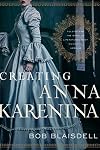
If I had seen this on the shelf, with its awful soft-focus, historical-chick-lit headless-woman cover, I might not have even picked it up. The subtitle is weird too: Anna Karenina is hardly an "enigmatic heroine." Complex, absolutely, but if any literary character is (in Blaisdell's words) "hyper-conscious," it would be Anna. Every thought, fear, passion, joy and grief is there for us to see. But then I expect Blaisdell had no say in those (ahem) "marketing" decisions.
I have read Anna show more Karenina several times, and love it. Bob Blaisdell has read it twenty times, including in Russian, which he learned in his mid forties in order to do so. He reveres it, cherishes it. And he is eager to tell you every single thing there is to know about "The Making of Anna Karenina": how it was conceived, developed, written (and nearly abandoned), thought about and finally published by Tolstoy and his long-suffering helpmate and wife, Sofia. You have to really love this novel and/or Tolstoy to enjoy this book, but if you are the right reader, you will.
You will also read a lot about Tolstoy's life, kids, marriage, houses, friendships, travels, and passion for horses. I did not know he was quite an expert in childhood education, a bit of a hypochondriac, depressive, a fanatical and affectionate writer of letters, and took himself very seriously indeed. Blaisdell is a friendly, fond, yet frank guide. Yes, Tolstoy was a very loving and involved dad... but poor Sofia endured 10 pregnancies by the time she was 30, and he refused to allow a wet nurse (as "unnatural") when her nipples were cracked and bleeding from breastfeeding. And no one gainsaid what Count Leo decreed.
Writers will find worthy insights into the writing process, authorial decisions made, and the emotional toll taken. I personally am still thinking about some of Tolstoy's stipulations about how the author feels - or does not feel - about his characters, and about the way descriptions are deployed. (For more on this, see my blogpost Tips from Tolstoy.) Blaisdell (lucky enough to work on some of this book while staying in Tolstoy's own house at Yasnya Polyana) is an approachable, personal, enjoyable writer - this is not a dry lit-crit book. I do wonder why he chose Constance Garnett's old and somewhat controversial translation as his basic text (I'm a Pevear and Volokhonsky fan, myself).
A pleasure for fans of Russian literature (glimpses of Turgenev and Dostoevsky pop up too). It may not make someone who has never read Anna K run out to buy a copy, but if you already have a beat-up, well-read copy on your shelf, this book will be an excellent supplement - and may get you to take your copy down and read it again.
9/7/2020 Update: I impulsively emailed Bob Blaisdell this morning, just to say how much I enjoyed his book, and asked him about his choice of the Garnett translation. He replied within an hour or two, with a cheerful and gracious note. His answer was that the Garnett is still a very good and readable translation, plus it's online with open access, so anyone can read it in full on the spot. I was delighted with his generous and friendly response! show less
I have read Anna show more Karenina several times, and love it. Bob Blaisdell has read it twenty times, including in Russian, which he learned in his mid forties in order to do so. He reveres it, cherishes it. And he is eager to tell you every single thing there is to know about "The Making of Anna Karenina": how it was conceived, developed, written (and nearly abandoned), thought about and finally published by Tolstoy and his long-suffering helpmate and wife, Sofia. You have to really love this novel and/or Tolstoy to enjoy this book, but if you are the right reader, you will.
You will also read a lot about Tolstoy's life, kids, marriage, houses, friendships, travels, and passion for horses. I did not know he was quite an expert in childhood education, a bit of a hypochondriac, depressive, a fanatical and affectionate writer of letters, and took himself very seriously indeed. Blaisdell is a friendly, fond, yet frank guide. Yes, Tolstoy was a very loving and involved dad... but poor Sofia endured 10 pregnancies by the time she was 30, and he refused to allow a wet nurse (as "unnatural") when her nipples were cracked and bleeding from breastfeeding. And no one gainsaid what Count Leo decreed.
Writers will find worthy insights into the writing process, authorial decisions made, and the emotional toll taken. I personally am still thinking about some of Tolstoy's stipulations about how the author feels - or does not feel - about his characters, and about the way descriptions are deployed. (For more on this, see my blogpost Tips from Tolstoy.) Blaisdell (lucky enough to work on some of this book while staying in Tolstoy's own house at Yasnya Polyana) is an approachable, personal, enjoyable writer - this is not a dry lit-crit book. I do wonder why he chose Constance Garnett's old and somewhat controversial translation as his basic text (I'm a Pevear and Volokhonsky fan, myself).
A pleasure for fans of Russian literature (glimpses of Turgenev and Dostoevsky pop up too). It may not make someone who has never read Anna K run out to buy a copy, but if you already have a beat-up, well-read copy on your shelf, this book will be an excellent supplement - and may get you to take your copy down and read it again.
9/7/2020 Update: I impulsively emailed Bob Blaisdell this morning, just to say how much I enjoyed his book, and asked him about his choice of the Garnett translation. He replied within an hour or two, with a cheerful and gracious note. His answer was that the Garnett is still a very good and readable translation, plus it's online with open access, so anyone can read it in full on the spot. I was delighted with his generous and friendly response! show less
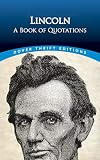
I received this book free from the publisher through NetGalley, and I honestly did not expect to enjoy it as much as I did. It was a quick read, and I found it surprisingly informative. There are quotes and excerpts from every possible source, and they range from personal to political. Many of them seemed quite informal and considering his background and what I have pieced together, I'm guessing he wasn't a particularly formal man. One of the funniest excerpts, and my personal favorite, is show more from a letter to a little girl. She had apparently written to him and suggested he grow a beard to which he responds by essentially telling her people might think it's silly. However he obviously did grow that beard and looked very distinguished with it!
He made a lot of truly insightful observations, which he articulated in a very uplifting and inspiring way. I can understand why he was both loved and hated. Around half the quotes in this book are related to the slavery issue, but to my surprise he was not only against the enslavement of his fellow man but advocated equal rights as well. I had no idea any white person in the United States living in those times was even capable of viewing any black person as an equal. He made so many true and eloquent arguments against slavery and for equal rights, that my mind is boggled. Though there were many more persuasive and articulate quotes, the one which appealed to me most was a simple argument where he points out one of the many faults in the logic of slavery. If a person with lighter skin has the right to enslave a person with darker skin, then that person will be the slave of the first man he meets with lighter skin than his own, and I am of course paraphrasing. His ideals were leagues above other men of his day.
Until I read this book, I had never given much thought to what sort of man Abraham Lincoln really was. Like nearly everyone else, I have a tendency to automatically dismiss any politician as being a liar no matter how much good they do. I have accepted the idea that the only people who have power, are bad people, and I must choose which I think are the lesser of those evils. I now find myself fostering a bit of hope for some future leader who will make great changes for our country. I also wonder what it might have been like to know Abraham Lincoln; what it might have been like to engage him in some rousing philosophical conversation. What an interesting and challenging friend he must have been. The cleverness, wit, intelligence, humor, and progressive thought he displays in these quotes is nothing short of phenomenal; the words of a truly Great Man. emnoir.wordpress.com show less
He made a lot of truly insightful observations, which he articulated in a very uplifting and inspiring way. I can understand why he was both loved and hated. Around half the quotes in this book are related to the slavery issue, but to my surprise he was not only against the enslavement of his fellow man but advocated equal rights as well. I had no idea any white person in the United States living in those times was even capable of viewing any black person as an equal. He made so many true and eloquent arguments against slavery and for equal rights, that my mind is boggled. Though there were many more persuasive and articulate quotes, the one which appealed to me most was a simple argument where he points out one of the many faults in the logic of slavery. If a person with lighter skin has the right to enslave a person with darker skin, then that person will be the slave of the first man he meets with lighter skin than his own, and I am of course paraphrasing. His ideals were leagues above other men of his day.
Until I read this book, I had never given much thought to what sort of man Abraham Lincoln really was. Like nearly everyone else, I have a tendency to automatically dismiss any politician as being a liar no matter how much good they do. I have accepted the idea that the only people who have power, are bad people, and I must choose which I think are the lesser of those evils. I now find myself fostering a bit of hope for some future leader who will make great changes for our country. I also wonder what it might have been like to know Abraham Lincoln; what it might have been like to engage him in some rousing philosophical conversation. What an interesting and challenging friend he must have been. The cleverness, wit, intelligence, humor, and progressive thought he displays in these quotes is nothing short of phenomenal; the words of a truly Great Man. emnoir.wordpress.com show less
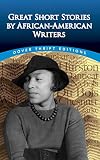
Great Short Stories by African-American Writers collects 26 short stories spanning approximately all of last century (1895-1996) into a compact anthology. This is certainly less extensive than the anthologies you might remember from school (Barksdale's Black Writers of America is the one I remember most fondly) but is not intended to fill such a niche. This is a wonderful introduction to both the short story form as well as the African-American experience of the past century and a half. It show more is filled with humor and sadness, with statements both cultural and personal.
While some of my favorites are not included (to be expected in any anthology) the selections were well-chosen to display a wide range of styles and tones. I think most readers of fiction will find some stories here that will stay with them well after putting the book down. People not used to reading fiction should still gain a great deal, it is just that readers of fiction are more used to empathetic readings across time and cultures so will more readily find characters with which to relate. That certainly doesn't preclude the social scientist from learning a great deal even if they may appreciate the fiction a little less.
Highly recommended as either an introduction or a supplement if some of the stories are new to you. The short biographies in the back along with the bibliography provide great resources to use to learn more or find more to read by these authors.
Reviewed from an ARC made available by the publisher via NetGalley. show less
While some of my favorites are not included (to be expected in any anthology) the selections were well-chosen to display a wide range of styles and tones. I think most readers of fiction will find some stories here that will stay with them well after putting the book down. People not used to reading fiction should still gain a great deal, it is just that readers of fiction are more used to empathetic readings across time and cultures so will more readily find characters with which to relate. That certainly doesn't preclude the social scientist from learning a great deal even if they may appreciate the fiction a little less.
Highly recommended as either an introduction or a supplement if some of the stories are new to you. The short biographies in the back along with the bibliography provide great resources to use to learn more or find more to read by these authors.
Reviewed from an ARC made available by the publisher via NetGalley. show less
Awards

You May Also Like


Associated Authors
Statistics
- Works
- 61
- Also by
- 8
- Members
- 3,571
- Popularity
- #7,096
- Rating
- 4.0
- Reviews
- 22
- ISBNs
- 119
- Languages
- 1