
Paul Negri
Author of Great American Short Stories
About the Author
Image credit: via Oyster River Pages
Series
Works by Paul Negri
Great Scenes from Shakespeare's Plays (Dover Classic Stories Coloring Book) (2000) — Author — 91 copies
Great Short Short Stories: Quick Reads by Great Writers (Dover Thrift Editions) (2005) 89 copies, 3 reviews
Baroque Keyboard Masterpieces: 39 Works by Bach, Handel, Scarlatti, Couperin and Others (2004) — Editor — 7 copies
Associated Works
Women's Wit and Wisdom: A Book of Quotations (Dover Thrift Editions) (2000) — Editor, some editions — 174 copies, 3 reviews
Tagged
Common Knowledge
- Canonical name
- Negri, Paul
- Gender
- male
- Awards and honors
- Gold Medal for Fiction, William Faulkner-William Wisdom Writing Competition
- Short biography
- Paul Negri has twice won the gold medal for fiction in the William Faulkner-William Wisdom Writing Competition. His stories have appeared in print and online in The Penn Review, Into the Void, Gemini Magazine, Flash Fiction Magazine, Jellyfish Review, Bone & Ink Zine and many other publications.
- Nationality
- USA
- Associated Place (for map)
- USA
Members
Reviews
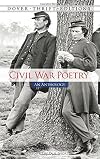
For almost exactly one full year, Civil War Poetry: An Anthology, edited by Paul Negri, lay on my night table, and occasionally I turned to it just before bed. It came to me last December as part of a “Secret Santa” exchange sponsored by LibraryThing and aptly branded as “Santathing.” I regret that I have never really embraced poetry, and as such it is an avenue in literature I rarely traverse. On the other hand, I remain fascinated with Civil War studies, and this was a dimension of show more that which I had never explored. Poetry had far more resonance to a wider audience in that era than it does today. It was indeed a surprisingly literate period, as I am reminded again and again in the Civil War correspondence that I personally have digitized and transcribed. Poetry in that age would have stretched far beyond the salons and drawing rooms of the elite to weigh on the minds and move on the lips of the ordinary soldier in the field. That is something that no historian of the war should overlook.
Civil War Poetry opens with arguably the most famous poem of the era, Julia Ward Howe’s “Battle Hymn of the Republic,” which was set to music and came to become for the north the anthem of the war [p1]. Most Civil War historians know that as Lee’s army marched into Maryland en route to Antietam, they chanted “Maryland, My Maryland,” in the hopes that the civilian population of this border state would rise up in support. The original poem, “My Maryland,” by James Ryder Randall, appears here [p12-13]. It too was later set to music and some came to call it “the Marseillaise of the Confederate Cause.” Despite this optimism, Unionist sentiment was particularly strong in the western part of the state, as celebrated in the famous if probably apocryphal poem “Barbara Frietchie,” by John Greenleaf Whittier, which also makes an appearance here [p24-26]:
“Shoot if you must, this old gray head,
But spare your country’s flag,” she said
The range of this slender volume is impressive, and includes both the notable – Emerson, Longfellow, and Lowell – as well as the more obscure, such as Francis Orray (misspelled as Orrery in this edition) Ticknor. Although I had never heard of Ticknor, his poem “Little Giffen,” about a Confederate soldier badly wounded at Murfreesboro and nursed back to health by Ticknor himself, only to fall in a later battle, was quite moving [p33-34]:
And we watched the war with bated breath, —
Skeleton Boy against skeleton Death.
Months of torture, how many such!
Weary weeks of the stick and crutch;
And still a glint of the steel-blue eye
Told of a spirit that wouldn’t die.
I found less inspiring the several poems by the far more well-known novelist Herman Melville, but then I would be the first to concede that I lack the credentials to critique the quality of poetry, but rather only to react to how it touches me. The editor notes that “The Bay Fight,” by Henry Howard Brownell, was of the most famous battle poems of the war, yet I suffered immeasurably through its more than fourteen pages of verse [p61-76]. But again, who am I to judge?
Still, to read Walt Whitman, who served as nurse as well as literary icon, cannot help but inspire. His renowned elegies to Lincoln, “O Captain! My Captain,” [p95-96] and the lengthy “When Lilacs Last in the Dooryard Bloom’d,” [p96-103] are included, but so too are lesser known titles, such as the poignant “The Wound Dresser,” [p91-93] and especially the tragic “A Sight in Camp in Daybreak Gray and Dim” [p91]:
A sight in camp in the daybreak gray and dim,
As from my tent I emerge so early sleepless,
As slow I walk in the cool fresh air the path near by the hospital
tent,
Three forms I see on stretchers lying, brought out there untended
lying,
Over each the blanket spread, ample brownish woolen blanket,
Gray and heavy blanket, folding, covering all.
Curious I halt and silent stand,
Then with light fingers I from the face of the nearest the first just
lift the blanket;
Who are you elderly man so gaunt and grim, with well-gray'd
hair, and flesh all sunken about the eyes?
Who are you my dear comrade?
Then to the second I step—and who are you my child and
darling?
Who are you sweet boy with cheeks yet blooming?
Then to the third—a face nor child nor old, very calm, as of
beautiful yellow-white ivory;
Young man I think I know you—I think this face is the face
of the Christ himself,
Dead and divine and brother of all, and here again he lies.
Remarkably, it is in this lamentation to the dead that Whitman artfully resurrects their sacrifice and bequeaths their legacy to us more than one hundred and fifty years after they fell. So it was for me to randomly discover the power of poetry in an unexpected place! It is for surprising and perhaps long overlooked poems such as this that, in the end, makes Civil War Poetry: An Anthology so rewarding. I highly recommend this little book to all who want to round out their studies of the war, even if poetry may not be your first love.
My review of: "Civil War Poetry: An Anthology," edited by Paul Negri, is live on my book blog https://regarp.com/2016/12/31/review-of-civil-war-poetry-an-anthology-edited-by-... show less
Civil War Poetry opens with arguably the most famous poem of the era, Julia Ward Howe’s “Battle Hymn of the Republic,” which was set to music and came to become for the north the anthem of the war [p1]. Most Civil War historians know that as Lee’s army marched into Maryland en route to Antietam, they chanted “Maryland, My Maryland,” in the hopes that the civilian population of this border state would rise up in support. The original poem, “My Maryland,” by James Ryder Randall, appears here [p12-13]. It too was later set to music and some came to call it “the Marseillaise of the Confederate Cause.” Despite this optimism, Unionist sentiment was particularly strong in the western part of the state, as celebrated in the famous if probably apocryphal poem “Barbara Frietchie,” by John Greenleaf Whittier, which also makes an appearance here [p24-26]:
“Shoot if you must, this old gray head,
But spare your country’s flag,” she said
The range of this slender volume is impressive, and includes both the notable – Emerson, Longfellow, and Lowell – as well as the more obscure, such as Francis Orray (misspelled as Orrery in this edition) Ticknor. Although I had never heard of Ticknor, his poem “Little Giffen,” about a Confederate soldier badly wounded at Murfreesboro and nursed back to health by Ticknor himself, only to fall in a later battle, was quite moving [p33-34]:
And we watched the war with bated breath, —
Skeleton Boy against skeleton Death.
Months of torture, how many such!
Weary weeks of the stick and crutch;
And still a glint of the steel-blue eye
Told of a spirit that wouldn’t die.
I found less inspiring the several poems by the far more well-known novelist Herman Melville, but then I would be the first to concede that I lack the credentials to critique the quality of poetry, but rather only to react to how it touches me. The editor notes that “The Bay Fight,” by Henry Howard Brownell, was of the most famous battle poems of the war, yet I suffered immeasurably through its more than fourteen pages of verse [p61-76]. But again, who am I to judge?
Still, to read Walt Whitman, who served as nurse as well as literary icon, cannot help but inspire. His renowned elegies to Lincoln, “O Captain! My Captain,” [p95-96] and the lengthy “When Lilacs Last in the Dooryard Bloom’d,” [p96-103] are included, but so too are lesser known titles, such as the poignant “The Wound Dresser,” [p91-93] and especially the tragic “A Sight in Camp in Daybreak Gray and Dim” [p91]:
A sight in camp in the daybreak gray and dim,
As from my tent I emerge so early sleepless,
As slow I walk in the cool fresh air the path near by the hospital
tent,
Three forms I see on stretchers lying, brought out there untended
lying,
Over each the blanket spread, ample brownish woolen blanket,
Gray and heavy blanket, folding, covering all.
Curious I halt and silent stand,
Then with light fingers I from the face of the nearest the first just
lift the blanket;
Who are you elderly man so gaunt and grim, with well-gray'd
hair, and flesh all sunken about the eyes?
Who are you my dear comrade?
Then to the second I step—and who are you my child and
darling?
Who are you sweet boy with cheeks yet blooming?
Then to the third—a face nor child nor old, very calm, as of
beautiful yellow-white ivory;
Young man I think I know you—I think this face is the face
of the Christ himself,
Dead and divine and brother of all, and here again he lies.
Remarkably, it is in this lamentation to the dead that Whitman artfully resurrects their sacrifice and bequeaths their legacy to us more than one hundred and fifty years after they fell. So it was for me to randomly discover the power of poetry in an unexpected place! It is for surprising and perhaps long overlooked poems such as this that, in the end, makes Civil War Poetry: An Anthology so rewarding. I highly recommend this little book to all who want to round out their studies of the war, even if poetry may not be your first love.
My review of: "Civil War Poetry: An Anthology," edited by Paul Negri, is live on my book blog https://regarp.com/2016/12/31/review-of-civil-war-poetry-an-anthology-edited-by-... show less
I opened the book to a random page and Sara Teasdale's The Kiss floored me. Flipping through the book reveals many standards--why can I never read Richard Corey without wanting to be Richard Corey?--and a number of poems I haven't seen before. The Kiss alone made it worth the purchase.
This book contains Dostoyevsky's "White Nights", which is a masterpiece. Likewise I must say I enjoyed Andreyev's "Lazarus": I can't really say why I liked those short-stories so much, but they were a long stretch away from being classical tales.
Through these stories, I feel I've got a firm grasp of 19th-century Russian writing. It's interesting to see how it differs so much and yet so universally little from a lot of western English-speaking literature (even though this is a collection show more translated to English).
All in all: brilliant and a long stretch from this somewhat stressed-out day and age. A story like Gogol's "The Overcoat" is typical. show less
Through these stories, I feel I've got a firm grasp of 19th-century Russian writing. It's interesting to see how it differs so much and yet so universally little from a lot of western English-speaking literature (even though this is a collection show more translated to English).
All in all: brilliant and a long stretch from this somewhat stressed-out day and age. A story like Gogol's "The Overcoat" is typical. show less
I really enjoyed several of these stories including a few of my favorites that I have read in other collections are "The Cask of Amontillado" by Edgar Allan Poe, "The Remarkable Case of Davidson's Eyes by H. G. Wells, and the "Sphinx Without a Secret" by Oscar Wilde. Some new ones I liked are "An Occurance at Owl Bridge" by Ambrose Bierce, "A Pair of Silk Stockings" by Kate Chopin, "The Luck of Roaring Camp" by Bret Harte, "Wee Willie Winkie" by Rudyard Kipling, "Sanctuary" by Nella Larson show more and "The Three Hermits" by Leo Tolstoy. show less
Lists
el (1)
You May Also Like


Associated Authors
Statistics
- Works
- 19
- Also by
- 4
- Members
- 2,269
- Popularity
- #11,310
- Rating
- 3.9
- Reviews
- 9
- ISBNs
- 33