
André Gide (1869–1951)
Author of The Immoralist
About the Author
Gide, the reflective rebel against bourgeois morality and one of the most important and controversial figures in modern European literature, published his first book anonymously at the age of 18. Gide was born in Paris, the only child of a law professor and a strict Calvinist mother. As a young show more man, he was an ardent member of the symbolist group, but the style of his later work is more in the tradition of classicism. Much of his work is autobiographical, and the story of his youth and early adult years and the discovery of his own sexual tendencies is related in Si le grain ne meurt (If it die . . .) (1926). Corydon (1923) deals with the question of homosexuality openly. Gide's reflections on life and literature are contained in his Journals (1954), which span the years 1889--1949. He was a founder of the influential Nouvelle Revue Francaise, in which the works of many prominent modern European authors appeared, and he remained a director until 1941. He resigned when the journal passed into the hands of the collaborationists. Gide's sympathies with communism prompted him to travel to Russia, where he found the realities of Soviet life less attractive than he had imagined. His accounts of his disillusionment were published as Return from the U.S.S.R. (1937) and Afterthoughts from the U.S.S.R. (1938). Always preoccupied with freedom, a champion of the oppressed and a skeptic, he remained an incredibly youthful spirit. Gide himself classified his fiction into three categories: satirical tales with elements of farce like Les Caves du Vatican (Lafcadio's Adventures) (1914), which he termed soties; ironic stories narrated in the first person like The Immoralist (1902) and Strait Is the Gate (1909), which he called recits; and a more complex narrative related from a multifaceted point of view, which he called a roman (novel). The only example of the last category that he published was The Counterfeiters (1926). Throughout his career, Gide maintained an extensive correspondence with such noted figures as Valery, Claudel, Rilke, and others. In 1947, he received the Nobel Prize for Literature. (Bowker Author Biography) show less
Series
Works by André Gide
Gide. Anthologie de la poésie française (La Pléiade) (1949) — Editor; Preface, some editions — 63 copies, 3 reviews
Le Retour de l'enfant prodigue / Le Traité du Narcisse / La Tentative amoureuse / El Hadj / Philoctète / Bethsabé (1912) — Author — 31 copies
Gide. Romans et récits. Oeuvres lyriques et dramatiques. Tome 1/2 (La Pléiade) (2009) — Author — 9 copies
Nouveaux prétextes : réflexions sur quelques points de littérature et de morale (1911) — Author — 7 copies
The Immoralist | Strait is the Gate | The Pastoral Symphony — Author — 5 copies
Anthologie de la poésie française 5 copies
Romanzi 5 copies
André Gide, Roger Martin du Gard. Correspondance, Tome 1/2 : 1913-1934 et Tome 2/2 : 1935-1951 (1968) — Author — 4 copies
Gide. Romans et récits. Oeuvres lyriques et dramatiques. Tome 2/2 (La Pléiade) (2009) — Author — 4 copies
Journal: 1889-1939 3 copies
The Journals of Andre Gide: Vol 2 3 copies
Opere 3 copies
Gertrude 3 copies
Erzählungen 2 copies
My theater; five plays and an essay 2 copies
Aus den Tagebüchern 1889 - 1939 2 copies
André Gide, Jacques Copeau. Correspondance. Tome 1/2 : Décembre 1902 - Mars 1913 (1989) — Author — 2 copies
Voyage au Congo: Le retour du Tchad: Retour de l'U.R.S.S.: Retouches à mon "Retour de l'U.R.S.S.": Carnets d'Égypte (1993) 2 copies
Numquid et tu? 2 copies
Incontri e pretesti 2 copies
Gide André 2 copies
Reisen 1 copy
Oeuvres complẗes / Tome IV 1 copy
Journal 1889-1939 1 copy
Vatikan'ın Zindanları 1 copy
Robert 1 copy
The notebooks of André Walter. Translated from the French and with an introd. and notes by Wade Baskin. (1968) 1 copy
Povratak iz SSSR-a 1 copy
LA LITERATURA COMPROMETIDA 1 copy
Un esprit non prévenu 1 copy
Pages from the Journal 1 copy
PENSAMENTO VIVO DE MONTAIGNE 1 copy
Art bitraire 1 copy
LOS SÓTANOS DEL VATICANO 1 copy
Theater : Gesammelte Stücke 1 copy
Bọn làm bạc giả 1 copy
Els Nodriments terrestres 1 copy
Journal, 1942-1949... 1 copy
Découvrons Henri Michaux 1 copy
Journal 1939-1942... 1 copy
El Prometeu mal encadenat 1 copy
Correspondance Gide/Valery 1 copy
L'Escola de les dones 1 copy
Ne jugez pas 1 copy
℗I ℗sotterranei del Vaticano 1 copy
Self portraits 1 copy
El Proceso 1 copy
Vääränrahantekijät : romaani 1 copy
Journal. 1939 -1942. 1 copy
OBRAS SELECTAS DE PREMIOS NOBEL 1947 - El inmoralista - Los monederos falsos - La puerta estrecha (1993) 1 copy
Littérature engagée 1 copy
Falskmyntarna del III 1 copy
Sucedió en la U.R.S.S 1 copy
Il caso Redureau 1 copy
lettere ad Angela 1 copy
Hyrden 1 copy
RRËFIMI I NJË VAJZE 1 copy
KTHIMI I DJALIT PRANGPRISHËS 1 copy
KTHIMI I DJALIT PLANGPRISHËS 1 copy
Album Gide. Iconographie choisie et commentée par Philippe Clerc. Texte de Maurice Nadeau. (1985) 1 copy
Prétextes, suivi de Nouveaux prétextes. Réflexions sur quelques points de littérature et de morale (1903) — Author — 1 copy
Falskmyntarna del I-II 1 copy
Attendu que 1 copy
Dindiki. 1 copy
Os Imortais n 29 1 copy
OS SUBTERRÂNEOS DO VATICANO 1 copy
Poesie 1 copy
Pântanos 1 copy
Tagebücher — Author — 1 copy
IMORALISTI 1 copy
Denemeler 1 copy
Eloges 1 copy
Obras Escogidas 1 copy
Et nunc manet in te 1 copy
The return of the prodigal : preceded by five other treatises, with Saul, a drama in five acts 1 copy
Œuvres majeures: romans, nouvelles, poésie, cahiers de voyage, essais littéraires & œuvres autobiographiques (2022) 1 copy
Poemi in prosa 1 copy
Correspondance: 1893-1938 1 copy
Les Faux-monnayeurs de André Gide (fiche de lecture et analyse complète de l'oeuvre) (French Edition) (2020) 1 copy
Prem Aur Prakash 1 copy
André Gide, Henri Ghéon. Correspondance. Tome 1/2 : 1897-1903 et Tome 2/2 : 1904-1944 (1976) — Author — 1 copy
André Gide, Jacques Copeau. Correspondance. Tome 2/2 : Mars 1913 - Octobre 1949 (1989) — Author — 1 copy
André Gide, Dorothy Bussy. Correspondance, tome 2/3 : Janvier 1925 - Novembre 1936 (1981) — Author — 1 copy
André Gide, Dorothy Bussy. Correspondance. Tome 3/3 : Janvier 1937 - Janvier 1951 (1982) — Author — 1 copy
André Gide Gesammelte Werke 1 copy
TEZEU DIN FILE DE TOAMNA 1 copy
A Crime Without A Motive 1 copy
Associated Works
The Private Memoirs and Confessions of a Justified Sinner (1824) — Afterword, some editions — 2,698 copies, 39 reviews
The Assassin's Cloak: An Anthology of the World's Greatest Diarists (2000) — Contributor, some editions — 624 copies, 9 reviews
Fifty Years: Being a Retrospective Collection of Novels, Novellas, Tales, Drama, Poetry, and Reportage and Essays: All Drawn from Volumes Issued during the Last Half-Century by… (1965) — Contributor — 56 copies
Shakespeare : Oeuvres complètes, tome 2 : Roméo et Juliette (1959) — Translator, some editions; Avant-propos, some editions — 20 copies
Het neusje van de zalm een feestelijke bloemlezing uit Querido's 'vlaggetjesreeks' (1986) — Contributor — 7 copies
André Gide's The Immoralist: A Play — Author — 5 copies
American Aphrodite: A Quarterly for the Fancy-Free, Volume Three, Number Twelve (1953) — Contributor — 4 copies
Les cahiers de la Petite Dame. Notes pour l'histoire authentique d'André Giide. Tome 2/4 : 1929-1937 (1975) — Contributor — 2 copies
Nouvelles — Translator, some editions — 2 copies
Les cahiers de la Petite Dame. Notes pour l'histoire authentique d'André Giide. Tome 1/4 : 1918-1929 (1973) — Contributor — 1 copy
Les cahiers de la Petite Dame. Notes pour l'histoire authentique d'André Giide. Tome 4/4 : 1945-1951 (1977) — Contributor — 1 copy
Les cahiers de la Petite Dame. Notes pour l'histoire authentique d'André Giide. Tome 3/4 : 1937-1945 (1976) — Contributor — 1 copy
Shakespeare Théâtre complet. Tome 1/2 et Tome 2/2 (La Pléiade, 19 38) (1938) — Foreword, some editions; Translator, some editions — 1 copy
Tagged
Common Knowledge
- Canonical name
- Gide, André
- Legal name
- Gide, André Paul Guillaume
- Birthdate
- 1869-11-22
- Date of death
- 1951-02-19
- Gender
- male
- Education
- Lycée Henri IV, Paris, France
- Occupations
- novelist
essayist - Organizations
- La Nouvelle Revue Française, Revue littéraire (Co-fondateur ∙ 1909)
L'Ermitage, Revue littéraire (Collaboration ∙ 1897 ∙ 1906) - Awards and honors
- Nobel Prize (Literature, 1947)
- Relationships
- Wharton, Edith (friend)
Schiffrin, Jacques (friend) - Nationality
- France
- Birthplace
- Paris, Île-de-France, France
- Places of residence
- St Brelades Bay, Jersey, Channel Islands, UK
Normandy, France
Tunis, Tunisia - Place of death
- Paris, Île-de-France, France
- Burial location
- Cimetière de Cuverville, Cuverville, France
- Associated Place (for map)
- France
Members
Reviews
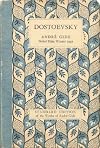
First published in 1923, at a time when Dostoevsky had yet to be rediscovered by the West, French author André Gide’s observations about the great writer are fascinating (and revealing about Gide as well). It’s far from a complete account, but there are plenty of gems to be found, such as Gide’s observation that Dostoevsky’s characters “group and arrange themselves always on one plane only, that of humility and pride.” Of special interest also were a sampling from Dostoevsky’s show more letters, including the one he wrote on December 22, 1849, the day his death sentence was stayed by the Tsar at the last minute, and another he wrote five years later which described in detail the journey he and his fellow prisoners took to Siberia, as well as the brutal conditions he found there.
Gide helps reveal the many bitter ironies about Dostoevsky’s life – the fact that despite his delicacy in childhood, he was drafted into the military, whereas his more robust brother Michael was rejected. That after his first four years in exile, when he wasn’t allowed to correspond with anyone, he spent six years pleading with his brother to write him, and to send him books – but never heard a word. “He wept when he bade me good-bye. Has his feeling towards me grown cold? Has his character changed? That would be a grief. Has he forgotten all the past?” he wrote a friend in 1856. That in the last year of his life, despite winning over public opinion, he was still struggling with attacks in the press, writing “For what I said in Moscow [his speech on ‘Pushkin,’ now revered], just look how I’ve been treated by almost the whole of the press: it is as if I were a thief or had embezzled from some bank or other. Ukhantsev [a notororious swindler of the time] is less foully abused than I.” It was during these final years, shortly before he died at just 59, that he would lament “the weakening of his memory and his imagination,” and yet it was at this time that he still produced his masterpiece, The Brothers Karamazov, which is as inspiring as it is humbling.
All of these aspects of his life seem to have fueled his self-doubt as a writer, his humility as a person, his awkwardness around others, and his submissiveness that seemed to channel Christ (e.g. still believing in the Emperor’s kindness after 10 years of exile). They were all facets of a genuinely vulnerable person. He was a man who knew pain, poverty, physical affliction (his epilepsy), and mental obsession (his gambling), and yet through it all he was generous to those around him and remained an optimist, both in Russia and in humanity. He resisted the Westernization of Russa, famously feuding with Turgenev, instead believing that Russia could help heal the party passions that were dividing Europe. And remarkably, during his exile, after having lived in frigid conditions with meager provisions for four years, he wrote, “Brother, there are very many noble natures in the world.”
There is such depth of feeling and authenticity in his work not because it is perfect precise and tidied up, but because it reflects the contradictions in people and remains gloriously messy. As Gide expresses it, he himself was a man of contradictions: “Conservative, but not hide-bound by traditions: monarchist, but of democratic opinions: Christian, but not a Roman Catholic: liberal, but not a progressive … he is of the stuff which displeases every party.” And yet Dostoevsky never tried to fit a mold, and said “The hardest thing on earth is to remain yourself.” He was raw, pure, natural. And thus, “with him there is no attempt to straighten or simplify lines; he is at his happiest in the complex; he fosters it.”
I liked how Gide rather poetically expressed the craft in Dostoevsky’s writing. “Balzac paints like David; Dostoevsky like Rembrandt,” he writes in the preface. In one of the lectures that were transcribed for the book, he says “In one of Stendhal’s novels, the light is constant, steady, and well-diffused. Every object is lit up in the same way, and is visible equally well from all angles; there are no shadow effects. But in Dostoevsky’s books, as in Rembrandt’s portrait, the shadows are the essential. Dostoevsky groups his characters and happenings, plays a brilliant light upon them, illuminating one aspect only.”
In a thought-provoking way, Gide also compares Nietzsche’s reaction to the Gospels as one of jealousy leading to the Superman, with Dostoevsky’s which is one of submission. In Dostoevsky, he writes, “the will to power leads inevitably to ruin,” whereas in Nietzsche it’s the opposite. In Dostoevsky, rationality and the mind are “demonic,” he says, and that “Dostoevsky’s heroes inherit the Kingdom of God only by the denial of mind and will and the surrender of personality.” That may sound antithetical to progress or what an atheist intellectual like me may buy into, but if I think of the “mind” in this context as ego, which in turns leads to competitiveness and internal suffering, I see the wisdom that I’ve always found in Dostoevsky.
There were many bits here and there that didn’t ring true e.g. Gide saying the influence of WWI upon literature was “nil,” or that jealousy might not be felt if people hadn’t read of it and expected themselves to feel that way, or subscribing to Mme. Hoffmann’s view that Russian mistrustfulness stemmed from “consciousness of his own insufficiency and proneness to sin,” or stating that “with physical well-being, mental activity is in abeyance.”
However, there is also wisdom in Gide’s anecdotes, such as this one from Walter Rathenau, who had been asking about Bolshevism and the Russian Revolution. “His answer was that naturally he had suffered at the horrible abominations practiced by the revolutionaries. ‘But believe me,’ he added, ‘a nation learns to know itself, as a man his own soul, only by passing through the depths of his suffering and the abyss of his sin…And America has not yet gained a soul because she refuses to accept sin and suffering.” I thought that was incredibly prescient, given America’s refusal to truly atone for its two original sins, slavery and genocide.
This is certainly not the final word on Dostoevsky, but it was a pleasure to read the insights from an aficionada in the literati nearly a century ago. show less
Gide helps reveal the many bitter ironies about Dostoevsky’s life – the fact that despite his delicacy in childhood, he was drafted into the military, whereas his more robust brother Michael was rejected. That after his first four years in exile, when he wasn’t allowed to correspond with anyone, he spent six years pleading with his brother to write him, and to send him books – but never heard a word. “He wept when he bade me good-bye. Has his feeling towards me grown cold? Has his character changed? That would be a grief. Has he forgotten all the past?” he wrote a friend in 1856. That in the last year of his life, despite winning over public opinion, he was still struggling with attacks in the press, writing “For what I said in Moscow [his speech on ‘Pushkin,’ now revered], just look how I’ve been treated by almost the whole of the press: it is as if I were a thief or had embezzled from some bank or other. Ukhantsev [a notororious swindler of the time] is less foully abused than I.” It was during these final years, shortly before he died at just 59, that he would lament “the weakening of his memory and his imagination,” and yet it was at this time that he still produced his masterpiece, The Brothers Karamazov, which is as inspiring as it is humbling.
All of these aspects of his life seem to have fueled his self-doubt as a writer, his humility as a person, his awkwardness around others, and his submissiveness that seemed to channel Christ (e.g. still believing in the Emperor’s kindness after 10 years of exile). They were all facets of a genuinely vulnerable person. He was a man who knew pain, poverty, physical affliction (his epilepsy), and mental obsession (his gambling), and yet through it all he was generous to those around him and remained an optimist, both in Russia and in humanity. He resisted the Westernization of Russa, famously feuding with Turgenev, instead believing that Russia could help heal the party passions that were dividing Europe. And remarkably, during his exile, after having lived in frigid conditions with meager provisions for four years, he wrote, “Brother, there are very many noble natures in the world.”
There is such depth of feeling and authenticity in his work not because it is perfect precise and tidied up, but because it reflects the contradictions in people and remains gloriously messy. As Gide expresses it, he himself was a man of contradictions: “Conservative, but not hide-bound by traditions: monarchist, but of democratic opinions: Christian, but not a Roman Catholic: liberal, but not a progressive … he is of the stuff which displeases every party.” And yet Dostoevsky never tried to fit a mold, and said “The hardest thing on earth is to remain yourself.” He was raw, pure, natural. And thus, “with him there is no attempt to straighten or simplify lines; he is at his happiest in the complex; he fosters it.”
I liked how Gide rather poetically expressed the craft in Dostoevsky’s writing. “Balzac paints like David; Dostoevsky like Rembrandt,” he writes in the preface. In one of the lectures that were transcribed for the book, he says “In one of Stendhal’s novels, the light is constant, steady, and well-diffused. Every object is lit up in the same way, and is visible equally well from all angles; there are no shadow effects. But in Dostoevsky’s books, as in Rembrandt’s portrait, the shadows are the essential. Dostoevsky groups his characters and happenings, plays a brilliant light upon them, illuminating one aspect only.”
In a thought-provoking way, Gide also compares Nietzsche’s reaction to the Gospels as one of jealousy leading to the Superman, with Dostoevsky’s which is one of submission. In Dostoevsky, he writes, “the will to power leads inevitably to ruin,” whereas in Nietzsche it’s the opposite. In Dostoevsky, rationality and the mind are “demonic,” he says, and that “Dostoevsky’s heroes inherit the Kingdom of God only by the denial of mind and will and the surrender of personality.” That may sound antithetical to progress or what an atheist intellectual like me may buy into, but if I think of the “mind” in this context as ego, which in turns leads to competitiveness and internal suffering, I see the wisdom that I’ve always found in Dostoevsky.
There were many bits here and there that didn’t ring true e.g. Gide saying the influence of WWI upon literature was “nil,” or that jealousy might not be felt if people hadn’t read of it and expected themselves to feel that way, or subscribing to Mme. Hoffmann’s view that Russian mistrustfulness stemmed from “consciousness of his own insufficiency and proneness to sin,” or stating that “with physical well-being, mental activity is in abeyance.”
However, there is also wisdom in Gide’s anecdotes, such as this one from Walter Rathenau, who had been asking about Bolshevism and the Russian Revolution. “His answer was that naturally he had suffered at the horrible abominations practiced by the revolutionaries. ‘But believe me,’ he added, ‘a nation learns to know itself, as a man his own soul, only by passing through the depths of his suffering and the abyss of his sin…And America has not yet gained a soul because she refuses to accept sin and suffering.” I thought that was incredibly prescient, given America’s refusal to truly atone for its two original sins, slavery and genocide.
This is certainly not the final word on Dostoevsky, but it was a pleasure to read the insights from an aficionada in the literati nearly a century ago. show less

Gide owes a huge debt to Maghreb, which gave him his first poetical, romantic masterpieces. Maghreb was Gide's Roman campagna, where purity of nature harmonised with purity of men, where modernity didn't exist, and handsome young boys blew tunes on rustic pipes while tending fluffy sheep. At least, it was until he could sustain the illusion no longer. In the earliest of his travel notes this hunger for being somewhere entirely different from his origin dominates everything--he is only as show more happy as the circumstances seem foreign, only where other tourists are not, seeing sights they miss, like the cheap puppetry show, and not the staged dances. He is constantly reassuring himself that he is experiencing something authentic, spontaneous. He wants to become invisible to the locals, to meld with them, in fact, he writes in one place, he would give everything to BE this particular Arab, here, now. It's easy to conclude that the 19th century mal du siècle lasted all 100 years of it, that the Western man was already gripped by anxiety, angst, nausea and the lot, in 1896. By the end of the notes in Amyntas, dating from 1904/5, Gide has definitely lost this second paradise, he will never return. Morocco and Algeria aren't Arcadia, the Arabs are troubled, sick and apathetic, not wisely contemplative; even the boys aren't good-looking anymore, barely two out of a hundred. Maybe that's the moment where Gide begins to see the world, for real this time. show less
Possible spoiler--
Despite my expectation that Gide must be a thoroughly anti-establishment writer, developments in this racy and sometimes humorous narrative place the author in company with Dan Quayle and other conservatives who’ve decried the evil effects of illegitimate births & child-rearing. Lafcadio’s “unmotivated crime” comes to pass as a result of his rootless lifestyle and devotion to fleeting amusements. The evil impulse fills an emptiness where attachment is lacking. His show more mother’s wanton ways in passing him from uncle to uncle clearly established the unfortunate pattern! And despite being drawn to pleasure, Lafcadio is also a bit of a Buddhist: he enters the void outside of social convention and even finds it possible to “quit a society as simply as all that, without stepping at the same moment into another…” A very interesting read! show less
Despite my expectation that Gide must be a thoroughly anti-establishment writer, developments in this racy and sometimes humorous narrative place the author in company with Dan Quayle and other conservatives who’ve decried the evil effects of illegitimate births & child-rearing. Lafcadio’s “unmotivated crime” comes to pass as a result of his rootless lifestyle and devotion to fleeting amusements. The evil impulse fills an emptiness where attachment is lacking. His show more mother’s wanton ways in passing him from uncle to uncle clearly established the unfortunate pattern! And despite being drawn to pleasure, Lafcadio is also a bit of a Buddhist: he enters the void outside of social convention and even finds it possible to “quit a society as simply as all that, without stepping at the same moment into another…” A very interesting read! show less
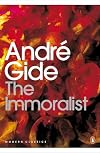
Michel travels with his new wife to the desert of Tunisia, though he falls ill with tuberculosis, and must slowly recover before he can travel home to France and continue his life as a scholar. However, during his convalescence, he discovers a new appreciation for life, and decides to restructure his existence to live for the present, not for the past.
Gide's novel caused an outrage when it was published in 1902; now, it is possible to read it without the sense of world-upheaval that the show more intelligentsia a hundred years ago might have felt, and instead appreciate it for what it is: a marvellously poetic look at the meaning of life for a man confused by his place in the world, who had never before stopped to consider what he wanted from the world.
There are clear threads of homosexuality and even what we would now consider paedophilia, but to concentrate on these two aspects would, essentially, to be missing the point. For me, the point of this novel is the examination of change in man, and how, though we are always changing unconsciously, when we try to affect a change in our lives, we meet the severest resistance, both internally and externally. show less
Gide's novel caused an outrage when it was published in 1902; now, it is possible to read it without the sense of world-upheaval that the show more intelligentsia a hundred years ago might have felt, and instead appreciate it for what it is: a marvellously poetic look at the meaning of life for a man confused by his place in the world, who had never before stopped to consider what he wanted from the world.
There are clear threads of homosexuality and even what we would now consider paedophilia, but to concentrate on these two aspects would, essentially, to be missing the point. For me, the point of this novel is the examination of change in man, and how, though we are always changing unconsciously, when we try to affect a change in our lives, we meet the severest resistance, both internally and externally. show less
Lists
Existentialism (1)
Favourite Books (1)
Short and Sweet (1)
1920s (1)
Cooper (1)
Mooie titels (1)
French Books (1)
Желаемое (1)
Awards


You May Also Like


Associated Authors
Statistics
- Works
- 368
- Also by
- 46
- Members
- 16,691
- Popularity
- #1,351
- Rating
- 3.7
- Reviews
- 227
- ISBNs
- 842
- Languages
- 30
- Favorited
- 45


