
Mark Healy
Author of Kursk 1943 : The Tide Turns in the East
About the Author
Mark Healy is the author of several books including Midway 1942, The Tiger Tank Story and The Ancient Assyrians, and produced the video series Die Deutschen Panzer. He wrote the best-selling Zitadelle: The German Offensive against the Kursk Salient 14-17 July 1943 for Spellmount.
Works by Mark Healy
Panther Tank Enthusiasts' Manual: Panzerkampfwagen V Panther (SdKfz 171) - An insight into the design, construction and operation of the finest medium tank in the Second World War (2019) 23 copies, 1 review
T-34 Tank Owners' Workshop Manual: 1940 to date (all models) - Insights into the most influential tank designs of the 20th century and the mainstay of ... units in World War 2… (2018) 19 copies, 1 review
Camouflage & Markings - Armour in Theater Eastern Front - Spring and Summer 1943 Volume 1 (2013) 3 copies
WPTAT004 Guideline Publications Armour in Theatre: Camouflage & Markings Tanks in the Great War 1914-1918 Volume 4 (2017) 3 copies
WPTCM2 Warpaint Books - Camouflage & Markings: Armour in Theatre Normandy Campaign Part I: British and Canadian Forces Volume 2 (2015) 2 copies
Armour In Theatre, Camouflage & Markings, Normandy Campaign Part 2: US and German forces, VOLUME 3 (2015) 1 copy
The Sleeper 1 copy
Golpe de efecto en el Este 1 copy
Associated Works
Tagged
Common Knowledge
Members
Reviews
Panther Tank Enthusiasts' Manual: Panzerkampfwagen V Panther (SdKfz 171) - An insight into the design, construction and operation of the finest medium tank in the Second World War by Mark Healy
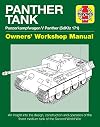
Very interesting book about a tank that was supposed to become and remain a mainstay of German armored units during WW2.
I have to admit I was really positively surprised with the book. I was not familiar with the Haynes Manual series. I was expecting either brief overview (as is case with Osprey books) or little bit too cheerleading approach to German WW2 weapons and especially tanks (like in case of Stackpole, Schiffer and to certain degree Helion). What we are given is a very thorough show more balanced overview of tank in line of another magnificent book on topic by Kennet W Estes' [book:German Heavy Fighting Vehicles of the Second World War: From Tiger to E-100|39845022].
Author gives a very detailed account of Panther tank. Book is divided into following blocks:
- reason for new tank development
- how tank was developed (construction bureaus involved and the way manufacturing was organized)
- design flaws and complexity introduced by a constant increase in weight and thickness of armor
- details of design and various differences between versions (this goes to the level of transmission control, I mean excellent!)
- combat use and experiences (this part is of course relatively brief but for the book of this type it is detailed nevertheless especially related to differences between fronts, from open steppe of Eastern Front to constricted terrain of Italy and claustrophobic woods of Western Europe (almost akin to urban warfare environments)
What I can say is that weapon industry is not that different from movie industry - every new weapon is a wonder weapon. And then when the views of German WW2 combat actions related to fast moving armored formations got brought back as genius (although German generals have even said that Western view of armored warfare is actually very far away from how Germans saw it) all German armored tanks were seen as pinnacle of tank design, which in my opinion is not true - excellent machines they might have been.
What this book shows is that instead of very complex but also extremely heavy (although powerfully armed with high caliber guns) tanks like Tiger and Panther, Germans might have gotten more by further improving on PzIV because this tank was more mobile, with better gun could probably be on par with opposition (especially Western ones). If anything tank development post WW2 showed that ultra heavy tanks, while they are moving fortresses (although Panther was severely in disadvantage in case of side or top attacks) mobility wise they were in a seriously bad situation - from fuel consumption, to engine and transmission issues caused by ever larger armor coating.
Dont get me wrong, I am glad Germans wasted a lot of material for this, it reduced casualties on allies' side considerably. But for this very reason I have difficulties seeing Panther as the finest medium tank of the conflict. In my opinion it is not super weapon that resolves conflict but good enough weapons. If weapon works against all targets 9 out of 10 times it is sufficiently good no matter what. If you have a weapon that is near 100% good but you cannot bring it to the firing line in full force in 70% of cases, guess what it is not near 100% good. While it can knock out what it sees in front of it, if flanked or if fighting in small numbers, nothing can help it. It will take its toll in blood but ultimately will be destroyed and knowledge on how to do it will spread out and make conditions for super-weapon-in-question extremely difficult. Current conflict proves this too.
This is the only issue I have with this book.
All in all excellent book, plethora of details (going into extreme technical descriptions), truly a pleasant surprise.
Highly recommended. show less
I have to admit I was really positively surprised with the book. I was not familiar with the Haynes Manual series. I was expecting either brief overview (as is case with Osprey books) or little bit too cheerleading approach to German WW2 weapons and especially tanks (like in case of Stackpole, Schiffer and to certain degree Helion). What we are given is a very thorough show more balanced overview of tank in line of another magnificent book on topic by Kennet W Estes' [book:German Heavy Fighting Vehicles of the Second World War: From Tiger to E-100|39845022].
Author gives a very detailed account of Panther tank. Book is divided into following blocks:
- reason for new tank development
- how tank was developed (construction bureaus involved and the way manufacturing was organized)
- design flaws and complexity introduced by a constant increase in weight and thickness of armor
- details of design and various differences between versions (this goes to the level of transmission control, I mean excellent!)
- combat use and experiences (this part is of course relatively brief but for the book of this type it is detailed nevertheless especially related to differences between fronts, from open steppe of Eastern Front to constricted terrain of Italy and claustrophobic woods of Western Europe (almost akin to urban warfare environments)
What I can say is that weapon industry is not that different from movie industry - every new weapon is a wonder weapon. And then when the views of German WW2 combat actions related to fast moving armored formations got brought back as genius (although German generals have even said that Western view of armored warfare is actually very far away from how Germans saw it) all German armored tanks were seen as pinnacle of tank design, which in my opinion is not true - excellent machines they might have been.
What this book shows is that instead of very complex but also extremely heavy (although powerfully armed with high caliber guns) tanks like Tiger and Panther, Germans might have gotten more by further improving on PzIV because this tank was more mobile, with better gun could probably be on par with opposition (especially Western ones). If anything tank development post WW2 showed that ultra heavy tanks, while they are moving fortresses (although Panther was severely in disadvantage in case of side or top attacks) mobility wise they were in a seriously bad situation - from fuel consumption, to engine and transmission issues caused by ever larger armor coating.
Dont get me wrong, I am glad Germans wasted a lot of material for this, it reduced casualties on allies' side considerably. But for this very reason I have difficulties seeing Panther as the finest medium tank of the conflict. In my opinion it is not super weapon that resolves conflict but good enough weapons. If weapon works against all targets 9 out of 10 times it is sufficiently good no matter what. If you have a weapon that is near 100% good but you cannot bring it to the firing line in full force in 70% of cases, guess what it is not near 100% good. While it can knock out what it sees in front of it, if flanked or if fighting in small numbers, nothing can help it. It will take its toll in blood but ultimately will be destroyed and knowledge on how to do it will spread out and make conditions for super-weapon-in-question extremely difficult. Current conflict proves this too.
This is the only issue I have with this book.
All in all excellent book, plethora of details (going into extreme technical descriptions), truly a pleasant surprise.
Highly recommended. show less
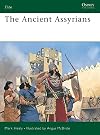
Beautiful black and white illustrations (for which 1 star), and also quite reasonable artwork by Angus McBride (another star), but the text is utterly dreadful. The author's philosophy apparently was - why use one word when you can say the same in ten. I am still little closer to understanding the extraordinary military machine that was the Assyrian army.

NO OF PAGES: 48 SUB CAT I: Children's Resources SUB CAT II: Bible Stories SUB CAT III: DESCRIPTION: A secular-liberal perspective on King David - Beware if using this as a teaching aid.NOTES: SUBTITLE: Warlord of Israel

You May Also Like


Associated Authors
Statistics
- Works
- 31
- Also by
- 1
- Members
- 1,170
- Popularity
- #21,986
- Rating
- 3.6
- Reviews
- 10
- ISBNs
- 79
- Languages
- 7