
John Okada (1923–1971)
Author of No-No Boy
About the Author
Image credit: Yoshito Okada Family via NY Times
Works by John Okada
Associated Works
Tagged
Common Knowledge
- Canonical name
- Okada, John
- Birthdate
- 1923
- Date of death
- 1971
- Gender
- male
- Education
- University of Washington (BA, BA)
Columbia University (MLS) - Cause of death
- heart attack
- Nationality
- USA
- Birthplace
- Seattle, Washington, USA
- Places of residence
- Seattle, Washington, USA
Minidoka War Relocation Center - Burial location
- Evergreen Washelli Memorial Park, Seattle, Washington, USA
- Map Location
- USA
Members
Reviews
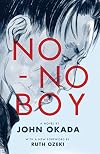
NO-NO BOY (2014 reprint) is an interesting book both in itself and for its unique place as perhaps the first novel by a Japanese-American. First published in 1957, it was mostly ignored and quickly disappeared. "Rediscovered" and passed around nearly twenty years later and republished by an Asian-American consortium of writers, it has since taken its rightful place as an important classic. It was John Okada's only book (a librarian and tech writer, he died of a heart attack at just 47), and show more reads like an autobiographical novel. Quite the opposite. Okada served honorably in the US Army Air Corps. His protagonist, Ichiro Yamada, on the other hand, was the titular "no-no boy," who refused to serve in the armed forces or swear allegiance to a country which had confiscated his family's Seattle home and business and placed them all in a desert internment camp for two years. Because of his refusals he spent two more years in prison. The story itself covers a short period of days following his release from prison well after the war has ended. He returns to Seattle where his parents have reestablished themselves in a small grocery store with living quarters in the back. His younger brother is ashamed of him and can't wait to join the army after high school. His father welcomes him back, and so does his controlling mother, who is delusional in thinking Japan won the war and slowly slips into insanity. Ichiro tries to reconnect with former friends and look for work, but his prison time and his race hamper both endeavors. Interior monologues abound, many of them bitter and frustrated, all of them powerful testaments to rampant postwar prejudice directed at Japanese-Americans. Postwar America of the 1940s is vividly painted here, with its slang, swing bands, roadhouses and private clubs. Ichiro watches helplessly as one veteran friend, badly maimed, is hospitalized, and another no-no boy loses himself to drink and destructive behavior.
NO-NO BOY is a powerful novel of being the wrong race, the wrong color, and on the wrong side after the war. John Okada was a very talented writer and this, his only book, is finally getting the respect it deserves. It shouldn't have taken so long. Very highly recommended.
- Tim Bazzett, author of the memoir, BOOKLOVER show less
NO-NO BOY is a powerful novel of being the wrong race, the wrong color, and on the wrong side after the war. John Okada was a very talented writer and this, his only book, is finally getting the respect it deserves. It shouldn't have taken so long. Very highly recommended.
- Tim Bazzett, author of the memoir, BOOKLOVER show less
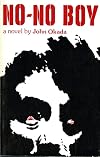
During World War II, from 1942–1946, at least 125,284 people of Japanese descent in 75 identified incarceration sites. Most of these individuals lived on the Pacific Coast, in ten concentration camps in the western interior of the country. Approximately two-thirds of the inmates were United States citizens, and many were children. Families were often separated. These Americans lost their homes, businesses, and farms, and most didn't get their property back.
Published in 1957, this was the only book published by John Okada, who was born in Seattle in 1923. He was attending UW when Pearl Harbor was attacked, and he and his family were interned in Minidoka in 1942. While there he was asked to enlist, and he served in the U.S. Air Force as a translator in military intelligence. After his service, Okada attended the University of Washington and Columbia University, gaining a master's in English. He died of a heart attack at the age of 47. He never saw the impact of his work, and wasn't acknowledged for his bravery in writing about such a painful, recent part of immigrant history.
No-No Boy faced a string of rejections by American publishers, and the Japanese publisher Charles E. Tuttle published an original run of 1,500 copies in 1957, which still had not sold out by the time Okada died in 1971. According to the wiki article: "The initial response within the Japanese community was similar to that faced by the book's protagonist: ostracism for drawing attention to what was still perceived as disloyalty to the country and community." The book is about draft resisters in WWII, and that would be a divisive topic to the community given the suspicion laid upon Japanese Americans whether they were citizens or not. The 442 Regiment soldiers were motivated to prove their loyalty, but others were alienated by being drafted when their families were in internment camps. Note that segregation meant that blacks and Japanese Americans were segregated in the military.
As a novel, the style would probably benefit from an audiobook narrator who can capture the personal narrative and the perspective of a native-born American of Japanese descent who would neither denounce his Japanese heritage nor serve in the U.S. Army during WWII. This novel takes place after the main character spent two years in a Japanese internment camp, and two years in prison after saying no when asked to join the Army.
The "no-no boys" were those who answered "No" on two important questions posed by the government: would he vow loyalty and would he enlist in the Army? Those who answered "no" were sentenced to two years in prison. Though the vast majority eventually answered the key loyalty questions affirmatively, a significant minority either refused to answer, gave qualified answers, or answered negatively—about 12,000 out of the 78,000 people over the age of seventeen whom the questionnaire was distributed to.
This novel raises many questions about patriotism and what the nation can ask of citizens to whom they are denying civil rights, about prejudice and racism (the German Americans weren't interned), about the power of executive privilege and how it can be misused, and even the conflicted feelings within an immigrant community. Sadly, many Japanese Americans died before receiving any public apology or form of renumeration for the loss of homes, businesses, and land.
In 1988, President Ronald Reagan signed into law the Civil Liberties Act of 1988 which officially apologized for the incarceration on behalf of the U.S. government and authorized a payment of $20,000 (equivalent to $52,000 in 2023) to each former detainee who was still alive when the act was passed. The legislation admitted that government actions were based on "race prejudice, war hysteria, and a failure of political leadership." By 1992, the U.S. government eventually disbursed more than $1.6 billion (equivalent to $4.12 billion in 2023) in reparations to 82,219 Japanese Americans who had been incarcerated. Despite this acknowledgment, civil liberties were still in danger. Karen Tei Yamashita said in the Penguin edition's foreword:
"Other executive edicts have called for a zero tolerance policy toward those who enter the United States illegally, justifying the separation of families and the detention of children, even those seeking asylum at our borders. Throughout the nation, there are currently more than two hundred immigrant detention centers, detaining, at last count in 2017, a daily average of thirty-nine thousand individuals. No-No Boy is a cautionary tale."

i'm glad i read this when i did, when i have some understanding of the camps and what this population went through. i was really surprised to see okada's main character, who refused the draft, be so regretful of that, and i wonder if that comes from okay's own experience being in the war and feeling antagonistic towards those who didn't serve. that was a real surprise for me, as was the deep conviction of some people that japan actually won the war and anything else was propaganda. (i guess show more that's something that happens in every conflict and about many things, but it was still surprising, and really well shown.)
maybe he made the main character avoid the draft to show that all the characters, whether they served or not, ended up in a terrible position in a country that hated them no matter what. and what a powerful message that is. show less
maybe he made the main character avoid the draft to show that all the characters, whether they served or not, ended up in a terrible position in a country that hated them no matter what. and what a powerful message that is. show less
No-No Boy was searingly wrong for its time: in 1956 John Okada wrote a novel about a Japanese American man who went to prison instead of fighting for a country that had sent his family to an internment camp. It was a time when white readers weren't ready to read the truth, and when Japanese-Americans were trying to move on. This novel was just reprinted last year by U Washington Press, with a foreword by Ruth Ozeki--it's worth getting a copy of the new edition just to read her essay about show more Okada and about the immediate post-WWII realities of Japanese American life. As Ozeki writes in her foreword, Ichiro's "obsessive, tormented" voice subverts Japanese postwar "model-minority" stereotypes, showing a fractured community and one man's "threnody of guilt, rage, and blame as he tries to negotiate his reentry into a shattered world."
I was expecting something polemical and discovered something far more subtle. The characters are complicated in interesting ways. I expected Ichiro, the titular No No Boy, to be righteous, a conscientious objector, to have a strong and (from my vantage point of 2015) completely defensible reason for refusing to swear loyalty to the United States or to enlist in the US armed forces when at the same time his people were being shipped off to internment camps.
Not at all. The novel is simply told, but never simple. Instead, the protagonist, Ichiro, is full of shame and self-doubt about his decision to refuse to swear a loyalty oath to the U.S. He wishes he could change his mind and take back the last two years, not because he spent them in prison, but because now he doesn't know who he is any longer. He envies friends who have come home wounded from the war; he even envies the war dead, even though their sacrifices have not given their families any more acceptance, and have not shielded them from race hatred at home.
Along with Ichiro, Okada introduces a host of other characters who each reflect a reasonable response to the prejudice and hardships faced by Japanese Americans in the 50's. One of my many favorites is Ichiro's mother, an unabashed Japanese nationalist, a woman who thinks any news about Japanese defeat must be U.S. war propaganda, and who rejects even the letters from her own family members in Japan as false.
Okada's writing has a hard-boiled feel that reminded me of From Here to Eternity by James Jones, which was published just a few years prior to No No Boy. The themes of the novel anticipate the turmoil of the Viet Nam war to follow, when men of a certain age found themselves divided into those who fought, and those who fought the draft. The novel should be read more widely not only as literature but as a fictional testament to the era in which it was written. show less
I was expecting something polemical and discovered something far more subtle. The characters are complicated in interesting ways. I expected Ichiro, the titular No No Boy, to be righteous, a conscientious objector, to have a strong and (from my vantage point of 2015) completely defensible reason for refusing to swear loyalty to the United States or to enlist in the US armed forces when at the same time his people were being shipped off to internment camps.
Not at all. The novel is simply told, but never simple. Instead, the protagonist, Ichiro, is full of shame and self-doubt about his decision to refuse to swear a loyalty oath to the U.S. He wishes he could change his mind and take back the last two years, not because he spent them in prison, but because now he doesn't know who he is any longer. He envies friends who have come home wounded from the war; he even envies the war dead, even though their sacrifices have not given their families any more acceptance, and have not shielded them from race hatred at home.
Along with Ichiro, Okada introduces a host of other characters who each reflect a reasonable response to the prejudice and hardships faced by Japanese Americans in the 50's. One of my many favorites is Ichiro's mother, an unabashed Japanese nationalist, a woman who thinks any news about Japanese defeat must be U.S. war propaganda, and who rejects even the letters from her own family members in Japan as false.
Okada's writing has a hard-boiled feel that reminded me of From Here to Eternity by James Jones, which was published just a few years prior to No No Boy. The themes of the novel anticipate the turmoil of the Viet Nam war to follow, when men of a certain age found themselves divided into those who fought, and those who fought the draft. The novel should be read more widely not only as literature but as a fictional testament to the era in which it was written. show less
Lists
Awards


You May Also Like


Associated Authors
Statistics
- Works
- 1
- Also by
- 5
- Members
- 874
- Popularity
- #29,293
- Rating
- 3.7
- Reviews
- 26
- ISBNs
- 10
- Languages
- 2
- Favorited
- 2