
Harold J. Morowitz (1927–2016)
Author of The Emergence of Everything: How the World Became Complex
About the Author
Harold J. Morowitz is Clarence Robinson Professor of Biology and Natural Philosophy at George Mason University.
Works by Harold J. Morowitz
Associated Works
The Mind's I: Fantasies and Reflections on Self and Soul (1981) — Contributor — 3,010 copies, 23 reviews
Tagged
Common Knowledge
- Legal name
- Morowitz, Harold Joseph
- Birthdate
- 1927-12-04
- Date of death
- 2016-03-22
- Gender
- male
- Education
- Yale College (AB|1947)
Yale University (PhD|Physics|1951) - Occupations
- physicist
university professor - Organizations
- Yale University
National Bureau of Standards
George Mason University
Krasnow Institute For Advanced Study (George Mason U)
National Heart Institute - Nationality
- USA
- Birthplace
- Poughkeepsie, New York, USA
- Places of residence
- New Haven, Connecticut, USA
Fairfax, Virginia, USA - Place of death
- Fairfax County, Virginia, USA
- Associated Place (for map)
- USA
Members
Reviews
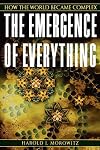
As soon as human beings became self-aware, they became universe-aware as well. While we seek to understand our place and our origins as individuals, we also have a need to explain the origin of all life and the universe as a whole. These are not easy questions, as they involves elements of many field of science and philosophy. Harold Morowitz, in The Emergence of Everything, lays out a fundamental structure for getting to the root of some of these questions by peering into the fields of show more cosmology, biology, physics, chemistry, and ultimately, theology.
The question here is one of emergence. Morowitz discusses the emergence of the universe from the Big Bang, the emergence of stars and planets, of life on planets, and of human beings in the ancient past and the upcoming future. How does one account for the emergence of complex life when also trying to boil the laws of the universe into a few simple equations? At what point does the whole become more than the sum of its parts? This book goes through the 26 stages of emergence in the known universe, starting with the primordium (the pre-Big Bang speck of all matter) through the formation of planets to the emergence of life then to the evolution of mammals and humans and finally with the emergence of language, philosophy, science, and religion. It’s the investigation of these points on the continuum of emergence that makes this book interesting.
Morowitz’s writing is necessarily heady, but still reads fairly quickly. He ultimately falls back on the concept of God (which is a little dismaying) to explain the spark of emergence, but his discussion of the formation of the universe and life are still deeply rooted in science. This book blends the conversation between philosophy and science pretty well. Another plus is that each chapter has a list of suggested reading at the end so that the reader can follow up on specific topics of interest. A complex and intriguing book. show less
The question here is one of emergence. Morowitz discusses the emergence of the universe from the Big Bang, the emergence of stars and planets, of life on planets, and of human beings in the ancient past and the upcoming future. How does one account for the emergence of complex life when also trying to boil the laws of the universe into a few simple equations? At what point does the whole become more than the sum of its parts? This book goes through the 26 stages of emergence in the known universe, starting with the primordium (the pre-Big Bang speck of all matter) through the formation of planets to the emergence of life then to the evolution of mammals and humans and finally with the emergence of language, philosophy, science, and religion. It’s the investigation of these points on the continuum of emergence that makes this book interesting.
Morowitz’s writing is necessarily heady, but still reads fairly quickly. He ultimately falls back on the concept of God (which is a little dismaying) to explain the spark of emergence, but his discussion of the formation of the universe and life are still deeply rooted in science. This book blends the conversation between philosophy and science pretty well. Another plus is that each chapter has a list of suggested reading at the end so that the reader can follow up on specific topics of interest. A complex and intriguing book. show less
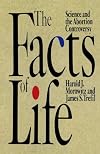
Harold J. Morowitz, professor of biology, and James Trefil, who teaches physics, both at George Mason University, have produced what I consider to be one of the seminal books on abortion that I have read. They examine the concepts of "life" and humanness. They point out that at the molecular level we are indistinguishable from plants and bacteria -- on a chemical level our cells function the same as brewer's yeast, a single cell organism; and we share a 98.5% genetic (DNA coding) with show more chimpanzees -- which are also "alive." Therefore, the important question one must ask is at what point the fetus or zygote acquires those characteristics that make us human, for no one would deny that we are indeed profoundly different from other forms of life. The point at which humanness is acquired (not personhood, which is a legal concept) becomes important to help distinguish between the rights of the mother and those of the fetus.
An enormous amount of change occurs from conception to birth, and the authors have examined the biological and scientific evidence to determine at what point this humanness is acquired. From a biologist's point of view, at conception, "two previously existing living things come together to form another living thing." Traditionally the anti-abortion advocates have argued that because the DNA genetic code exists at conception, that is when "life" begins. Morowitz and Trefil suggest that is like saying a building is complete when the blueprints are done. The combining creates the DNA blueprint, but dead tissue excised in a hospital has the same DNA blueprint, and cancerous tumors contain genetic uniqueness, yet no one would call them "life" worthy of preservation. Not to mention the fact that only about 1/3 of all conceptions lead to a successful birth -- nature performs abortions at a much higher rate than humans. (Research being done on parthenogenesis -- birth without conception -- indicates that unfertilized eggs can be stimulated to divide and begin the development of a complete adult: a Gloria Steinem fantasy come true.)
To make a long, but fascinating, story short, the authors propose that humanness begins at the moment when the cerebral cortex is formed and the synapses begin functioning. This is not a unique nor new position. The Jesuit scholar Teilhard de Chardin and the Catholic theologian Bernard Haring have both written that the cerebral cortex is the "center of all personal manifestations and activities." It is here that speech, conscious movement, visual information and sensory stimuli are all processed. The enlarged cerebral cortex is unique to humans, and it becomes a functioning entity sometime between 25 and 30 weeks of development. Coincidentally, that is also when electroencephalographic readings take place. (The absence of EEG readings is now widely used as a determination of death.) Teilhard de Chardin, who was a paleontologist, as well as a theologian, regarded the "development of an enlarged cerebral cortex as almost a second creation -- as a sign from God that humanity is, indeed, special, regardless of the fact that we share a common ancestry with all other life." Hence the authors recommend that in the conflict of rights, until the fetus achieves synapses in the cerebral cortex, at about 7 months, the woman shall choose and her rights must predominate. After 7 months, a loss of certainty occurs and one can no longer deny with certainty the humanity of the fetus, and its rights must be considered and protected.
This book will probably not solve the abortion dilemma, but it goes a long way toward providing a rational and scientific basis for evidence of what constitutes humanness and at what point we achieve that distinction. It should be required reading. show less
An enormous amount of change occurs from conception to birth, and the authors have examined the biological and scientific evidence to determine at what point this humanness is acquired. From a biologist's point of view, at conception, "two previously existing living things come together to form another living thing." Traditionally the anti-abortion advocates have argued that because the DNA genetic code exists at conception, that is when "life" begins. Morowitz and Trefil suggest that is like saying a building is complete when the blueprints are done. The combining creates the DNA blueprint, but dead tissue excised in a hospital has the same DNA blueprint, and cancerous tumors contain genetic uniqueness, yet no one would call them "life" worthy of preservation. Not to mention the fact that only about 1/3 of all conceptions lead to a successful birth -- nature performs abortions at a much higher rate than humans. (Research being done on parthenogenesis -- birth without conception -- indicates that unfertilized eggs can be stimulated to divide and begin the development of a complete adult: a Gloria Steinem fantasy come true.)
To make a long, but fascinating, story short, the authors propose that humanness begins at the moment when the cerebral cortex is formed and the synapses begin functioning. This is not a unique nor new position. The Jesuit scholar Teilhard de Chardin and the Catholic theologian Bernard Haring have both written that the cerebral cortex is the "center of all personal manifestations and activities." It is here that speech, conscious movement, visual information and sensory stimuli are all processed. The enlarged cerebral cortex is unique to humans, and it becomes a functioning entity sometime between 25 and 30 weeks of development. Coincidentally, that is also when electroencephalographic readings take place. (The absence of EEG readings is now widely used as a determination of death.) Teilhard de Chardin, who was a paleontologist, as well as a theologian, regarded the "development of an enlarged cerebral cortex as almost a second creation -- as a sign from God that humanity is, indeed, special, regardless of the fact that we share a common ancestry with all other life." Hence the authors recommend that in the conflict of rights, until the fetus achieves synapses in the cerebral cortex, at about 7 months, the woman shall choose and her rights must predominate. After 7 months, a loss of certainty occurs and one can no longer deny with certainty the humanity of the fetus, and its rights must be considered and protected.
This book will probably not solve the abortion dilemma, but it goes a long way toward providing a rational and scientific basis for evidence of what constitutes humanness and at what point we achieve that distinction. It should be required reading. show less
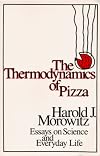
A collection of 52 essays ranging from innocent investigations into the truly mundane such as coffee, to the development in recent centuries of metaphysics. Morowitz is a biophysicist by trade but he also has a long history of writing essays and his specialty is to view it from a scientific slant. Take the title essay for example, why is pizza always so hot that it burns the roof of your mouth? This question is expertly investigated and even to someone not scientifically bent, really show more accessible and interesting reading.
In fact, the best essays I discovered were the ones about the common everyday things: the whole food chapter is great, as too are the medicine and people chapters. There are gems of essays scattered throughout the book but there are also a few musings that you really do scan over very quickly. I tried to read everything thoroughly but I did get bored during the data classification segments and the metaphysical musings. Still, this is not a book you read all at once. I actually started it last year and only picked it up occasionally at first as the essays are lovely and brief and you can fit a couple of them in while you're waiting for whatever.
Recently, I've been reading it a lot more and it is surprising how long this 250 page book will take. But I do consider the thermodynamics of pizza every time I now order pizza and I have other new knowledge such as sailors who still navigate today by the pre-Copernicus geocentric view of the earth, or the fact that the Physicians Desk Reference is a popular library book for wannabe pharmaceutical practitioners with no jobs if you get my meaning.
I will leave you with his thoughts on the religion Kabbala:
"Thus, what began as the search for the inner nature of divinity on occasion deteriorated into a mumbo jumbo of not-understood symbols inscribed on amulets. Cabala moved from religious awe to numerical prestidigitation."
I enjoyed being coached into thinking deeper about things I wouldn't normally give a second thought to. I enjoyed the brevity of the essays; it allows you to fit the book easily around your other reading and into your life. And I enjoyed learning some new things. show less
In fact, the best essays I discovered were the ones about the common everyday things: the whole food chapter is great, as too are the medicine and people chapters. There are gems of essays scattered throughout the book but there are also a few musings that you really do scan over very quickly. I tried to read everything thoroughly but I did get bored during the data classification segments and the metaphysical musings. Still, this is not a book you read all at once. I actually started it last year and only picked it up occasionally at first as the essays are lovely and brief and you can fit a couple of them in while you're waiting for whatever.
Recently, I've been reading it a lot more and it is surprising how long this 250 page book will take. But I do consider the thermodynamics of pizza every time I now order pizza and I have other new knowledge such as sailors who still navigate today by the pre-Copernicus geocentric view of the earth, or the fact that the Physicians Desk Reference is a popular library book for wannabe pharmaceutical practitioners with no jobs if you get my meaning.
I will leave you with his thoughts on the religion Kabbala:
"Thus, what began as the search for the inner nature of divinity on occasion deteriorated into a mumbo jumbo of not-understood symbols inscribed on amulets. Cabala moved from religious awe to numerical prestidigitation."
I enjoyed being coached into thinking deeper about things I wouldn't normally give a second thought to. I enjoyed the brevity of the essays; it allows you to fit the book easily around your other reading and into your life. And I enjoyed learning some new things. show less
The topic is as fascinating as any and the author gives a very thorough description of how the insights of the science of emergence are advancing practically every scientific field. However, my eyes began to cross once or twice because of the overly detailed explanations.
Lists
Awards


You May Also Like


Associated Authors
Statistics
- Works
- 21
- Also by
- 2
- Members
- 636
- Popularity
- #39,628
- Rating
- 3.9
- Reviews
- 6
- ISBNs
- 50
- Languages
- 3
- Favorited
- 1
