
Kathryn Harkup
Author of A is for Arsenic: the Poisons of Agatha Christie
About the Author
Works by Kathryn Harkup
Making the Monster: The Science Behind Mary Shelley's Frankenstein (Bloomsbury Sigma) (2018) 166 copies, 6 reviews
Tagged
Common Knowledge
Members
Reviews
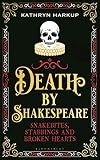
Magnificent attention to detail! This book offers an amazing look at the science behind the deaths in Shakespeare’s plays.
But let’s start at the beginning. Before even going into Shakespeare’s literary treatment of death, this book explores the idea of death as it would have been understood in Shakespeare’s day. This was a time when public executions were common occurrences, and theatre-goers who would watch Romeo and Juliet die on the stage might just as easily have witnessed show more actual deaths on a scaffold. Death was present, and talked about, and seen all around. It wasn’t something that was only ever euphemistically referred to in hushed tones—it was part of the fabric of society, and a deeply personal part of everyone’s life. Shakespeare’s very profession had been shaped by death. He was a playwright struggling to support himself and his family during at time when going to the theatre was often illegal. Due to the large numbers of people dying from the plague, all sorts of public gatherings, including theatres, were banned. This was the time when Shakespeare would turn to writing poetry to support himself and his family. Then the disease would die down, he’d return to London, and he’d continue to write plays until the next major outbreak. And the disease didn’t just shape his profession: it also killed his only son when he was only 11 years old. Death was a very intimate part of Shakespeare’s life. No wonder it turned up so often in his plays.
In describing his plays, the scope and the depth of this book surprised me immensely. It covers all the deaths that Shakespeare used in all his plays, and it divides them into chapters based on type, such as poison, execution, war, bear attack, etc. (And yes, I’m serious about those bears.) Everything is grounded in context: the death-related excerpts of Shakespeare’s plays are given in context of the larger plot, and, in the case of the histories, Shakespeare’s details are compared with those of the historical record. Then, the death, as described by Shakespeare, is given a very thorough scientific analysis. How many of Shakespeare’s deaths are realistic? (Quite a lot, it seems.) How about when he’s vague: what are the different possible explanations? (Did I mention that this book has a lot of fascinating conjecture? So many possibilities!) Can Claudius really have poisoned his brother by pouring it in his EAR? Do poisons even work that way? (No spoilers here. You’ll have to read the book to find this one out!) Parts of this book are morbid and gruesome, but mostly it’s a highly readable and clear scientific analysis. It makes connections to modern cases and treats the deaths, as much as possible, with dignity and respect. All in all, a compelling look at the many ways to shuffle off this mortal coil. show less
But let’s start at the beginning. Before even going into Shakespeare’s literary treatment of death, this book explores the idea of death as it would have been understood in Shakespeare’s day. This was a time when public executions were common occurrences, and theatre-goers who would watch Romeo and Juliet die on the stage might just as easily have witnessed show more actual deaths on a scaffold. Death was present, and talked about, and seen all around. It wasn’t something that was only ever euphemistically referred to in hushed tones—it was part of the fabric of society, and a deeply personal part of everyone’s life. Shakespeare’s very profession had been shaped by death. He was a playwright struggling to support himself and his family during at time when going to the theatre was often illegal. Due to the large numbers of people dying from the plague, all sorts of public gatherings, including theatres, were banned. This was the time when Shakespeare would turn to writing poetry to support himself and his family. Then the disease would die down, he’d return to London, and he’d continue to write plays until the next major outbreak. And the disease didn’t just shape his profession: it also killed his only son when he was only 11 years old. Death was a very intimate part of Shakespeare’s life. No wonder it turned up so often in his plays.
In describing his plays, the scope and the depth of this book surprised me immensely. It covers all the deaths that Shakespeare used in all his plays, and it divides them into chapters based on type, such as poison, execution, war, bear attack, etc. (And yes, I’m serious about those bears.) Everything is grounded in context: the death-related excerpts of Shakespeare’s plays are given in context of the larger plot, and, in the case of the histories, Shakespeare’s details are compared with those of the historical record. Then, the death, as described by Shakespeare, is given a very thorough scientific analysis. How many of Shakespeare’s deaths are realistic? (Quite a lot, it seems.) How about when he’s vague: what are the different possible explanations? (Did I mention that this book has a lot of fascinating conjecture? So many possibilities!) Can Claudius really have poisoned his brother by pouring it in his EAR? Do poisons even work that way? (No spoilers here. You’ll have to read the book to find this one out!) Parts of this book are morbid and gruesome, but mostly it’s a highly readable and clear scientific analysis. It makes connections to modern cases and treats the deaths, as much as possible, with dignity and respect. All in all, a compelling look at the many ways to shuffle off this mortal coil. show less
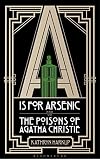
Gifted to me by a brave man who still chose to marry me after I asked for this, A is for Arsenic is a delightfully morbid blend of chemistry, literature, and murder.
Harkup uses Agatha Christie’s works to explore poisons from A onwards, combining solid science with genuinely fun wordplay and structure. It manages to be informative without being dry, and dark without being off-putting.
I read this when it first came out and even had the slightly surreal experience of meeting the author at a show more pathology museum after a lecture on poisoning, back when I was in my (only mildly more) morbid era.
Educational, entertaining, and just concerning enough to make it a memorable gift. (my parents are equal parts concerned and impressed) show less
Harkup uses Agatha Christie’s works to explore poisons from A onwards, combining solid science with genuinely fun wordplay and structure. It manages to be informative without being dry, and dark without being off-putting.
I read this when it first came out and even had the slightly surreal experience of meeting the author at a show more pathology museum after a lecture on poisoning, back when I was in my (only mildly more) morbid era.
Educational, entertaining, and just concerning enough to make it a memorable gift. (my parents are equal parts concerned and impressed) show less

Overall entertaining, educating and just a little enervating. There’s a lot of chemistry and biology in the explanations of how each poison kills that it can be a little overwhelming to read the book in long sessions. Broken up in smaller bits it works better. In addition to explaining how each poison kills, the writer describes how Christie used it in a particular book, how accurate she was about dosing and symptoms (she was!) and whether there were any real-life murders with that poison. show more Readers will especially like that there are no spoilers in most of the explanations, and where there are they are forewarned. Nice!
Although I learned a lot from the book, there were some things that I felt didn’t need explaining. Like how heroin is cut to maximize profits. Haven’t we all seen Dirty Harry, Miami Vice and a million other cop dramas to understand that this is the norm? Jeez. But on to the good stuff -
Arsenic is known to retard decomposition. Arsenic eating became a fad … yeah, I know … weird. But this fad may have contributed to the vampire myth. Bodies found long after death or disinterred may have shown little signs of decay. Where’s my stake?
Belladonna’s active component is atropine from the latin atropa which comes from Atropos, the aspect of fate responsible for cutting the cords of life. That is just so cool.
Hemlock has been mentioned in fiction for thousands of years - in plays, poetry and even used in the name of a Sesame Street character, the detective Sherlock Hemlock. Hemlock decreases in potency as the plant ages. I did not know that and will only use young hemlock. Kidding.
The term cold turkey comes from morphine withdrawal symptoms. Getting chilled and having goosebumps is very common when coming off opioids and people looked like cold turkeys. Why not cold geese is anybody’s guess.
One thing that I didn’t need to learn from a book because I already know it to be true is this - “The interaction of morphine with opioid receptors in the cerebral cortex, the higher functioning part of the brain, modifies our perception of pain. A person under the influence of morphine may continue to be aware of pain, but is no longer concerned about it.” p 183
Right on. I’ve said it in other reviews and places - vicodin (et al) doesn’t do anything for pain, it just makes you not care.
Overall an interesting book and one that if you are a person of large fortune with unscrupulous relatives, will make you want to hire a food taster. show less
Although I learned a lot from the book, there were some things that I felt didn’t need explaining. Like how heroin is cut to maximize profits. Haven’t we all seen Dirty Harry, Miami Vice and a million other cop dramas to understand that this is the norm? Jeez. But on to the good stuff -
Arsenic is known to retard decomposition. Arsenic eating became a fad … yeah, I know … weird. But this fad may have contributed to the vampire myth. Bodies found long after death or disinterred may have shown little signs of decay. Where’s my stake?
Belladonna’s active component is atropine from the latin atropa which comes from Atropos, the aspect of fate responsible for cutting the cords of life. That is just so cool.
Hemlock has been mentioned in fiction for thousands of years - in plays, poetry and even used in the name of a Sesame Street character, the detective Sherlock Hemlock. Hemlock decreases in potency as the plant ages. I did not know that and will only use young hemlock. Kidding.
The term cold turkey comes from morphine withdrawal symptoms. Getting chilled and having goosebumps is very common when coming off opioids and people looked like cold turkeys. Why not cold geese is anybody’s guess.
One thing that I didn’t need to learn from a book because I already know it to be true is this - “The interaction of morphine with opioid receptors in the cerebral cortex, the higher functioning part of the brain, modifies our perception of pain. A person under the influence of morphine may continue to be aware of pain, but is no longer concerned about it.” p 183
Right on. I’ve said it in other reviews and places - vicodin (et al) doesn’t do anything for pain, it just makes you not care.
Overall an interesting book and one that if you are a person of large fortune with unscrupulous relatives, will make you want to hire a food taster. show less
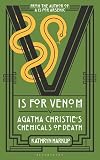
I picked this up after really enjoying A is for Arsenic, which was originally gifted to me by the man who would eventually become my life partner—a move still spoken of in extended family circles as a “bold choice” from a “brave man.”
I read A is for Arsenic by Kathryn Harkup when it first came out and even had the slightly surreal experience of meeting the author at a pathology museum after a lecture on poisoning, back when I was in my (only mildly more) morbid era, so I came into show more V is for Venom with fairly high expectations.
I didn’t love this one quite as much, mostly because the A material (in every sense, haha) was already used in A is for Arsenic, and it’s hard not to feel that the best opportunities were taken early. That said, V is for Venom is still a strong follow-up, even if it strays slightly from classic “poisons” into adjacent territory like venom and gas.
The science remains solid and engaging, though it felt a bit heavier than I remembered—possibly because when I read the first book I had a medical school acceptance in hand, and now I’m pursuing a PhD in information systems (not that kind of doctor, tragically). Even so, the explanations are clear enough that this shouldn’t be an issue for most readers.
Overall, while it doesn’t quite recapture the novelty of the first book, it’s still a fascinating and well-written exploration of murder, literature, and science. A very respectable B+… which, fittingly, comes after A. show less
I read A is for Arsenic by Kathryn Harkup when it first came out and even had the slightly surreal experience of meeting the author at a pathology museum after a lecture on poisoning, back when I was in my (only mildly more) morbid era, so I came into show more V is for Venom with fairly high expectations.
I didn’t love this one quite as much, mostly because the A material (in every sense, haha) was already used in A is for Arsenic, and it’s hard not to feel that the best opportunities were taken early. That said, V is for Venom is still a strong follow-up, even if it strays slightly from classic “poisons” into adjacent territory like venom and gas.
The science remains solid and engaging, though it felt a bit heavier than I remembered—possibly because when I read the first book I had a medical school acceptance in hand, and now I’m pursuing a PhD in information systems (not that kind of doctor, tragically). Even so, the explanations are clear enough that this shouldn’t be an issue for most readers.
Overall, while it doesn’t quite recapture the novelty of the first book, it’s still a fascinating and well-written exploration of murder, literature, and science. A very respectable B+… which, fittingly, comes after A. show less
Lists
Awards


You May Also Like


Statistics
- Works
- 9
- Members
- 880
- Popularity
- #29,100
- Rating
- 3.9
- Reviews
- 35
- ISBNs
- 42
- Languages
- 6
- Favorited
- 2