
Derek Parker
Author of Parker's Astrology
About the Author
Derek Parker has been a freelance writer and journalist since the 1960s. He is the author of more than forty books
Disambiguation Notice:
Derek and Julia Parker are two astrologers married and working together - some of their books are marked to Julia, some to Derek and some to both. Derek/Julia's author pages should not be combined with Julia's or Derek's solo pages.
Image credit: Derek and Julia Parker via their website
Series
Works by Derek Parker
The Future Now: How to Use All Methods of Prediction from Astrology to Tarot to Discover Your Future (1988) 18 copies
Parkers' Encyclopedia of Astrology: Everything You Ever Wanted to Know About Astrology (2009) 17 copies
Dreaming: A Complete Illustrated Guide to Interpreting and Benefiting from Your Dreams (1994) 7 copies
The Compleat Astrologer's Love Signs 2 copies
PREDICTING YOUR FUTURE 2 copies
Astrologisch paspoort: Leeuw 1 copy
The Author Vol. CIII-CVII 1 copy
Associated Works
Buddenbrooks: The Decline of a Family (1901) — Introduction, some editions — 6,457 copies, 113 reviews
Tagged
Common Knowledge
- Canonical name
- Parker, Derek
- Birthdate
- 1932-05-27
- Gender
- male
- Education
- Fowey Grammar School
- Occupations
- astrologer
writer
broadcaster
reporter - Relationships
- Parker, Julia (wife)
- Nationality
- UK
- Birthplace
- Looe, Cornwall, England, UK
- Places of residence
- London, England (forty years)
Sydney, New South Wales, Australia - Map Location
- England, UK
- Disambiguation notice
- Derek and Julia Parker are two astrologers married and working together - some of their books are marked to Julia, some to Derek and some to both. Derek/Julia's author pages should not be combined with Julia's or Derek's solo pages.
Members
Reviews

An entertaining enough anthology of erotic prose, produced in the early 1980s, that might still make a few people uncomfortable.
Certainly, some contemporary moralists, who might still put up with anything between two consenting adults, might baulk at the occasional pleasures involving younger persons.
The past is definitely another country. Paedo has now replaced terrorist as the central unthinking insult 'de nos jours' but, otherwise, nearly all forms of adult transgression and stance are show more here and they will amuse, disgust, 'turn on' or bore to taste.
Derek Parker is quite acute in his choice of passage, emphasising literary insights rather than arousal, but the net effect is probably to confirm that sex is something that you do rather than read or write about. In short, it hangs together well but it cannot inspire.
One test of an anthology is whether it is likely to drive you to read on. Unfortunately, most passages rather do the opposite (at least to this reviewer).
A lack of desire to discover more about desire through literature may show how much we have moved into a more explicit and visual culture - although the arrival of Fifty Shades of Unsafe Sex shows that many still prefer wordy fantasy to grubby reality.
I know and admire the work of Pauline Reage and there is a very amusing, probably unintended, satire on seventeenth century Chinese examination culture from Li Yiu but much of the material is crude or overwrought and the rest is merely 'interesting'.
As you might expect, Oscar Wilde cannot write badly and there is much of quality but probably only Casanova looks as if he would be worth reading for any sense of something that is not purely sexual fantasy.
I have probably rated this book a little unfairly because anthologies are never easy to review. Parker himself seems mature and civilised in his own assessment of this problem and of his subject matter.
I am also somewhat personally prejudiced against literature as substitute for life. Fantasy about strange worlds and other planets is one thing. Fantasy about what can actually be touched and felt strikes me as often absurd displacement activity.
So, this is one for reference and guidance really, available to remind oneself of the style and approach of a particular author. But I do have a footnote to add, a discovery, and it is not really to do with the erotic but only with fine and lucid writing.
Experimental writing is often the worst of all - I had forgotten what hard work William Burroughs was - so the clarity of Denton Welch, virtually unknown today, who died in his early 30s, was a revelation.
A superb diary passage of homo-erotic longing, English middle class diffidence and inability to act on a desire (how very English!) shows a fine writer who was never given a chance to shine. show less
Certainly, some contemporary moralists, who might still put up with anything between two consenting adults, might baulk at the occasional pleasures involving younger persons.
The past is definitely another country. Paedo has now replaced terrorist as the central unthinking insult 'de nos jours' but, otherwise, nearly all forms of adult transgression and stance are show more here and they will amuse, disgust, 'turn on' or bore to taste.
Derek Parker is quite acute in his choice of passage, emphasising literary insights rather than arousal, but the net effect is probably to confirm that sex is something that you do rather than read or write about. In short, it hangs together well but it cannot inspire.
One test of an anthology is whether it is likely to drive you to read on. Unfortunately, most passages rather do the opposite (at least to this reviewer).
A lack of desire to discover more about desire through literature may show how much we have moved into a more explicit and visual culture - although the arrival of Fifty Shades of Unsafe Sex shows that many still prefer wordy fantasy to grubby reality.
I know and admire the work of Pauline Reage and there is a very amusing, probably unintended, satire on seventeenth century Chinese examination culture from Li Yiu but much of the material is crude or overwrought and the rest is merely 'interesting'.
As you might expect, Oscar Wilde cannot write badly and there is much of quality but probably only Casanova looks as if he would be worth reading for any sense of something that is not purely sexual fantasy.
I have probably rated this book a little unfairly because anthologies are never easy to review. Parker himself seems mature and civilised in his own assessment of this problem and of his subject matter.
I am also somewhat personally prejudiced against literature as substitute for life. Fantasy about strange worlds and other planets is one thing. Fantasy about what can actually be touched and felt strikes me as often absurd displacement activity.
So, this is one for reference and guidance really, available to remind oneself of the style and approach of a particular author. But I do have a footnote to add, a discovery, and it is not really to do with the erotic but only with fine and lucid writing.
Experimental writing is often the worst of all - I had forgotten what hard work William Burroughs was - so the clarity of Denton Welch, virtually unknown today, who died in his early 30s, was a revelation.
A superb diary passage of homo-erotic longing, English middle class diffidence and inability to act on a desire (how very English!) shows a fine writer who was never given a chance to shine. show less
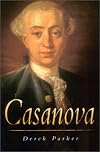
Parker gives it the old college try, but other than traipsing from one assignation, affair or embroilment to another, there's just not much to Casanova, in the end. I kept hoping that he would do something interesting, but even when he meets notable people (Voltaire, Catherine the Great) those moments are made to seem just short interludes between hops into bed. Skippable.

Two stars instead of one because I remember it had some nice illustrations and some basic information about the stories behind the constellations of the zodiac.
The 'technical' section is provided by an ephemeris (a table of the relative positions of the planets), information of how to make adjustments for geographical location, instructions of how to plot them onto a diagram to provide a birth chart, and details of how to interpret the significance of the chart.
For me, this book was an show more insight into how an individual birth chart might be produced, but also confirmed the pseudo-scientific nature of the whole enterprise. show less
The 'technical' section is provided by an ephemeris (a table of the relative positions of the planets), information of how to make adjustments for geographical location, instructions of how to plot them onto a diagram to provide a birth chart, and details of how to interpret the significance of the chart.
For me, this book was an show more insight into how an individual birth chart might be produced, but also confirmed the pseudo-scientific nature of the whole enterprise. show less
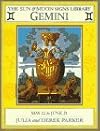
As a Gemini this was a very interesting book on the lore surrounding Gemini's as usual it sometimes fit me to a tee, often times not, but still an interesting read.
Awards


You May Also Like


Associated Authors
Statistics
- Works
- 132
- Also by
- 16
- Members
- 2,384
- Popularity
- #10,767
- Rating
- 4.1
- Reviews
- 18
- ISBNs
- 349
- Languages
- 12