
Jung Yun
Author of Shelter
About the Author
Jung Yun was born in South Korea, raised in North Dakota, and her first novel, Shelter (Picador), was long-listed for the Center for Fiction's First Novel Prize, a finalist for Good Reads' Best Fiction Book of 2016, and a finalist for the 2016 Barnes & Noble Discover Great New Writers Program. show more (Bowker Author Biography) show less
Image credit: Photo of author Jung Yun.
Works by Jung Yun
Tagged
Common Knowledge
- Gender
- female
- Education
- University of Massachusetts, Amherst (MFA - Creative Writing)
University of Pennsylvania
Vassar College - Occupations
- novelist
assistant professor (English) - Organizations
- George Washington University
- Birthplace
- Seoul, South Korea
- Places of residence
- Baltimore, Maryland, USA
Fargo, North Dakota, USA - Associated Place (for map)
- USA
Members
Reviews
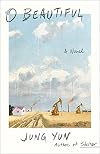
I found the author's previous book, [b:Shelter|25658832|Shelter|Jung Yun|https://i.gr-assets.com/images/S/compressed.photo.goodreads.com/books/1452090024l/25658832._SX50_.jpg|45480676], really hard to get through, with a pathetic main character that was hard to like or empathize with. O Beautiful didn't have that problem. Elinor is a fascinating character, initially a bit distant, but ultimately admirable and even lovable. She is certainly someone the reader can empathize with and come to show more care for. I found it interesting that her parents, one deceased and one who has disappeared, are like ghosts, ever-present in Elinor's thoughts, but ultimately insubstantial. I loved Yun's writing here, beautiful but not florid, straight-forward but not tedious, deftly exploring the hearts and complications of her characters. Impressive. show less
Rare is the book that I am impatient enough to buy in hardcover these days, but this exists at the intersection of many of my interests — primarily Korean immigration & the Bakken oil boom. In fact I ended up reading three books quite near each other in time that had significant overlap and really informed each other — this, Northern Light by Kazim Ali (also dealing with the impact of resource extraction on tribal lands & their surroundings — though this time hydroelectric power in show more Canada, plus also grappling with being second generation South Asian migrants) and Yellow Bird by Sierra Crane Murdock (also about the Bakken oil boom — but more directly on the effects on the reservation there).
This was the only one of the three that is fictional, but our protagonist is a journalist so it sometimes has a reporting feel. This book also deals most directly with the man problem — just how many more men than women have flooded into the area to take oil jobs — and the somewhat toxic environment that creates, for both women and men.
Elinor is also dealing with a lot of her own stuff as she tries to report on the boom — her recently fractured relationship (with her mentor & former professor, who got her assigned to this story), her difficult relationships with family, a reliance on drugs and alcohol... and as much as she tries to tamp all that down and not deal with it, her reporting on the sexism, racism, good-ol-boyism, etc. forces her to unpack far more than she cares to.
The story can be slow sometimes and Elinor is a frustrating person, but I was entranced the whole way. show less
This was the only one of the three that is fictional, but our protagonist is a journalist so it sometimes has a reporting feel. This book also deals most directly with the man problem — just how many more men than women have flooded into the area to take oil jobs — and the somewhat toxic environment that creates, for both women and men.
Elinor is also dealing with a lot of her own stuff as she tries to report on the boom — her recently fractured relationship (with her mentor & former professor, who got her assigned to this story), her difficult relationships with family, a reliance on drugs and alcohol... and as much as she tries to tamp all that down and not deal with it, her reporting on the sexism, racism, good-ol-boyism, etc. forces her to unpack far more than she cares to.
The story can be slow sometimes and Elinor is a frustrating person, but I was entranced the whole way. show less
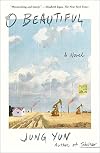
There are so many layers to this story of a Korean-American former model turned journalist who returns to North Dakota to write an article about socio-economic changes in small town, Avery, brought about by the oil boom in the Bakken Formation. Elinor grew up on an Air Force base in North Dakota and left as soon as she could, having suffered from racist treatment throughout her youth. Her personal struggles continue throughout the book.
On another level, she owes her assignment to write a show more challenging article to her former professor (and lover) who is a controlling figure in her life. She wants to take the focus in a different direction from his outline of events. Her conflicted feelings about her former relationship and present resentment of his treatment cause her to take erratic actions and decisions.
In the course of conducting her research she encounters racism and mysogynistic attitudes/behaviors from men and women, both locals and "newcomers" in the area. At the same time she feels like she has made friends for the first time in her life with people from the area. Anyone who has lived in that part of the country knows that those contrasts exist.
Because of her familiarity with the area, Elinor is struck by the destructive changes to the natural beauty and resources. Her interviews reveal environmental and health issues brought about by the fracking process in oil production. All of this adds to the realism and drama of the story. show less
On another level, she owes her assignment to write a show more challenging article to her former professor (and lover) who is a controlling figure in her life. She wants to take the focus in a different direction from his outline of events. Her conflicted feelings about her former relationship and present resentment of his treatment cause her to take erratic actions and decisions.
In the course of conducting her research she encounters racism and mysogynistic attitudes/behaviors from men and women, both locals and "newcomers" in the area. At the same time she feels like she has made friends for the first time in her life with people from the area. Anyone who has lived in that part of the country knows that those contrasts exist.
Because of her familiarity with the area, Elinor is struck by the destructive changes to the natural beauty and resources. Her interviews reveal environmental and health issues brought about by the fracking process in oil production. All of this adds to the realism and drama of the story. show less
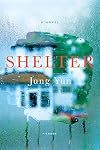
Do not read this book if you have commitments the next day. Do not read this book if you are on the bus ride to work. Once you start, you won't be able to stop. Do not pass Go. Do not collect $200.
Yun's darkly domestic, disturbing prose will pull you down a rabbit hole you won't want to go down, but it's too late now and you should've seen her warnings earlier.
Shelter centres around a young Korean-American father, Kyung, who's living beyond his means in a house he can't afford. The story show more begins with Kyung's mother, Mae coming into his backyard, naked, injured and crying in Korean. Very soon after, Kyung's parents come to live with him and all of their tumultuous past comes to the surface like oil rising to the surface of water. The only thing holding the oil in place is the tension in the water.
Yun is a master innovator of the darkly disturbing domesticity I've been craving since I read The Vegetarian by Han Kang. What I appreciate about Yun's writing is that she somehow makes the domestic situation more unsettling than the actual crime that's committed in the opening pages of the book. Her rendition of Korean family dynamics -- the expectations, the social obligations, the mental and emotional strain of a family who never truly communicates because they never learned how -- is something I doubt I'll ever read again.
Then, somehow, the energy changes, Yun adds to the tension, layer by layer, crafting each character with care as someone might chip away at marble, with precision. Kyung is a wonderfully complex character with muddied motivations and emotional reactions that make him feel tangible. Kyung's upset about something and makes a move to apologise, but instead of apologising, he blames the person he meant to apologise to. All at once, I sided with him, I understood and then I went straight back to disliking him.
Then, somewhere in the last 100 pages, the delicate dominos Jung Yun has lined up all begin to fall. One by one, gaining momentum as they had for the centre. I'm still reeling from the conclusion, in fact, I'm not sure I'll ever get over it. I wish I could talk about it. I wish I could disclose it all, but to do that would be to dishonour this book, and I don't want to do that.
I should warn you, if you are at all sensitive to domestic violence, I would give this book a miss. It is an overarching theme in this book and reappears frequently, each time often more intense than the last.
I feel conflicted, like Kyung. I want everyone to read it, but I don't want anyone feeling the way I feel after I read it. But I need someone to talk to about it.
So it goes. show less
Yun's darkly domestic, disturbing prose will pull you down a rabbit hole you won't want to go down, but it's too late now and you should've seen her warnings earlier.
Shelter centres around a young Korean-American father, Kyung, who's living beyond his means in a house he can't afford. The story show more begins with Kyung's mother, Mae coming into his backyard, naked, injured and crying in Korean. Very soon after, Kyung's parents come to live with him and all of their tumultuous past comes to the surface like oil rising to the surface of water. The only thing holding the oil in place is the tension in the water.
Yun is a master innovator of the darkly disturbing domesticity I've been craving since I read The Vegetarian by Han Kang. What I appreciate about Yun's writing is that she somehow makes the domestic situation more unsettling than the actual crime that's committed in the opening pages of the book. Her rendition of Korean family dynamics -- the expectations, the social obligations, the mental and emotional strain of a family who never truly communicates because they never learned how -- is something I doubt I'll ever read again.
Then, somehow, the energy changes, Yun adds to the tension, layer by layer, crafting each character with care as someone might chip away at marble, with precision. Kyung is a wonderfully complex character with muddied motivations and emotional reactions that make him feel tangible. Kyung's upset about something and makes a move to apologise, but instead of apologising, he blames the person he meant to apologise to. All at once, I sided with him, I understood and then I went straight back to disliking him.
Then, somewhere in the last 100 pages, the delicate dominos Jung Yun has lined up all begin to fall. One by one, gaining momentum as they had for the centre. I'm still reeling from the conclusion, in fact, I'm not sure I'll ever get over it. I wish I could talk about it. I wish I could disclose it all, but to do that would be to dishonour this book, and I don't want to do that.
I should warn you, if you are at all sensitive to domestic violence, I would give this book a miss. It is an overarching theme in this book and reappears frequently, each time often more intense than the last.
I feel conflicted, like Kyung. I want everyone to read it, but I don't want anyone feeling the way I feel after I read it. But I need someone to talk to about it.
So it goes. show less
Lists
Awards


You May Also Like


Associated Authors
Statistics
- Works
- 3
- Members
- 699
- Popularity
- #36,216
- Rating
- 3.7
- Reviews
- 43
- ISBNs
- 20
- Languages
- 1
- Favorited
- 2