
Florence Temko (1921–2009)
Author of Origami Magic
About the Author
Series
Works by Florence Temko
Origami for Beginners: The Creative World of Paper Folding: Easy Origami Book with 36 Projects: Great for Kids or Adult Beginners (1991) 47 copies
Fabrigami: The Origami Art of Folding Cloth to Create Decorative and Useful Objects (2013) — Contributor — 24 copies, 1 review
Fun & Easy Origami Kit: 30 Original Paper-folding Projects: Includes Origami Kit with 2 Instruction Books & 98 High-Quality Origami Papers (2017) 5 copies
Origami Love Notes Kit: Romantic Hand-Folded Notes & Envelopes: Kit with Origami Book, 12 Original Projects and 36 High-Quality Origami Papers (2017) 4 copies
Jewish origami 4 copies
Paper Folding Made Easy 4 copies
JEWISH ORIGAMI 3 copies
Origami for Beginners 2 copies
Tagged
Common Knowledge
- Birthdate
- 1921-10-20
- Date of death
- 2009-11-12
- Gender
- female
- Nationality
- USA
- Places of residence
- La Jolla, California, USA
- Associated Place (for map)
- California, USA
Members
Reviews

An odd little book. Some of the patterns given are origami, mostly pretty basic ones; the non-modular ones are all familiar to me from other sources. The modular ones are interesting, and I think quite doable, though the instructions and diagrams are a little confusing at times. She keeps re-defining mountain and valley folds with each pattern, not sure why. There are also several patterns that are _not_ origami - when scissors and glue get involved, it's papercraft but not origami. The show more woven basket, in particular, bothers me. Overall, it looks interesting and I want to work some of her patterns, but it's not really a great origami book. show less
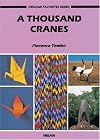
This non-fiction title is a "how to" book on the craft of origami...specifically how to fold paper "cranes", and assemble them together. While that is a fun thing to have students do, I was very touched by the story of Sadako, and the memorial to her where people place paper cranes they create. I actually teared up reading that part. So it has different "levels" of interest, and that makes it a good book in my eyes.
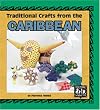
Beginning with a map and historical information on the Caribbean, step-by-step guidelines for eight projects follow: Cuban yarn dolls, Puerto Rican "vejigante" masks, Jamaican woven fish, Barbadian shell crafts, Grenadian spice hangers, Haitian metal cutouts, as well as drums and tap-tap trucks. Appropriate for grades 3-7 (the younger grades with adult help; safety comments provided as needed), each project also includes colorful photos, diagrams, templates, (easily acquired) supply lists, show more and suggestions for variations. Most include a small map and additional facts about the country of origin. The book concludes with a metric conversion chart, glossary, index, and suggested reading (fiction, folktales, nonfiction).
I have not been able to locate another resource like this one. The crafts range from very easy (the yarn dolls, shell crafts, coffee can drums, woven paper fish, and spice hangers) to more difficult (the masks, which involve papier-mache; the tap-tap trucks, which use modeling clay; and the metal cutouts, which use disposable aluminum pie pans that may have sharp edges when cut). The recommendations for grades 3-7 are probably appropriate (I have worked with many second graders who have difficulty with paper weaving, cutting with scissors, and anything involving glue!). show less
I have not been able to locate another resource like this one. The crafts range from very easy (the yarn dolls, shell crafts, coffee can drums, woven paper fish, and spice hangers) to more difficult (the masks, which involve papier-mache; the tap-tap trucks, which use modeling clay; and the metal cutouts, which use disposable aluminum pie pans that may have sharp edges when cut). The recommendations for grades 3-7 are probably appropriate (I have worked with many second graders who have difficulty with paper weaving, cutting with scissors, and anything involving glue!). show less
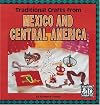
Not only is this a how to crafts book, it is also a learning tool of the culture of Mexico and Central America. This book would work with well when teaching about different cultures or where objects came from. The instructions are easy to follow and include detailed illustrations. The real pictures of how the crafts appear in the countries and how they are used will give students the connection of the craft they themselves made to the actual craft in the culture. History of the technique show more used in making the crafts also create an educational piece with children, as they learn about what the people did in order to make the objects. show less
Lists
Awards


You May Also Like


Associated Authors
Statistics
- Works
- 71
- Members
- 1,269
- Popularity
- #20,210
- Rating
- 3.5
- Reviews
- 14
- ISBNs
- 100
- Languages
- 2