

Tomoko Fuse
Author of Unit Origami: Multidimensional Transformations
About the Author
Image credit: Prof. Finn
Works by Tomoko Fuse
Tomoko Fuse's Origami Boxes: Beautiful Paper Gift Boxes from Japan's Leading Origami Master (Origami Book with 30 Projects) (2018) 49 copies
The Complete Book of Origami Polyhedra: 64 Ingenious Geometric Paper Models (Learn Modular Origami from Japan's Leading Master!) (2022) 20 copies
Shin Origami Rando: Tsukatte Asobou Yunitto Origami (New Origami Land: Origami You Can Play With) (2000) 12 copies
Chōhōkei no kami ēyon ichimai de oru : sankaku shikaku gokaku nagai katachi no hako (2014) 8 copies
鶴と扇と (折り紙コレクション) 7 copies
Origami Shinsekai 2,2 7 copies
Yunitto Origami Essensu: Fuse Tomoko No Yunitto Shūsei Rippōtai Jūnimentai Nijūmentai Kara Hoshigumi Made (2010) 7 copies
Stylish accessory who make the unit origami (1993) ISBN: 4140310588 [Japanese Import] (1993) 6 copies
Origami de tsukuru mochiÌ"futsunagi : kazaru okuru tanoshimu kumiawasete dekiru hoshi to hana to yuki no kesshoÌ" (2009) 6 copies
おりがみ入れ物いろいろ (新・おりがみランド) 6 copies
Easy Origami to Enliven Your Life (Kurashi o Irodoru Raku Raku no Origami) (in Japanese) (1656) 6 copies
Shin Origami Rando: Hako Baraeti Yunitto Origami (New Origami Land: Origami Box Variety) (2000) 6 copies
おりがみ 花の模様 (おりがみ工房) 5 copies
世界のユニットおりがみ (おりがみランド) 5 copies
だれでもできる最新くす玉折り紙教室 4 copies
おりがみ 食卓を楽しく (おりがみ工房) 4 copies
Hajimete demo kumeru kusudama origami : Ichiban wakariyasui tamentai origami no tsukurikata. (2014) 4 copies
Origami hanakusudama. 3 copies
おりがみ 伝承とその応用 (おりがみ工房) 3 copies
Fabulous Origami Boxes 2 copies
Wrap and Bag Included Put That Need: Letters and Thank Yous/Wrap, Convenient Fold People 76 Piece 2 copies
折り紙のたのしみ (ちくま少年図書館 57) 2 copies
鶴のおりがみ (新・おりがみランド) 2 copies
유니트 종이접기 3 [unit origami] 2 copies
Crane Origami 1 copy
The Mask (Tomoko Fuse Model Collection) [面 (布施知子折り紙作品集) Men (Fuse Tomoko Origami Sakuhin Shuu)] 1 copy
Flowery Origami Kusudama's 1 copy
Cranes and Fans 1 copy
小箱につめる12か月 春夏 (折り紙雑貨店 (3)) 1 copy
Hako O Tanoshimu 1 copy
Spiral Origami I 1 copy
Yorokobi (喜び) 1 copy
The Mask (面) 1 copy
たのしい箱の世界 (ユニット折り紙) 1 copy
できた! ユニット折り紙入門 (ちくま文庫) 1 copy
動くおりがみ (新・おりがみランド) 1 copy
箱バラエティー―ユニットおりがみ (おりがみランド) 1 copy
Neat Origami Boxes 1 copy
유니트 종이접기 4 (Unit Origami 4 ) 1 copy
Origami modulare 1 copy
Tagged
Common Knowledge
- Canonical name
- Fuse, Tomoko
- Legal name
- 布施 知子
- Birthdate
- 1951
- Gender
- female
- Nationality
- Japan
- Birthplace
- Niigata Prefecture, Japan
- Places of residence
- Nagano Prefecture, Japan
- Associated Place (for map)
- Japan
Members
Reviews
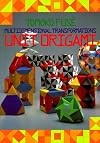
This is perhaps my favorite origami book. I've made pretty much every model in this book at one point or another. I've got some other unit origami books, but they can't compare to this one. There's nothing more disappointing to the origami enthusiast than completing a big, multi-unit structure with thirty or so individual pieces of paper, only to find out that the big old geometric ball that you just made is structurally unsound, or doesn't even stay together at all. That doesn't happen show more here. If a design in this book doesn't stay together that well when you assemble all the units, the author tells you so beforehand (there are a couple like this, which the author includes due to their beauty or the ingenuity of their design). I'm an especially big fan of the pinwheel unit that you can see in black and white on the cover of this book. You can make all sorts of geometrical figures with it, like the cubes shown on the cover, but what's especially compelling is that you can connect different units using a variety of different paper joints (you can see the red paper that's connecting the cubes there on the cover). Making unit origami then connecting the units together in interesting ways is a lot of fun. I used to teach my neighbors' children in Mongolia how to make some of these, and they always got a kick out of it. Then they would have something to do when they came over to my ger and wouldn't bother me about letting them play solitaire on my computer. It was a win-win situation for me. I've given a lot of these unit origami creations as gifts, and they're always well-received. Another interesting thing about these designs is that you can often use the units to make a wide variety of three-dimensional geometric shapes. There's a glossary of geometric solids in the back of the book to help you with that. I recommend this book highly to all people interested in origami. show less
Impressive book with clear instructions and an elegant presentation. The models are organized by method of construction. There are essentially two techniques of construction. One involves flat plates that can be bent and slotted into other flat plates. Generally speaking, the visible part of a plate occupies just one face of the polyhedron. In some case, a unit is only visible as an edge, since its sole purpose is to connect other units. I have not seen this technique in any other origami show more book. This might be a good approach for molecular origami. The other technique the author uses is the more traditional approach, where a polyhedron can be made of many identical modules that usually occupy a portion of several faces of the polyhedron.
I made the cuboctahedron, which uses the first technique. It was satisfactory, but certainly one of the least ambitious models in the book.
I will attempt more, next time. show less
I made the cuboctahedron, which uses the first technique. It was satisfactory, but certainly one of the least ambitious models in the book.
I will attempt more, next time. show less
This book was my first introduction to making origami boxes and I derived a lot of pleasure from working through it. However, there are errors in the instructions for some boxes, particularly when it comes to explaining how to make nested boxes.
When attempting to make hexagonal boxes of different sizes, I found I was getting boxes that either had holes in the top, or else were domed owing to the centre having too much paper. After some effort (aided by by some basic geometry and show more trigonometry) I was able to work out a better technique that solved the problem and produced perfect hexagonal boxes.
The photos of completed boxes are beautiful and an inspiration when working, but they are not well annotated. For instance, to produce the effect shown in one of the photos of a triangular box, you need to work with two sheets of paper of different colours held back to back (using a total of six, rather than the normal three, sheets) - this is not mentioned anywhere in the text, you have to work it out for yourself.
The instructions for size adjustments for boxes with four sides seem to be fine (I haven't tried the octagonal boxes yet).
Overall, a good book, but I wouldn't give it to a beginner. My copy is covered in pencil notations where I've made corrections and clarifications. show less
When attempting to make hexagonal boxes of different sizes, I found I was getting boxes that either had holes in the top, or else were domed owing to the centre having too much paper. After some effort (aided by by some basic geometry and show more trigonometry) I was able to work out a better technique that solved the problem and produced perfect hexagonal boxes.
The photos of completed boxes are beautiful and an inspiration when working, but they are not well annotated. For instance, to produce the effect shown in one of the photos of a triangular box, you need to work with two sheets of paper of different colours held back to back (using a total of six, rather than the normal three, sheets) - this is not mentioned anywhere in the text, you have to work it out for yourself.
The instructions for size adjustments for boxes with four sides seem to be fine (I haven't tried the octagonal boxes yet).
Overall, a good book, but I wouldn't give it to a beginner. My copy is covered in pencil notations where I've made corrections and clarifications. show less
Fuse has written a book all about one of her favorite areas of origmami: modular creations. Modular origami is created when you fold multiple copies of the same unit and then work them together to create a larger model. It looks gorgeous, but can be very time consuming and frustrating if your model is made of 60 units. I like this book alot, but it is clear that Fuse's ability to fold is light years beyond mine. Still, she always gives clear directions and diagramms so that if you are show more patient you can make gorgeous models. show less
You May Also Like


Statistics
- Works
- 144
- Members
- 1,654
- Popularity
- #15,535
- Rating
- 4.4
- Reviews
- 7
- ISBNs
- 130
- Languages
- 5
- Favorited
- 2