
Rudolph Maté (1898–1968)
Author of The 300 Spartans [1962 film]
About the Author
Image credit: wikimedia.org
Works by Rudolph Maté
The Man with the Golden Arm / D.O.A. / David Copperfield (Triple Feature Video) — Director — 2 copies
The Mystery Collection 10 Movie Pack — Director — 2 copies
Streets of Fear - 20 Movie Collection — Director — 2 copies
The Green Glove 1 copy
Universal Classics: 3 DVDs — Director — 1 copy
Mystery Classics: Fog Island / Green Eyes / The Green Glove / International Crime (2005) — Director — 1 copy
The Black Shield of Falworth 1 copy
Branded 1 copy
Quando i mondi si scontrano 1 copy
Associated Works
Film Noir Classics (Detour / D.O.A. / He Walked By Night / Impact) — Director — 1 copy
Tagged
Common Knowledge
- Canonical name
- Maté, Rudolph
- Legal name
- Mayer, Rudolf
- Birthdate
- 1898-01-21
- Date of death
- 1968-10-27
- Gender
- male
- Occupations
- film director
cinematographer
film producer - Nationality
- Austria-Hungary
- Birthplace
- Kraków, Austria–Hungary
- Place of death
- Beverly Hills, California, USA
- Map Location
- Poland
Members
Reviews
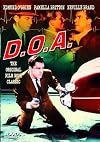
This riveting entry in the noir cycle is everything many others made in the genre during this time period failed to be. Despite a relatively meager budget, Rudolph Mate used the lovely San Francisco locations and a harrowing set of circumstances to create a minor masterpiece. Atmospheric and suspenseful, the viewer races against time with the hero as Mate ratchets the tension to a fever pitch. How we often realize the importance of loving someone too late makes for a moving ending, as the show more police report is stamped, D.O.A.
The story-line is that a man in San Francisco reports his own murder. Mate creates drama from the opening moments as the still very much alive victim walks down a long corridor to the Homicide Division. Edmond O’Brien, radio’s first Johnny Dollar, gives a solid performance as Frank Bigelow. He's planning a weekend jaunt to San Francisco to avoid committing to his girlfriend. Pamela Britton is quite nice in the role of Frank’s devoted sweetheart, Paula Gibson. Paula’s phone calls and small reminders act as his conscience every time he sees a pretty girl and bells go off. Despite this, however, he ends up with a group across the hall from his swanky St. Francis Hotel room. Nothing ends up happening but when he wakes up, something doesn’t feel quite right.
A trip to the doctor reveals that he has been poisoned in a way which cannot be treated or reversed. Stunned and initially in denial, Frank finally becomes angry when he’s told it could not have been an accident. Mate adds an ironic touch when an exhausted Frank, trying to come to terms with what’s happened, leans against a newsstand featuring LIFE magazine. Throughout the story, the director takes full advantage of the cable cars and nightlife of this once fabulous city. San Francisco for Frank, however, has become a dark nightmare for a man bent on finding the man who did this to him. There are some fabulous twists and turns along the way in the screenplay by Russell Rouse and Clarence Green. Every second which ticks by is one less that Frank has to solve the mystery in a race against time. There is both urgency and danger as Frank inches closer to the truth, and some tenderness when a worried Paula shows up to help. Frank has realized too late that she was always the one, and now has little time to tell her before he finishes his last task.
A great cast includes William Ching, Beverly Garland, Luther Adler and Lynn Baggett. Of special note is Laurette Luez as the tawdry Marla Rakubian, and young, real-life war hero Neville Brand as the psychopath, Chester. TV fans may remember Brand as Texas Ranger Reese Bennett from Laredo. He earned many medals during the war, including a Purple Heart and Silver Star. Here he is quite good at portraying a bad guy.
A poignant ending punctuates this truly masterful noir film. It is a film both technically brilliant, and has a heart. O’Brien is excellent and Britton adds a tender element to the film with her quiet and realistic performance. A fabulous and unique film that is a must for film buffs. show less
The story-line is that a man in San Francisco reports his own murder. Mate creates drama from the opening moments as the still very much alive victim walks down a long corridor to the Homicide Division. Edmond O’Brien, radio’s first Johnny Dollar, gives a solid performance as Frank Bigelow. He's planning a weekend jaunt to San Francisco to avoid committing to his girlfriend. Pamela Britton is quite nice in the role of Frank’s devoted sweetheart, Paula Gibson. Paula’s phone calls and small reminders act as his conscience every time he sees a pretty girl and bells go off. Despite this, however, he ends up with a group across the hall from his swanky St. Francis Hotel room. Nothing ends up happening but when he wakes up, something doesn’t feel quite right.
A trip to the doctor reveals that he has been poisoned in a way which cannot be treated or reversed. Stunned and initially in denial, Frank finally becomes angry when he’s told it could not have been an accident. Mate adds an ironic touch when an exhausted Frank, trying to come to terms with what’s happened, leans against a newsstand featuring LIFE magazine. Throughout the story, the director takes full advantage of the cable cars and nightlife of this once fabulous city. San Francisco for Frank, however, has become a dark nightmare for a man bent on finding the man who did this to him. There are some fabulous twists and turns along the way in the screenplay by Russell Rouse and Clarence Green. Every second which ticks by is one less that Frank has to solve the mystery in a race against time. There is both urgency and danger as Frank inches closer to the truth, and some tenderness when a worried Paula shows up to help. Frank has realized too late that she was always the one, and now has little time to tell her before he finishes his last task.
A great cast includes William Ching, Beverly Garland, Luther Adler and Lynn Baggett. Of special note is Laurette Luez as the tawdry Marla Rakubian, and young, real-life war hero Neville Brand as the psychopath, Chester. TV fans may remember Brand as Texas Ranger Reese Bennett from Laredo. He earned many medals during the war, including a Purple Heart and Silver Star. Here he is quite good at portraying a bad guy.
A poignant ending punctuates this truly masterful noir film. It is a film both technically brilliant, and has a heart. O’Brien is excellent and Britton adds a tender element to the film with her quiet and realistic performance. A fabulous and unique film that is a must for film buffs. show less

"D.O.A." is a film noir classic, full of head-long drive, allied to a brooding atmosphere, with a story built on a mountain of irony - not least the central conceit of a poisoned, soon to be dead man searching for his own killer. In 2004 it was selected for preservation in the United States National Film Registry by the Library of Congress as being "culturally, historically, or aesthetically significant. Written by Russell Rouse and Clarence Greene the film opens with Frank Bigelow (Edmond show more O'Brien) walking into a police station to report his own murder. Bigelow tells his story to the cops in flashback - he's an accountant from the town of Banning who took a week-off in San Francisco, much to the chagrin of his secretary and girlfriend, Paula (Pamela Britton) who he leaves behind in Banning. In 'Frisco he's invited by a group of people at a sales convention to join them at a nightclub for drinks. Unfortunately, he has his drink swapped by a stranger and soon afterwards begins to feel I'll. He visits a doctor the next day who diagnoses him as having been poisoned with "luminous toxin" for which there is no antidote. He's given a few days to live and sets out to discover who poisoned him and why. "D.O.A." is an expertly put together paranoid little thriller out of which director Rudolph Maté manages to squeeze an ocean of suspense and tension. Everything about the film is a touch off-centre: the story structure is strange, in essence, one extended flashback sequence and the storyline is complex and meandering - much like Frank, it's never 100% clear to the audience exactly what's going on. The film was obviously made on a meagre budget but Maté and his cinematographer Ernest Laszlo makes up for any shortcoming with odd camera angles, strange framings and innovative, brilliantly lit and stylised noir sequences. The film opens with a superb tracking shot that has been referred to as "...one of cinema's most innovative opening sequences". The sequence follows Frank into the police station and down the station corridors into a roomful of detectives, who appear to have been waiting for him. This opening sequence has the effect of putting the audience alongside Frank in his walk into the police station; through the camera we accompany him into the station. Rudolph Maté from the very outset therefore makes the audience an ally of Frank the "everyman" hero of the piece - we're there alongside him every step of the way. Great scenes and sequences follow on: the smoky jazz bar (one of the earliest representations of beat culture on film); Frank running through the street, as if trying to escape his fate, after being informed he's only got days to live (shot guerrilla style, the stunned pedestrians having no idea a movie was being made and that an actor would be charging through them); Frank hunting the killers in an abandoned warehouse; a gunfight in a crowded chemist shop and the final confrontation at the Bradbury Building. The cast is also excellent, particularly Edmond O'Brien, hugely likeable as the harassed and put-upon Frank Bigelow who ironically only finds drive, motivation and a reason to live when handed a death sentence. What could be more noir than that? Neville Brand is brilliant as spittle-flecked psychopathic thug Chester and Pamela Britton and Beverly Garland (credited as Beverly Campbell) put in good turns as good girl, Paula and the bad girl Miss Foster. Everything about "D.O.A." works brilliantly - the direction and cinematography by Rudolph Maté and Ernest Laszlo is first class, the performances are good, the plot hugely original and the atmosphere appropriately brooding and grim. An excellent slice of film noir. show less
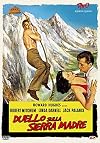
“I’ve led a very sheltered life. I thought every girl was named mama till I was 21.” — Mitchum, trying to charm Darnell
If you are a fan of atmosphere and the two lead stars in this film, and don't mind that much of the happenings are best left unexamined, then the tense and harrowing climax of this film will make what came before it play much better than it is in reality. Howard Hughes picked this film to be the first RKO production shot in 3-D and it is very easy to see why once show more viewed. Rudolph Mate shot it in places like Cuernavaca, Morelos, Taxo, and Guerrero, giving it a real South American feel throughout. Beautiful scenery and atmosphere make it easy to ignore the film's deficiencies, especially in the last third of the film, which is as tense and exciting as any you'll see. It is so good in fact, it almost feels like you are suddenly watching a different movie, Mate and Mitchum just enjoying the atmosphere themselves, and saving the good stuff for last.
Mitchum is Russ Lambert, a boxer afraid to throw his big right hand after putting an opponent down for the longest count that exists. He and his manager are traveling around fighting lesser-knowns so he can win without the risk of hurting anyone else. Linda Darnell is Clare Sinclair/Sheppard, on the run from boyfriend and gangster Vic Spilato. He has sent his own deadly right hand to bring her back before she can testify against him. Gunsmoke fans will easily recognize Milburn Stone in the brief role of Spilato's bookkeeper, Edward Dawson, who says the wrong thing to Cappy (Jack Palance). Seeing the headline about his death, Clare knows Vic has found her. But Cappy's loyalty to Vic is suspect, having a thing for Clare himself. While she tries not to fall for Russ, Cappy tracks them down amid some spicy flavor provided by Mate and Hughes.
A lovely spot called ‘the mountain of contentment’ is simply there to enjoy, as are the fireworks at the Spanish wedding of a young couple. A rather suggestive dance at the celebration by a married woman is thrown into the fragrant pot as well, as is a magnificent tram ride between the gorgeous peaks. Clare tries to ditch Russ so he won't get hurt, but he’s in for the long haul and tries to convince her they can make a new start. When Cappy finds them onboard the tram, it sets the stage for a spectacular finish that will have viewers on the edge of their seats. The newly married couple (Maurice Jara — Judy Walsh), the decent man who killed his wayward wife for her indiscretions (Rudolfo Hoyos Jr.), the young son he loves (Richard Vera), the cop escorting him to jail (Salvador Baguez), two English tourists (Reginald Sheffield — Margaret Brewster), and the proud cable car conductor (Sandro Giglio) all join the trio for a ride no moviegoer will ever forget.
The fight between Russ and Cappy on the swinging tram whose one fraying cable could break at any moment is just one highlight which make the last thirty minutes of this film terrific viewing. A blindfolded boy may end up picking who lives and who dies. Whether all the thrills in this film come too late for you depends on your own taste. If you are a stickler for plot and motivations, this one isn't for you in any way, shape or form. I went with it all because of the atmosphere and the stars, so enjoyed it a ton despite that. Others will have to make up their own minds, so it is best to search out the least expensive option before shelling out big bucks. show less
If you are a fan of atmosphere and the two lead stars in this film, and don't mind that much of the happenings are best left unexamined, then the tense and harrowing climax of this film will make what came before it play much better than it is in reality. Howard Hughes picked this film to be the first RKO production shot in 3-D and it is very easy to see why once show more viewed. Rudolph Mate shot it in places like Cuernavaca, Morelos, Taxo, and Guerrero, giving it a real South American feel throughout. Beautiful scenery and atmosphere make it easy to ignore the film's deficiencies, especially in the last third of the film, which is as tense and exciting as any you'll see. It is so good in fact, it almost feels like you are suddenly watching a different movie, Mate and Mitchum just enjoying the atmosphere themselves, and saving the good stuff for last.
Mitchum is Russ Lambert, a boxer afraid to throw his big right hand after putting an opponent down for the longest count that exists. He and his manager are traveling around fighting lesser-knowns so he can win without the risk of hurting anyone else. Linda Darnell is Clare Sinclair/Sheppard, on the run from boyfriend and gangster Vic Spilato. He has sent his own deadly right hand to bring her back before she can testify against him. Gunsmoke fans will easily recognize Milburn Stone in the brief role of Spilato's bookkeeper, Edward Dawson, who says the wrong thing to Cappy (Jack Palance). Seeing the headline about his death, Clare knows Vic has found her. But Cappy's loyalty to Vic is suspect, having a thing for Clare himself. While she tries not to fall for Russ, Cappy tracks them down amid some spicy flavor provided by Mate and Hughes.
A lovely spot called ‘the mountain of contentment’ is simply there to enjoy, as are the fireworks at the Spanish wedding of a young couple. A rather suggestive dance at the celebration by a married woman is thrown into the fragrant pot as well, as is a magnificent tram ride between the gorgeous peaks. Clare tries to ditch Russ so he won't get hurt, but he’s in for the long haul and tries to convince her they can make a new start. When Cappy finds them onboard the tram, it sets the stage for a spectacular finish that will have viewers on the edge of their seats. The newly married couple (Maurice Jara — Judy Walsh), the decent man who killed his wayward wife for her indiscretions (Rudolfo Hoyos Jr.), the young son he loves (Richard Vera), the cop escorting him to jail (Salvador Baguez), two English tourists (Reginald Sheffield — Margaret Brewster), and the proud cable car conductor (Sandro Giglio) all join the trio for a ride no moviegoer will ever forget.
The fight between Russ and Cappy on the swinging tram whose one fraying cable could break at any moment is just one highlight which make the last thirty minutes of this film terrific viewing. A blindfolded boy may end up picking who lives and who dies. Whether all the thrills in this film come too late for you depends on your own taste. If you are a stickler for plot and motivations, this one isn't for you in any way, shape or form. I went with it all because of the atmosphere and the stars, so enjoyed it a ton despite that. Others will have to make up their own minds, so it is best to search out the least expensive option before shelling out big bucks. show less

2026 movie #11. 1949. Frank (O'Brien) is a small town accountant on vacation in San Francisco when someone slips him a fatal, but slow-acting, dose of poison. He has enough time to figure out who wants him dead and why. A classic noir. Complicated story but it holds together.
You May Also Like


Associated Authors
Statistics
- Works
- 35
- Also by
- 12
- Members
- 394
- Popularity
- #61,533
- Rating
- 3.6
- Reviews
- 14
- ISBNs
- 16