
Richard Stoneman (1) (1951–2025)
Author of A Traveller's History of Turkey
For other authors named Richard Stoneman, see the disambiguation page.
About the Author
Richard Stoneman is an honorary visiting professor in the Department of Classics and Ancient History at the University of Exeter. His many books include Alexander the Great: A Life in Legend and Xerxes: A Persian Life.
Works by Richard Stoneman
Books We Might Have Known 2 copies
Associated Works
The Oresteia: Agamemnon, Women at the Graveside, Orestes in Athens (0458) — Consultant Editor, some editions — 11,671 copies, 87 reviews
The Greek Alexander Romance (2000) — Translator, some editions; Translator, some editions — 382 copies, 7 reviews
Tagged
Common Knowledge
- Legal name
- Stoneman, Richard John
- Birthdate
- 1951
- Date of death
- 2025-06-01
- Gender
- male
- Occupations
- classics editor
classics scholar - Organizations
- University of Exeter, UK
Routledge - Nationality
- England
UK - Places of residence
- London, England, UK
Devon, England, UK - Associated Place (for map)
- England, UK
Members
Reviews
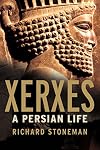
He’s the Ahasuerus of Esther, and is otherwise passed over in silence in the Hebrew Bible. He’s the ultimate bad guy of Herodotus’ Histories. You’d think we’d know a lot about the Achaemenid Persian king we call Xerxes, but there is much to be desired.
Richard Stoneman does the best he can with the resources available in Xerxes: A Persian Life (galley received as part of early review program). He has a great handle on the relevant resources available in Greek and the current state show more of archaeology. In this work he even strains by using far later Iranian tales, which in whatever details they perhaps retain about Xerxes, are garbled and intermixed with stories of later Parthian and perhaps even Sassanid kings, as well as later operas and plays written by Greeks and Europeans.
Xerxes is as much a biography of the Persian Empire as it is a story about Xerxes himself. The author well framed the life of Xerxes in terms of how his father Darius ascended to the throne and Darius’ adventures against the Scythians and the Greeks. The author suggests Xerxes was constantly haunted by the specter of his father and keeping up the family legacy.
The author considered what could be known of life in the Persian court and how Xerxes would have conducted himself within it. The author uses Herodotus’ narrative in order to set forth Xerxes’ campaign against the Greeks and tries his best to imagine the situation according to Xerxes’ perspective. It would be impossible to consider the Greek campaign an unmitigated success, and its failings may have bedeviled Xerxes for the rest of his life; but it was not a complete failure, for many people did submit to him, and he was able to destroy Athens.
The author shows how Xerxes otherwise seemed to invest his time and efforts in a major building program at Persepolis, which proves quite difficult to consider since the Greek records suggest Alexander the Great very specifically targeted the parts of Persepolis built by Xerxes for destruction.
Xerxes’ home life is considered as well as the assassination plot which led to his death. You’d think much more would be recorded about such a great and influential king. And yet we seem to know more about many kings before and after Xerxes than Xerxes himself.
While the author casts aspersions on the historical legitimacy of the book of Esther for many not insignificant reasons, ironically, it would seem the author of the book of Esther might well have best captured the personality and spirit of Xerxes and his court. He was a man who got whatever he wanted, for better or for worse, and who could be easily directed for all kinds of ends. His biggest mistake was his biggest exploit, making himself the ultimate enemy of the Greeks, leading to the erasure of most of his legacy.
Xerxes ascended to the throne without drama, and despite his assassination, the throne passed relatively smoothly to his son Artaxerxes (I). It was not much, but it was something. And we are all left to consider how such aspirations to greatness could lead to such vanity and futility. show less
Richard Stoneman does the best he can with the resources available in Xerxes: A Persian Life (galley received as part of early review program). He has a great handle on the relevant resources available in Greek and the current state show more of archaeology. In this work he even strains by using far later Iranian tales, which in whatever details they perhaps retain about Xerxes, are garbled and intermixed with stories of later Parthian and perhaps even Sassanid kings, as well as later operas and plays written by Greeks and Europeans.
Xerxes is as much a biography of the Persian Empire as it is a story about Xerxes himself. The author well framed the life of Xerxes in terms of how his father Darius ascended to the throne and Darius’ adventures against the Scythians and the Greeks. The author suggests Xerxes was constantly haunted by the specter of his father and keeping up the family legacy.
The author considered what could be known of life in the Persian court and how Xerxes would have conducted himself within it. The author uses Herodotus’ narrative in order to set forth Xerxes’ campaign against the Greeks and tries his best to imagine the situation according to Xerxes’ perspective. It would be impossible to consider the Greek campaign an unmitigated success, and its failings may have bedeviled Xerxes for the rest of his life; but it was not a complete failure, for many people did submit to him, and he was able to destroy Athens.
The author shows how Xerxes otherwise seemed to invest his time and efforts in a major building program at Persepolis, which proves quite difficult to consider since the Greek records suggest Alexander the Great very specifically targeted the parts of Persepolis built by Xerxes for destruction.
Xerxes’ home life is considered as well as the assassination plot which led to his death. You’d think much more would be recorded about such a great and influential king. And yet we seem to know more about many kings before and after Xerxes than Xerxes himself.
While the author casts aspersions on the historical legitimacy of the book of Esther for many not insignificant reasons, ironically, it would seem the author of the book of Esther might well have best captured the personality and spirit of Xerxes and his court. He was a man who got whatever he wanted, for better or for worse, and who could be easily directed for all kinds of ends. His biggest mistake was his biggest exploit, making himself the ultimate enemy of the Greeks, leading to the erasure of most of his legacy.
Xerxes ascended to the throne without drama, and despite his assassination, the throne passed relatively smoothly to his son Artaxerxes (I). It was not much, but it was something. And we are all left to consider how such aspirations to greatness could lead to such vanity and futility. show less
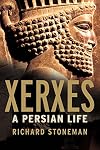
Don't you just love it when something is published that ties in with a new enthusiasm? Stoneman's biography of Xerxes (apparently the first biography of a Persian ruler of this period since Plutarch) was published at the perfect time for me. It's a rich, well-written book bristling with anecdotes and information that help to give a more rounded picture of a man too often dismissed as a tree-loving tyrant. Aimed at a general readership, this is a good place to start for anyone in a similar show more position to myself: keen to know more, but not a classical historian or archaeologist, and unable to tackle the Greek and Latin sources for themselves. There are errors and inconsistencies, and Stoneman doesn't always explain enough - but it provides a great foundation for understanding more about the period, and leaves you (well, me anyway) itching to hurry off and read more. Slightly flawed perhaps, but utterly fascinating.
For a full review, please see my blog:
http://theidlewoman.blogspot.co.uk/2015/09/xerxes-persian-life-richard-stoneman.... show less
For a full review, please see my blog:
http://theidlewoman.blogspot.co.uk/2015/09/xerxes-persian-life-richard-stoneman.... show less
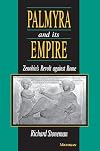
Essential reading for those interested in Palmyra, Zenobia, and Syria in the 200's AD. Stoneman goes into great detail about the land, politics, religions, and economy of Palmyra, all immensely interesting.
Sadly Zenobia really only enters the stage in the last 50 or so pages, this is however not Stoneman's fault but rather the dearth of solid historical writings on her. She, like her short lived empire, was a star that burned immensely bright then went out. Still, I feel Stoneman has done show more great service to this intriguing Warrior Queen and I feel she can rightly take her place next to the Tomyris', Artemisia I's, Cleopatra's, and Boudica's of history. show less
Sadly Zenobia really only enters the stage in the last 50 or so pages, this is however not Stoneman's fault but rather the dearth of solid historical writings on her. She, like her short lived empire, was a star that burned immensely bright then went out. Still, I feel Stoneman has done show more great service to this intriguing Warrior Queen and I feel she can rightly take her place next to the Tomyris', Artemisia I's, Cleopatra's, and Boudica's of history. show less
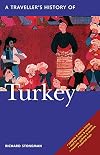
Throughout the millennia Turkey formed the core of several Empires—Persia, Rome, Byzantium—before becoming the center of the Ottoman Empire. All these civilizations have left their marks on the landscape, architecture and art of Turkey—a place of fascinating overlapping cultures. A Traveller's History of Turkey offers a concise and readable account of the region from prehistory right up to the present day. It covers everything from the legendary Flood of Noah, the early civilization of show more Catal Huyuk seven thousand years before Christ, through the treasures of Troy, Alexander the Great, the Romans, Seljuks, Byzantines and the Golden Age of the Sultans, to the twentieth century's great changes wrought by Kemal Ataturk and the strong position Turkey now holds in the world community. From: Amazon.com show less
Lists
Awards

You May Also Like


Associated Authors
Statistics
- Works
- 29
- Also by
- 11
- Members
- 746
- Popularity
- #34,062
- Rating
- 4.0
- Reviews
- 7
- ISBNs
- 89
- Languages
- 7