
Hannah Nordhaus
Author of The Beekeeper's Lament: How One Man and Half a Billion Honey Bees Help Feed America
About the Author
Award-winning journalist Hannah Nordhaus has written for the Los Angeles Times, the Financial Times, the Village Voice, Outside magazine, and other publications. She lives with her family in Boulder, Colorado.
Works by Hannah Nordhaus
The Beekeeper's Lament: How One Man and Half a Billion Honey Bees Help Feed America (2011) 300 copies, 18 reviews
Tagged
Common Knowledge
Members
Reviews
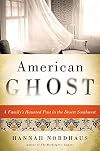
Hannah Nordhaus’ family memoir, [American Ghost], can easily be misunderstood if the subtitle is ignored as the book is cracked open for reading. Some of the reviews claimed it wasn’t the ghost story they had hoped for, or that it was flat boring. But those readers seem to have missed what her mission was in mining family history for information about a woman who is thought to haunt one of the most famous hotel properties in New Mexico. Sure, the woman she’s studying her show more great-grandmother, a woman wrapped in mystery because of her own button-downed character as much as the fact that she may be a ghost. But what Nordhaus is really looking for is her own identity, a creation cobbled together from several different cultures and ethnic histories.
Julia Staab was a Jew who followed her husband from a tiny town Germany to the territorial West in New Mexico. Little remains of her, and most of what does is seen through the histories of relatives and New Mexican personalities from her time. Nordhaus sifts through historical accounts from Staab’s husband, Staab’s daughter, Bishop Lamy – the man who built the famous cathedral from [Death Comes for the Archbishop – and Sister Blandina Seagle – a Catholic nun who could talk gunslingers down from a stage coach robbery and who is being considered for sainthood. As she works through these accounts, she manages not just to find her own identity, but New Mexico’s, as well. [American Ghost] is a rich and detailed history of a territory boiling toward statehood.
Since Staab is thought to haunt La Posada – translation, “place of rest” – Nordhaus also does some supernatural digging, as well, consulting mediums and psychics to contact her ancestor. Others found these passages distracting, but they are as much a part of New Mexico’s history as the historical accounts. Santa Fe, where La Posada stands, and New Mexico are rich in other-worldly and new age pursuits. Nordhaus pauses to dabble in the extra-ordinary, and it lends another level to the identity of the place she is examining. New Mexico is populated by many ghosts, and the story of how and why they haunt the land is a necessary part of understanding the place.
As a New Mexican always looking for another perspective on New Mexico’s diverse backstory, Nordhaus’ [American Ghost] was a wonderful read. She brings a journalist’s eye to the research, and an insider’s understanding to the strange place. Don’t pay attention to the negative reviews, especially if you’re a fan of the Old West and eccentric people.
Bottom Line: More of a history of New Mexico and the territorial West than a true ghost story, but the supernatural informs the history.
5 bones!!!!!
A favorite for the year. show less
Julia Staab was a Jew who followed her husband from a tiny town Germany to the territorial West in New Mexico. Little remains of her, and most of what does is seen through the histories of relatives and New Mexican personalities from her time. Nordhaus sifts through historical accounts from Staab’s husband, Staab’s daughter, Bishop Lamy – the man who built the famous cathedral from [Death Comes for the Archbishop – and Sister Blandina Seagle – a Catholic nun who could talk gunslingers down from a stage coach robbery and who is being considered for sainthood. As she works through these accounts, she manages not just to find her own identity, but New Mexico’s, as well. [American Ghost] is a rich and detailed history of a territory boiling toward statehood.
Since Staab is thought to haunt La Posada – translation, “place of rest” – Nordhaus also does some supernatural digging, as well, consulting mediums and psychics to contact her ancestor. Others found these passages distracting, but they are as much a part of New Mexico’s history as the historical accounts. Santa Fe, where La Posada stands, and New Mexico are rich in other-worldly and new age pursuits. Nordhaus pauses to dabble in the extra-ordinary, and it lends another level to the identity of the place she is examining. New Mexico is populated by many ghosts, and the story of how and why they haunt the land is a necessary part of understanding the place.
As a New Mexican always looking for another perspective on New Mexico’s diverse backstory, Nordhaus’ [American Ghost] was a wonderful read. She brings a journalist’s eye to the research, and an insider’s understanding to the strange place. Don’t pay attention to the negative reviews, especially if you’re a fan of the Old West and eccentric people.
Bottom Line: More of a history of New Mexico and the territorial West than a true ghost story, but the supernatural informs the history.
5 bones!!!!!
A favorite for the year. show less
What tales can we believe? The submersive force of history-the sedimentary layers of narrative-seems to bury even the hardest facts, and only the physical clues jut above the surface: the hotel; the cathedral; the chiseled Hebrew letters; the apricot trees; and also DNA, those four letters that can peel open, tetragrammatically, our genetic past.
This is not an "I really wanted to like this" review. I picked this book up not expecting much of anything, just a quick read, a history of a show more haunting. No. This is an "I really want to rate this higher" review. Because as it unfolded, I found that the author really can write, and even managed some very nice musings. (Truly, this is a rare time when I'm rating a book two stars and actually still recommending it as a read.) Unfortunately, the author has no self discipline. She has a beauty of a history to tell out of her family's past, but she just cannot resist playing out every gimmick, throwing in every tangent she can lay hold of to make the book. I have no tolerance for that kind of self indulgence anymore.Not even for the two chapters she throws in on her youngest great-great aunt's experience of the Holocaust. (begin rant) Stay on topic, authors! If you meander, your meanderings had best be ultimately grounded in where you're going! Especially when you're writing me a specific history! (end rant)
Her story is that of her great-great grandmother, Julia Staub, born in 1844 and died in 1896, pioneer wife of turn of the century Jewish self-made millionaire Abraham Staub, inspiration for [b:The German Bride|1756928|The German Bride|Joanna Hershon|https://d.gr-assets.com/books/1320397438s/1756928.jpg|1754800], who lived and died in Santa Fe, New Mexico prior to statehood, and who is now (maybe) haunting the hotel, La Posada, that was once her home. Ms. Nordhaus circles in slowly (at times very slowly!) on Julia's memory, primarily by exploration of other works of literature of the time, but also by dint of an admirable exploration of archives, news articles, family trees, diaries, and interviews of various descendants and persons of interest. The family history is fascinating; the view of life in the Western territories from a specifically Jewish and mercantile point of view is well worth the read. (Honestly, if she had confined herself to matters contemporary to Julia and at least connected to Julia and her family, I might have followed this writer anywhere. Her excursions into the history of women's health at the time and into the history of Spiritualism were both very nice. Also, when she begins to speculate as to whether Julia could have had an affair with Archbishop Jean-Baptiste Lamy, the real life inspiration for [b:Death Comes for the Archbishop|545951|Death Comes for the Archbishop|Willa Cather|https://d.gr-assets.com/books/1436632846s/545951.jpg|1457974], she at least has the decency to get a DNA test to see if she can eliminate the possibility herself. I found that very admirable.)
However, she is an unreliable historian: she persists in leaping to conclusions about Julia's life and family relationships (often based on completely unrelated literature, such as [a:Franz Kafka|5223|Franz Kafka|https://d.gr-assets.com/authors/1412460277p2/5223.jpg]'s [b:Letter to His Father|187569|Letter to His Father|Franz Kafka|https://d.gr-assets.com/books/1371828205s/187569.jpg|2735799]) that appear to me completely unsupported by the amazing primary history she is able to piece together. Specifically, she drops dark hints about Abraham through the whole book, but the story that comes through in her history is one of a wealthy, doting father and husband who was also a shrewd, litigious businessman. (Land grabs are discussed, but nothing definitive is presented.)
The other main problem with the book is the ghost hunt itself. This book is essentially long-form journalism, and she appears to belong to the school of journalism that says all you have to do to have a great story is put yourself through some odd-ball experience and write about it. I lost count of how many mediums and/or psychics she visited. She went on two ghost tours, including one to the totally unrelated site of [b:The Shining|11588|The Shining (The Shining, #1)|Stephen King|https://d.gr-assets.com/books/1353277730s/11588.jpg|849585]. (Probably because it was close to home for her; she's from my neck of the woods). She tried edible marijuana to reach out to Julia's ghost. She finally stays in Julia's room at the hotel and visit's the grave, but the book ends back in Boulder with, what, exactly? Not an exorcism. Maybe I'll call it a sending. The entire ghost hunt could have been written in poignant fashion, but since the author does not appear to harbor one scrap of belief in the paranormal, it all comes off as very gimmicky and hokey and seriously mars the book.
And yet. And yet! This story is worth reading. This book is worth reading, if only for the awesome bibliography. (I have hardly scratched the surface in this review of the books this book led me too, which is its own kind of rating of the value of a history, and in this case a very high one.) At the very least, I will definitely be reading [b:At the End of the Santa Fe Trail|991004|At the End of the Santa Fe Trail|Blandina Segale|https://d.gr-assets.com/books/1180039298s/991004.jpg|976499], the diary of a nun that aided Julia and her children, and [b:Ten Days in a Mad-House|1642216|Ten Days in a Mad-House|Nellie Bly|https://d.gr-assets.com/books/1394107458s/1642216.jpg|1636567] for [a:Nellie Bly|4372012|Nellie Bly|https://d.gr-assets.com/authors/1285099323p2/4372012.jpg]'s expose on the treatment of female insanity at the time.
What to do? I am staying firm on the two stars. But I will give the author's other book, [b:The Beekeeper's Lament: How One Man and Half a Billion Honey Bees Help Feed America|10129668|The Beekeeper's Lament How One Man and Half a Billion Honey Bees Help Feed America|Hannah Nordhaus|https://d.gr-assets.com/books/1327940879s/10129668.jpg|15027533], a try. Maybe she will be a better journalist when she does not have a ghost to chase. show less
This is not an "I really wanted to like this" review. I picked this book up not expecting much of anything, just a quick read, a history of a show more haunting. No. This is an "I really want to rate this higher" review. Because as it unfolded, I found that the author really can write, and even managed some very nice musings. (Truly, this is a rare time when I'm rating a book two stars and actually still recommending it as a read.) Unfortunately, the author has no self discipline. She has a beauty of a history to tell out of her family's past, but she just cannot resist playing out every gimmick, throwing in every tangent she can lay hold of to make the book. I have no tolerance for that kind of self indulgence anymore.
Her story is that of her great-great grandmother, Julia Staub, born in 1844 and died in 1896, pioneer wife of turn of the century Jewish self-made millionaire Abraham Staub, inspiration for [b:The German Bride|1756928|The German Bride|Joanna Hershon|https://d.gr-assets.com/books/1320397438s/1756928.jpg|1754800], who lived and died in Santa Fe, New Mexico prior to statehood, and who is now (maybe) haunting the hotel, La Posada, that was once her home. Ms. Nordhaus circles in slowly (at times very slowly!) on Julia's memory, primarily by exploration of other works of literature of the time, but also by dint of an admirable exploration of archives, news articles, family trees, diaries, and interviews of various descendants and persons of interest. The family history is fascinating; the view of life in the Western territories from a specifically Jewish and mercantile point of view is well worth the read. (Honestly, if she had confined herself to matters contemporary to Julia and at least connected to Julia and her family, I might have followed this writer anywhere. Her excursions into the history of women's health at the time and into the history of Spiritualism were both very nice. Also, when she begins to speculate as to whether Julia could have had an affair with Archbishop Jean-Baptiste Lamy, the real life inspiration for [b:Death Comes for the Archbishop|545951|Death Comes for the Archbishop|Willa Cather|https://d.gr-assets.com/books/1436632846s/545951.jpg|1457974], she at least has the decency to get a DNA test to see if she can eliminate the possibility herself. I found that very admirable.)
However, she is an unreliable historian: she persists in leaping to conclusions about Julia's life and family relationships (often based on completely unrelated literature, such as [a:Franz Kafka|5223|Franz Kafka|https://d.gr-assets.com/authors/1412460277p2/5223.jpg]'s [b:Letter to His Father|187569|Letter to His Father|Franz Kafka|https://d.gr-assets.com/books/1371828205s/187569.jpg|2735799]) that appear to me completely unsupported by the amazing primary history she is able to piece together. Specifically, she drops dark hints about Abraham through the whole book, but the story that comes through in her history is one of a wealthy, doting father and husband who was also a shrewd, litigious businessman. (Land grabs are discussed, but nothing definitive is presented.)
The other main problem with the book is the ghost hunt itself. This book is essentially long-form journalism, and she appears to belong to the school of journalism that says all you have to do to have a great story is put yourself through some odd-ball experience and write about it. I lost count of how many mediums and/or psychics she visited. She went on two ghost tours, including one to the totally unrelated site of [b:The Shining|11588|The Shining (The Shining, #1)|Stephen King|https://d.gr-assets.com/books/1353277730s/11588.jpg|849585]. (Probably because it was close to home for her; she's from my neck of the woods). She tried edible marijuana to reach out to Julia's ghost. She finally stays in Julia's room at the hotel and visit's the grave, but the book ends back in Boulder with, what, exactly? Not an exorcism. Maybe I'll call it a sending. The entire ghost hunt could have been written in poignant fashion, but since the author does not appear to harbor one scrap of belief in the paranormal, it all comes off as very gimmicky and hokey and seriously mars the book.
And yet. And yet! This story is worth reading. This book is worth reading, if only for the awesome bibliography. (I have hardly scratched the surface in this review of the books this book led me too, which is its own kind of rating of the value of a history, and in this case a very high one.) At the very least, I will definitely be reading [b:At the End of the Santa Fe Trail|991004|At the End of the Santa Fe Trail|Blandina Segale|https://d.gr-assets.com/books/1180039298s/991004.jpg|976499], the diary of a nun that aided Julia and her children, and [b:Ten Days in a Mad-House|1642216|Ten Days in a Mad-House|Nellie Bly|https://d.gr-assets.com/books/1394107458s/1642216.jpg|1636567] for [a:Nellie Bly|4372012|Nellie Bly|https://d.gr-assets.com/authors/1285099323p2/4372012.jpg]'s expose on the treatment of female insanity at the time.
What to do? I am staying firm on the two stars. But I will give the author's other book, [b:The Beekeeper's Lament: How One Man and Half a Billion Honey Bees Help Feed America|10129668|The Beekeeper's Lament How One Man and Half a Billion Honey Bees Help Feed America|Hannah Nordhaus|https://d.gr-assets.com/books/1327940879s/10129668.jpg|15027533], a try. Maybe she will be a better journalist when she does not have a ghost to chase. show less
The Beekeeper's Lament: How One Man and Half a Billion Honey Bees Help Feed America by Hannah Nordhaus
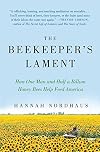
This is a highly enjoyable and informative look at modern-day beekeeping. The author tracks a migrant beekeeper, John Miller, as he follows the flowering crops across the western U.S. with literally millions of honeybees. She provides us with a sense of what life as a beekeeper is like, and information about bees themselves. Well written, accessible and fascinating.
The beekeeper's lament : how one man and half a billion honey bees help feed America by Hannah Nordhaus
The current story of American bees—massive die-offs, along with massive replacement efforts and mobile units that go from one side of the country to the other, fertilizing multiple crops. Nordhous suggests that this very hyperproductivity may be making bees more vulnerable to die-offs, as these working colonies have very little time to rest. Beekeepers tend to be misanthropes, and so she gets a lot of color out of their stories. It’s an ultimately melancholy story of the way that even show more the least apparently automatable function of agriculture—pollination by bees, still better than any of the alternatives—can be turned into mass production. show less
Lists
Awards


You May Also Like


Associated Authors
Statistics
- Works
- 5
- Members
- 581
- Popularity
- #43,162
- Rating
- 3.7
- Reviews
- 39
- ISBNs
- 17