
Anand Neelakantan
Author of ASURA : Tale of the Vanquished
About the Author
Series
Works by Anand Neelakantan
අසුර හෙවත් රාවණා 1 copy
Tagged
Common Knowledge
- Gender
- male
Members
Reviews
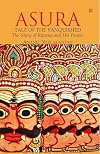
"Asura" was my very first introduction to quality Indian fiction of the historical variety, and I was impressed by its quasi-mythological scope. Neelakantan weaves mythology and reality in a colorful tapestry in which Gods and men battle among each other and with themselves.
The author's treatment of Ravana is commendable. Painted in various hues of literary paint, the "Ramayana's" antagonist is cast as a sagacious ruler but wanting father. His status as a prominent anti-hero is undeniable, show more and even Neelakantan does not attempt to alter the Status quo. But in "Asura," the demon-king is treated with microscopic scrutiny and emerges as an affable and warm personality. And these latter elements make the ending heart-wrenching. Ravana emerges as that leader whose unpopularity hinges on their unpopular decisions but only after they have departed are the positive affects of their rulings seen. For Ravana there is no natural ending, but an untimely death.
Drawing upon a hitherto less known tradition, Neelakantan provides an alternative version of Ravana, one far removed from the archetypal demon-king. While the book's illustrations border on the laughable, its narrative is laudable. Easy to read and comprehend, its only failing is its lackluster treatment of the story's secondary protagonist: the fisherman Bhadra.
Overall, this is a tale to be repeatedly savored over and over again and one which transcends multiple barriers to re-analyze what we thought we knew about Indic mythology. show less
The author's treatment of Ravana is commendable. Painted in various hues of literary paint, the "Ramayana's" antagonist is cast as a sagacious ruler but wanting father. His status as a prominent anti-hero is undeniable, show more and even Neelakantan does not attempt to alter the Status quo. But in "Asura," the demon-king is treated with microscopic scrutiny and emerges as an affable and warm personality. And these latter elements make the ending heart-wrenching. Ravana emerges as that leader whose unpopularity hinges on their unpopular decisions but only after they have departed are the positive affects of their rulings seen. For Ravana there is no natural ending, but an untimely death.
Drawing upon a hitherto less known tradition, Neelakantan provides an alternative version of Ravana, one far removed from the archetypal demon-king. While the book's illustrations border on the laughable, its narrative is laudable. Easy to read and comprehend, its only failing is its lackluster treatment of the story's secondary protagonist: the fisherman Bhadra.
Overall, this is a tale to be repeatedly savored over and over again and one which transcends multiple barriers to re-analyze what we thought we knew about Indic mythology. show less
If you think this is Ramayana retold from Ravan's perspective, you're mistaken.
The book is thousands of miles away from what is mentioned in mythology. Instead, Ananda Neelakantan has used the Aryan Invasion Theory and his wishful thinking (I wont use the word 'imagination') to retell the story, as against what is mentioned on the cover (its misleading).
The book states that fair skinned Devas (read Aryans) were barbarians who came from North and destroyed magnificent cities built by Asuras show more in the Indus-Saraswati valley and pushed them down to the peninsula.
Ravan, as per the book, belongs to a Tamil tribe living in the southern tip of the peninsula, fathered by a Brahmin sage. Everyone knows that as per Ramayana, Ravan's native place is in western UP. Ravan is projected as a Tamil superhero, predecessor to Rajinikanth instead.
There's no mention of the word 'Tamil' in Ramayana.
Ayodhya is portrayed as a shanty town with emaciated people, malnourished children and open sewers.
Varun is portrayed as a Pirate.
Author writes that Sita is actually Ravan's daughter whom he abandons and is found and raise by Janak. Years later, at Sita's swayamvar, Ravan attends it as a spectator, a non participant, just to overlook how his 'daughter' gets married. The Ramayan mentions that Ravan attends the swayamvar as a suitor, but is denied participation by sages present (who knew Ravan's antecedents) and Janak's courtiers.
Monkey king Bali is said to be Ravan's friend in the book. Bali and Ravan had animosity; infact Bali had crushingly defeated Ravan in a wrestling duel. Some versions of Ramayan mention that Bali had tied Ravan in his tail and dragged him all over.
Ram, Lakshman and the monkey army are described to attacking from the rear in a cowardly fashion during the battle of Lanka.
Ram, after winning Lanka is described to be killing in public a 14 year old boy, Shambuka, son of Asura migrants to Ayodhya, only because he learned Sanskrit and the scriptures and challenged caste hierarchy. In Ramayan, Shambuka is a dhobi (someone who owns a laundry business) who criticizes Ram for accepting his wife after she has spent a long duration with another man.
There are many, many other distortions and characters created by Ananda Neelakantan in the book.
To conclude, I haven't come across a more nonsense book than Asura in my life so far. show less
The book is thousands of miles away from what is mentioned in mythology. Instead, Ananda Neelakantan has used the Aryan Invasion Theory and his wishful thinking (I wont use the word 'imagination') to retell the story, as against what is mentioned on the cover (its misleading).
The book states that fair skinned Devas (read Aryans) were barbarians who came from North and destroyed magnificent cities built by Asuras show more in the Indus-Saraswati valley and pushed them down to the peninsula.
Ravan, as per the book, belongs to a Tamil tribe living in the southern tip of the peninsula, fathered by a Brahmin sage. Everyone knows that as per Ramayana, Ravan's native place is in western UP. Ravan is projected as a Tamil superhero, predecessor to Rajinikanth instead.
There's no mention of the word 'Tamil' in Ramayana.
Ayodhya is portrayed as a shanty town with emaciated people, malnourished children and open sewers.
Varun is portrayed as a Pirate.
Author writes that Sita is actually Ravan's daughter whom he abandons and is found and raise by Janak. Years later, at Sita's swayamvar, Ravan attends it as a spectator, a non participant, just to overlook how his 'daughter' gets married. The Ramayan mentions that Ravan attends the swayamvar as a suitor, but is denied participation by sages present (who knew Ravan's antecedents) and Janak's courtiers.
Monkey king Bali is said to be Ravan's friend in the book. Bali and Ravan had animosity; infact Bali had crushingly defeated Ravan in a wrestling duel. Some versions of Ramayan mention that Bali had tied Ravan in his tail and dragged him all over.
Ram, Lakshman and the monkey army are described to attacking from the rear in a cowardly fashion during the battle of Lanka.
Ram, after winning Lanka is described to be killing in public a 14 year old boy, Shambuka, son of Asura migrants to Ayodhya, only because he learned Sanskrit and the scriptures and challenged caste hierarchy. In Ramayan, Shambuka is a dhobi (someone who owns a laundry business) who criticizes Ram for accepting his wife after she has spent a long duration with another man.
There are many, many other distortions and characters created by Ananda Neelakantan in the book.
To conclude, I haven't come across a more nonsense book than Asura in my life so far. show less
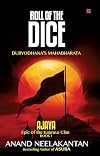
After reading 'ASURA' my expectation from the author was really high. So I was waiting eagerly to read his second book 'AJAYA'. After finishing the book I have no doubt in my mind that Anand Neelakantan has delivered it again. He has created another masterpiece by his magical writing. As the name suggest 'Ajaya: Roll of the Dice (Epic of the Kaurava clan, #1)' is the first book of great mythological epic Mahabharata. We all know the story of this great epic from traditional point of view show more which portrait 'pandavas' as savior of 'dharma' and 'kauravas' as evil destruction force. But in this book the author has narrated the story from a different perspective and tried to raise some hard hitting question regarding our belief of 'dharma'. We never try to understand how 'Suyodhana' became 'Duryodhana', we never raise questions about 'pandavas' being the children of Gods, we also see 'Krishna' as a 'avatar' not as a master strategist but the author dare to do the same. The social injustice for the sake of maintaining 'dharma' is one of highlights of the book. The convincing storyline, awesome narration of events and a totally different perspective of the story has made this book a real page turner. I will recommend this book to every book lovers and request the readers to read it with open mind and then come to any conclusion. show less
A fascinating read.
I am an infracaninophile; this book has appealed to my sensibilities.
This is the retelling of Mahabaratha from the Kuru clan perspective.
In Neelakantan's retelling, Pandavas, for that matter even Krishna is not a god. They are mere humans. Suyodhana is the protagonist of the novel. He is portrayed as a lion-hearted,peace loving, noble soul. He (Suyodhana)attacks the caste system with passion, and advocates meritocracy. Must read.
It takes guts to author a book of this show more kind. Commendable effort. The author has railed against the so-called gods ;)
show less
I am an infracaninophile; this book has appealed to my sensibilities.
This is the retelling of Mahabaratha from the Kuru clan perspective.
In Neelakantan's retelling, Pandavas, for that matter even Krishna is not a god. They are mere humans. Suyodhana is the protagonist of the novel. He is portrayed as a lion-hearted,peace loving, noble soul. He (Suyodhana)attacks the caste system with passion, and advocates meritocracy. Must read.
It takes guts to author a book of this show more kind. Commendable effort. The author has railed against the so-called gods ;)
show less
You May Also Like


Associated Authors
Statistics
- Works
- 28
- Members
- 587
- Popularity
- #42,722
- Rating
- 3.5
- Reviews
- 19
- ISBNs
- 37
- Languages
- 6