
Thupten Jinpa
Author of Mind Training: The Great Collection
About the Author
Thupten Jinpa has been the principal English-Languare translator for his holiness the Dalai Lama for more than two decades and is president of the Institute of Tibetan classic. A former monk, he completed his doctorate in religious studies at Cambridge University. Author of many books, he also show more teaches at McGill University in Montreal show less
Works by Thupten Jinpa
A Fearless Heart: How the Courage to Be Compassionate Can Transform Our Lives (2015) 93 copies, 1 review
Science and Philosophy in the Indian Buddhist Classics, Vol. 1: The Physical World (2017) — Editor — 61 copies, 2 reviews
Songs of Spiritual Experience: Tibetan Buddhist Poems of Insight and Awakening (2000) — Translator — 53 copies
Self, Reality and Reason in Tibetan Philosophy: Tsongkhapa's Quest for the Middle Way (Routledge Critical Studies in Buddhism) (2002) 31 copies
Science and Philosophy in the Indian Buddhist Classics, Vol. 4: Philosophical Topics (4) (2023) 19 copies
Science and Philosophy in the Indian Buddhist Classics, Vol. 3: Philosophical Schools (3) (2022) 14 copies
The Tibetan Book of Everyday Wisdom: A Thousand Years of Sage Advice (Library of Tibetan Classics) (2018) 13 copies
Stages of the Path and the Oral Transmission: Selected Teachings of the Geluk School (6) (Library of Tibetan Classics) (2022) 9 copies
Associated Works
The Tibetan Book of the Dead: First Complete Translation (Penguin Classics Deluxe Edition) (2005) — Editor, some editions — 1,402 copies, 5 reviews
The Good Heart: A Buddhist Perspective on the Teachings of Jesus (1996) — Translator, some editions — 630 copies, 6 reviews
Healing Anger: The Power of Patience from a Buddhist Perspective (1997) — Translator, some editions — 309 copies
Dzogchen: The Heart Essence of the Great Perfection (2001) — Translator, some editions — 228 copies, 4 reviews
The Power of Compassion: A Collection of Lectures by His Holiness the XIV Dalai Lama (1995) — Translator, some editions — 197 copies, 6 reviews
Consciousness at the Crossroads: Conversations with the Dalai Lama on Brainscience and Buddhism (1999) — Translator; Translator, some editions — 137 copies, 2 reviews
The Tibetan Way of Life, Death & Rebirth: The Illustrated Guide to Tibetan Wisdom (2003) — Foreword — 88 copies
From Here to Enlightenment: An Introduction to Tsong-kha-pa's Classic Text The Great Treatise on the Stages of the Path to Enlightenment (2013) — Translator, some editions — 62 copies, 4 reviews
Tagged
Common Knowledge
- Birthdate
- 1958
- Gender
- male
- Education
- Zongkar Choede Monastery, near Mysore, India
Ganden monastic university, south India (Geshe Lharam)
University of Cambridge (MA Honors|Western Philosophy)
University of Cambridge (Ph.D. Honors|Religious Studies) - Occupations
- translator
editor
scholar
monk, Tibetan Buddhist (former) - Organizations
- Institute of Tibetan Classics (founder)
Mind and Life Institute (advisory board)
Compassion Institute (founder) - Awards and honors
- Margaret Smith Research Fellow at Girton College, Cambridge (Eastern Religion, 1996-1999)
- Nationality
- Tibet
- Birthplace
- Tibet
- Associated Place (for map)
- Tibet
Members
Reviews
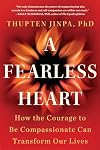
In A Fearless Heart: How the Courage to Be Compassionate Can Transform Our Lives, Dr. Thupten Jinpa offers a practical guide to creating change through Buddhist-inspired compassion practices. Dr. Jinpa is a former Buddhist monk, who left the monastic life to pursue higher education, completing a Ph.D. in religious studies at Cambridge University. He has been the principal English language translator for His Holiness the Dalai Lama for a many years. While he weaves in his own experiences to show more reinforce various concepts relevant to compassion, this is not a book about his own story. Rather, the major focus is the elements Compassion Cultivation Training, a standardized secular compassion training program that he was involved in developing at Stanford University.
While the author’s approach is steeped in Tibetan Buddhist tradition, he makes it very accessible for non-spiritual audiences. He provides clear explanations of relevant terminology, and incorporates a variety of concepts and research findings from the field of psychology, often pointing out the parallels to classical Buddhist thought. Some ideas will be familiar to those who have done cognitive behavioural therapy work, such as distinguishing between observations and evaluations, and recognizing that thoughts are not who we are.
Dr. Jinpa describes three elements of compassion: perceiving another’s suffering or need, emotionally connecting with the suffering/need, and wishing to see that situation may relieved. Empathy involves the first two of these elements, and is a complex phenomenon in the brain that appears to involve the limbic system, attachment system, and pain matrix. Dr. Jinpa explains that “compassion acknowledges the fundamental truth of our human condition that not all pain can be fixed… In many situations, it’s not fixing that is needed; rather, it’s our empathic response, our acceptance, understanding, and solidarity.”
The importance of self-compassion is emphasized throughout the book. A free online self-compassion test is mentioned, which can be found at https://centerformsc.org/learn-msc/take-the-self-compassion-test/. The test breaks down scores on scales of self-kindness, self-judgment, common humanity, isolation, mindfulness, and over-identification. I completed the test, and scored particularly low in the areas of common humanity, isolation, and over-identification. This helps point me in the direction of the type of work that I need to focus on.
Dr. Jinpa explains that while the practice of self-compassion and the capacity to self-soothe and regulate emotions is heavily influenced by experiences and attachment early in life, the capacity for compassion is innate and therefore growth and change are possible. Self-compassion work includes cultivating both compassion (a wish to be free from suffering) and loving-kindness (a wish for happiness) towards ourselves, with a goal to cultivate the capacity to genuinely accept and care for ourselves and a profound appreciation of our natural and legitimate aspiration to kindness. The book offers specific, uncomplicated exercises to build skills in these areas.
Self-hatred is something that many of us living with mental illness have experienced at some point or another, and Dr. Jinpa offers an interesting view on this. He states that self-hatred comes from actually caring a great deal, but being unable to accept/forgive imperfect selves. As a result, people hide behind the “layers of armor we put on when we feel like we’re under attack”. When approaching self-forgiveness, Dr. Jinpa suggests that it is important to acknowledge the legitimacy of unmet needs that prompted the behaviour in question, which I found very powerful.
The Tibetan practice of “tonglen” (literally “giving and receiving”) is offered as an active compassion meditation. It involves breathing in another’s suffering (while visualizing dark clouds or smoke) and breathing out happiness and good fortune (visualizing white clouds and light). Rather than drawing us into another’s pain, this voluntary taking on of another’s suffering is presented as an empowered state of mind that allows us to get out of ourselves and our own pain. Thus it differs from the empathetic taking on of another’s suffering, which is liable to cause what’s often referred to as “compassion fatigue”. Working in a helping profession myself, I found this to be an interesting differentiation.
Compassion training has been shown to improve psychological well-being in a number of different ways. It is correlated with decreased suppression of emotions and increased resilience. It teaches us to become less self-preoccupied and see ourselves in the context of our relationship with others rather than in isolation. It also increases self-acceptance, social connectedness, and a sense of purpose in life. The exercises in the book provide a useful roadmap, and I’m looking forward to adding a compassion practice into my holistic wellness plan.
Previously published on the blog Mental Health @ Home
https://mentalhealthathome.org/2018/02/16/book-review-a-fearless-heart/ show less
While the author’s approach is steeped in Tibetan Buddhist tradition, he makes it very accessible for non-spiritual audiences. He provides clear explanations of relevant terminology, and incorporates a variety of concepts and research findings from the field of psychology, often pointing out the parallels to classical Buddhist thought. Some ideas will be familiar to those who have done cognitive behavioural therapy work, such as distinguishing between observations and evaluations, and recognizing that thoughts are not who we are.
Dr. Jinpa describes three elements of compassion: perceiving another’s suffering or need, emotionally connecting with the suffering/need, and wishing to see that situation may relieved. Empathy involves the first two of these elements, and is a complex phenomenon in the brain that appears to involve the limbic system, attachment system, and pain matrix. Dr. Jinpa explains that “compassion acknowledges the fundamental truth of our human condition that not all pain can be fixed… In many situations, it’s not fixing that is needed; rather, it’s our empathic response, our acceptance, understanding, and solidarity.”
The importance of self-compassion is emphasized throughout the book. A free online self-compassion test is mentioned, which can be found at https://centerformsc.org/learn-msc/take-the-self-compassion-test/. The test breaks down scores on scales of self-kindness, self-judgment, common humanity, isolation, mindfulness, and over-identification. I completed the test, and scored particularly low in the areas of common humanity, isolation, and over-identification. This helps point me in the direction of the type of work that I need to focus on.
Dr. Jinpa explains that while the practice of self-compassion and the capacity to self-soothe and regulate emotions is heavily influenced by experiences and attachment early in life, the capacity for compassion is innate and therefore growth and change are possible. Self-compassion work includes cultivating both compassion (a wish to be free from suffering) and loving-kindness (a wish for happiness) towards ourselves, with a goal to cultivate the capacity to genuinely accept and care for ourselves and a profound appreciation of our natural and legitimate aspiration to kindness. The book offers specific, uncomplicated exercises to build skills in these areas.
Self-hatred is something that many of us living with mental illness have experienced at some point or another, and Dr. Jinpa offers an interesting view on this. He states that self-hatred comes from actually caring a great deal, but being unable to accept/forgive imperfect selves. As a result, people hide behind the “layers of armor we put on when we feel like we’re under attack”. When approaching self-forgiveness, Dr. Jinpa suggests that it is important to acknowledge the legitimacy of unmet needs that prompted the behaviour in question, which I found very powerful.
The Tibetan practice of “tonglen” (literally “giving and receiving”) is offered as an active compassion meditation. It involves breathing in another’s suffering (while visualizing dark clouds or smoke) and breathing out happiness and good fortune (visualizing white clouds and light). Rather than drawing us into another’s pain, this voluntary taking on of another’s suffering is presented as an empowered state of mind that allows us to get out of ourselves and our own pain. Thus it differs from the empathetic taking on of another’s suffering, which is liable to cause what’s often referred to as “compassion fatigue”. Working in a helping profession myself, I found this to be an interesting differentiation.
Compassion training has been shown to improve psychological well-being in a number of different ways. It is correlated with decreased suppression of emotions and increased resilience. It teaches us to become less self-preoccupied and see ourselves in the context of our relationship with others rather than in isolation. It also increases self-acceptance, social connectedness, and a sense of purpose in life. The exercises in the book provide a useful roadmap, and I’m looking forward to adding a compassion practice into my holistic wellness plan.
Previously published on the blog Mental Health @ Home
https://mentalhealthathome.org/2018/02/16/book-review-a-fearless-heart/ show less
Science and Philosophy in the Indian Buddhist Classics, Vol. 1: The Physical World by Dalai Lama XIV
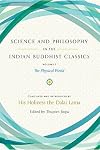
this is a bizarre collection. who is this for? as a comparative overview of abhidharma, it is not quite comprehensive or contextual enough to b useful, and the inclusion of kalachakra selections and tibetan medical texts defeats that purpose. i could only imagine some adventurous history/philosophy of science person stumbling upon this and being unexpectedly inspired
also im irritated that in the section on "time" his tibetan bias led him to ignore the Vibhajyavāda presentist/anti-eternalist show more stance on "the three times". or rather he failed to distinguish bw the ontological & phenomenological perspectives on the reality of time show less
also im irritated that in the section on "time" his tibetan bias led him to ignore the Vibhajyavāda presentist/anti-eternalist show more stance on "the three times". or rather he failed to distinguish bw the ontological & phenomenological perspectives on the reality of time show less

The new standard work and definitive biography of Tsongkhapa, one of the principle founders of the Gelug school of Tibetan Buddhism--the school of the Dalai Lamas.
In this groundbreaking addition to the Lives of the Masters series, Thupten Jinpa, a scholar-practitioner and long-time translator for His Holiness the Dalai Lama, offers the most comprehensive portrait available of Jé Tsongkhapa (1357–1419), one of the greatest Buddhist teachers in history. A devout monastic, Tsongkhapa took on show more the difficult task of locating and studying all of the Indian Buddhist classics available in Tibet in his day. He went on to synthesize this knowledge into a holistic approach to the path of awakening. In an achievement of incredible magnitude, he integrated the pivotal yet disparate Mahayana teachings on emptiness while retaining the important role of critical reason and avoiding the extreme of negating the reality of the everyday world.
Included in this volume is a discussion of Tsongkhapa’s early life and training; his emergence as a precociously intelligent Buddhist mind; the composition of his Great Treatise on the Stages of the Path to Enlightenment, Great Exposition of Tantra, and many other important works; and his founding of the Lhasa Prayer Festival and Ganden Monastery. This is a necessary resource for anyone interested in Tsongkhapa’s transformative effect on the understanding and practice of Buddhism in Tibet in his time and his continued influence today. show less
In this groundbreaking addition to the Lives of the Masters series, Thupten Jinpa, a scholar-practitioner and long-time translator for His Holiness the Dalai Lama, offers the most comprehensive portrait available of Jé Tsongkhapa (1357–1419), one of the greatest Buddhist teachers in history. A devout monastic, Tsongkhapa took on show more the difficult task of locating and studying all of the Indian Buddhist classics available in Tibet in his day. He went on to synthesize this knowledge into a holistic approach to the path of awakening. In an achievement of incredible magnitude, he integrated the pivotal yet disparate Mahayana teachings on emptiness while retaining the important role of critical reason and avoiding the extreme of negating the reality of the everyday world.
Included in this volume is a discussion of Tsongkhapa’s early life and training; his emergence as a precociously intelligent Buddhist mind; the composition of his Great Treatise on the Stages of the Path to Enlightenment, Great Exposition of Tantra, and many other important works; and his founding of the Lhasa Prayer Festival and Ganden Monastery. This is a necessary resource for anyone interested in Tsongkhapa’s transformative effect on the understanding and practice of Buddhism in Tibet in his time and his continued influence today. show less

An extraordinary journey for the love of animals has been captured in this 30-minute documentary produced by Geshe Jinpa with the help of friends from Amitabha Buddhist Centre in Singapore.
108 Yaks: A Journey of Love & Freedom follows the project from its origins, from Geshe Jinpa receiving Lama Zopa Rinpoche’s advice to save the yaks, to the 19-day expedition driving the yaks across the Himalayan range of northeast Nepal to their remote sanctuary in the holy valley of Rolwaling.
The video show more shows the challenges that Geshe Jinpa's team of herders, porters and camera crew faced as they tackled high mountain passes and treacherous cliffs in 2011, all the while responsible for the lives and safety of these large animals. Undaunted by obstacles and spurred on by numerous prayers, Geshe Jinpa and his team miraculously completed the mission with all yaks – and humans – arriving at their destination.
Geshe Jinpa has served Lama Zopa Rinpoche with deep devotion for 16 years. Ever attentive to Lama Zopa Rinpoche’s needs, Geshe Jinpa also actively carries out whatever advice Rinpoche gives him. show less
108 Yaks: A Journey of Love & Freedom follows the project from its origins, from Geshe Jinpa receiving Lama Zopa Rinpoche’s advice to save the yaks, to the 19-day expedition driving the yaks across the Himalayan range of northeast Nepal to their remote sanctuary in the holy valley of Rolwaling.
The video show more shows the challenges that Geshe Jinpa's team of herders, porters and camera crew faced as they tackled high mountain passes and treacherous cliffs in 2011, all the while responsible for the lives and safety of these large animals. Undaunted by obstacles and spurred on by numerous prayers, Geshe Jinpa and his team miraculously completed the mission with all yaks – and humans – arriving at their destination.
Geshe Jinpa has served Lama Zopa Rinpoche with deep devotion for 16 years. Ever attentive to Lama Zopa Rinpoche’s needs, Geshe Jinpa also actively carries out whatever advice Rinpoche gives him. show less
You May Also Like


Associated Authors
Statistics
- Works
- 30
- Also by
- 11
- Members
- 591
- Popularity
- #42,465
- Rating
- 4.0
- Reviews
- 8
- ISBNs
- 44
- Languages
- 4