
Thubten Yeshe (1935–1984)
Author of Introduction to Tantra : The Transformation of Desire
About the Author
Lama Thubten Yeshe (1935-84) was born in Tibet and educated at the great Sera Monastic University. In the late 1960s he began teaching Buddhism to Westerners at Kopan Monastery, Kathmandu, Nepal, with Lama Zopa Rinpoche. In 1975 they founded the international Buddhist organization the Foundation show more for the Preservation of the Mahayana Tradition (FPMT), which now has more than 160 centers, projects, and services worldwide. His other books include The Bliss of Inner Fire, Wisdom Energy, and When the Chocolate Runs Out. show less
Works by Thubten Yeshe
The Essence of Tibetan Buddhism: The Three Principal Aspects of the Path and an Introduction to Tantra (2001) 164 copies, 2 reviews
The Peaceful Stillness of the Silent Mind: Buddhism, Mind and Meditation (2004) 135 copies, 1 review
Becoming Your Own Therapist; An Introduction to the Buddhist Way of Thought (1998) 115 copies, 1 review
Ego, Attachment and Liberation: Overcoming your mental bureaucracy. A five day meditation course (2006) 96 copies
The Tantric Path of Purification: The Yoga Method of Heruka Vajrasattva, Including Complete Retreat Instructions (1994) 71 copies, 2 reviews
Light of dharma: A commentary on the three principle paths to enlightenment (A wisdom basic transcript) (1993) 14 copies
Cittamani Tara: A commentary on the Anuttarayogatantra method of Cittamani Tara (A Wisdom intermediate transcript. White series) (1984) 7 copies
Vajra Yogini: A commentary on the Anuttarayogatantra method of Vajra Yogini : the first, edited transcript of a course t (1984) 7 copies
Medicine Dharma Reiki: An Introduction to the Secret Inner Practices with Extensive Extracts from Dr. Usui's Journals (2001) 5 copies, 1 review
Commentary On The Vajrayogini Tantra 3 copies
The first clear step 3 copies
Manjushri. (A Commentary on the Kriyatantra Yoga Method of Divine Wisdom Manjushri). (1984) 3 copies
The twenty-one Taras : two commentaries on the Kriyatantra of the 21 Taras, given at Nagarjuna Institute, Spain and in Vancouver, Canada in 1980 (1991) 2 copies
Mind And Its Potential 2 copies
Leben Tod und Nach Dem Tod 2 copies
Avalakiteshvara - Yoga Tantra Method 2 copies
Was ist Meditation 2 copies
Heruka Vajrasattva 2 copies
Kopan Meditation Course 1982 2 copies
Consigli per Monaci e Monache 2 copies
Maitreya 2 copies
Life, death and after death 1 copy
VajraYogini Kommentar 1 copy
De Groene Tara 1 copy
L’essenza del Buddhismo tibetano: I tre aspetti principali del sentiero, Introduzione al Tantra 1 copy
Vajra Yogini 1 copy
Se tu propio terapeuta 1 copy
Vajrapani 1 copy
La energía de la sabiduría 1 copy
Avalokiteshvara 1 copy
Dharma Celebration 1 copy
Advice for Monks and Nuns 1 copy
Vajrapani 1 copy
Vajrapani Commentary 1 copy
Introduction to Meditation 1 copy
තන්ත්රයානයට හැදින්වීමක් 1 copy
Associated Works
Discovering Buddhism/ Discovering Buddhism awakening the limitless potential of your mind, achieving all peace and happines (2004) — Contributor — 2 copies, 1 review
Tagged
Common Knowledge
- Birthdate
- 1935
- Date of death
- 1984
- Gender
- male
- Education
- Sera Monastic University, Lhasa, Tibet
- Occupations
- Buddhist monk
- Organizations
- Tibetan Buddhism
Galugpa
Foundation for the Preservation of the Mahayana Tradition (cofounder)
Kopan Monastery, Kathmandu Nepal (co-founded, 1984) - Nationality
- Tibet (birth)
- Associated Place (for map)
- Tibet
Members
Reviews
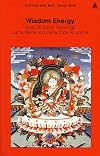
[Wisdom Energy: Basic Buddhist Teachings] by [[Lama Yeshe]] and [[Lama Zopa Rinpoche]]
Finished 7/19/12
This book is a collection of talks given by these two lamas on a tour of the U.S. in the 1970s. Although the teachings in the book are much the same as what I am learning in my Buddhism classes here at Rangjung Yeshe Institute in Nepal, the way they are presented is very different. Lamas Yeshe and Zopa tend to keep a lot of the more technical terms and lists of practice aspects out of the show more book and focus more on the basics: learning how to train the mind, how to deal with attachment and grasping, how to approach studying the dharma.
What I find most important about the dharma to me now is looking at how many of the thoughts and concepts we create about ourselves and the world around us are really reified delusions - things we invent but think are real. So we dislike another person for 'their' traits when in fact we project those traits onto them. We feel like we're unable to do something because we create a self-definition based on our inability. Seeing how this process of delusion creates and recreates itself in the mind is fundamental to being free from ignorant thoughts. Most importantly, the dharma is something to be taken in, internalized, reflected and lived out, not just memorized once and mastered in a formulaic way.
Overall, a useful book. Too bad Lama Yeshe has passed.
Rating: 5/5 show less
Finished 7/19/12
This book is a collection of talks given by these two lamas on a tour of the U.S. in the 1970s. Although the teachings in the book are much the same as what I am learning in my Buddhism classes here at Rangjung Yeshe Institute in Nepal, the way they are presented is very different. Lamas Yeshe and Zopa tend to keep a lot of the more technical terms and lists of practice aspects out of the show more book and focus more on the basics: learning how to train the mind, how to deal with attachment and grasping, how to approach studying the dharma.
What I find most important about the dharma to me now is looking at how many of the thoughts and concepts we create about ourselves and the world around us are really reified delusions - things we invent but think are real. So we dislike another person for 'their' traits when in fact we project those traits onto them. We feel like we're unable to do something because we create a self-definition based on our inability. Seeing how this process of delusion creates and recreates itself in the mind is fundamental to being free from ignorant thoughts. Most importantly, the dharma is something to be taken in, internalized, reflected and lived out, not just memorized once and mastered in a formulaic way.
Overall, a useful book. Too bad Lama Yeshe has passed.
Rating: 5/5 show less
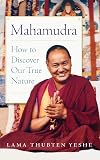
Relish these direct, experiential meditation instructions from the author of the bestselling Introduction to Tantra.
Lama Yeshe tells us that mahamudra is “the universal reality of emptiness, of nonduality” and its unique characteristic is its emphasis on meditation: “With mahamudra meditation there is no doctrine, no theology, no philosophy, no God, no Buddha. Mahamudra is only experience.”
He relies on the First Panchen Lama’s well-known Root Text of Genden Mahamudra, which in a show more few short pages provides the pith instructions for, first, overcoming distraction and resting in meditative stillness on the clarity of one’s own mind, and then, with subtle awareness, penetrating its ultimate nature, its emptiness.
As always, Lama Yeshe’s words are direct, funny, and incredibly encouraging. He gets us to go beyond ego’s addiction to a limited sense of self and to taste the lightness and expansiveness of our own true nature. show less
Lama Yeshe tells us that mahamudra is “the universal reality of emptiness, of nonduality” and its unique characteristic is its emphasis on meditation: “With mahamudra meditation there is no doctrine, no theology, no philosophy, no God, no Buddha. Mahamudra is only experience.”
He relies on the First Panchen Lama’s well-known Root Text of Genden Mahamudra, which in a show more few short pages provides the pith instructions for, first, overcoming distraction and resting in meditative stillness on the clarity of one’s own mind, and then, with subtle awareness, penetrating its ultimate nature, its emptiness.
As always, Lama Yeshe’s words are direct, funny, and incredibly encouraging. He gets us to go beyond ego’s addiction to a limited sense of self and to taste the lightness and expansiveness of our own true nature. show less
Relish these direct, experiential meditation instructions from the author of the bestselling Introduction to Tantra.
Lama Yeshe tells us that mahamudra is “the universal reality of emptiness, of nonduality” and its unique characteristic is its emphasis on meditation: “With mahamudra meditation there is no doctrine, no theology, no philosophy, no God, no Buddha. Mahamudra is only experience.”
He relies on the First Panchen Lama’s well-known Root Text of Genden Mahamudra, which in a show more few short pages provides the pith instructions for, first, overcoming distraction and resting in meditative stillness on the clarity of one’s own mind, and then, with subtle awareness, penetrating its ultimate nature, its emptiness.
As always, Lama Yeshe’s words are direct, funny, and incredibly encouraging. He gets us to go beyond ego’s addiction to a limited sense of self and to taste the lightness and expansiveness of our own true nature. show less
Lama Yeshe tells us that mahamudra is “the universal reality of emptiness, of nonduality” and its unique characteristic is its emphasis on meditation: “With mahamudra meditation there is no doctrine, no theology, no philosophy, no God, no Buddha. Mahamudra is only experience.”
He relies on the First Panchen Lama’s well-known Root Text of Genden Mahamudra, which in a show more few short pages provides the pith instructions for, first, overcoming distraction and resting in meditative stillness on the clarity of one’s own mind, and then, with subtle awareness, penetrating its ultimate nature, its emptiness.
As always, Lama Yeshe’s words are direct, funny, and incredibly encouraging. He gets us to go beyond ego’s addiction to a limited sense of self and to taste the lightness and expansiveness of our own true nature. show less
Medicine Dharma Reiki: An Introduction to the Secret Inner Practices with Extensive Extracts from Dr. Usui's Journals by Lama Yeshe

Richard Blackwell, aka Lama Yeshe (which is awkward because there is a legit Lama Yeshe out there!), purported to have found secret diaries and materials from Usui and that Reiki is a lay form of Medicine Buddha practise. After many assurances of providing documents were never fulfilled, Paula Horan and her partner disowned and disavowed any connection to this material. There may be some good information about buddhism within this book but sinc the basic premise has never been adequately show more proved, the book must not be relied upon. show less
Lists
You May Also Like


Associated Authors
Statistics
- Works
- 134
- Also by
- 1
- Members
- 2,409
- Popularity
- #10,649
- Rating
- 4.0
- Reviews
- 27
- ISBNs
- 99
- Languages
- 9
- Favorited
- 7