
About the Author
Tsong-kha-pa (1357-1419), founder of the Gelug school of Tibetan Buddhism and of Ganden Monastery, was a prolific writer and one of Tibet's greatest philosophers
Image credit: From Rigpa Shedra Wiki
Works by Tsong-Kha-Pa
The Great Treatise on the Stages of the Path to Enlightenment (Volume 1) (The Great Treatise on the Stages of the Path, the Lamrim Chenmo) (1990) 203 copies
The Great Treatise on the Stages of the Path to Enlightenment (Volume 2) (The Great Treatise on the Stages of the Path, the Lamrim Chenmo) (1992) 160 copies
The Great Treatise on the Stages of the Path to Enlightenment (Volume 3) (The Great Treatise on the Stages of the Path, the Lamrim Chenmo) (2004) 159 copies
Tsong Khapa's Speech of Gold in the Essence of True Eloquence: Reason and Enlightenment in the Central Philosophy of Tibet (1984) 31 copies, 1 review
Illuminating the Intent: An Exposition of Candrakirti's Entering the Middle Way (Library of Tibetan Classics) (2021) 16 copies, 1 review
The Middle-Length Treatise on the Stages of the Path to Enlightenment (Wisdom Culture Series) (2021) 16 copies, 1 review
The Brilliantly Illuminating Lamp of the Five Stages (Treasury of the Buddhist Sciences) (2019) 5 copies, 1 review
Insight Section Of The Small Lam Rim 3 copies
Illuminating the Intent: An Exposition of Candrakirti's Entering the Middle Way (Library of Tibetan Classics) (2021) 3 copies
Ocean Of Reasoning - Chapter Two 2 copies
The thirty-seven practices of all Buddhas' sons : revised translations of the Tibetan rGyal.sras lag-len so-bdun-ma (1975) — Author — 2 copies
Songs of My Spiritual Life 1 copy
Briefer Steps of the Path 1 copy
Guru Yoga 1 copy
Ocean of Eloquence: Commentary on the Yogacara Doctrine of Mind: No. 142 (Bibliotheca Indo-Buddhica S.) (1995) 1 copy
Lam Rim Chen-Mo, Vol V 1 copy
Dan Ne Leg Shed Nying Po 1 copy
Langdor Chedu Salwai Dronme 1 copy
Associated Works
Balancing The Mind: A Tibetan Buddhist Approach To Refining Attention (1998) — Contributor — 102 copies
Steps on the Path to Enlightenment, Volume 1: A Commentary on the Lamrim Chenmo, The Foundational Practices (2004) — Contributor, some editions — 69 copies
Tagged
Common Knowledge
- Canonical name
- Tsong-Kha-Pa
- Other names
- Tsong-kha-pa Blo-bzang-grags-pa
- Birthdate
- 1357 CE
- Date of death
- 1419 CE
- Gender
- male
- Education
- Drikung Monastery, Tibet
- Occupations
- Buddhist teacher
scholar - Organizations
- Gelug School of Tibetan Buddhism
Ganden Monastery - Nationality
- Tibet
- Birthplace
- Amdo Province, Tibet
- Places of residence
- Tibet
- Place of death
- Tibet
- Associated Place (for map)
- Amdo Province, Tibet
Members
Reviews

Compassion in Tibetan Buddhism is a seminal work that presents the methods for developing altruistic compassion through the lenses of both medieval Tibetan scholarship and modern oral tradition.
1. Practical Meditation: The first part features a series of meditations and visualizations by Kensur Lekden (a 20th-century abbot), focusing on the step-by-step psychological training required to generate deep-seated love and compassion for all beings.
2. Philosophical Foundation: The second part show more presents a translation of a portion of Tsong-ka-pa’s Illumination of the Thought, which provides a rigorous academic and yogic explanation of compassion as the essential root of the Mahayana path. Illumination of the Thought (dbu ma la 'jug pa'i rnam bshad dgongs pa rab gsal) is Tsong-ka-pa's extensive commentary on Chandrakirti’s Supplement to the Middle Way (Madhyamakavatara). show less
1. Practical Meditation: The first part features a series of meditations and visualizations by Kensur Lekden (a 20th-century abbot), focusing on the step-by-step psychological training required to generate deep-seated love and compassion for all beings.
2. Philosophical Foundation: The second part show more presents a translation of a portion of Tsong-ka-pa’s Illumination of the Thought, which provides a rigorous academic and yogic explanation of compassion as the essential root of the Mahayana path. Illumination of the Thought (dbu ma la 'jug pa'i rnam bshad dgongs pa rab gsal) is Tsong-ka-pa's extensive commentary on Chandrakirti’s Supplement to the Middle Way (Madhyamakavatara). show less
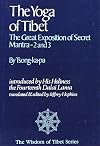
Yoga of Tibet describes the profound process of meditation in Action and Performance Tantra. It is an invaluable book for anyone who is practising or interested in Buddhist tantra. It consists of three parts: Heart of Mantra by the Dalai Lama is a lucid exposition of the meditative rites of of deity yoga-the distinctly tantric process in which yogis visualize themselves in the form of a Buddha's divine body as a manifestation of compassionate wisdom. The Great Exposition of Secret Mantra show more part 2 & 3 by Tsong-ka-pa, details the practices of Action and Performance Tantra. Special deity yoga techniques for the development of the heart, mind and physical form of a Buddha are presented in a coherent series of yogic exercises. The Mudras (hand gestures) that accompany the meditations are clearly illustrated. A Supplement by Jeffrey Hopkins outlines in detail the structure of Action Tantra practices as well as the need for development of special yogic powers. show less
The Middle-Length Treatise on the Stages of the Path to Enlightenment (Wisdom Culture Series) by Tsong-Kha-Pa

The first complete English translation of renowned scholar-saint Tsongkhapa's Middle-Length Treatise on the Stages of the Path.
Tsongkhapa (1357-1419), the author of the well-known Great Treatise on the Stages of the Path to Enlightenment and the teacher of the First Dalai Lama, is renowned as one of the greatest scholar-saints that Tibet has ever produced. A dozen years after writing the Great Treatise, he wrote the Middle-Length Treatise on the Stages of the Path, presented here in its show more first complete English translation.
Half the length of the well-known Great Treatise, this work similarly presents a systematic overview of the Buddhist path. Tsongkhapa begins by abridging the longer work, distilling its explanations for quicker integration. He presents a series of meditations, beginning with recognizing the rarity of our human existence and the great opportunities it affords, followed by reflections on impermanence, suffering, and the promise of liberation from our past actions, until proceeding to the path of bodhisattvas, whose universal compassion seeks to free every being from suffering. Tsongkhapa gives especially detailed instructions on samatha, the deep meditative concentration that is a precondition for the highest insight into the nature of reality. The final and largest section, on that very insight, is unique to this work, particularly Tsongkhapa's presentation of conventional truth and ultimate truth.
Those new to Tibetan Buddhist teachings will benefit from the approachable style of this classic handbook for enlightenment, and beginners and longtime practitioners alike will cherish the clear guidance from one of Tibet's great luminaries. show less
Tsongkhapa (1357-1419), the author of the well-known Great Treatise on the Stages of the Path to Enlightenment and the teacher of the First Dalai Lama, is renowned as one of the greatest scholar-saints that Tibet has ever produced. A dozen years after writing the Great Treatise, he wrote the Middle-Length Treatise on the Stages of the Path, presented here in its show more first complete English translation.
Half the length of the well-known Great Treatise, this work similarly presents a systematic overview of the Buddhist path. Tsongkhapa begins by abridging the longer work, distilling its explanations for quicker integration. He presents a series of meditations, beginning with recognizing the rarity of our human existence and the great opportunities it affords, followed by reflections on impermanence, suffering, and the promise of liberation from our past actions, until proceeding to the path of bodhisattvas, whose universal compassion seeks to free every being from suffering. Tsongkhapa gives especially detailed instructions on samatha, the deep meditative concentration that is a precondition for the highest insight into the nature of reality. The final and largest section, on that very insight, is unique to this work, particularly Tsongkhapa's presentation of conventional truth and ultimate truth.
Those new to Tibetan Buddhist teachings will benefit from the approachable style of this classic handbook for enlightenment, and beginners and longtime practitioners alike will cherish the clear guidance from one of Tibet's great luminaries. show less
Illuminating the Intent: An Exposition of Candrakirti's Entering the Middle Way (Library of Tibetan Classics) by Je Tsongkhapa
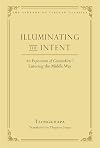
The Dalai Lama's translator and author of the definitive biography of Tsongkhapa here presents the first translation of one of that master's seminal and best-known works.
This work is perhaps the most influential explanation of Candrakirti's seventh-century classic Entering the Middle Way (Madhyamakavatara).
Written as a supplement to Nagarjuna's Fundamental Verses on the Middle Way, Candrakirti's text integrates the central insight of Nagarjuna's thought--the rejection of any metaphysical show more notion of intrinsic existence--with the well-known Mahayana framework of the ten levels of the bodhisattva, and it became the most studied presentation of Madhyamaka thought in Tibet.
Completed the year before the author's death, Tsongkhapa's exposition of Candrakirti's text is recognized by the Tibetan tradition as the final standpoint of Tsongkhapa on many philosophical questions, particularly the clear distinctions it draws between the standpoints of the Madhyamaka and Cittamatra schools. show less
This work is perhaps the most influential explanation of Candrakirti's seventh-century classic Entering the Middle Way (Madhyamakavatara).
Written as a supplement to Nagarjuna's Fundamental Verses on the Middle Way, Candrakirti's text integrates the central insight of Nagarjuna's thought--the rejection of any metaphysical show more notion of intrinsic existence--with the well-known Mahayana framework of the ten levels of the bodhisattva, and it became the most studied presentation of Madhyamaka thought in Tibet.
Completed the year before the author's death, Tsongkhapa's exposition of Candrakirti's text is recognized by the Tibetan tradition as the final standpoint of Tsongkhapa on many philosophical questions, particularly the clear distinctions it draws between the standpoints of the Madhyamaka and Cittamatra schools. show less
You May Also Like


Associated Authors
Statistics
- Works
- 82
- Also by
- 5
- Members
- 1,783
- Popularity
- #14,438
- Rating
- 4.4
- Reviews
- 10
- ISBNs
- 76
- Languages
- 6
- Favorited
- 3