
Nāgārjuna
Author of The Fundamental Wisdom of the Middle Way: Nagarjuna's Mulamadhyamakakarika
About the Author
Image credit: Golden statue of Nagarjuna at Samye Ling Monastery
Series
Works by Nāgārjuna
The Fundamental Wisdom of the Middle Way: Nagarjuna's Mulamadhyamakakarika (1993) 649 copies, 8 reviews
Nagarjuna's Seventy Stanzas: A Buddhist Psychology of Emptiness (1999) — Root Text; Root Text — 147 copies, 1 review
Nagarjuna's Middle Way: Mulamadhyamakakarika (Classics of Indian Buddhism) (2013) — Root Text — 90 copies
The precious garland and The song of the four mindfulnesses (The Wisdom of Tibet series ; 2) (1975) 72 copies, 1 review
Elegant Sayings: Nagarjuna's Staff of Wisdom & Sakya Pandit's Treasury of Elegant Sayings (1977) 69 copies
Nagarjuna's letter: Nagarjuna's 'Letter to a friend', with a commentary by the Venerable Rendawa, Zhon-nu Lo-dro (2011) 30 copies
Nagarjuna's Reason Sixty (Yuktisastika) with Candrakirti's Commentary (Yuktisastikavrrti) (Treasury of the Buddhist Sciences) (2007) 18 copies
Nagarjunian Disputations: A Philosophical Journey Through an Indian Looking-Glass (Monographs of the Society for Asian and Comparative Philosophy) (1994) 14 copies
Le settanta stanze sulla vacuità 13 copies
Marvelous Stories from the Perfection of Wisdom (English and Chinese Edition) (2009) — Author — 12 copies
Nāgārjuna's Treatise on the Ten Bodhisattva Grounds: The Daśabhūmika Vibhāṣā (2019) 7 copies, 1 review
Le Traité de la Grande Vertu de Sagesse de Nagarjuna (Mahāprajňāpāramitāśāstra). Tome IV, Chapitres XLII (suite)-XLVIII (1976) 3 copies
Nagarjuna on Mindfulness of the Buddha: The easy practice : Nagarjuna's Treatise on the ten grounds, chapter 9 ; The pratuyutpanna samadhi : Nagarjuna's treatise on the ten… (2019) 3 copies, 1 review
Golden zephyr 3 copies
Pañcakrama : Sanskrit and Tibetan texts critically edited with verse index and facsimile edition of the Sanskrit manusc (1994) 2 copies
Works. 1 copy
Nagarjuna's Yogaratnamala 1 copy
Carta a um Amigo 1 copy
madhyamaka karika 1 copy
Nagarjuna's Letter 1 copy
Bodhichitta Commentary 1 copy
Associated Works
The Sun of Wisdom: Teachings on the Noble Nagarjuna's Fundamental Wisdom of the Middle Way (2003) — Root Text — 144 copies, 2 reviews
Paths and Grounds of Guhyasamaja According to Arya Nagarjuna (1995) — Root Text — 54 copies, 1 review
Tagged
Common Knowledge
- Canonical name
- Nāgārjuna
- Other names
- Acharya Nāgārjuna
- Birthdate
- c. 150 CE
- Date of death
- 250 CE
- Gender
- male
- Occupations
- philosopher
- Organizations
- Madhyamaka
- Nationality
- India
- Associated Place (for map)
- India
Members
Reviews
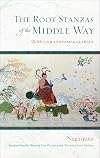
A new English translation of the founding text of the Madhyamaka (Middle Way) school of Buddhism, with the Tibetan version of the text included.
The Root Stanzas holds an honored place in all branches of Tibetan Buddhism, as well as in the Buddhist traditions found in China, Japan, and Korea, because of the way it develops the seminal view of emptiness (shunyata), which is crucial to understanding Mahayana Buddhism and central to its practice. It is prized for its pithy and pointed arguments show more that show that things lack intrinsic being and thus are “empty” (shunya). They abide in the Middle Way, free from the extremes of permanence and annihilation. show less
The Root Stanzas holds an honored place in all branches of Tibetan Buddhism, as well as in the Buddhist traditions found in China, Japan, and Korea, because of the way it develops the seminal view of emptiness (shunyata), which is crucial to understanding Mahayana Buddhism and central to its practice. It is prized for its pithy and pointed arguments show more that show that things lack intrinsic being and thus are “empty” (shunya). They abide in the Middle Way, free from the extremes of permanence and annihilation. show less
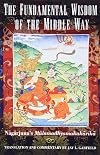
The Buddhist saint Nagarjuna, who lived in South India in approximately the second century CE, is undoubtedly the most important, influential, and widely studied Mahayana Buddhist philosopher. His many works include texts addressed to lay audiences, letters of advice to kings, and a set of penetrating metaphysical and epistemological treatises. His greatest philosophical work, the Mulamadhyamikakarika—read and studied by philosophers in all major Buddhist schools of Tibet, China, Japan, show more and Korea—is one of the most influential works in the history of Indian philosophy. Now, in The Fundamental Wisdom of the Middle Way, Jay L. Garfield provides a clear and eminently readable translation of Nagarjuna's seminal work, offering those with little or no prior knowledge of Buddhist philosophy a view into the profound logic of the Mulamadhyamikakarika. show less
The text on its own is almost impossible to understand, which is why it's traditionally been accompanied by a commentary. Instead of translating this commentary, Garfield provides his own, which I'm not a fan of.
You May Also Like


Associated Authors
Statistics
- Works
- 104
- Also by
- 3
- Members
- 1,844
- Popularity
- #13,956
- Rating
- 4.2
- Reviews
- 21
- ISBNs
- 122
- Languages
- 15
- Favorited
- 5