
Hans J. Hillerbrand
Author of The Protestant Reformation
About the Author
Hans J. Hillerbrand is Professor of Religion and History at Duke University.
Image credit: Goshen College
Works by Hans J. Hillerbrand
The Reformation : A Narrative History Related by Contemporary Observes and Participants (1964) — Editor — 239 copies, 1 review
Christianity: The Illustrated History: Church and Society, Culture and Civilization, Sacred Art and Architecture (2008) 44 copies, 1 review
Associated Works
Tagged
Common Knowledge
- Canonical name
- Hillerbrand, Hans J.
- Legal name
- Hillerbrand, Hans Joachim
- Birthdate
- 1931-09-13
- Date of death
- 2020-11014
- Gender
- male
- Education
- University of Erlangen (Ph.D|1957)
- Occupations
- historian
professor - Organizations
- Duke University
Southern Methodist University
City University of New York Graduate Center
Goshen College
American Academy of Religion
American Society of Church History (show all 7)
Society for Reformation Studies - Awards and honors
- German Cross of the Order of Merit (2008)
- Nationality
- Germany
- Birthplace
- Gersheim, Germany
- Places of residence
- Durham, North Carolina, USA
- Place of death
- Evanston, Illinois, USA
- Associated Place (for map)
- Germany
Members
Reviews
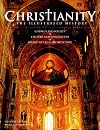
This book calls itself a history, though it is divided into four sections - Origins and History, Principles and Practices, The Bible, and Christianity Today. It does give a basic overview of the religion's history, but it wasn't quite as in depth as I would have preferred - although that can easily be overlooked at the fact that the book offers so much more than history. For example, it is filled with pages devoted to art or architecture of the faith as well, and even discusses some of the show more issues the faith is presented with today, such as homosexuality or the role of women, etc.
I did enjoy how unbiased the book seems to be - it doesn't favor one side of Christianity over another in presenting the various differences in opinion on matters of faith, offering more than just the "traditionally accepted", "orthodox" ways of belief. show less
I did enjoy how unbiased the book seems to be - it doesn't favor one side of Christianity over another in presenting the various differences in opinion on matters of faith, offering more than just the "traditionally accepted", "orthodox" ways of belief. show less
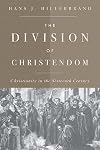
Christendom, the social-political-religious definition of Europe for nearly millennium was shaken at the right moment and the right place to rend it asunder for all time. In Hans J. Hillerbrand’s revision of his own work, The Division of Christendom: Christianity in the Sixteenth Century, the Reformation started by Martin Luther in Germany is seen first and foremost as a religious dispute that was not inevitable but due to political and societal factors as able to evolve until it became show more irreversible.
Hillerbrand began by setting the stage upon which Luther would burst onto the scene focusing not only on the condition of the Church, but also the political situation in Germany. Then Hillerbrand goes into what he calls “the first phase” of the Reformation in which Luther was the primary focus from 1517 to 1521, then after Luther’s stand at Worms the focus of the Reformation changes from a primarily religious controversy into one that politics begins to dominate in Germany. Yet, Hillerbrand doesn’t stop with Luther and Germany, as he begins describing the reactions to the German events in other territories before they lead to their own Reformation events. The Catholic Church’s response to the spread of Protestantism across Europe, the different forms of Protestantism besides Lutheranism, and the theological debates between all of them were all covered. And at the end of the book Hillerbrand compared the beginning of the 16th-century to the end and how each was different and the same after over 80 years of debate.
While Hillerbrand’s survey of the Reformation is intended for both general audiences and scholars, which he successes in doing, the epilogue of the book is what I believe is the best part of the text. Entitled “Historiography”, Hillerbrand discusses the various ways the Reformation has been covered by historians over the past 500 years and the trends in history as well. But in reviewing his own text, Hillerbrand emphasized the religious aspect that sparked as well as influenced the Reformation and the importance of the events in Germany which determined not only Luther’s but the Reformation’s fate in Europe. By ending the book on this note, Hillerbrand gives his readers much to think about on either to agree or disagree with his conclusion which is one of the many reasons to study history.
The Division of Christendom is a relatively, for 500 pages, compact survey of 16th-century Europe in which things both changed dramatically and yet stayed the same during a transformative time in Western history. As one of the foremost historians of the Reformation, Hans J. Hillerbrand knows this period of history as no one else and just adds to my recommendation to read this book for those interested in the Reformation. show less
Hillerbrand began by setting the stage upon which Luther would burst onto the scene focusing not only on the condition of the Church, but also the political situation in Germany. Then Hillerbrand goes into what he calls “the first phase” of the Reformation in which Luther was the primary focus from 1517 to 1521, then after Luther’s stand at Worms the focus of the Reformation changes from a primarily religious controversy into one that politics begins to dominate in Germany. Yet, Hillerbrand doesn’t stop with Luther and Germany, as he begins describing the reactions to the German events in other territories before they lead to their own Reformation events. The Catholic Church’s response to the spread of Protestantism across Europe, the different forms of Protestantism besides Lutheranism, and the theological debates between all of them were all covered. And at the end of the book Hillerbrand compared the beginning of the 16th-century to the end and how each was different and the same after over 80 years of debate.
While Hillerbrand’s survey of the Reformation is intended for both general audiences and scholars, which he successes in doing, the epilogue of the book is what I believe is the best part of the text. Entitled “Historiography”, Hillerbrand discusses the various ways the Reformation has been covered by historians over the past 500 years and the trends in history as well. But in reviewing his own text, Hillerbrand emphasized the religious aspect that sparked as well as influenced the Reformation and the importance of the events in Germany which determined not only Luther’s but the Reformation’s fate in Europe. By ending the book on this note, Hillerbrand gives his readers much to think about on either to agree or disagree with his conclusion which is one of the many reasons to study history.
The Division of Christendom is a relatively, for 500 pages, compact survey of 16th-century Europe in which things both changed dramatically and yet stayed the same during a transformative time in Western history. As one of the foremost historians of the Reformation, Hans J. Hillerbrand knows this period of history as no one else and just adds to my recommendation to read this book for those interested in the Reformation. show less
Blessed and published, basically, by the Catholic Church, this analysis of the Church's spiritual and administrative weaknesses is surprisingly candid.
The causes and result of the Protestant reformation
Awards

You May Also Like


Associated Authors
Statistics
- Works
- 33
- Also by
- 2
- Members
- 1,729
- Popularity
- #14,866
- Rating
- 3.6
- Reviews
- 7
- ISBNs
- 46
- Languages
- 1