
Chantal Thomas (1) (1945–)
Author of Farewell, My Queen
For other authors named Chantal Thomas, see the disambiguation page.
About the Author
Chantal Thomas is director of research at the Centre National de la Recherche Scientifique. She lives in France
Works by Chantal Thomas
Le Palais de la Reine 1 copy
Sade Livro 1 1 copy
Associated Works
The Libertine Reader: Eroticism and Enlightenment in Eighteenth-Century France (1997) — Contributor — 71 copies
Tagged
Common Knowledge
- Birthdate
- 1945
- Gender
- female
- Occupations
- historian
novelist - Organizations
- French National Center for Scientific Research
- Awards and honors
- Grand Prix de la Société des Gens de Lettres (Ensemble de son oeuvre | 20 14)
Fauteuil numéro 12 de l’Académie française - Short biography
- Chantal Thomas was born in Lyon and raised in Arcachon, Bordeaux, and Paris. Her career has included teaching at French and USA universities, such as Yale and Princeton, as well as writing. She has published some 19 works, including biographies of the Marquis de Sade, Casanova, and Marie Antoinette. In 2002, her historical novel Les adieux à la reine (Farewell, My Queen) became a bestseller and won the Prix Femina. It was adapted into a film starring Diane Kruger as Queen Marie Antoinette and Léa Seydoux as her reader, Sidonie Laborde.
- Nationality
- France
- Birthplace
- Lyon, Rhône, Auvergne-Rhône-Alpes, France
- Places of residence
- Arcachon, Gironde, Nouvelle-Aquitaine, France
Bordeaux, Gironde, Nouvelle-Aquitaine, France
Paris, France - Associated Place (for map)
- France
Members
Reviews
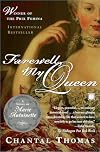
I read 'Farewell, My Queen' after seeing the sumptuous film adaptation. Although the film and book differ substantially in the details of how things unfold, they have the same basic structure and, crucially, the same atmosphere. This novel takes place as a memory of the last few days the main character, Sidonie, spends in the Palace of Versailles. After news of the fall of the Bastille reaches the royal family, life at Versailles unravels chaotically.
It was interesting to read 'Farewell, My show more Queen' as a counterpoint to my usual pro-Revolution reading. In 'City of Darkness, City of Light' for example, all the characters are excited and carried along by the Revolution, to varying degrees. To Sidonie, her friends, and her superiors, it is a wholly baffling and terrifying prospect, incomprehensible and destructive. They have no concept of the wider social and economic context, no point of contact with the bourgeois third estate deputies, no common understanding with those outside the Versailles bubble. The sense of stifling helplessness and confusion is very effective in this novel, helped by copious symbolism. Indeed, some characters appear only to be avatars of chaos or longing, possibly invented by Sidonie. Her narration is powerful, albeit clearly not reliable.
I enjoyed this novel as a snapshot of the French monarchy's collapse, but ultimately I prefer the pro-revolutionary perspective. Sidonie is immersed in the wasteful, ineffectual, archaic ritual of Versailles, the appeal of which to her seems to be grounded in her love for the Queen. Actually, her portrait of Versailles life reminded me of the Gormenghast trilogy.
On balance, I'd only recommend reading this novel after seeing the film. The combination evokes the atmosphere of dissolution and collapse effectively; each on its own is fairly slight and insubstantial. Moreover, the film is beautifully shot and brings out the relationship between the Queen and Gabrielle de Polignac more unequivocally than the novel. show less
It was interesting to read 'Farewell, My show more Queen' as a counterpoint to my usual pro-Revolution reading. In 'City of Darkness, City of Light' for example, all the characters are excited and carried along by the Revolution, to varying degrees. To Sidonie, her friends, and her superiors, it is a wholly baffling and terrifying prospect, incomprehensible and destructive. They have no concept of the wider social and economic context, no point of contact with the bourgeois third estate deputies, no common understanding with those outside the Versailles bubble. The sense of stifling helplessness and confusion is very effective in this novel, helped by copious symbolism. Indeed, some characters appear only to be avatars of chaos or longing, possibly invented by Sidonie. Her narration is powerful, albeit clearly not reliable.
I enjoyed this novel as a snapshot of the French monarchy's collapse, but ultimately I prefer the pro-revolutionary perspective. Sidonie is immersed in the wasteful, ineffectual, archaic ritual of Versailles, the appeal of which to her seems to be grounded in her love for the Queen. Actually, her portrait of Versailles life reminded me of the Gormenghast trilogy.
On balance, I'd only recommend reading this novel after seeing the film. The combination evokes the atmosphere of dissolution and collapse effectively; each on its own is fairly slight and insubstantial. Moreover, the film is beautifully shot and brings out the relationship between the Queen and Gabrielle de Polignac more unequivocally than the novel. show less
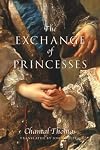
The author’s careful attention to detail and the amount of research she did is very evident right off the bat. The lush descriptions of Georgian court life and the extravagant world of the nobility comes to vivid reality. I could almost hear the rustle of silk and clink of jewels in real life.
I really enjoyed the subject matter explored in the book. Not only the lives of royals in the Georgian era, always a fascinating subject of historical fiction lovers. The way that royal children were show more utilized as commodities to obtain peace and power was also an enthralling subject. The author does a great job of making the reader feel for these youngsters as they’re thrust into a world they’re not prepared for and roles that seem daunting.
Yet, I think this book has a severe identity crisis that kills the work overall. At times this book would read as a historical fiction and at others it would read as a non-fiction. Alternately, the reader would get into the character’s heads and explore their motivations. And then the next paragraph we would be given dates, facts, and figures interspersed with snatches of primary material. More than once I was thrown from the narrative as we flip flopped from book style to book style so that by the end, I just really wanted the book to be over with.
So while there is some interesting material explored within and in vibrant, life-like detail, this book ultimately fails for me as its flipping between book styles. I actually finished the book in disgust, wishing it would make up its mind on fiction or non-fiction. So maybe read if you’re really hard up for reading material, but I wouldn’t go out of your way to find this one.
Note: Book received for free from publisher via NetGalley in exchange for an honest review. show less
I really enjoyed the subject matter explored in the book. Not only the lives of royals in the Georgian era, always a fascinating subject of historical fiction lovers. The way that royal children were show more utilized as commodities to obtain peace and power was also an enthralling subject. The author does a great job of making the reader feel for these youngsters as they’re thrust into a world they’re not prepared for and roles that seem daunting.
Yet, I think this book has a severe identity crisis that kills the work overall. At times this book would read as a historical fiction and at others it would read as a non-fiction. Alternately, the reader would get into the character’s heads and explore their motivations. And then the next paragraph we would be given dates, facts, and figures interspersed with snatches of primary material. More than once I was thrown from the narrative as we flip flopped from book style to book style so that by the end, I just really wanted the book to be over with.
So while there is some interesting material explored within and in vibrant, life-like detail, this book ultimately fails for me as its flipping between book styles. I actually finished the book in disgust, wishing it would make up its mind on fiction or non-fiction. So maybe read if you’re really hard up for reading material, but I wouldn’t go out of your way to find this one.
Note: Book received for free from publisher via NetGalley in exchange for an honest review. show less
This one was a quick read, if nothing else. I had not been familiar with the figures of Louise Elisabeth of Orleans or Mariana Victoria of Spain previously, so it was interesting to learn about their parallel experiences as extremely young brides in the French and Spanish royal courts. Interesting, but I would have liked to have more exploration of the issues of childhood and neglect (as the forward hinted at).

A travers trois célèbres salons : la Chambre bleue de Mme de Rambouillet (XVIIe siècle), le salon de Mme du Deffand (XVIIIe siècle), le château de Coppet de Mme de Staël (XIXe siècle), se tracent trois différentes approches de l'esprit de conversation et des jeux de langage, trois moments dans l'histoire de la femme supérieure (Mme de Staël), c'est-à-dire libre de refuser la tradition et d'affirmer ses talents : les Précieuses optant pour la féerie, Mme du Deffand pour la show more distance et l'humour, Mme de Staël pour la passion et la littérature comme arme. (4e) show less
Lists
Awards


You May Also Like


Associated Authors
Statistics
- Works
- 31
- Also by
- 3
- Members
- 683
- Popularity
- #37,040
- Rating
- 3.4
- Reviews
- 26
- ISBNs
- 97
- Languages
- 6
