
John Chu (1)
Author of The Water That Falls on You From Nowhere
For other authors named John Chu, see the disambiguation page.
About the Author
Image credit: John Chu, from Wikipedia.
Works by John Chu
A Cost-Benefit Analysis of the Proposed Trade-Offs for the Overhaul of the Barricade (2014) 12 copies, 1 review
Incomplete Proofs 2 copies
Repairing the World 2 copies
Associated Works
Worlds Seen in Passing: Ten Years of Tor.com Short Fiction (2018) — Contributor — 161 copies, 1 review
Some of the Best from Tor.com: 2019 Edition: A Tor.com Original (2020) — Contributor — 157 copies, 3 reviews
Lost Transmissions: The Secret History of Science Fiction and Fantasy (2019) — Contributor — 154 copies, 5 reviews
Kaleidoscope: Diverse YA Science Fiction and Fantasy Stories (2014) — Contributor — 123 copies, 6 reviews
Lightspeed Magazine, Issue 61 • June 2015 (Queers Destroy Science Fiction! special issue) (2015) — Contributor — 112 copies, 3 reviews
New Suns 2: Original Speculative Fiction by People of Color (2023) — Contributor — 59 copies, 1 review
Sunspot Jungle: The Ever Expanding Universe of Fantasy and Science Fiction (2018) — Contributor — 38 copies, 1 review
Fantasy Magazine, Issue 60 (December 2016) - People of Colo(u)r Destroy Fantasy! Special Issue (2016) — Contributor — 31 copies, 1 review
The Long List Anthology Volume 6: More Stories from the Hugo Award Nomination List (2020) — Contributor — 30 copies, 2 reviews
Asimov's Science Fiction: Vol. 37, No. 2 [February 2013] (2013) — Contributor — 11 copies, 2 reviews
Tagged
Common Knowledge
- Birthdate
- 19??
- Gender
- male
- Occupations
- microprocessor architect
writer
translator - Birthplace
- Taiwan
- Places of residence
- Palo Alto, California, USA
- Map Location
- USA
Members
Reviews
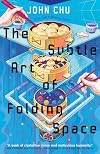
Ellie has a problem. Well, she has several actually. First, her sister keeps trying to kill her. Second, her mother is in a coma. Third, her sister tasks her with a cleanup of the underpinnings of the universe that Ellie is not thrilled to take on, and which turns into more than she bargained for.
John Chu’s debut novel The Subtle Art of Folding Space combines the dysfunctional dynamics of an immigrant family with a physics-bending multiverse-spanning scf-fi crisis. Ellie’s family, it show more turns out, are part of an underground group of people who keep our universe humming along as it should be. They do this by designing, building, maintaining and verifying a series of, well, I’m not sure what to call them - some kind of machines - that stop anomalies from cropping up and knocking our reality for a loop.
The metaphors for all those machines come from the worlds of plumbing, mechanics and computer science. Ellie and her compatriots work on pipes, valves, gears, gates, etc. There is some internal logic to the concept Chu puts forth but it’s pseudoscience rather than “hard science” fiction in this part of the story.
The family dynamics however would seem to spring from Chu’s real-world knowledge or even personal experience. Chu is a gay Taiwanese American author. The family is Taiwanese American and one of the main characters is Ellie’s gay cousin Daniel.
The book is written with a light tone, and with plenty of comic relief. Even the explanations of what the machines do and why they need fixing are not too deep - just enough explanation is given to support the story. Like the pseudoscience of a Star Trek episode, the science-y mumbo jumbo sounds good coming out of the character’s mouths, even if the science itself may be suspect.
Star Trek seems like a good reference point. If you are a fan of Star Trek or are comfortable with the pseudoscience-y part of the science fiction / fantasy spectrum, then this book will be a natural fit for you. If you are more of a fan of the knights and dragons at the fantasy end of science fiction / fantasy, this book will likely be a stretch.
Despite the light tone and the pseudoscience, the family drama is fairly serious, and Ellie’s struggle with her sister seems plausible, and grounded in realistic family tensions. Resolving this drama is the heart of the book. I fell for both the family drama and the pseudoscience and found this a quick and enjoyable read. show less
John Chu’s debut novel The Subtle Art of Folding Space combines the dysfunctional dynamics of an immigrant family with a physics-bending multiverse-spanning scf-fi crisis. Ellie’s family, it show more turns out, are part of an underground group of people who keep our universe humming along as it should be. They do this by designing, building, maintaining and verifying a series of, well, I’m not sure what to call them - some kind of machines - that stop anomalies from cropping up and knocking our reality for a loop.
The metaphors for all those machines come from the worlds of plumbing, mechanics and computer science. Ellie and her compatriots work on pipes, valves, gears, gates, etc. There is some internal logic to the concept Chu puts forth but it’s pseudoscience rather than “hard science” fiction in this part of the story.
The family dynamics however would seem to spring from Chu’s real-world knowledge or even personal experience. Chu is a gay Taiwanese American author. The family is Taiwanese American and one of the main characters is Ellie’s gay cousin Daniel.
The book is written with a light tone, and with plenty of comic relief. Even the explanations of what the machines do and why they need fixing are not too deep - just enough explanation is given to support the story. Like the pseudoscience of a Star Trek episode, the science-y mumbo jumbo sounds good coming out of the character’s mouths, even if the science itself may be suspect.
Star Trek seems like a good reference point. If you are a fan of Star Trek or are comfortable with the pseudoscience-y part of the science fiction / fantasy spectrum, then this book will be a natural fit for you. If you are more of a fan of the knights and dragons at the fantasy end of science fiction / fantasy, this book will likely be a stretch.
Despite the light tone and the pseudoscience, the family drama is fairly serious, and Ellie’s struggle with her sister seems plausible, and grounded in realistic family tensions. Resolving this drama is the heart of the book. I fell for both the family drama and the pseudoscience and found this a quick and enjoyable read. show less

This story is set in a future universe a lot like ours with some remarkable exceptions. For one thing, physics was controlled by actual machinery, called the “skunkworks,” which regulated the very precise interactions of matter, energy, and force. A secret group of highly specialized engineers was charged with safeguarding the machinery’s integrity, since even a minor change could result in unpredictable alterations to the universe.
When not too long ago, in both our world and the world show more of this novel, physics shifted from a “Newtonian” paradigm - positing a "clockwork universe" that is orderly, deterministic, and knowable - to the indeterminate perspective of the quantum paradigm, this complicated the output of the skunkworks.
Quantum discoveries revealed that at the particle level, matter exists in a blend of possible outcomes. It is only after observation that a particle can be distinguished as a single, definite state.
The unobserved outcomes disappear from immediate reality in our universe. But in this fictional world, they are still lying around in the skunkworks, where “shards of discarded and potential futures litter the caches . . . ."
In the story then, the classic dilemma of quantum superposition (familiar as the problem of Schrödinger's cat), has turned into a universe-wide nightmare, especially when it is suspected that some workers in the skunkworks are conspiring to rewrite the rules of the universe to benefit themselves. Since the skunkworks’ cache is full of “pieces of what didn’t happen lying all over the place,” what’s to stop anyone from picking one or more up, and substituting one possible outcome for another?
It turns out, nothing but norms have prevented this. And as one of the characters points out, norms only hold until they don’t. [Indeed, those who had faith in the American government experiment that has been mostly propped up by norms are finding this out as well.]
Throughout the book, Chu makes the point that most people don’t think about how the world operates; they just expect the law of physics to operate as usual at all times. However, as with any complex system, sometimes nefarious characters can throw a wrench in the works, putting your entire universe (at whatever level) at risk.
The author displays impressive feats of creative imagination with descriptions of how maintenance workers service and refine the skunkworks by folding space in unexpected configurations.
But in some ways the story is all a rather fanciful setting for a family drama, most saliently between two sisters, Ellie and Chris; their relationship with their mother; and the manner in which their cousin-almost-brother Daniel interacted with both girls.
Evaluation: This story is way outside the box, and thus will delight many readers, at least with respect to the sci-fi aspects. I found the family drama just a tad frustrating, however. Ellie wanted “normalcy” so desperately she was willing to overlook all evidence of psychosis . . . over and over. . . to get it. show less
When not too long ago, in both our world and the world show more of this novel, physics shifted from a “Newtonian” paradigm - positing a "clockwork universe" that is orderly, deterministic, and knowable - to the indeterminate perspective of the quantum paradigm, this complicated the output of the skunkworks.
Quantum discoveries revealed that at the particle level, matter exists in a blend of possible outcomes. It is only after observation that a particle can be distinguished as a single, definite state.
The unobserved outcomes disappear from immediate reality in our universe. But in this fictional world, they are still lying around in the skunkworks, where “shards of discarded and potential futures litter the caches . . . ."
In the story then, the classic dilemma of quantum superposition (familiar as the problem of Schrödinger's cat), has turned into a universe-wide nightmare, especially when it is suspected that some workers in the skunkworks are conspiring to rewrite the rules of the universe to benefit themselves. Since the skunkworks’ cache is full of “pieces of what didn’t happen lying all over the place,” what’s to stop anyone from picking one or more up, and substituting one possible outcome for another?
It turns out, nothing but norms have prevented this. And as one of the characters points out, norms only hold until they don’t. [Indeed, those who had faith in the American government experiment that has been mostly propped up by norms are finding this out as well.]
Throughout the book, Chu makes the point that most people don’t think about how the world operates; they just expect the law of physics to operate as usual at all times. However, as with any complex system, sometimes nefarious characters can throw a wrench in the works, putting your entire universe (at whatever level) at risk.
The author displays impressive feats of creative imagination with descriptions of how maintenance workers service and refine the skunkworks by folding space in unexpected configurations.
But in some ways the story is all a rather fanciful setting for a family drama, most saliently between two sisters, Ellie and Chris; their relationship with their mother; and the manner in which their cousin-almost-brother Daniel interacted with both girls.
Evaluation: This story is way outside the box, and thus will delight many readers, at least with respect to the sci-fi aspects. I found the family drama just a tad frustrating, however. Ellie wanted “normalcy” so desperately she was willing to overlook all evidence of psychosis . . . over and over. . . to get it. show less
This was such a unique book about generational trauma and complex family dynamics tied into a sci-fi mystery in the best way!
What if the physics of the universe is controlled by machinery known as the skunkworks, your sister likes to try to murder you, and you have to decide between the stability of the universe and your mother’s life? This book somehow combines all of those crazy topics as Ellie has to figure out who would destabilize the universe in such a way and why, exploring the show more complexity of the skunkworks and of human relationships.
I really enjoyed listening to this story, I found the physics of the universe portions to be fun, even though they were a bit confusing at times, because I didn’t need them to make perfect sense. The concept of having a machinery maintaining the universe was fascinating and well executed, and the moral dilemma Ellie faces with having to choose the universe or her mom and the resulting consequences of that action was well depicted.
The narrator did such a great job capturing the tone of the book, especially all of the complex emotions the main character is put through. The sound quality of this audiobook was wonderful and I think that part of my love of this book was definitely experiencing it in an audio format! I felt more engaged in the mystery and invested in the characters.
I would recommend this book for fans of science fiction as well as stories portraying complex family dynamics and emotions.
Thank you so much to Netgalley and Macmillan Audio for the opportunity to listen to an eALC of this book! show less
What if the physics of the universe is controlled by machinery known as the skunkworks, your sister likes to try to murder you, and you have to decide between the stability of the universe and your mother’s life? This book somehow combines all of those crazy topics as Ellie has to figure out who would destabilize the universe in such a way and why, exploring the show more complexity of the skunkworks and of human relationships.
I really enjoyed listening to this story, I found the physics of the universe portions to be fun, even though they were a bit confusing at times, because I didn’t need them to make perfect sense. The concept of having a machinery maintaining the universe was fascinating and well executed, and the moral dilemma Ellie faces with having to choose the universe or her mom and the resulting consequences of that action was well depicted.
The narrator did such a great job capturing the tone of the book, especially all of the complex emotions the main character is put through. The sound quality of this audiobook was wonderful and I think that part of my love of this book was definitely experiencing it in an audio format! I felt more engaged in the mystery and invested in the characters.
I would recommend this book for fans of science fiction as well as stories portraying complex family dynamics and emotions.
Thank you so much to Netgalley and Macmillan Audio for the opportunity to listen to an eALC of this book! show less
This review is of the audiobook read by Katharine Chin.
Calling The Subtle Art of Folding Space science fiction is overselling its scifi elements. It's a toxic family drama with a thick layer of technobabble over it. I felt the world building was actually very weak, despite how much the world was talked about: all the words seemed to be handwaving instead of developing the world.
The Narrator
I was not a fan of the narration. Katharine Chin sounded so flat most of the time that I honestly show more thought I might have been listening to an AI. (I wasn't; she's a real person.)
Check the book out from the library if you're interested, but I recommend getting it in print.
Received via NetGalley. show less
Calling The Subtle Art of Folding Space science fiction is overselling its scifi elements. It's a toxic family drama with a thick layer of technobabble over it. I felt the world building was actually very weak, despite how much the world was talked about: all the words seemed to be handwaving instead of developing the world.
The Narrator
I was not a fan of the narration. Katharine Chin sounded so flat most of the time that I honestly show more thought I might have been listening to an AI. (I wasn't; she's a real person.)
Check the book out from the library if you're interested, but I recommend getting it in print.
Received via NetGalley. show less
Lists
Awards

You May Also Like


Associated Authors
Statistics
- Works
- 12
- Also by
- 36
- Members
- 298
- Popularity
- #78,714
- Rating
- 3.8
- Reviews
- 32
- ISBNs
- 12