
Meredith Russo
Author of If I Was Your Girl
Works by Meredith Russo
Associated Works
(Don't) Call Me Crazy: 33 Voices Start the Conversation about Mental Health (2018) — Contributor — 315 copies, 1 review
Tagged
Common Knowledge
- Canonical name
- Russo, Meredith
- Birthdate
- c. 1986
- Gender
- female
- Occupations
- writer
- Nationality
- USA
- Places of residence
- Chattanooga, Tennessee, USA
- Associated Place (for map)
- Tennessee, USA
Members
Reviews
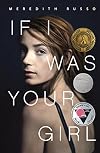
Review also posted on my blog: https://bennilovesbooks.wordpress.com/2017/01/06/review-if-i-was-your-girl-by-me...
After getting beat up at her old school for being transgender, Amanda Hardy makes the decision to move in with her father and start over again at a new school. Just wanting to make it through high school without any further incidents, Amanda decides she wants to pass as cisgender rather than tell people that she is trans (because who else really needs to know, anyway?). When the show more charming Grant falls into her life, she feels like she wants to tell him everything about herself — but what would be the repercussions of doing so?
This book is important because it serves as a wonderful window into the life of a trans person. It can be very difficult for cisgender people to conceptualize what it means to be trans and how microaggressions in everyday speech and behavior can be hurtful, in addition to how being bullied for being trans can affect a person. Amanda’s bullying was brutal, and yet her story was easily digestible for someone who would struggle to actually relate to her situation. In the author’s note, Russo (who is trans herself) stated that she wrote Amanda like this intentionally; she wanted her to clearly be trans, but she also wanted to make her someone who cis readers could relate to, and as a nonbinary trans person I sincerely appreciate that because I know far too many cis people who would struggle to understand a character who was written to be a more “realistic” trans teen, and they really need to read a book like this so they can better understand why their behavior is hurtful, even if they don’t even mean to be hurtful.
Unfortunately, this strength is also one of the book’s biggest weak spots. While being relatable to cis readers, Amanda is a very idealized trans teen. She is incredibly lucky because she has no issues passing as cis whatsoever, and she even managed to have bottom surgery before she was even out of high school. The latter point, especially, is a rarity for trans teens because surgery is expensive, many places have an infinite number of hoops that need to be jumped through before it can take place, and age restrictions generally prevent teens from getting it (though Amanda avoided that last point by taking a gap year in the middle of high school, so she was legally old enough to have surgery before she graduated). These points help her become more relatable to cis readers, but at the same time these things distance her from trans readers who want a trans character to identify with. Transgender characters are still pretty underrepresented (though this has been improving), leaving a pretty limited number of trans characters for trans readers to identify with. Many trans readers, teenagers especially, would consider Amanda to be incredibly lucky and might even wish to be in her position, and that can cause distance to form between the character and the reader. Though trans readers can very well still enjoy this book (as I did), it was still written with cis readers as more of its intended audience. There’s nothing wrong with having a book like this, of course, but it did leave me wishing for a book about a trans character geared toward a trans audience to read next.
A minor nitpick (with very minor spoilers): In the scene where the girls take Amanda to go get her ears pierced, the second the piercer opened her mouth I wanted to tell Amanda to leave the shop and never look back. No piercer who knows what they’re doing would ever ask someone if they want “gauges” put in their ears (for those who don’t know, “gauges” are a unit of measurement and not a type of jewelry; most standard earrings are 18g or 20g, for instance, so if you have any piercings you’re technically wearing these “gauges” the piercer is referring to yourself, regardless of whether you’ve stretched any piercings), and a good piercer would pierce with sterilized jewelry (NOT jewelry brought from outside the shop), and you generally wouldn’t be able to change the jewelry in your lobes for about two months while waiting for the piercings to heal. The only thing in this scene that the piercer actually did right is use a needle and not a gun to pierce Amanda’s ears. If you’re planning to get piercings at any point in the future and the person whom you are considering to have poke holes in you and then fill those holes with metal acts anything like this piercer does, please turn around and walk back out the door and go find another piercer. You’ll thank yourself later.
On a much better note, this book did an excellent job of normalizing things such as taking medication regularly and getting help for mental health-related issues. Oftentimes these things aren’t handled very well in books, and I think it’s fantastic when a book shows its readers that things like this are healthy and normal, and we need more representation of mental and physical health issues like this in books. Additionally, including information about the necessity of dilation after bottom surgery was appreciated because many people don’t realize that this is a necessary aftercare step. Though it didn’t centrally focus on it, this book didn’t ignore the medical side of this character, and that’s something that I would really like to see more of in fiction in general.
I also really appreciated the role that religion played in the book. Though Amanda wasn’t herself, many characters in the book identified as moderately to very religious, and in general I thought that the conflict between religion and transgender people was handled pretty well. It may have been handled a bit too positively for my taste, but I think that might just go back to the cis vs. trans intended audience thing mentioned earlier.
One thing that I liked that brought a bit more realism back to the story was Amanda’s trans role model, as well as the other people from her support group. These characters weren’t present for most of the book (and while this was a bummer, it does make sense because these characters live closer to Amanda’s mom than to Amanda’s dad and so Amanda is geographically distant from them for most of the book), but these characters (some of whom are just mentioned in passing) are the types of trans characters whom trans readers would find most relatable because they don’t all pass flawlessly and they haven’t all had bottom and/or top surgery and they don’t all have their mental health situation under control. Though I understand why they weren’t, I wish we could have seen more of these characters and heard more of their stories.
Overall, If I Was Your Girl was a solid debut from Russo. If she has plans for a second novel, I hope that she’ll write a book with a trans character that’s more geared toward trans readers. After reading this, I think she would be rather good at it. Though it wasn’t perfect, I wouldn’t hesitate to recommend this book to others. I think this is a book that everyone (especially cis people) should read.
Final Rating: 4 out of 5 stars show less
After getting beat up at her old school for being transgender, Amanda Hardy makes the decision to move in with her father and start over again at a new school. Just wanting to make it through high school without any further incidents, Amanda decides she wants to pass as cisgender rather than tell people that she is trans (because who else really needs to know, anyway?). When the show more charming Grant falls into her life, she feels like she wants to tell him everything about herself — but what would be the repercussions of doing so?
This book is important because it serves as a wonderful window into the life of a trans person. It can be very difficult for cisgender people to conceptualize what it means to be trans and how microaggressions in everyday speech and behavior can be hurtful, in addition to how being bullied for being trans can affect a person. Amanda’s bullying was brutal, and yet her story was easily digestible for someone who would struggle to actually relate to her situation. In the author’s note, Russo (who is trans herself) stated that she wrote Amanda like this intentionally; she wanted her to clearly be trans, but she also wanted to make her someone who cis readers could relate to, and as a nonbinary trans person I sincerely appreciate that because I know far too many cis people who would struggle to understand a character who was written to be a more “realistic” trans teen, and they really need to read a book like this so they can better understand why their behavior is hurtful, even if they don’t even mean to be hurtful.
Unfortunately, this strength is also one of the book’s biggest weak spots. While being relatable to cis readers, Amanda is a very idealized trans teen. She is incredibly lucky because she has no issues passing as cis whatsoever, and she even managed to have bottom surgery before she was even out of high school. The latter point, especially, is a rarity for trans teens because surgery is expensive, many places have an infinite number of hoops that need to be jumped through before it can take place, and age restrictions generally prevent teens from getting it (though Amanda avoided that last point by taking a gap year in the middle of high school, so she was legally old enough to have surgery before she graduated). These points help her become more relatable to cis readers, but at the same time these things distance her from trans readers who want a trans character to identify with. Transgender characters are still pretty underrepresented (though this has been improving), leaving a pretty limited number of trans characters for trans readers to identify with. Many trans readers, teenagers especially, would consider Amanda to be incredibly lucky and might even wish to be in her position, and that can cause distance to form between the character and the reader. Though trans readers can very well still enjoy this book (as I did), it was still written with cis readers as more of its intended audience. There’s nothing wrong with having a book like this, of course, but it did leave me wishing for a book about a trans character geared toward a trans audience to read next.
A minor nitpick (with very minor spoilers): In the scene where the girls take Amanda to go get her ears pierced, the second the piercer opened her mouth I wanted to tell Amanda to leave the shop and never look back. No piercer who knows what they’re doing would ever ask someone if they want “gauges” put in their ears (for those who don’t know, “gauges” are a unit of measurement and not a type of jewelry; most standard earrings are 18g or 20g, for instance, so if you have any piercings you’re technically wearing these “gauges” the piercer is referring to yourself, regardless of whether you’ve stretched any piercings), and a good piercer would pierce with sterilized jewelry (NOT jewelry brought from outside the shop), and you generally wouldn’t be able to change the jewelry in your lobes for about two months while waiting for the piercings to heal. The only thing in this scene that the piercer actually did right is use a needle and not a gun to pierce Amanda’s ears. If you’re planning to get piercings at any point in the future and the person whom you are considering to have poke holes in you and then fill those holes with metal acts anything like this piercer does, please turn around and walk back out the door and go find another piercer. You’ll thank yourself later.
On a much better note, this book did an excellent job of normalizing things such as taking medication regularly and getting help for mental health-related issues. Oftentimes these things aren’t handled very well in books, and I think it’s fantastic when a book shows its readers that things like this are healthy and normal, and we need more representation of mental and physical health issues like this in books. Additionally, including information about the necessity of dilation after bottom surgery was appreciated because many people don’t realize that this is a necessary aftercare step. Though it didn’t centrally focus on it, this book didn’t ignore the medical side of this character, and that’s something that I would really like to see more of in fiction in general.
I also really appreciated the role that religion played in the book. Though Amanda wasn’t herself, many characters in the book identified as moderately to very religious, and in general I thought that the conflict between religion and transgender people was handled pretty well. It may have been handled a bit too positively for my taste, but I think that might just go back to the cis vs. trans intended audience thing mentioned earlier.
One thing that I liked that brought a bit more realism back to the story was Amanda’s trans role model, as well as the other people from her support group. These characters weren’t present for most of the book (and while this was a bummer, it does make sense because these characters live closer to Amanda’s mom than to Amanda’s dad and so Amanda is geographically distant from them for most of the book), but these characters (some of whom are just mentioned in passing) are the types of trans characters whom trans readers would find most relatable because they don’t all pass flawlessly and they haven’t all had bottom and/or top surgery and they don’t all have their mental health situation under control. Though I understand why they weren’t, I wish we could have seen more of these characters and heard more of their stories.
Overall, If I Was Your Girl was a solid debut from Russo. If she has plans for a second novel, I hope that she’ll write a book with a trans character that’s more geared toward trans readers. After reading this, I think she would be rather good at it. Though it wasn’t perfect, I wouldn’t hesitate to recommend this book to others. I think this is a book that everyone (especially cis people) should read.
Final Rating: 4 out of 5 stars show less
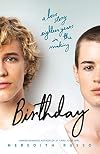
Two best friends fall in love despite the changes in their lives and social pressures that threaten to tear them apart.
They were inseparable childhood friends, transgender girl Morgan and cisgender boy, Eric. They spend every birthday together. It was a rare September snowstorm that brought their families together in the hospital on the day that they share...the day of their birth. As they grow up and go through the difficulties that are often faced, such as high school; Morgan struggles to show more understand and like, much less love, herself.
Mogan feels trapped. Her mother has died of cancer, and she is afraid that she'll be rejected by her best friend, Eric and her father, the football coach, if she dares to tell them her "secret"...the secret she has kept since she was 5-years old...She's NOT a girl...She's a boy. Eric also has family tension and worries. He worries about his friendship with Morgan, as well as hiding his own concerns about his sexuality and his future. He identifies as "cisgender". Being cisgender isn’t the same thing as being "straight", but the two sexualities can overlap. People can be both "cisgender" and "straight". If this is confusing to you...think how confusing it is to an 8-year-old.
The narrative follows Morgan and Eric from year to year on their birthday. The author captures every last ounce of the intense feelings of these two young people who feel trapped in their small, football-obsessed town. Morgan’s self-acceptance is an intimate, honest journey with a hopeful resolution that acknowledges the struggles and experiences of transgender people. While the story ends on a happy note, grief, economic struggle, abuse, discrimination, suicide, and divorce all play significant roles in the story and how they affected the development of the two main characters.
It's not a very long book but it is packed to the gills with so many emotions...emotions that most people may not understand...but hopefully they will at least try. The slow-burn romance between Eric and Morgan is so worth the wait.
Side note: I volunteer and work with a group of LGBTQ kids from ages 7-17. Two of them are transgender...so I have heard about and seen some of the difficulties they have already encountered. With this story, the author sends two messages...that the world is slowly changing...and that no one has been given the "God-given" right to stand in judgement of anyone else. show less
They were inseparable childhood friends, transgender girl Morgan and cisgender boy, Eric. They spend every birthday together. It was a rare September snowstorm that brought their families together in the hospital on the day that they share...the day of their birth. As they grow up and go through the difficulties that are often faced, such as high school; Morgan struggles to show more understand and like, much less love, herself.
Mogan feels trapped. Her mother has died of cancer, and she is afraid that she'll be rejected by her best friend, Eric and her father, the football coach, if she dares to tell them her "secret"...the secret she has kept since she was 5-years old...She's NOT a girl...She's a boy. Eric also has family tension and worries. He worries about his friendship with Morgan, as well as hiding his own concerns about his sexuality and his future. He identifies as "cisgender". Being cisgender isn’t the same thing as being "straight", but the two sexualities can overlap. People can be both "cisgender" and "straight". If this is confusing to you...think how confusing it is to an 8-year-old.
The narrative follows Morgan and Eric from year to year on their birthday. The author captures every last ounce of the intense feelings of these two young people who feel trapped in their small, football-obsessed town. Morgan’s self-acceptance is an intimate, honest journey with a hopeful resolution that acknowledges the struggles and experiences of transgender people. While the story ends on a happy note, grief, economic struggle, abuse, discrimination, suicide, and divorce all play significant roles in the story and how they affected the development of the two main characters.
It's not a very long book but it is packed to the gills with so many emotions...emotions that most people may not understand...but hopefully they will at least try. The slow-burn romance between Eric and Morgan is so worth the wait.
Side note: I volunteer and work with a group of LGBTQ kids from ages 7-17. Two of them are transgender...so I have heard about and seen some of the difficulties they have already encountered. With this story, the author sends two messages...that the world is slowly changing...and that no one has been given the "God-given" right to stand in judgement of anyone else. show less
We all know that high school sucks. I recently read in one book that the only people who remember high school fondly are the rarefied ones at the top of the high school food chain – your football captains, your mean girl cheerleaders, etc. That leaves the rest of us who try not to think of high school at all because it dredges up bad memories. Still, after reading If I Was Your Girl, I know that most of us, for all our complaints, had it easy compared to LGBTQIA teens. Theirs is a journey show more we, as a society, almost never discuss, even though we absolutely should. Thankfully, there are people like Meredith Russo willing to start the discussion and bring attention to these ignored teens and the potential trauma they face just by attending school each and every day.
If I Was Your Girl is a beautiful and yet heartbreaking story of Amanda as she attempts to adjust to life not only at a new high school in a new town but also as a female. Her flashbacks to past tortures show how traumatized she remains after a childhood filled with the struggle to reconcile the differences between her body and her mind’s gender identification. It also shows how a statement considered innocuous by cisgender people can cut to the quick anyone who does not fit that norm. As such, Amanda’s trauma is deep and lasting. It is a wonder anyone is able to adjust and overcome such hate. Her entire story is a great example of how society gets caught up in body image and gender norms to the detriment of everyone.
As much as If I Was Your Girl makes you hate the ignoramuses who spew ignorant gender biases, it also gives you tremendous admiration for Amanda and for the entire transgender community. That they face such hate and confusion on a daily basis and are able to rise above it to become the beautiful butterflies they are is remarkable. It would be so easy for Amanda to hide herself away for the remainder of her high school years, but she does not. She finds friends, she remains social. More importantly, she puts herself out there in a way that is scary for any person. She is truly a remarkable young woman.
What makes If I Was Your Girl even more poignant is the fact that Ms. Russo herself is a transwoman. Her fiction is very much based in fact, and in many ways Amanda’s experiences are her own. Her story, both her private and her fictionalized versions, provide much-needed hope to an entire community left to flounder in a world where all sides struggle to accept them. She provides a vision in which life gets better and offers her own life experiences as proof. Moreover, she offers support where support is difficult to find and resources for those who need it.
If I Was Your Girl is one of those novels that should be required reading for everyone of any age and gender. It is timely and does more to raise empathy for the transgender community than anything to date because it puts you directly into Amanda’s shoes. If you are a parent, Amanda becomes your daughter. If you are a teen, you resonate with the cruelty of your fellow classmates. If you are a transgender teen, hopefully you recognize yourself in Amanda and realize that you can find happiness. We all can and more importantly, we all deserve it. show less
If I Was Your Girl is a beautiful and yet heartbreaking story of Amanda as she attempts to adjust to life not only at a new high school in a new town but also as a female. Her flashbacks to past tortures show how traumatized she remains after a childhood filled with the struggle to reconcile the differences between her body and her mind’s gender identification. It also shows how a statement considered innocuous by cisgender people can cut to the quick anyone who does not fit that norm. As such, Amanda’s trauma is deep and lasting. It is a wonder anyone is able to adjust and overcome such hate. Her entire story is a great example of how society gets caught up in body image and gender norms to the detriment of everyone.
As much as If I Was Your Girl makes you hate the ignoramuses who spew ignorant gender biases, it also gives you tremendous admiration for Amanda and for the entire transgender community. That they face such hate and confusion on a daily basis and are able to rise above it to become the beautiful butterflies they are is remarkable. It would be so easy for Amanda to hide herself away for the remainder of her high school years, but she does not. She finds friends, she remains social. More importantly, she puts herself out there in a way that is scary for any person. She is truly a remarkable young woman.
What makes If I Was Your Girl even more poignant is the fact that Ms. Russo herself is a transwoman. Her fiction is very much based in fact, and in many ways Amanda’s experiences are her own. Her story, both her private and her fictionalized versions, provide much-needed hope to an entire community left to flounder in a world where all sides struggle to accept them. She provides a vision in which life gets better and offers her own life experiences as proof. Moreover, she offers support where support is difficult to find and resources for those who need it.
If I Was Your Girl is one of those novels that should be required reading for everyone of any age and gender. It is timely and does more to raise empathy for the transgender community than anything to date because it puts you directly into Amanda’s shoes. If you are a parent, Amanda becomes your daughter. If you are a teen, you resonate with the cruelty of your fellow classmates. If you are a transgender teen, hopefully you recognize yourself in Amanda and realize that you can find happiness. We all can and more importantly, we all deserve it. show less
SPOILERS
God I struggled so hard with this book. I kept having to remind myself while reading it that a book cannot be perfect, that it won't speak to everyone, that expecting a book (especially about trans people, when you are a trans person) to do that is falling into that trope where we get so little representation that we put so much pressure on the people who do produce that representation and are never pleased.
All of that being said, even though I knew why this book had been so hyped show more the the 'lgbt ya lit' world (if there really is such a thing,) I googled somewhere in the first third to confirm that the author was indeed trans because fuck me this book felt like it was written by a cis person. In my edition, at the end, Russo writes a note first to her cis readers and basically says "I literally made this character a big stereotype with all these things to show you she is a girl and to make you understand that trans girls are girls the easiest transition possible for you to make" and then everything clicked into place. I highlighted that part and said in my notes "this makes everything make sense- but what about the trans readers? What are we supposed to do with this?"
And that's being a little unfair--there were parts of this book that I was like "oh thank fuck for articulating this," but most of it was like..... fit into so many tropes. I read somewhere that Russo was like "I wrote this so that we'd have a story where trans girls get a happy ending" and like yeah eventually but also like the outing sequence was so terrifying and awful because I'd read that, because I spent the whole book going "it'll be okay, she's not going to pull this bullshit on you" and then she did? And some of that might be the genre Russo is working in--like if you know anything about high schooler romcoms, you'll see the arc of this book pretty much perfectly, but also the stakes are so much higher here because she's writing about a trans girl and. I'm not sure how I feel about that part of it yet. Very little of it felt like an experience I related to (which, fair, I'm not a straight trans girl living in Georgia, just because we're both trans doesn't mean we have similarities in how we experience our trans-ness) and it really felt like I was reading a typical high schooler romcom with someone who just happened to be a trans girl. Which is probably Russo's point! But that switch is so not simple and so complicated and I'm still not sure how I feel about it.
(I did have to keep reading it because it also kind of felt like a thriller, with her whole 'going stealth' thing, which..... is also super fucking complicated and stereotype-y while still being part of people's lived experiences and it's just this book is so complicated and messy and I don't know how to feel about it.) show less
God I struggled so hard with this book. I kept having to remind myself while reading it that a book cannot be perfect, that it won't speak to everyone, that expecting a book (especially about trans people, when you are a trans person) to do that is falling into that trope where we get so little representation that we put so much pressure on the people who do produce that representation and are never pleased.
All of that being said, even though I knew why this book had been so hyped show more the the 'lgbt ya lit' world (if there really is such a thing,) I googled somewhere in the first third to confirm that the author was indeed trans because fuck me this book felt like it was written by a cis person. In my edition, at the end, Russo writes a note first to her cis readers and basically says "I literally made this character a big stereotype with all these things to show you she is a girl and to make you understand that trans girls are girls the easiest transition possible for you to make" and then everything clicked into place. I highlighted that part and said in my notes "this makes everything make sense- but what about the trans readers? What are we supposed to do with this?"
And that's being a little unfair--there were parts of this book that I was like "oh thank fuck for articulating this," but most of it was like..... fit into so many tropes. I read somewhere that Russo was like "I wrote this so that we'd have a story where trans girls get a happy ending" and like yeah eventually but also like the outing sequence was so terrifying and awful because I'd read that, because I spent the whole book going "it'll be okay, she's not going to pull this bullshit on you" and then she did? And some of that might be the genre Russo is working in--like if you know anything about high schooler romcoms, you'll see the arc of this book pretty much perfectly, but also the stakes are so much higher here because she's writing about a trans girl and. I'm not sure how I feel about that part of it yet. Very little of it felt like an experience I related to (which, fair, I'm not a straight trans girl living in Georgia, just because we're both trans doesn't mean we have similarities in how we experience our trans-ness) and it really felt like I was reading a typical high schooler romcom with someone who just happened to be a trans girl. Which is probably Russo's point! But that switch is so not simple and so complicated and I'm still not sure how I feel about it.
(I did have to keep reading it because it also kind of felt like a thriller, with her whole 'going stealth' thing, which..... is also super fucking complicated and stereotype-y while still being part of people's lived experiences and it's just this book is so complicated and messy and I don't know how to feel about it.) show less
Lists
LGBTQIA+ TBR (1)
Best Young Adult (1)
Awards


You May Also Like


Associated Authors
Statistics
- Works
- 2
- Also by
- 4
- Members
- 1,761
- Popularity
- #14,615
- Rating
- 3.9
- Reviews
- 78
- ISBNs
- 54
- Languages
- 10
- Favorited
- 1