

Sally Denton
Author of American Massacre: The Tragedy at Mountain Meadows, September 1857
About the Author
Sally Denton is an investigative reporter, author, and historian who writes about the subjects others ignore-from a drug conspiracy in Kentucky to organized crime in Las Vegas; from corruption within the Mormon Church to the hidden history of Manifest Destiny. She has received the Guggenheim show more Fellowship, the Woodrow Wilson Public Scholar Fellowship, and the Black Mountain/Kluge Fellowship. She lives in Nevada. show less
Works by Sally Denton
Passion and Principle: John and Jessie Fremont, the Couple Whose Power, Politics, and Love Shaped Nineteenth-Century Americ (2007) 94 copies, 1 review
The Plots Against the President: FDR, a Nation in Crisis, and the Rise of the American Right (2012) 88 copies, 3 reviews
Fremont Steals California 2 copies
Tagged
Common Knowledge
- Canonical name
- Denton, Sally
- Birthdate
- 1953
- Gender
- female
- Nationality
- USA
- Birthplace
- Elko, Nevada, USA
- Associated Place (for map)
- Nevada, USA
Members
Reviews
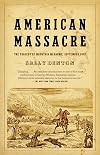
Hundreds of cattle bray in alarm as they are herded north toward Cedar City. Two hundred horses, most of them valuable Kentucky thoroughbreds, rear and shriek at strange hands and the smoke of blazing pyres nearby. Forty prairie schooners and four ornate carriages rumble and creak under new drivers, coming back up out of the valley on the same trail by which they entered it days before. The screamingly and moaning of the more than twenty children they carry drown out every other sound. The show more children, who range in age from nine months to seven years, are all under the age of eight, young enough to be considered "innocent blood" in the Mormon faith. They have had no fresh water and little to eat for five days. The blood of their parents, sisters, and brothers still wet on their skin and clothes, they are still hysterical from what they have just seen. One of the men walking behind the procession is John Doyle Lee who has commanded and joined in the mass murder that has just taken place. show less
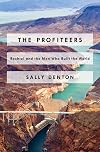
The Profiteers: Bechtel and the Men Who Built the World by Sally Denton is a highly recommended corporate/social/political account of the start and the growth of the global megacompany the Bechtel Corporation.
This is a biography of the privately owned Bechtel Company and the family who founded it. Originally founded in 1898 "Bechtel grew from a scrappy Nevada road-grading operation at the dawn of the twentieth century to the world's largest construction company." Bechtel prides itself as show more the company that can "build anything, any place, any time." Their ability to tackle seemingly impossible projects in inhospitable locations and forbidding landscapes began when they constructed the Hoover Dam. Through five generations they have shown both incredible technological ingenuity and major industry innovations.
From the Hoover Dam to projects in the Mojave Desert to the Persian Gulf, Bechtel has tackled the big, impossible projects for years. They have handled the Channel Tunnel, and the Big Dig. They have to constructed airports, power plants, and entire cities. Bechtel carted away the wreckage of the World Trade Center and rebuilt Iraq. They have harnessed the planet's natural resources, including hydroelectric, oil, coal, water, nuclear power, natural gas, and geothermal power.
Denton lays down a foundation for the combination of influence peddling combined with a base corporate craving for power by Bechtel. Rather than a completely impartial fact-based account very occasionally Denton's arguments for Bechtel's control over Washington become a bit too much of a stretch and aren't backed by absolute tenable connections. In a few cases the narrative veers into verbal machinations that seem to indicate a personal loyalty to political party connections and the motive of individuals has been assumed to be unpropitious.
However, clearly there are enough connections, and certain arguments are based by enough facts to raise concerns. It is alarming to read the account of the number of individuals in government who have ties to the Bechtel Company and have worked for them while still in government over the years. Denton explores the strong connections of the company to the government and how they have been "inextricably enmeshed" in U.S. foreign policy for seven decades. Much of their work involves government contracts. Denton outlines their influence peddling through their government connections. While no one at Bechtel cooperated with Denton, they did deny any influence peddling.
The narrative also includes information about the Jonathan Pollard espionage case. Pollard passed classified information to Israel about neighboring Middle Eastern countries and received what many people think was an overly harsh sentence. Several Bechtel executives/Washington insiders may have been involved in his punitive sentence. (Or it could be simple the sentence was harsh because Pollard was passing intelligence information to another country.)
This is very well written and researched and should be enjoyed by anyone who enjoys contemporary U.S. history, and political science. Denton includes extensive notes, bibliography, and an index.
Disclosure: My Kindle edition was courtesy of Simon & Schuster for review purposes.
http://shetreadssoftly.blogspot.com/2016/02/the-profiteers.html show less
This is a biography of the privately owned Bechtel Company and the family who founded it. Originally founded in 1898 "Bechtel grew from a scrappy Nevada road-grading operation at the dawn of the twentieth century to the world's largest construction company." Bechtel prides itself as show more the company that can "build anything, any place, any time." Their ability to tackle seemingly impossible projects in inhospitable locations and forbidding landscapes began when they constructed the Hoover Dam. Through five generations they have shown both incredible technological ingenuity and major industry innovations.
From the Hoover Dam to projects in the Mojave Desert to the Persian Gulf, Bechtel has tackled the big, impossible projects for years. They have handled the Channel Tunnel, and the Big Dig. They have to constructed airports, power plants, and entire cities. Bechtel carted away the wreckage of the World Trade Center and rebuilt Iraq. They have harnessed the planet's natural resources, including hydroelectric, oil, coal, water, nuclear power, natural gas, and geothermal power.
Denton lays down a foundation for the combination of influence peddling combined with a base corporate craving for power by Bechtel. Rather than a completely impartial fact-based account very occasionally Denton's arguments for Bechtel's control over Washington become a bit too much of a stretch and aren't backed by absolute tenable connections. In a few cases the narrative veers into verbal machinations that seem to indicate a personal loyalty to political party connections and the motive of individuals has been assumed to be unpropitious.
However, clearly there are enough connections, and certain arguments are based by enough facts to raise concerns. It is alarming to read the account of the number of individuals in government who have ties to the Bechtel Company and have worked for them while still in government over the years. Denton explores the strong connections of the company to the government and how they have been "inextricably enmeshed" in U.S. foreign policy for seven decades. Much of their work involves government contracts. Denton outlines their influence peddling through their government connections. While no one at Bechtel cooperated with Denton, they did deny any influence peddling.
The narrative also includes information about the Jonathan Pollard espionage case. Pollard passed classified information to Israel about neighboring Middle Eastern countries and received what many people think was an overly harsh sentence. Several Bechtel executives/Washington insiders may have been involved in his punitive sentence. (Or it could be simple the sentence was harsh because Pollard was passing intelligence information to another country.)
This is very well written and researched and should be enjoyed by anyone who enjoys contemporary U.S. history, and political science. Denton includes extensive notes, bibliography, and an index.
Disclosure: My Kindle edition was courtesy of Simon & Schuster for review purposes.
http://shetreadssoftly.blogspot.com/2016/02/the-profiteers.html show less
This is one of three nonfiction books that I have read in the last month that didn't quite live up to my expectations. Some things that the author set out to achieve were done well but others either missed the mark or have been done better elsewhere.
For starters, readers looking for an in-depth investigation into the murders of eight women and children that took place in northern Mexico in November 2019 will likely be disappointed. The first and last chapters deal with this subject as show more comprehensively as is possible considering the limits that the situation imposes, but it still doesn't provide any concrete proof as to who commit these heinous crimes. In the end, I was left with even more possible culprits than I considered before I picked up the book.
As a descendent of polygamous Mormon families, [author:Sally Denton|100283] is well-equipped to provide a good summary of the foundation and history of the church founded by Joseph Smith and led for decades by Brigham Young. She pulls no punches, describing how church missionaries recruited European women into the church, denying forcefully the rumors that polygamy was one of their key tenets until they were in Utah with little chance of escape. Denton also didn't shy away from describing the events of the Mountain Meadows Massacre, when church members, likely on Young's orders, disguised themselves as Paiute Indians and slaughtered an entire wagon train of California-bound settlers, and its aftermath, when Young betrayed many of his trusted lieutenants and either aided the government in its prosecution of the killers or quietly arranged a more permanent means of insuring their silence. To this day, most church members that I have talked to know little to nothing about these events, even though they are a well documented part of the public record.
Brigham Young's betrayal of the Mountain Meadows participants and the subsequent revelation to church prophet Wilford Woodruff that God wanted them to end plural marriage, that prompted a schism in the church that saw may hardline polygamists leave the church and try to create their on promised land. Some of these went to Mexico. Even though the history of these LDS offshoots is convoluted and extremely bloody, this story, too, is one that Denton was able to tell well, with her innate empathy for the plight of women trapped in a subservient role from which few could escape.
Denton's skillset fails her when it comes to describing the history of the Mexican cartels. This, too, is a convoluted and very bloody story and many great journalists have paid with their lives for their attempts to tell it. Even so, there are books and articles out there that can give one a better understanding of the subject than Denton was able to do.
Bottom line: Denton did a good job of describing the history of the LDS church and of the groups that split off from it after it rejected polygamy. For those reasons, this book is worthwhile, and I appreciate the effort that went into writing it. show less
For starters, readers looking for an in-depth investigation into the murders of eight women and children that took place in northern Mexico in November 2019 will likely be disappointed. The first and last chapters deal with this subject as show more comprehensively as is possible considering the limits that the situation imposes, but it still doesn't provide any concrete proof as to who commit these heinous crimes. In the end, I was left with even more possible culprits than I considered before I picked up the book.
As a descendent of polygamous Mormon families, [author:Sally Denton|100283] is well-equipped to provide a good summary of the foundation and history of the church founded by Joseph Smith and led for decades by Brigham Young. She pulls no punches, describing how church missionaries recruited European women into the church, denying forcefully the rumors that polygamy was one of their key tenets until they were in Utah with little chance of escape. Denton also didn't shy away from describing the events of the Mountain Meadows Massacre, when church members, likely on Young's orders, disguised themselves as Paiute Indians and slaughtered an entire wagon train of California-bound settlers, and its aftermath, when Young betrayed many of his trusted lieutenants and either aided the government in its prosecution of the killers or quietly arranged a more permanent means of insuring their silence. To this day, most church members that I have talked to know little to nothing about these events, even though they are a well documented part of the public record.
Brigham Young's betrayal of the Mountain Meadows participants and the subsequent revelation to church prophet Wilford Woodruff that God wanted them to end plural marriage, that prompted a schism in the church that saw may hardline polygamists leave the church and try to create their on promised land. Some of these went to Mexico. Even though the history of these LDS offshoots is convoluted and extremely bloody, this story, too, is one that Denton was able to tell well, with her innate empathy for the plight of women trapped in a subservient role from which few could escape.
Denton's skillset fails her when it comes to describing the history of the Mexican cartels. This, too, is a convoluted and very bloody story and many great journalists have paid with their lives for their attempts to tell it. Even so, there are books and articles out there that can give one a better understanding of the subject than Denton was able to do.
Bottom line: Denton did a good job of describing the history of the LDS church and of the groups that split off from it after it rejected polygamy. For those reasons, this book is worthwhile, and I appreciate the effort that went into writing it. show less
Passion and Principle: John and Jessie Fremont, the Couple Whose Power, Politics, and Love Shaped Nineteenth-Century America by Sally Denton
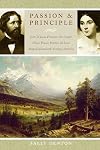
"They were everything a growing nation needed for a symbol of success, and the country was not to see this combination of youth and daring again until the later cults of hero worship for George and Elizabeth Custer, Charles and Ann Lindbergh, or John and Jacqueline Kennedy," wrote the biographer Richard Egan about the subjects of Sally Denton's "Passion and Principle: John and Jessie Frémont, The Couple Whose Power, Politics, and Love Shaped Nineteenth-Century America."
John Frémont show more (1813–1890), called "The Pathfinder" for his repeated forays into the treacherous West at a time when California still belonged to Mexico and Britain still staked a claim on Oregon, was celebrated for intrepid journeys (surviving the hazardous Rockies, hostile Indians, and death-threatening diseases) that made him the embodiment of manifest destiny.
Jessie Frémont (1824–1902), the daughter of Missouri Senator Thomas Hart Benton, one of the most progressive and learned politicians this country has ever produced, sat at the knee of Andrew Jackson in the White House, where, in moments of stress, the President would unconsciously clench her hair. Taught not to complain, Jessie became an independent, spirited woman far ahead of her time, working with her husband on best-selling narratives of his adventures and managing his 1856 presidential campaign.
So how did it all go wrong? And how did this couple right themselves only to suffer enough repeated setbacks and comebacks to fill at least five seasons of an HBO series? The trouble began shortly after they met.
While Benton admired the young explorer and touted his prospects, it was quite another matter when Frémont fell in love with 15-year-old Jessie. Smitten with the 26-year-old Frémont, Jessie married John in a secret ceremony performed by a Catholic priest, apparently the only member of the clergy not sufficiently worried about Benton's wrath.
Eventually reconciled to the marriage, Benton again sponsored Frémont, who was promoted quickly to colonel in the U.S. Army, but who also aroused the envy of senior officers. They resented his popularity and tendency to take action without (so they thought) proper authority. What should have been Frémont's crowning glory, conquering California without war, turned into a court martial when he refused to cede command to President Polk's handpicked replacement. Frémont's original orders, Ms. Denton explains, were ambiguous, allowing Polk to retain or replace Frémont depending on the president's closely held political objectives.
For all Frémont's skills — he was a trained scientist, engineer, and cartographer — he had no political brain, and he never stooped to study politics. Charged with being a secret Catholic during the 1856 presidential campaign, he would not even issue a denial, let alone go on the offensive against his inept but ultimately victorious opponent, James Buchanan, a Democratic Party hack.
Jessie always had to do the heavy lifting, tirelessly trying to get her father to support her husband's presidential bid, for example. Benton was anti-slavery, pro-Western exploration, and so a natural Frémont ally, but Benton could not abide his son-in-law's high-handed moral tone or his inability to see that preserving the Union came first. Benton thought, and rightly so, that Frémont would make a terrible president, although Ms. Denton seems to demur on this point.
Jessie, a stellar player in her husband's campaign (she was the first presidential candidate's wife to make widespread public appearances), became the target of critics who decried such a visible role for a woman. She never wavered in her husband's support, even when advisers close to his campaign resigned, suspecting him of infidelity (rumors of his affairs would continue even after he abandoned politics).
Later she made a major blunder: In 1861, she went directly to President Lincoln to argue her husband's case—why it was necessary for Frémont (in charge of defending Missouri) to issue an Emancipation Proclamation before Lincoln was ready to countenance such a momentous act. Lincoln rejected her plea, even ridiculing her for arguing in her husband's stead.
Whether Frémont was morally right is beside the point. Ms. Denton calls his proclamation an act of courage and Jessie's plea a natural consequence of a woman at home in the White House. But Frémont's proclamation was also an act of political folly. No president can countenance an officer in the field announcing such a momentous policy on his own authority.
Disagreeing with Ms. Denton's judgments, however, is not as important as recognizing that she has written a riveting narrative about what she calls a "power couple" who "fascinated and baffled" the public. They are curiously modern and "evocative of Bill and Hillary Clinton," Ms. Denton rightly concludes. show less
John Frémont show more (1813–1890), called "The Pathfinder" for his repeated forays into the treacherous West at a time when California still belonged to Mexico and Britain still staked a claim on Oregon, was celebrated for intrepid journeys (surviving the hazardous Rockies, hostile Indians, and death-threatening diseases) that made him the embodiment of manifest destiny.
Jessie Frémont (1824–1902), the daughter of Missouri Senator Thomas Hart Benton, one of the most progressive and learned politicians this country has ever produced, sat at the knee of Andrew Jackson in the White House, where, in moments of stress, the President would unconsciously clench her hair. Taught not to complain, Jessie became an independent, spirited woman far ahead of her time, working with her husband on best-selling narratives of his adventures and managing his 1856 presidential campaign.
So how did it all go wrong? And how did this couple right themselves only to suffer enough repeated setbacks and comebacks to fill at least five seasons of an HBO series? The trouble began shortly after they met.
While Benton admired the young explorer and touted his prospects, it was quite another matter when Frémont fell in love with 15-year-old Jessie. Smitten with the 26-year-old Frémont, Jessie married John in a secret ceremony performed by a Catholic priest, apparently the only member of the clergy not sufficiently worried about Benton's wrath.
Eventually reconciled to the marriage, Benton again sponsored Frémont, who was promoted quickly to colonel in the U.S. Army, but who also aroused the envy of senior officers. They resented his popularity and tendency to take action without (so they thought) proper authority. What should have been Frémont's crowning glory, conquering California without war, turned into a court martial when he refused to cede command to President Polk's handpicked replacement. Frémont's original orders, Ms. Denton explains, were ambiguous, allowing Polk to retain or replace Frémont depending on the president's closely held political objectives.
For all Frémont's skills — he was a trained scientist, engineer, and cartographer — he had no political brain, and he never stooped to study politics. Charged with being a secret Catholic during the 1856 presidential campaign, he would not even issue a denial, let alone go on the offensive against his inept but ultimately victorious opponent, James Buchanan, a Democratic Party hack.
Jessie always had to do the heavy lifting, tirelessly trying to get her father to support her husband's presidential bid, for example. Benton was anti-slavery, pro-Western exploration, and so a natural Frémont ally, but Benton could not abide his son-in-law's high-handed moral tone or his inability to see that preserving the Union came first. Benton thought, and rightly so, that Frémont would make a terrible president, although Ms. Denton seems to demur on this point.
Jessie, a stellar player in her husband's campaign (she was the first presidential candidate's wife to make widespread public appearances), became the target of critics who decried such a visible role for a woman. She never wavered in her husband's support, even when advisers close to his campaign resigned, suspecting him of infidelity (rumors of his affairs would continue even after he abandoned politics).
Later she made a major blunder: In 1861, she went directly to President Lincoln to argue her husband's case—why it was necessary for Frémont (in charge of defending Missouri) to issue an Emancipation Proclamation before Lincoln was ready to countenance such a momentous act. Lincoln rejected her plea, even ridiculing her for arguing in her husband's stead.
Whether Frémont was morally right is beside the point. Ms. Denton calls his proclamation an act of courage and Jessie's plea a natural consequence of a woman at home in the White House. But Frémont's proclamation was also an act of political folly. No president can countenance an officer in the field announcing such a momentous policy on his own authority.
Disagreeing with Ms. Denton's judgments, however, is not as important as recognizing that she has written a riveting narrative about what she calls a "power couple" who "fascinated and baffled" the public. They are curiously modern and "evocative of Bill and Hillary Clinton," Ms. Denton rightly concludes. show less
Lists
Awards


You May Also Like


Associated Authors
Statistics
- Works
- 12
- Members
- 1,189
- Popularity
- #21,620
- Rating
- 3.7
- Reviews
- 15
- ISBNs
- 51
- Languages
- 2