
Robert S. Garland
Author of The Other Side of History: Daily Life in the Ancient World
About the Author
Works by Robert S. Garland
What to Expect When You're Dead: An Ancient Tour of Death and the Afterlife (2025) 36 copies, 2 reviews
Athens Burning: The Persian Invasion of Greece and the Evacuation of Attica (2017) 30 copies, 1 review
Wandering Greeks: The Ancient Greek Diaspora from the Age of Homer to the Death of Alexander the Great (2014) 26 copies
Greece and Rome: an Integrated History of the Ancient Mediterranean (The Great Courses Part 1 of 3) 2 copies
God Against the Gods: The History of Monotheism and Polytheism, Lecture 9: Death and the Afterlife 2 copies
God Against the Gods: The History of Monotheism and Polytheism, Lecture 8: Divine Intervention 1 copy
The Greek World: A Study of History and Culture, Lecture 4: Classical Greece: The Age of Pericles 1 copy
The Other Side of History: Daily Life in the Ancient World, Lecture 8: Being an Egyptian Worker 1 copy
God Against the Gods: The History of Monotheism and Polytheism, Lecture 5: How to Contact Your God 1 copy
God Against the Gods: The History of Monotheism and Polytheism, Lecture 6: Women, Sex, and Sexuality 1 copy
A World Full of Living Gods 1 copy
The Greek World: A Study of History and Culture, Lecture 18: Greek Historians: The Birth of History 1 copy
The Greek World: A Study of History and Culture, Lecture 9: Greek Mythology: Monsters and Misfits 1 copy
The Greek World: A Study of History and Culture, Lecture 11: The Sensuality of Greek Sculpture 1 copy
The Greek World: A Study of History and Culture, Lecture 12: The Perfection of Greek Architecture 1 copy
The Greek World: A Study of History and Culture, Lecture 13: The Monumentality of Greek Painting 1 copy
The Greek World: A Study of History and Culture, Lecture 14: Homer's Humanity: The Epic Experience 1 copy
The Greek World: A Study of History and Culture, Lecture 19: Greek Philosophy: Man and Nature 1 copy
The Greek World: A Study of History and Culture, Lecture 8: The Birth of the Greek Nation-State 1 copy
The Greek World: A Study of History and Culture, Lecture 6: Greece, Rome, Byzantium, and Baghdad 1 copy
The Greek World: A Study of History and Culture, Lecture 22: Greek Language, Literacy, and Writing 1 copy
The Greek World: A Study of History and Culture, Lecture 23: Eating and Drinking Among the Greeks 1 copy
The Greek World: A Study of History and Culture, Lecture 24: What Does Greece Mean to Us Today? 1 copy
Associated Works
The Oxford Handbook of Childhood and Education in the Classical World (2014) — Contributor — 15 copies
Poetry, theory, praxis : the social life of myth, word and image in ancient Greece : essays in honour of William J. Slater (2003) — Contributor — 3 copies
Tagged
Common Knowledge
- Canonical name
- Garland, Robert S.
- Other names
- Garland, Robert S.J.
- Birthdate
- 1947-09-25
- Gender
- male
- Education
- Manchester University (B.A.|1969|Classics)
McMaster University (M.A.|1973|Classics)
University College London (Ph.D.|1981|Ancient History) - Occupations
- classical philologist
historian
professor - Organizations
- Colgate University (Roy D. and Margaret B. Wooster Professor of the Classics)
- Awards and honors
- Fulbright Scholar and Fellow of the Center for Hellenic Studies (1985-86)
George Grote Prize in Ancient History Prize
Fellow of the Institute for Advanced Study (Spring 1990)
Benjamin Meaker Distinguished Visiting Professor, Bristol University (1995) - Nationality
- UK
- Associated Place (for map)
- UK
Members
Reviews
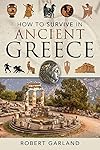
How to Survive in Ancient Greece is an excellent and painless introduction to Greek culture and everyday life. I've read many books on the subject, yet I still found numerous fascinating new bits of information as well as an interesting perspective on the differences between Classical Greece and the modern world.
The focus of this imaginary travelogue is Athens in 420 BCE. This is simply because it's a time and place we know the most about and find the most interesting. We grow up learning show more that Greece was the birthplace of Western Democracy, but what will strike most readers is how alien a place it really was. We are accustomed to equating democracy with a belief in egalitarianism, human rights, and social mobility. Yet, as the author frequently points out, the Athenians saw no disconnect between their democratic ideals on the one hand, and brutal slavery and abject poverty on the other. And the treatment of women in classical Athens was not unlike that found in modern fundamentalist Islamic states.
The book is brief, entertaining, and written in simple, straightforward prose. I would recommend it as an introductory work on Ancient Greece, not only for adults, but for teenage readers as well, with the caveat that there is some discussion of prostitution and other sexual topics. show less
The focus of this imaginary travelogue is Athens in 420 BCE. This is simply because it's a time and place we know the most about and find the most interesting. We grow up learning show more that Greece was the birthplace of Western Democracy, but what will strike most readers is how alien a place it really was. We are accustomed to equating democracy with a belief in egalitarianism, human rights, and social mobility. Yet, as the author frequently points out, the Athenians saw no disconnect between their democratic ideals on the one hand, and brutal slavery and abject poverty on the other. And the treatment of women in classical Athens was not unlike that found in modern fundamentalist Islamic states.
The book is brief, entertaining, and written in simple, straightforward prose. I would recommend it as an introductory work on Ancient Greece, not only for adults, but for teenage readers as well, with the caveat that there is some discussion of prostitution and other sexual topics. show less
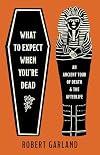
Handy and humorous instructions on what to expect if you time travel back to the ancient world and then die. (You’re limited to Egyptian, Mesopotamian, Hindu, Jewish, Zoroastrian, Etruscan, Greek, Roman, Early Christian and Early Islamic). Most of these polities were of the opinion that if you had led a decent life on Earth, you would have an acceptable existence in the afterlife. Each of these civilizations had questions to answer – what do you do with the dead body? (Egyptians want it show more preserved, Greeks favored cremation; Zoroastrians go for The Tower of Silence). Are you judged by the powers that be based on your behavior while living? (Everybody agrees). What is the outcome of that judgement if unfavorable? In Egypt you’re eaten by the Devourer of Souls and that’s it; with Hindus you might get another chance; in the other civilizations you are sent somewhere for eternal punishment. How about if the judgement if favorable? In most you have an existence more or less similar to what you did when alive. Some interpretations of Islam send you to heaven or hell immediately on death; in others you have to wait until the Day of Judgement. (Unless you’re a martyr, in which case you get your 72 virgins right away). Author Robert Garland admits Egyptian eschatology is pretty complicated, with multiple souls and different paths for each; your “ka” is most the classical concept of a soul – with you while alive and surviving after death if properly tended. Your “ba” only appears after death and lives in the tomb. If all goes well, your “ka” and “ba” unite to form an “akh”, which is translated as “effective spirit”. A final question is how the dead interact with the living (if at all) and how do you fend off unwanted interactions. Definitely a book to keep handy; perhaps to be buried with. Various appropriate illustrations, end notes, and a bibliography. For more of this sort of thing, see Sum; The Buried Soul show less
There are a few ways to do these 'general insights into history' books, and this is well structured in giving each topic its due. If you're interested in something specific like the afterlife, slavery or war it's easy enough to look up. There's a common issue with trying to make "ancient greece" a singular place though, since each city state functions differently, and you end up mostly writing about Athens and mentioning Sparta a couple of times, which is exactly what happens here. It show more doesn't do too much with the premise of a time traveller either, it's mostly general history.
Alternative: 24 Hours in Ancient Athens: A Day in the Life of the People Who Lived There, which focuses on Athens specifically, and gives you a more compelling personal portrait of different people at different levels of society during an imagined 24 hour day. It benefits a lot from creating small narratives that showcase what people would want, what they could do, expectations and so on. show less
Alternative: 24 Hours in Ancient Athens: A Day in the Life of the People Who Lived There, which focuses on Athens specifically, and gives you a more compelling personal portrait of different people at different levels of society during an imagined 24 hour day. It benefits a lot from creating small narratives that showcase what people would want, what they could do, expectations and so on. show less
When the Pope died in April 2025 and his body was put on display for members of the church and the public to pay their respects, I was reminded how jarring it is to today's sensibilities and thought it was a good time to listen to What to Expect When You're Dead - An Ancient Tour of Death and the Afterlife by Robert Garland.
Covering the time period in history 100,000 BC - 400 AD, this audiobook references ancient texts, artworks and archaeology at a level I was largely unfamiliar with. show more However I did enjoy some of the content, including this quote taken from Greek Playwright Aristophanes (446 BC - 386 BC):
"In Aristophanes Frogs, anyone who has harmed a guest, failed to pay a boy for his sexual favours, struck his mother, punched his father or sworn a false oath is consigned to a sewer full of turds." Chapter 5 Heaven and Hell
The beliefs of many ancient civilisations and religions were offered, in addition to their thoughts on the afterlife, how best to lay the dead to rest and how to honour their ancestors.
As a youngster I was interested in the history of Egypt, the pyramids and of course the discovery of Tutankhamun's tomb. I was simultaneously disturbed by the fact mummified remains were once desecrated by grave robbers and disturbed in the 'modern era' by archaeologists, with artefacts removed to be sold to private collectors or displayed in museums. It shouldn't come as a surprise then that I relished the legend of the curse of Tutankhamun and enjoyed hearing more about Egyptian curses here:
"Thieves certainly weren't deterred by the stiff penalties they incurred if apprehended, death by impaling being a common punishment. Nor by the curses that the deceased promised to rain down on those who broke into their tombs. A typical Egyptian curse reads as follows: As for anyone who shall violate my corpse in the necropolis or shall damage my image in my chamber, the ka (spirit or soul) of Ra (sun god) shall abhor him. He shall not bequeath his goods to his children nor shall he be restful in life, nor shall he receive water in the necropolis. His ba (personality and soul) shall be destroyed forever.'" Chapter 8, Where to Deposit the Remains
Scary stuff! The book includes beliefs and practices from a range of ancient cultures and traditions, including Early Christian, Egyptian, Etruscan, Greek, Hindu, Islamic, Jewish, Mesopotamian, Roman and Zoroastrian. I'll admit I was in very unfamiliar territory here, however this did help to clarify that my interest in death rituals is anchored in Western culture closer to my own time. I've shared my interest in the mourning etiquette of the Victorian era in other reviews and have the current books on my virtual TBR to read at some stage in the future:
Fashionable Mourning Jewellery, Clothing and Customs by Mary Brett
Mourning Art & Jewellery by Maureen Delorme
Death in the Victorian Family by Pat Gallant
Childhood & Death in Victorian England by Sarah Seaton
Narrated by Zeb Soanes, What to Expect When You're Dead - An Ancient Tour of Death and the Afterlife by Robert Garland is recommended for dedicated non fiction readers with an interest in ancient history and ancient civilisations from 100,000 BC - 400 AD. I thought that was me but it turns out that it isn't. show less
Covering the time period in history 100,000 BC - 400 AD, this audiobook references ancient texts, artworks and archaeology at a level I was largely unfamiliar with. show more However I did enjoy some of the content, including this quote taken from Greek Playwright Aristophanes (446 BC - 386 BC):
"In Aristophanes Frogs, anyone who has harmed a guest, failed to pay a boy for his sexual favours, struck his mother, punched his father or sworn a false oath is consigned to a sewer full of turds." Chapter 5 Heaven and Hell
The beliefs of many ancient civilisations and religions were offered, in addition to their thoughts on the afterlife, how best to lay the dead to rest and how to honour their ancestors.
As a youngster I was interested in the history of Egypt, the pyramids and of course the discovery of Tutankhamun's tomb. I was simultaneously disturbed by the fact mummified remains were once desecrated by grave robbers and disturbed in the 'modern era' by archaeologists, with artefacts removed to be sold to private collectors or displayed in museums. It shouldn't come as a surprise then that I relished the legend of the curse of Tutankhamun and enjoyed hearing more about Egyptian curses here:
"Thieves certainly weren't deterred by the stiff penalties they incurred if apprehended, death by impaling being a common punishment. Nor by the curses that the deceased promised to rain down on those who broke into their tombs. A typical Egyptian curse reads as follows: As for anyone who shall violate my corpse in the necropolis or shall damage my image in my chamber, the ka (spirit or soul) of Ra (sun god) shall abhor him. He shall not bequeath his goods to his children nor shall he be restful in life, nor shall he receive water in the necropolis. His ba (personality and soul) shall be destroyed forever.'" Chapter 8, Where to Deposit the Remains
Scary stuff! The book includes beliefs and practices from a range of ancient cultures and traditions, including Early Christian, Egyptian, Etruscan, Greek, Hindu, Islamic, Jewish, Mesopotamian, Roman and Zoroastrian. I'll admit I was in very unfamiliar territory here, however this did help to clarify that my interest in death rituals is anchored in Western culture closer to my own time. I've shared my interest in the mourning etiquette of the Victorian era in other reviews and have the current books on my virtual TBR to read at some stage in the future:
Fashionable Mourning Jewellery, Clothing and Customs by Mary Brett
Mourning Art & Jewellery by Maureen Delorme
Death in the Victorian Family by Pat Gallant
Childhood & Death in Victorian England by Sarah Seaton
Narrated by Zeb Soanes, What to Expect When You're Dead - An Ancient Tour of Death and the Afterlife by Robert Garland is recommended for dedicated non fiction readers with an interest in ancient history and ancient civilisations from 100,000 BC - 400 AD. I thought that was me but it turns out that it isn't. show less
You May Also Like


Associated Authors
Statistics
- Works
- 66
- Also by
- 6
- Members
- 1,076
- Popularity
- #23,895
- Rating
- 3.8
- Reviews
- 16
- ISBNs
- 86
- Languages
- 2