
Anna Mazzola
Author of The Unseeing
About the Author
Works by Anna Mazzola
Associated Works
Tagged
Common Knowledge
- Canonical name
- Mazzola, Anna
- Other names
- Sharpe, Anna (pseudonym)
- Gender
- female
- Short biography
- [excerpted from author's website]
Anna is the award-winning author of five historical crime or Gothic novels. She is now also writing legal thrillers under the name Anna Sharpe.
Anna regularly appears at literary festivals and events and gives talks and workshops on creative writing. When not writing, Anna works as a human rights and criminal justice solicitor acting for survivors of crime. She is also a volunteer for Doorstep Library, working with underprivileged children.
She lives in South London, with one husband, two children, a black cat and a snake. - Nationality
- England
UK - Places of residence
- London, Middlesex, England, UK
- Associated Place (for map)
- England, UK
Members
Reviews
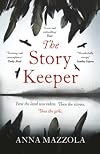
In 1857, Audrey is on her way from London to the Isle of Skye to interview for the position of Assistant to a collector of folk tales. Miss Buchanan is a spinster and folklorist and rarely leaves her family home of Lanerly Hall; a dilapidated estate owned by her brother.
Some of Mr Buchanan's tenants (referred to as crofters) have been evicted, and Mazzola doesn't shy away from the effects of the Clearances in Skye around this time. The landscape is bleak and the crofters are struggling to show more make a living and keep food on the table, regularly relying on superstition and folklore rather than religion. Miss Buchanan recognises that local folk tales aren't being shared as freely within the community any more and the displacement of crofters from the land to make way for sheep farming means these stories are being lost.
The crofters distrust their landlord and believe there's something evil about Lanerly Hall so Audrey's job is to earn their trust and record as many stories as she can.
I enjoyed the descriptions of Lanerly Hall but when a local girl washes up dead on the beach nearby and another goes missing, the crofters believe it to be the work of faeries. Meanwhile, Audrey believes someone is responsible and we're given a number of potential suspects.
"Better to be terrified than miserable. If the reality is that people die of starvation and illness, drown themselves out of shame, or leave their impoverished homes in search of a better life, then maybe it's preferable to think that the fairies are taking people away to serve some greater purpose." Page 131
The author creates a dark and foreboding gothic atmosphere full of superstitions, myths, folklore and fairytales. In her historical note at the end of the novel, Mazzola explains the idea for this book came from the West Ham vanishings in the 1880s where a number of children and young adults disappeared from the East End of London. She also shares that the many folk tales relayed to Audrey in the book are adaptations of real folk stories which helped to ground the book firmly in 1800s Scotland.
The Story Keeper by Anna Mazzola was an enjoyable historical fiction mystery and will appeal to fans of books like The Essex Serpent by Sarah Perry and The Good People by Hannah Kent. show less
Some of Mr Buchanan's tenants (referred to as crofters) have been evicted, and Mazzola doesn't shy away from the effects of the Clearances in Skye around this time. The landscape is bleak and the crofters are struggling to show more make a living and keep food on the table, regularly relying on superstition and folklore rather than religion. Miss Buchanan recognises that local folk tales aren't being shared as freely within the community any more and the displacement of crofters from the land to make way for sheep farming means these stories are being lost.
The crofters distrust their landlord and believe there's something evil about Lanerly Hall so Audrey's job is to earn their trust and record as many stories as she can.
I enjoyed the descriptions of Lanerly Hall but when a local girl washes up dead on the beach nearby and another goes missing, the crofters believe it to be the work of faeries. Meanwhile, Audrey believes someone is responsible and we're given a number of potential suspects.
"Better to be terrified than miserable. If the reality is that people die of starvation and illness, drown themselves out of shame, or leave their impoverished homes in search of a better life, then maybe it's preferable to think that the fairies are taking people away to serve some greater purpose." Page 131
The author creates a dark and foreboding gothic atmosphere full of superstitions, myths, folklore and fairytales. In her historical note at the end of the novel, Mazzola explains the idea for this book came from the West Ham vanishings in the 1880s where a number of children and young adults disappeared from the East End of London. She also shares that the many folk tales relayed to Audrey in the book are adaptations of real folk stories which helped to ground the book firmly in 1800s Scotland.
The Story Keeper by Anna Mazzola was an enjoyable historical fiction mystery and will appeal to fans of books like The Essex Serpent by Sarah Perry and The Good People by Hannah Kent. show less
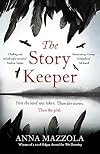
After the death of her mother and her father's remarriage Audrey moves to London where her family tries to make a lady out of her. When she witnesses abuse in her voluntary work she finds that she is not believed and takes a job on the Isle of Skye working with a folklorist. This is Audrey's real passion and she finds an escape in the stories. However when girls start disappearing and links are made with folk tales Audrey finds fact and fiction blurring.
I loved Anna Mazzola's first novel and show more this one is even better. there is a wonderful passion to the setting on Skye, and a genuine love of the old tales. The story mixes in the same streak of social conscious that the previous book (The Unseeing) had, here about the role of women in Victorian society and also the unjust nature of the Highlands Clearance. Add in the supernatural element, which is often overplayed in writing but here is judged perfectly, and a gripping tale - it is clear that this is a writer who is progressing in leaps and bounds and I look forward to more. show less
I loved Anna Mazzola's first novel and show more this one is even better. there is a wonderful passion to the setting on Skye, and a genuine love of the old tales. The story mixes in the same streak of social conscious that the previous book (The Unseeing) had, here about the role of women in Victorian society and also the unjust nature of the Highlands Clearance. Add in the supernatural element, which is often overplayed in writing but here is judged perfectly, and a gripping tale - it is clear that this is a writer who is progressing in leaps and bounds and I look forward to more. show less
I love books set on islands, especially Scottish islands, so The Story Keeper had a massive appeal for me immediately based purely on the setting of the Isle of Skye. It's an island I have been to so I was able to visualise the places referred to in the story which was an added bonus.
I find myself more drawn to historical fiction these days than ever before and when it's as wonderful, as well-written and as absorbing as this then I know I've made the right reading choice.
We follow Audrey show more Hart as she leaves her home in London in 1857 and travels to Skye to help Miss Buchanan of Lanerly Hall in her collection of forklore. She has a special connection to the fairy and folk tales as her mother had also been a collector. But darker forces are at work as young girls start to go missing and the lines between fact and fiction start to blur. Are spirits taking the girls or is it the work of a malevolent human?
Right from the start this is a book that is oozing with atmosphere. There's a claustrophobic island feel to it, especially with Audrey being an incomer. The locals are suspicious of her and she finds it hard to get them to share their traditional stories with her. I admired Audrey's determination and her strength in her pursuit of the tales, in fact I liked her as a character very much.
I found there to be a really strong sense of place throughout. The Highland clearances have just taken place where people were forced out of their homes and left with nothing. It's quite a sad sort of a story and it really burrowed its way into the heart of me. I thought the whole book was utterly fascinating really, so original, so interesting and compelling.
The ending was a surprise, with two developments that I never saw coming, one of which I wished hadn't happened and one which I thought was a lovely turn of events. I closed the book with a sense of satisfaction at having read a truly fabulous story. Anna Mazzola's writing is evocative and lyrical and she has produced something truly special in The Story Keeper. show less
I find myself more drawn to historical fiction these days than ever before and when it's as wonderful, as well-written and as absorbing as this then I know I've made the right reading choice.
We follow Audrey show more Hart as she leaves her home in London in 1857 and travels to Skye to help Miss Buchanan of Lanerly Hall in her collection of forklore. She has a special connection to the fairy and folk tales as her mother had also been a collector. But darker forces are at work as young girls start to go missing and the lines between fact and fiction start to blur. Are spirits taking the girls or is it the work of a malevolent human?
Right from the start this is a book that is oozing with atmosphere. There's a claustrophobic island feel to it, especially with Audrey being an incomer. The locals are suspicious of her and she finds it hard to get them to share their traditional stories with her. I admired Audrey's determination and her strength in her pursuit of the tales, in fact I liked her as a character very much.
I found there to be a really strong sense of place throughout. The Highland clearances have just taken place where people were forced out of their homes and left with nothing. It's quite a sad sort of a story and it really burrowed its way into the heart of me. I thought the whole book was utterly fascinating really, so original, so interesting and compelling.
The ending was a surprise, with two developments that I never saw coming, one of which I wished hadn't happened and one which I thought was a lovely turn of events. I closed the book with a sense of satisfaction at having read a truly fabulous story. Anna Mazzola's writing is evocative and lyrical and she has produced something truly special in The Story Keeper. show less
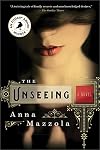
If Charles Dickens taught us anything, it is that pre-Victorian London was rough. The divide between the haves and the have-nots was huge, and the opportunities for advancement rare. Women in particular suffered as they had no rights and even fewer opportunities. Sarah Gale is just one woman caught up in the hardships of the time. With no money, no husband, and no chance for a respectable job, there was not much she could do to keep a roof over her head and feed her child, yet her desire to show more do so condemns her in the eyes of society. Ms. Gale’s trial also shows the rampant misogyny that existed back then (and still exists?). The Unseeing is a damning story in that it confirms everything Dickens ever covered in his novels with the addition of being about a true crime. Drawing on actual transcripts and newspaper articles from the time, Ms. Mazzola shows that the misogyny women all around the world still face has been around for a very long time.
The Unseeing is a dark novel; in fact, everything about the story is gloomy. London itself hides under a layer of smog and pollution so thick that it often obscures the sun. The poverty levels of most of the residents of the city are appalling. The graft and corruption among those sworn to uphold the law makes your stomach turn. Then there is Newgate prison, that infamous bastion of depravity, cruelty, and all that was wrong with London society. Much of the novel occurs within its walls, lending its own air of gloom to the proceedings. Edmund faces his own challenges, including the very real threat of debtors’ prison, further compounding the misery. Yet all of this serves the purpose of underscoring just how bleak life was for people then. It is a reminder of how lucky we are in today’s society and how far we have come.
Ms. Mazzola does an excellent job blurring the lines between fact and fiction in her debut novel. Sarah’s story is not a happy one, and Ms. Mazzola does not fictitiously make it one. Instead, she uses her meticulous research to present a plausible scenario for Ms. Gale’s silence and condemnation. The moral dilemmas Edmund faces in his investigation is also timely, in that we are all facing similar dilemmas between speaking out against current injustices and remaining silent for fear of retaliation. Peeling back the layers of history, as Ms. Mazzola does, provides readers with opportunity to learn from past mistakes. The Unseeing is a great opportunity to do so. show less
The Unseeing is a dark novel; in fact, everything about the story is gloomy. London itself hides under a layer of smog and pollution so thick that it often obscures the sun. The poverty levels of most of the residents of the city are appalling. The graft and corruption among those sworn to uphold the law makes your stomach turn. Then there is Newgate prison, that infamous bastion of depravity, cruelty, and all that was wrong with London society. Much of the novel occurs within its walls, lending its own air of gloom to the proceedings. Edmund faces his own challenges, including the very real threat of debtors’ prison, further compounding the misery. Yet all of this serves the purpose of underscoring just how bleak life was for people then. It is a reminder of how lucky we are in today’s society and how far we have come.
Ms. Mazzola does an excellent job blurring the lines between fact and fiction in her debut novel. Sarah’s story is not a happy one, and Ms. Mazzola does not fictitiously make it one. Instead, she uses her meticulous research to present a plausible scenario for Ms. Gale’s silence and condemnation. The moral dilemmas Edmund faces in his investigation is also timely, in that we are all facing similar dilemmas between speaking out against current injustices and remaining silent for fear of retaliation. Peeling back the layers of history, as Ms. Mazzola does, provides readers with opportunity to learn from past mistakes. The Unseeing is a great opportunity to do so. show less
Lists
Awards


You May Also Like


Associated Authors
Statistics
- Works
- 7
- Also by
- 2
- Members
- 461
- Popularity
- #53,307
- Rating
- 3.9
- Reviews
- 23
- ISBNs
- 49