
Beth Underdown
Author of The Witchfinder's Sister
Works by Beth Underdown
Lost Voices Exhibition Guide 1 copy
Tagged
Common Knowledge
- Birthdate
- 1987
- Gender
- female
- Education
- University of York (English literature)
University of Manchester (MA|Creative writing) - Occupations
- novelist
lecturer - Organizations
- University of Manchester
- Agent
- Nelle Andrew (Peters, Fraser & Dunlop)
- Short biography
- Beth Underdown was born in Rochdale in 1987. She studied at the University of York and then the University of Manchester, where she is now a Lecturer in Creative Writing. [website, retrieved 10/1/2024]
Beth Underdown studied English literature at the University of York and worked as an intern at the arts and culture magazine Aesthetica. After becoming an editor at Phaidon Press, Underdown graduated with distinction from the University of Manchester Creative Writing MA program. Underdown now lectures at the University on Manchester and lives in the Peak District, not too far from where she was born; the sense of history in that landscape is an important catalyst for her writing. [from The Witchfinder's Sister (Random House Books, 2017)) - Nationality
- UK
- Birthplace
- Rochdale, Lancashire, UK
- Places of residence
- Peak District, Derbyshire, England, UK
- Associated Place (for map)
- UK
Members
Reviews
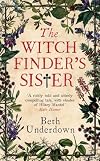
We've all heard of the Salem witch trials but we often forget that similar witch-hunts were going on in Britain, led by Matthew Hopkins in Essex. In the days before plucking and waxing, woe betide any woman with a furred brow or hairy lip as they may find themselves being labelled as a witch. Many unfortunate women in The Witchfinder's Sister are unfairly accused of being witches and maybe there is one real witch in the story - will Matthew's methods of detection identify her?
Alice thought show more she had escaped the strange ways of her brother, Matthew, when she married Joseph and they set up home in London, however, Joseph's sudden death sees her return from London to Manningtree. Alice is carrying her own precious secret, a secret that she knows she can't keep hidden for long, not when Matthew has eyes and ears in the whole town.
Matthew has strange secretive meetings at the house and Alice overhears enough to make her fear for the safety of her mother-in-law Bridget. Bridget has been close to the Hopkins family for many years, and knows more than she is willing to let on about the terrible scarring Matthew has on his face. Matthew was told that he crawled into the open fire as a baby but Alice finds out the truth that Bridget has kept hidden for many years. Will it be too late to save Bridget from Matthew's witch-hunt?
There are so many interesting stories within The Witchfinder's Sister that it's a guaranteed page-turner. Alice's story is tragic and poignant but as his sister she's known Matthew since he was born so she knows how he works. My heart went out to the poor women who were tried as witches, made even more poignant by the fact that the characters in the book were real women who were tried by Matthew Hopkins in the Essex Witch Trials.
Reading The Witchfinder's Sister is like having a secret window into the 17th Century. It is so impeccably researched and filled to the brim with interesting facts that are so cleverly woven into the fiction, almost hidden in plain sight if we choose to see them. Never has a fiction book had me racing off to google both during and after reading it. I was absolutely gobsmacked at the origins of 'hocus pocus' and I was delighted to see Alice having beer for breakfast!
The Witchfinder's Sister is a stunning debut by Beth Underdown. Her wonderful descriptive writing style naturally draws the reader into the story and seems to take on such authenticity of the period that I really felt as if I was there watching the trials unfold. The ending was jaw-droppingly brilliant and, although a very good end to the book, I for one would love to see the story continue.
I chose to read an ARC and this is my honest and unbiased opinion. show less
Alice thought show more she had escaped the strange ways of her brother, Matthew, when she married Joseph and they set up home in London, however, Joseph's sudden death sees her return from London to Manningtree. Alice is carrying her own precious secret, a secret that she knows she can't keep hidden for long, not when Matthew has eyes and ears in the whole town.
Matthew has strange secretive meetings at the house and Alice overhears enough to make her fear for the safety of her mother-in-law Bridget. Bridget has been close to the Hopkins family for many years, and knows more than she is willing to let on about the terrible scarring Matthew has on his face. Matthew was told that he crawled into the open fire as a baby but Alice finds out the truth that Bridget has kept hidden for many years. Will it be too late to save Bridget from Matthew's witch-hunt?
There are so many interesting stories within The Witchfinder's Sister that it's a guaranteed page-turner. Alice's story is tragic and poignant but as his sister she's known Matthew since he was born so she knows how he works. My heart went out to the poor women who were tried as witches, made even more poignant by the fact that the characters in the book were real women who were tried by Matthew Hopkins in the Essex Witch Trials.
Reading The Witchfinder's Sister is like having a secret window into the 17th Century. It is so impeccably researched and filled to the brim with interesting facts that are so cleverly woven into the fiction, almost hidden in plain sight if we choose to see them. Never has a fiction book had me racing off to google both during and after reading it. I was absolutely gobsmacked at the origins of 'hocus pocus' and I was delighted to see Alice having beer for breakfast!
The Witchfinder's Sister is a stunning debut by Beth Underdown. Her wonderful descriptive writing style naturally draws the reader into the story and seems to take on such authenticity of the period that I really felt as if I was there watching the trials unfold. The ending was jaw-droppingly brilliant and, although a very good end to the book, I for one would love to see the story continue.
I chose to read an ARC and this is my honest and unbiased opinion. show less
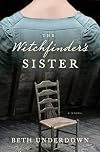
This is a difficult read, but it's also a powerful and incredibly written piece of historical fiction that achieves a great deal.
The difficulty comes from the subject matter, addressing the witch trials that took place in England in the mid-seventeenth century, and from the fact that Underdown does such an incredible justice to the horror and injustices tied up in the history and characters at the heart of such a topic. By taking a side-view of Matthew Hopkins, a documents self-styled show more witchfinder, and creating a sister for him to serve as the point-of-view for this novel--and he may or may not have had a sister, as discussed in the book's Author's note--Underdown has managed to bring this story to life in a way that is heartbreaking even without the added weight of reality.
And, I'll be truthful here--whenever I let myself remember that the events in this book were for the most part based on real events/persons, I had to step away from the book. Not just for a few hours, but for at least a few days. In truth, this book even made me reconsider The Crucible, which I not only read but acted in, and feel a whole new horror in relation to that work's portrayals and content.
So, back to the Witchfinder's Sister... This is a striking book. It is worth reading. It is beautifully, expertly crafted. It is also as horrifying as it is breathtaking. There's no doubt in my mind that many readers will begin this book and put it back down again, as the stresses and the horrors of the book are only compounded by the fact that they come from a woman who is, simply due to her position, helpless to stop her own brother from enacting what, from a contemporary perspective, we can only call monstrous.
So, yes, I'd recommend this book. I also, however, would not fault anyone for veering away from it, or reading to the halfway point or thereabouts and realizing that they cannot put themselves through the rest of it. show less
The difficulty comes from the subject matter, addressing the witch trials that took place in England in the mid-seventeenth century, and from the fact that Underdown does such an incredible justice to the horror and injustices tied up in the history and characters at the heart of such a topic. By taking a side-view of Matthew Hopkins, a documents self-styled show more witchfinder, and creating a sister for him to serve as the point-of-view for this novel--and he may or may not have had a sister, as discussed in the book's Author's note--Underdown has managed to bring this story to life in a way that is heartbreaking even without the added weight of reality.
And, I'll be truthful here--whenever I let myself remember that the events in this book were for the most part based on real events/persons, I had to step away from the book. Not just for a few hours, but for at least a few days. In truth, this book even made me reconsider The Crucible, which I not only read but acted in, and feel a whole new horror in relation to that work's portrayals and content.
So, back to the Witchfinder's Sister... This is a striking book. It is worth reading. It is beautifully, expertly crafted. It is also as horrifying as it is breathtaking. There's no doubt in my mind that many readers will begin this book and put it back down again, as the stresses and the horrors of the book are only compounded by the fact that they come from a woman who is, simply due to her position, helpless to stop her own brother from enacting what, from a contemporary perspective, we can only call monstrous.
So, yes, I'd recommend this book. I also, however, would not fault anyone for veering away from it, or reading to the halfway point or thereabouts and realizing that they cannot put themselves through the rest of it. show less

Perhaps it is a coincidence simply due to my reading choices lately or a heightened awareness of the topic in general, but there is an abundance of books lately discussing women’s roles past and present, how intelligent and independent women were viewed and in some regards continue to be viewed by general society. Whatever it is, I am thoroughly enjoying the chance to learn more and adding fuel to my renewed feminism. While The Witchfinder’s Sister does not have such a woman as the main show more character, it does detail how the real-life Witchfinder went about terrorizing women for a few years in the mid-seventeenth century. Even though no one is hunting down modern “witches” to torture them into confessing their sins, the hatred towards women exhibited by the men in the novel is something to which all women today can relate.
Ms. Underdown admits in her Author’s Note that there was a lot of license she had to take with the details because there is not much known about Matthew Hopkins. This could be problematic for the story, but she does a tremendous job of incorporating painstaking research into her novel and credibly blending fact with fiction. She also recognizes those areas she added in her notes so that readers understand exactly what she added and her reasons for doing so. When fact is stranger than fiction like in this scenario, knowing such delineations is useful and interesting.
While Matthew Hopkins’ reasons for hunting and killing witches are only a supposition, Ms. Underdown provides a great example of how hatred and disgust at the female body, as well as fear, cowardice, and a lust for power, contributed to witch hunts. In fact, it takes no great stretch of the imagination to view Matthew as a symbol for all of the hunters throughout history. His disgust with the female reproductive system and female lust is every man’s discomfort at menstruation and sexually forward women. His lust for power is the glass ceiling and ongoing misogyny that continue to view women as inferior and limit them in their roles. The witch hunts of today may not involving watching and swimming, but they provide similar results in making women’s health a taboo subject and making it virtually impossible for a woman to become president under today’s conditions.
The Witchfinder’s Sister is an interesting story but not without its demerits. Alice is a surprisingly weak character, not in development but in personality. She is meek whereas the women who most influenced her life were strong. She is hesitant to offend and spends much of her time lamenting her inability to influence her brother for the better. There is no concern of her being mistaken for a witch because she spends a majority of her time hiding in her room rather than taking action. It is her frustrating lack of inaction and propensity for wishful thinking that strikes the reader as out of place in this novel where the hunting of strong, active women plays such a strong role.
In spite of its negatives, The Witchfinder’s Sister is enjoyable with its glimpse into a little-known part of history. The timing of the story’s release, as women face ever increasing concerns about reproductive health care access as well as an ongoing dialogue about feminism and women’s roles in society, may be a coincidence or else it is brilliant marketing by the publisher. Either way, readers can relate to Alice and to Matthew’s victims in a way they may not have done a year ago, and it is easy to recognize in Matthew the sanctimony of today’s current American administration. It may be dismaying to realize that women have been persecuted for the same reasons for hundreds of years, but there is comfort in the fact that we continue to survive and thrive in spite of such persecution. We might have a long way to go to stamp out such witch hunts, but being aware of the various forms they take, past and present, is one weapon in our arsenal to continue to battle against them. show less
Ms. Underdown admits in her Author’s Note that there was a lot of license she had to take with the details because there is not much known about Matthew Hopkins. This could be problematic for the story, but she does a tremendous job of incorporating painstaking research into her novel and credibly blending fact with fiction. She also recognizes those areas she added in her notes so that readers understand exactly what she added and her reasons for doing so. When fact is stranger than fiction like in this scenario, knowing such delineations is useful and interesting.
While Matthew Hopkins’ reasons for hunting and killing witches are only a supposition, Ms. Underdown provides a great example of how hatred and disgust at the female body, as well as fear, cowardice, and a lust for power, contributed to witch hunts. In fact, it takes no great stretch of the imagination to view Matthew as a symbol for all of the hunters throughout history. His disgust with the female reproductive system and female lust is every man’s discomfort at menstruation and sexually forward women. His lust for power is the glass ceiling and ongoing misogyny that continue to view women as inferior and limit them in their roles. The witch hunts of today may not involving watching and swimming, but they provide similar results in making women’s health a taboo subject and making it virtually impossible for a woman to become president under today’s conditions.
The Witchfinder’s Sister is an interesting story but not without its demerits. Alice is a surprisingly weak character, not in development but in personality. She is meek whereas the women who most influenced her life were strong. She is hesitant to offend and spends much of her time lamenting her inability to influence her brother for the better. There is no concern of her being mistaken for a witch because she spends a majority of her time hiding in her room rather than taking action. It is her frustrating lack of inaction and propensity for wishful thinking that strikes the reader as out of place in this novel where the hunting of strong, active women plays such a strong role.
In spite of its negatives, The Witchfinder’s Sister is enjoyable with its glimpse into a little-known part of history. The timing of the story’s release, as women face ever increasing concerns about reproductive health care access as well as an ongoing dialogue about feminism and women’s roles in society, may be a coincidence or else it is brilliant marketing by the publisher. Either way, readers can relate to Alice and to Matthew’s victims in a way they may not have done a year ago, and it is easy to recognize in Matthew the sanctimony of today’s current American administration. It may be dismaying to realize that women have been persecuted for the same reasons for hundreds of years, but there is comfort in the fact that we continue to survive and thrive in spite of such persecution. We might have a long way to go to stamp out such witch hunts, but being aware of the various forms they take, past and present, is one weapon in our arsenal to continue to battle against them. show less
"For they say what happened, but not what it was like. They say what happened, but they do not say why.”
Witch hunting is one of the most embarrassing pieces of human history. ‘The Witchfinder’s Sister’ is a fictional tale where the author conceives a plausible viewpoint of Matthew Stafford’s sister. This isn’t based on a true story since, while these characters were real, so little is known about them. We do know that during the Essex witch trials between the years of 1645 and show more 1647, that hundreds of women were investigated for witchcraft and many were murdered as a result of it.
Beth Underdown is spot on for the dreary and run-down writing tone fitting the bleak storyline for her debut novel. Beautifully written, haunting, moving, the prose fits the plot perfectly and uplifts it to another level. Written poorly, this story wouldn’t have worked nearly as well since the atmosphere was such a key part of the experience, and that can only be achieved with lyrical writing that suits it.
The story follows the sister Alice who must return home humiliated and penniless after her husband died. Her brother accepts her with open arms, kind of, but she soon finds out that the twisted relative has somehow managed to sway the town under his spell. It’s not just his lust for power or terror of women, but she finds out another secret that may explain the psychology of why he became so demented in the first place.
Alice is a worthy enough character on her own, although at times I wanted to shake her. I know she was stuck because of the people she was trying to protect and because of the lack of choices women had back then though, but she found her backbone anyway and lived to carry on.
The side characters that helped strengthen her amped the story up well – Bridget, the run-down housekeeper with a strong moral balance but little defenses was especially effective. The author doesn’t give her an unrealistic personality to suit modern politics as some historical pieces with women characters dare to do, and that makes the story feel even more genuine and moving.
I dig that the author introduced the actual possibility of real magic into the storyline too, making even Alice doubt that supernatural forces may be at play. It makes sense that even if they thought Matthew was wrong, small doubts would start infecting even her, so I liked this realism on human fault.
The author did an admirable job of capturing the oppressive and struggling atmosphere the women must have experienced, and she doesn’t shy away from the details of the tests, trials, imprisonments, betrayals, and twisted facts of the case. Even the small details are covered to loan authenticity.
It’s a slower paced book at times, but the bulk of it is needed to fit the storyline’s emphasis on the demented fanaticism that ruined so many lives so cruelly, so senselessly.
Recommended for fans of drama, whether they favor historical time pieces or modern ones – it’s a moving account of a horrific time in human history that we shouldn’t ever forget.
An honest review has been provided after receiving this one from Netgalley as an ARC – much thanks to the publisher and author. show less
Witch hunting is one of the most embarrassing pieces of human history. ‘The Witchfinder’s Sister’ is a fictional tale where the author conceives a plausible viewpoint of Matthew Stafford’s sister. This isn’t based on a true story since, while these characters were real, so little is known about them. We do know that during the Essex witch trials between the years of 1645 and show more 1647, that hundreds of women were investigated for witchcraft and many were murdered as a result of it.
Beth Underdown is spot on for the dreary and run-down writing tone fitting the bleak storyline for her debut novel. Beautifully written, haunting, moving, the prose fits the plot perfectly and uplifts it to another level. Written poorly, this story wouldn’t have worked nearly as well since the atmosphere was such a key part of the experience, and that can only be achieved with lyrical writing that suits it.
The story follows the sister Alice who must return home humiliated and penniless after her husband died. Her brother accepts her with open arms, kind of, but she soon finds out that the twisted relative has somehow managed to sway the town under his spell. It’s not just his lust for power or terror of women, but she finds out another secret that may explain the psychology of why he became so demented in the first place.
Alice is a worthy enough character on her own, although at times I wanted to shake her. I know she was stuck because of the people she was trying to protect and because of the lack of choices women had back then though, but she found her backbone anyway and lived to carry on.
The side characters that helped strengthen her amped the story up well – Bridget, the run-down housekeeper with a strong moral balance but little defenses was especially effective. The author doesn’t give her an unrealistic personality to suit modern politics as some historical pieces with women characters dare to do, and that makes the story feel even more genuine and moving.
I dig that the author introduced the actual possibility of real magic into the storyline too, making even Alice doubt that supernatural forces may be at play. It makes sense that even if they thought Matthew was wrong, small doubts would start infecting even her, so I liked this realism on human fault.
The author did an admirable job of capturing the oppressive and struggling atmosphere the women must have experienced, and she doesn’t shy away from the details of the tests, trials, imprisonments, betrayals, and twisted facts of the case. Even the small details are covered to loan authenticity.
It’s a slower paced book at times, but the bulk of it is needed to fit the storyline’s emphasis on the demented fanaticism that ruined so many lives so cruelly, so senselessly.
Recommended for fans of drama, whether they favor historical time pieces or modern ones – it’s a moving account of a horrific time in human history that we shouldn’t ever forget.
An honest review has been provided after receiving this one from Netgalley as an ARC – much thanks to the publisher and author. show less
Lists
Awards


You May Also Like


Associated Authors
Statistics
- Works
- 3
- Members
- 489
- Popularity
- #50,497
- Rating
- 3.6
- Reviews
- 39
- ISBNs
- 22
- Languages
- 1