
Mary Fulbrook
Author of A Concise History of Germany
About the Author
Mary Fulbrook, FBA is Professor of German History at University College London (UCL), UK. A graduate of Cambridge and Harvard Universities, she is the author or editor of numerous books, including Reckonings: Legacies of Nazi Persecution and the Quest for Justice, for which she won the 2019 Wolfson show more History Prize, and A Small Town Near Auschwitz: Ordinary Nazis and the Holocaust, winner of the 2012 Fraenkel Prize. Professor Fulbrook has served as Executive Dean of the UCL Faculty of Social and Historical Sciences, Academic Director of the UCL European Institute, founding Joint Editor of the journal German History, and Chair of the German History Society. show less
Works by Mary Fulbrook
Bystander Society: Conformity and Complicity in Nazi Germany and the Holocaust (2023) 32 copies, 1 review
Piety and Politics: Religion and the Rise of Absolutism in England, Wurttemberg and Prussia (Cambridge Paperback Library) (1983) 11 copies
Un-civilizing processes? : excess and transgression in German society and culture : perspectives debating with Norbert Elias (2016) 2 copies
Dissonant Lives: Generations and Violence Through the German Dictatorships, Vol. 2: Nazism through Communism (Oxfo12 13 06 2019) (2017) 2 copies
Un-Civilizing Processes?: Excess and Transgression in German Society and Culture: Perspectives Debating with Norbert Eli (2007) 2 copies
The Cambridge History of the Holocaust: Volume 2, Perpetrating The Holocaust: Policies, Participants, Places (2025) 2 copies
Nationl Hist & Europ Hist CL 1 copy
Associated Works
The Politics of Gesture: Historical Perspectives (Past & Present, Supplement 4, 2009) (2009) — Contributor — 8 copies
Tagged
Common Knowledge
- Canonical name
- Fulbrook, Mary
- Legal name
- Fulbrook, Mary Jean Alexandra
- Birthdate
- 1951-11-28
- Gender
- female
- Nationality
- UK
- Associated Place (for map)
- UK
Members
Reviews
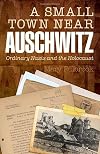
Histories about the perpetrators of the Holocaust tend to focus on the hands-on killers or the architects of genocide in the upper echelons of the Nazi party. But it took an enormous amount of administrative work to make lists of Jews in an area, confiscate their property, deprive them of food, jobs and housing, round them up, push them into ghettos, arrange rail transport to take them to the camps. Who were the pencil-pushers who did this work? What did they think about what they were show more doing--at the time and after the war?
Mary Fulbrook, a professor of German history at University College, London, found herself in a surprising position to look at these questions when she discovered that the husband of her godmother, her mother's childhood best friend, was the administrator of the major town of Bedzin in Silesia. Though he was a member of the Nazi party and there is more than enough remaining in the archival record to show that he was an efficient cog in the killing machine, Udo Klausa never paid a price for his role in implementing the Holocaust; in fact, he went on to a successful postwar career.
What's more, Klausa insisted that he was not at all responsible for the terrible fate of the Bedzin Jews. This, even though the population of 50,000, almost half of whom were Jews, was reported by Klausa himself to be down to 27,000 by 1943. In other words, all the Jews gone under his watch. Most were rounded up in two Aktions and sent to work camps or to death down the road in Auschwitz. Klausa is representative of the thousands of ordinary Germans without whose desk work the Germans could never have achieved their genocidal aims.
In this detailed account, Fulbrook inexorably marshals the evidence showing what Klausa did. Her personal connection allows her to add chilling and illuminating details of the dehumanization that helped so many self-described "ordinary" and "decent" Germans see Jews as inferior beings infecting the nation. Frau Klausa's letters to Fulbrook's mother describe the Jews in town as being in a disgusting state; ignoring that it was the actions of the Nazi occupiers that deprived them of their jobs and homes, as well as decent food, clothing and shelter. Frau Klausa then blithely describe how the Klausas moved into a house appropriated from a Jewish family and how cheaply they were able to furnish the house with confiscated Jewish property.
Fulbrook carefully walks a difficult line for a professional historian who has a personal acquaintance with her subject. She never allows her personal relationship to interfere with her professional responsibility. We are provided with a thoroughgoing and clear-eyed revelation of how Klausa (and, by extension, many other Germans) justified his inhuman behavior during the war and reinvented his wartime history for more palatable consumption the rest of his life.
This is an important addition to Holocaust history and to our understanding of how a population can become complicit in the most horrific crimes.
Disclosure: I received a free publisher's review copy of this book. show less
Mary Fulbrook, a professor of German history at University College, London, found herself in a surprising position to look at these questions when she discovered that the husband of her godmother, her mother's childhood best friend, was the administrator of the major town of Bedzin in Silesia. Though he was a member of the Nazi party and there is more than enough remaining in the archival record to show that he was an efficient cog in the killing machine, Udo Klausa never paid a price for his role in implementing the Holocaust; in fact, he went on to a successful postwar career.
What's more, Klausa insisted that he was not at all responsible for the terrible fate of the Bedzin Jews. This, even though the population of 50,000, almost half of whom were Jews, was reported by Klausa himself to be down to 27,000 by 1943. In other words, all the Jews gone under his watch. Most were rounded up in two Aktions and sent to work camps or to death down the road in Auschwitz. Klausa is representative of the thousands of ordinary Germans without whose desk work the Germans could never have achieved their genocidal aims.
In this detailed account, Fulbrook inexorably marshals the evidence showing what Klausa did. Her personal connection allows her to add chilling and illuminating details of the dehumanization that helped so many self-described "ordinary" and "decent" Germans see Jews as inferior beings infecting the nation. Frau Klausa's letters to Fulbrook's mother describe the Jews in town as being in a disgusting state; ignoring that it was the actions of the Nazi occupiers that deprived them of their jobs and homes, as well as decent food, clothing and shelter. Frau Klausa then blithely describe how the Klausas moved into a house appropriated from a Jewish family and how cheaply they were able to furnish the house with confiscated Jewish property.
Fulbrook carefully walks a difficult line for a professional historian who has a personal acquaintance with her subject. She never allows her personal relationship to interfere with her professional responsibility. We are provided with a thoroughgoing and clear-eyed revelation of how Klausa (and, by extension, many other Germans) justified his inhuman behavior during the war and reinvented his wartime history for more palatable consumption the rest of his life.
This is an important addition to Holocaust history and to our understanding of how a population can become complicit in the most horrific crimes.
Disclosure: I received a free publisher's review copy of this book. show less
Back when I was a naïve bright-eyed college student thinking of becoming a school teacher and minoring in German, I briefly flirted with the idea of incorporating my love of history and my German degree by trying to solve the unsolvable while obtaining my Ph.D. What was that unsolvable question? Why did an entire population ignore/remain in the dark/allow the horrors that befell anyone who was not of Aryan decent in Germany and its controlled countries during the 1930s and 1940s? Mary show more Fulbrook explores a similar unsolvable question in A Small Town Near Auschwitz, as she explores one man’s experiences as a lower-level bureaucrat in a Nazi-dominated area roughly twenty miles from the infamous Auschwitz death camp.
A Small Town Near Auschwitz is a fascinating story that unfortunately reads like a poorly-written dissertation. Seriously, if one had a dissertation checklist as to formatting and necessary requirements, one could go down said checklist and mark off each item as one reads the book. In addition, it is filled with details, big and small, that contribute to a vivid portrayal of Bedjzin before and during the war but that also bog down the narrative. The details are in and of themselves very interesting, but they force a reader to dwell on terrifying and extremely emotional experiences that make it difficult to read. One has to take a break from the emotional trauma that Ms. Fulbrook’s words create. In other words, it is very slow and cumbersome reading.
Another issue found with A Small Town Near Auschwitz is Ms. Fulbrook’s close association with her subject matter. While she makes no attempts to hide her connections to Udo Klausa and his wife, there are times in the narrative where it is obvious that Ms. Fulbrook is not quite as objective as she is trying to be or as she perhaps should be as a historian. Her conclusions are tainted, at times, with a sense of guilt that she was either drawing such negative conclusions about a long-time family friend or that she was trying to find a more positive explanation for behaviors or attitudes that probably should not be positively explained. This sense of shame weakens her conclusions as she allows her personal history to impact them.
That being said, without the close relationship between Mrs. Klausa and Ms. Fulbrook’s mother and personal correspondence this relationship created, her insights into the bureaucratic layers of the Nazi regime would not be as intimate and revealing. This correspondence provided a glimpse into the Klausa family’s true thoughts about Hitler, the Nazi regime, and what was occurring in Bedjzin, something the revisionist history of the post-Hitler era would never have allowed to occur. Her familial relationship with the Klausa family is a very sharp double-edged sword that allows for brilliant moments of clarity in an era where everyone was obfuscating the truth while shading the entire work in elements of gray as Ms. Fulbrook allows her personal feelings to interfere with her conclusions.
Ms. Fulbrook’s research in A Small Town Near Auschwitz is extremely thorough and, as such, extremely upsetting. The stories of atrocity towards the Jewish and the Polish population are straightforwardly presented, but it does not make it any less emotional a reading experience. What makes the scenes truly horrific is that Ms. Fulbrook goes beyond descriptions of what occurred and delves into the political machinations behind such actions, as well as depicting the thought processes of those in charge of carrying out such heinous acts. The unemotional attitudes of the oppressors over the oppressed is truly terrifying and caused more than one disturbing dream in the course of reading the book.
Ms. Fulbrook presents her answers to the unsolvable question about the general population involvement in the Final Solution as fully as she can, drawing on the private correspondence between her own mother and Udo Klausa’s wife as well as the unique perspective of having met and known her chosen subject. The conclusions she draws are chilling in that they show how easily anyone can justify his or her own behavior and ignore the impact of one’s actions on others. Not only that but she showcases how simple it is to retell one’s own personal history to avoid appearing guilty in the eyes of others. A Small Town Near Auschwitz, if one can get through the tedium of reading such dense and emotionally-charged material, is an unnerving reminder of what happened to an entire population and a subtle warning of how easily it could again occur.
Acknowledgments: Thank you to NetGalley and to Oxford University Press for my review copy. show less
A Small Town Near Auschwitz is a fascinating story that unfortunately reads like a poorly-written dissertation. Seriously, if one had a dissertation checklist as to formatting and necessary requirements, one could go down said checklist and mark off each item as one reads the book. In addition, it is filled with details, big and small, that contribute to a vivid portrayal of Bedjzin before and during the war but that also bog down the narrative. The details are in and of themselves very interesting, but they force a reader to dwell on terrifying and extremely emotional experiences that make it difficult to read. One has to take a break from the emotional trauma that Ms. Fulbrook’s words create. In other words, it is very slow and cumbersome reading.
Another issue found with A Small Town Near Auschwitz is Ms. Fulbrook’s close association with her subject matter. While she makes no attempts to hide her connections to Udo Klausa and his wife, there are times in the narrative where it is obvious that Ms. Fulbrook is not quite as objective as she is trying to be or as she perhaps should be as a historian. Her conclusions are tainted, at times, with a sense of guilt that she was either drawing such negative conclusions about a long-time family friend or that she was trying to find a more positive explanation for behaviors or attitudes that probably should not be positively explained. This sense of shame weakens her conclusions as she allows her personal history to impact them.
That being said, without the close relationship between Mrs. Klausa and Ms. Fulbrook’s mother and personal correspondence this relationship created, her insights into the bureaucratic layers of the Nazi regime would not be as intimate and revealing. This correspondence provided a glimpse into the Klausa family’s true thoughts about Hitler, the Nazi regime, and what was occurring in Bedjzin, something the revisionist history of the post-Hitler era would never have allowed to occur. Her familial relationship with the Klausa family is a very sharp double-edged sword that allows for brilliant moments of clarity in an era where everyone was obfuscating the truth while shading the entire work in elements of gray as Ms. Fulbrook allows her personal feelings to interfere with her conclusions.
Ms. Fulbrook’s research in A Small Town Near Auschwitz is extremely thorough and, as such, extremely upsetting. The stories of atrocity towards the Jewish and the Polish population are straightforwardly presented, but it does not make it any less emotional a reading experience. What makes the scenes truly horrific is that Ms. Fulbrook goes beyond descriptions of what occurred and delves into the political machinations behind such actions, as well as depicting the thought processes of those in charge of carrying out such heinous acts. The unemotional attitudes of the oppressors over the oppressed is truly terrifying and caused more than one disturbing dream in the course of reading the book.
Ms. Fulbrook presents her answers to the unsolvable question about the general population involvement in the Final Solution as fully as she can, drawing on the private correspondence between her own mother and Udo Klausa’s wife as well as the unique perspective of having met and known her chosen subject. The conclusions she draws are chilling in that they show how easily anyone can justify his or her own behavior and ignore the impact of one’s actions on others. Not only that but she showcases how simple it is to retell one’s own personal history to avoid appearing guilty in the eyes of others. A Small Town Near Auschwitz, if one can get through the tedium of reading such dense and emotionally-charged material, is an unnerving reminder of what happened to an entire population and a subtle warning of how easily it could again occur.
Acknowledgments: Thank you to NetGalley and to Oxford University Press for my review copy. show less
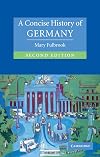
More like an abridged history of Germany. I expect a concise history to be complete, just using as few words as possible. It could also be called a short history of modern Germany because coverage of the pre-modern era is weak. The chapters get progressively longer, and time periods shorter; far more drastic than the disclaimer in the preface led me to believe. It glosses over many details, some of which are important. On the other hand, chapters on the 20th century are an alphabet soup of show more acronyms for every little political party, which can be difficult to keep straight. Although much of the content is even-handed, the author's leftist bias is evident in many places. When she writes about politics and economics, she often makes judgments that assume her readers share her underlying biases. I don't, and found that a bit annoying. Finally, rather than being concise, the prose is rather dense. Finishing the book was a chore. show less
Concise as in top level 1500 feet, just enough overview history to get you interested in learning more.
Learn the big picture before drilling in on the detailed parts of history that you want to learn more about.
Learn the big picture before drilling in on the detailed parts of history that you want to learn more about.
Awards


You May Also Like


Associated Authors
Statistics
- Works
- 34
- Also by
- 1
- Members
- 1,278
- Popularity
- #20,059
- Rating
- 3.6
- Reviews
- 15
- ISBNs
- 111
- Languages
- 10