
Trevor Royle
Author of The Civil War: The War of the Three Kingdoms 1638-1660
About the Author
Trevor Royle's previous books include Crimea, The Civil War: The War of the Three Kingdoms, and The Wars of the Roses. He is a script writer for the BBC and a columnist for the Edinburgh Sunday Herald. He is a Fellow of the Royal Society of Edinburgh.
Image credit: www.fraspublishing.co.uk
Works by Trevor Royle
Associated Works
Tagged
Common Knowledge
- Birthdate
- 1945-01-26
- Gender
- male
- Occupations
- historian
newspaper editor - Awards and honors
- Royal Society of Edinburgh (Fellow)
- Nationality
- UK
- Places of residence
- Edinburgh, Scotland, UK
- Associated Place (for map)
- Scotland, UK
Members
Reviews

This well-researched book deserves a mention as it is newly published (at the time of this review, anyway) and it a gem for those interested in this battle. Full disclosure: I became a fan of Diana Gabaldon's after receiving her books as a present, and have been looking in my local library for something approximating a historical discussion of the Battle of Culloden Then I chanced upon this book and read this portion for the historical context. And on so many levels this book applies to fans show more of Outlander as well as those interested in Scottish clans or in how the British Empire gained its reach starting in large part with this battle.
And another full disclosure: I have not read the entire book, as the British nation-building does not resonate with me right now. However, the portion I did read is fantastic and difficult at the same time. The build-up to the Battle of Culloden is well-researched and the Battle of Prestonpans is also included in the research as it bears a close bearing on the events of the larger Battle. The personalities of the Duke of Cumberland, second son to King George II, and Bonnie Prince Charlie are researched from historical accounts, as are the make ups of both armies including their positions on the field on the day of this historical battle. And that brings me to what is difficult to read in this book: the amount of death that happens in a very short space of time, the killing of the survivors and the wounded survivors after the Battle, and the retributions of the clan society in the months after the Battle are hard: these were real people who were dehumanized by the winners, suffered a complete destruction of their homes and their societal structure, and were killed in a brief battle in ways that war always brings. What struck me about the post-battle portions were the ways in which Royle is able to shine a light on how the defeated enemy was dehumanized as a tactic that is not shared in this current age, and also how the clan structure was the last part of feudal Europe that had ended in the centuries before (not class structure, but feudal society). show less
And another full disclosure: I have not read the entire book, as the British nation-building does not resonate with me right now. However, the portion I did read is fantastic and difficult at the same time. The build-up to the Battle of Culloden is well-researched and the Battle of Prestonpans is also included in the research as it bears a close bearing on the events of the larger Battle. The personalities of the Duke of Cumberland, second son to King George II, and Bonnie Prince Charlie are researched from historical accounts, as are the make ups of both armies including their positions on the field on the day of this historical battle. And that brings me to what is difficult to read in this book: the amount of death that happens in a very short space of time, the killing of the survivors and the wounded survivors after the Battle, and the retributions of the clan society in the months after the Battle are hard: these were real people who were dehumanized by the winners, suffered a complete destruction of their homes and their societal structure, and were killed in a brief battle in ways that war always brings. What struck me about the post-battle portions were the ways in which Royle is able to shine a light on how the defeated enemy was dehumanized as a tactic that is not shared in this current age, and also how the clan structure was the last part of feudal Europe that had ended in the centuries before (not class structure, but feudal society). show less

Though this is the history of a war, it is more of a general history book than a military history book - you will read dozens of descriptions of battles and skirmishes and seiges, and yet learn very little of the skills and tactics and strategies of the conflict. However, it is a solid political work and explains very well the ever changing factions that acted throughout the war and its aftermath.
On the war in England, the book is clear and concise and detailed. On the war in Scotland the show more book is detailed - the endless debates and disputes and sermons and factions in Scotland seem so tedious as to be nearly as lethal as the fighting. But on the war in Ireland, the book manages to convey permanent confusion and hopelessness but not much else. I think that's the main weakness of this history. show less
On the war in England, the book is clear and concise and detailed. On the war in Scotland the show more book is detailed - the endless debates and disputes and sermons and factions in Scotland seem so tedious as to be nearly as lethal as the fighting. But on the war in Ireland, the book manages to convey permanent confusion and hopelessness but not much else. I think that's the main weakness of this history. show less
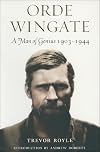
Orde Wingate: A Man of Genius quotes Churchill in the subtitle to guide a biography of an expert in unconventional warfare, cut down before his time in a plane crash in 1944. This book is best when it describes the conformist weirdness of the interwar British Army, and Wingate's quixotic crusade to be an Individual in this environment. His early career, in the regiment, in Sudan, and in Mandatory Palestine, are lovingly detailed. The picture that emerges is of an iconoclastic and deeply show more moral soldier, who's immense (indeed, maniac) energy drives his men to accomplish great things. This came to a peak in with the campaign to liberate Ethiopia from the Italians with Gideon Force, a small patriotic band that outfought larger Italian units to restore Emperor Haile Selassie to the throne. Next, Wingate was assigned to the Burma theater, but the Chindit deep penetration units have a more mixed record, suffering heavy casualties for unclear results.
Wingate clearly was a man of great vision, but it's unclear if that vision actually matched up to reality. His talent for finding highly placed patrons was undercut by fighting against his immediate superiors, equals, and subordinate officers. His career might be encapsulated in miniature in one incident in Palestine. More or less on his own authority, Wingate had created a group of Jewish Special Night Squads to fight Arab gangs through night ambush. This went great, until a combined operation wound up with Wingate ambushing himself and getting shot five times with a Bren gun.
This is a strong biography, but a weak military history. As an aside, my favorite "wtf moment" was apparently a weekly ritual in British Artillery Officer school was a Friday night dance, where the Seniors wore full dress, the first years wore pajamas, and then the first years were beaten. Did the whole British army run on weird sadomasochism? show less
Wingate clearly was a man of great vision, but it's unclear if that vision actually matched up to reality. His talent for finding highly placed patrons was undercut by fighting against his immediate superiors, equals, and subordinate officers. His career might be encapsulated in miniature in one incident in Palestine. More or less on his own authority, Wingate had created a group of Jewish Special Night Squads to fight Arab gangs through night ambush. This went great, until a combined operation wound up with Wingate ambushing himself and getting shot five times with a Bren gun.
This is a strong biography, but a weak military history. As an aside, my favorite "wtf moment" was apparently a weekly ritual in British Artillery Officer school was a Friday night dance, where the Seniors wore full dress, the first years wore pajamas, and then the first years were beaten. Did the whole British army run on weird sadomasochism? show less
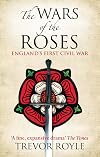
StevenTX's excellent review led me to read this narrative history, which as he says does a great job of taking the reader through a turbulent period of English history, The late 14th century to the late 15th century was a time when England was still very much in the late middle ages, as powerful aristocrats battled for control of the kingdom. Royle manages to string together a very readable narrative, which is not so easy with the confusion and anarchic actions of the many participants. show more Strong characters and weak personalities are given well rounded portraits as Royle uses the latest research into the period to provide a fine introduction for the amateur historian. There is very little social history, but Royle does provide some examples of the literature of the time. (there was precious little that has survived following the age of Chaucer in the late 14th century). The battles and skirmishes became more savage as the period progressed as chivalry was well and truly buried on the killing grounds. An excellent history which could appeal to the general reader. A Four star read. show less
Lists
You May Also Like


Associated Authors
Statistics
- Works
- 40
- Also by
- 3
- Members
- 1,267
- Popularity
- #20,252
- Rating
- 3.7
- Reviews
- 18
- ISBNs
- 99