
Richard Conniff
Author of The Natural History of the Rich: A Field Guide
About the Author
Richard Conniff is a prize-winning science writer and journalist and the author of nine books, including The Species Seekers: Heroes, Fools, and the Mad Pursuit of Life on Earth.
Image credit: Photo by Gregory Conniff
Works by Richard Conniff
The Species Seekers: Heroes, Fools, and the Mad Pursuit of Life on Earth (2011) 194 copies, 6 reviews
Swimming with Piranhas at Feeding Time: My Life Doing Dumb Stuff with Animals (2009) 90 copies, 3 reviews
The Ape in the Corner Office: Understanding the Workplace Beast in All of Us (2005) 75 copies, 1 review
House of Lost Worlds: Dinosaurs, Dynasties, and the Story of Life on Earth (2016) 67 copies, 2 reviews
The Devil's Book of Verse: Masters of the Poison Pen from Ancient Times to the Present Day (1983) 3 copies, 1 review
Associated Works
Tagged
Common Knowledge
- Birthdate
- 1951-03-01
- Gender
- male
- Nationality
- USA
- Associated Place (for map)
- USA
Members
Reviews

There are a lot of things to like about Ending Epidemics by Richard Conniff. With COVID still being around this is even more topical than it would have been otherwise, though it would have been worth the read even prior to our current situation.
As science/medical history, this is an excellent read. The writing is concise but relaxed, bringing the reader along as we watch history being made over the years. While science is certainly the focus these are equally engrossing as stories of people show more doing wonderful things, displaying their curiosity and ingenuity to solve problems while advancing science and medicine.
It was also effective the way he included the relatively mundane things that can help prevent or minimize the effects, such as sanitation, as well as the peripheral inventions in science (improvements to the microscope, for instance) that helped make discoveries possible.
Perhaps one of the things that most speaks to our current situation is how short our memories can be. This isn't just true in this area, but can be more devastating than other examples. When a deadly disease is eradicated or so minimized as to be rare, we forget, as a population, how much pain and death previous generations lived with. Then, when new diseases pop up, as they will, our bigger problem becomes our lack of mental preparedness to take necessary steps even when those steps come far quicker than they ever could have before.
Highly recommended for both the reader with minimal knowledge of virology or epidemiology as well as those with more knowledge of the science but who want to better understand the history.
Reviewed from a copy made available by the publisher via NetGalley. show less
As science/medical history, this is an excellent read. The writing is concise but relaxed, bringing the reader along as we watch history being made over the years. While science is certainly the focus these are equally engrossing as stories of people show more doing wonderful things, displaying their curiosity and ingenuity to solve problems while advancing science and medicine.
It was also effective the way he included the relatively mundane things that can help prevent or minimize the effects, such as sanitation, as well as the peripheral inventions in science (improvements to the microscope, for instance) that helped make discoveries possible.
Perhaps one of the things that most speaks to our current situation is how short our memories can be. This isn't just true in this area, but can be more devastating than other examples. When a deadly disease is eradicated or so minimized as to be rare, we forget, as a population, how much pain and death previous generations lived with. Then, when new diseases pop up, as they will, our bigger problem becomes our lack of mental preparedness to take necessary steps even when those steps come far quicker than they ever could have before.
Highly recommended for both the reader with minimal knowledge of virology or epidemiology as well as those with more knowledge of the science but who want to better understand the history.
Reviewed from a copy made available by the publisher via NetGalley. show less
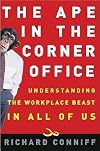
We like to think of ourselves as “evolved”. We might be willing to grant that we are animals — after all, we have arms, legs — actually we have all the same organs, limbs, etc. as apes (make that “other apes”). But we really do want to insist we are somehow just a completely different kind of thing. After all, we are rational, we have culture, we watch tv, . . .
Books like this remind us that we really are animals, that our thoroughly rational self-image is a thin veneer over our show more animal selves. So much of our behavior mirrors the behaviors not only of apes but other more distant relatives, despite anything we may think about ourselves. We vie for the corner office just like apes vie with their fellow apes for grooming partners, sexual partners, the best food, the best nest location, . . . . We think our organizational structures, our decision processes, our workplace designs are all in the interests of business and efficiency. Maybe they are, but they are also those same bits of competition and hierarchy that we see in our cousins.
Conniff even cites the suggestion that language itself — one of the things we think strongly sets us apart — evolved as a substitute for grooming. Set aside for the moment pictures of language as statements of facts and think instead of ritualistic exchanges of “How are you?”, day to day gossip, “exchanges of pleasantries”. It’s easy then to see much of our linguistic behavior as establishing and maintaining communal and personal relationships, just as apes do in grooming.
There are other books on the topic, and Conniff cites a number of them, notably Frans de Waal’s classic Chimpanzee Politics. Conniff himself is not a scientist like de Waal, but he’s a rare cross of scientific, management, and journalistic experience. De Waal studies chimps, and for the most part he leaves the comparisons to us to make. Conniff speaks straightforwardly of human, mostly office behavior.
Conniff has put in his time in business and office environments. He starts there and works back from our behavior there to find our similarities and shared roots with other animals. In doing so, he’s not only bringing us closer to our animal relatives, but he’s also, again like de Waal, bringing them closer to us — he dispels the myths of the constantly bloodthirsty, violent animal and puts in its place a much more complex picture, containing compassion, cooperation, coordination, and, above all, community-building.
Much of the book, especially the first half, addresses hierarchy. Expressions of hierarchical relationships needn’t be large and explicit. They can be facial expressions, postures, positionings in a room — all of these things we can, if we take the time, observe in ourselves just as we can in apes. Hierarchy after all is what gives so much structure to community. Hierarchy gives us not only competition but stability — when we behave appropriately to our places, expressing dominance or submission, or just peer standing, we make it possible to carry on without friction.
In addition to hierarchy (subordination and dominance), Conniff discusses atlruism, intimidation, imitation, and deception, all in the context of commonalities with our animal relatives.
In reading the book, I found myself wanting not to engage in some of the behaviors Conniff describes, not to be driven by these biologically-rooted drives. But actually I think the healthier attitude is to embrace them, enjoying that biologically-driven part of us. After all, that’s what got us where we are today (both for the good and the bad). Sometimes hierarchy in particular is offensive or extreme, and it needs to be resisted. But try to do without it altogether. We’ll never not be animals. show less
Books like this remind us that we really are animals, that our thoroughly rational self-image is a thin veneer over our show more animal selves. So much of our behavior mirrors the behaviors not only of apes but other more distant relatives, despite anything we may think about ourselves. We vie for the corner office just like apes vie with their fellow apes for grooming partners, sexual partners, the best food, the best nest location, . . . . We think our organizational structures, our decision processes, our workplace designs are all in the interests of business and efficiency. Maybe they are, but they are also those same bits of competition and hierarchy that we see in our cousins.
Conniff even cites the suggestion that language itself — one of the things we think strongly sets us apart — evolved as a substitute for grooming. Set aside for the moment pictures of language as statements of facts and think instead of ritualistic exchanges of “How are you?”, day to day gossip, “exchanges of pleasantries”. It’s easy then to see much of our linguistic behavior as establishing and maintaining communal and personal relationships, just as apes do in grooming.
There are other books on the topic, and Conniff cites a number of them, notably Frans de Waal’s classic Chimpanzee Politics. Conniff himself is not a scientist like de Waal, but he’s a rare cross of scientific, management, and journalistic experience. De Waal studies chimps, and for the most part he leaves the comparisons to us to make. Conniff speaks straightforwardly of human, mostly office behavior.
Conniff has put in his time in business and office environments. He starts there and works back from our behavior there to find our similarities and shared roots with other animals. In doing so, he’s not only bringing us closer to our animal relatives, but he’s also, again like de Waal, bringing them closer to us — he dispels the myths of the constantly bloodthirsty, violent animal and puts in its place a much more complex picture, containing compassion, cooperation, coordination, and, above all, community-building.
Much of the book, especially the first half, addresses hierarchy. Expressions of hierarchical relationships needn’t be large and explicit. They can be facial expressions, postures, positionings in a room — all of these things we can, if we take the time, observe in ourselves just as we can in apes. Hierarchy after all is what gives so much structure to community. Hierarchy gives us not only competition but stability — when we behave appropriately to our places, expressing dominance or submission, or just peer standing, we make it possible to carry on without friction.
In addition to hierarchy (subordination and dominance), Conniff discusses atlruism, intimidation, imitation, and deception, all in the context of commonalities with our animal relatives.
In reading the book, I found myself wanting not to engage in some of the behaviors Conniff describes, not to be driven by these biologically-rooted drives. But actually I think the healthier attitude is to embrace them, enjoying that biologically-driven part of us. After all, that’s what got us where we are today (both for the good and the bad). Sometimes hierarchy in particular is offensive or extreme, and it needs to be resisted. But try to do without it altogether. We’ll never not be animals. show less
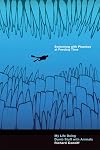
Richard Conniff reminds us in a firsthand way that we live in a much broader animal ecology than we think we do. We are seriously outnumbered, and in some cases, out-strategized, especially by insects — ants, bees, mosquitos, you name it. With ants in particular, it seems like we are living in their world, not vice versa.
The book is a collection of essays. It is oriented mainly around the theme of the broader ecology we are part of but rarely pay sufficient attention to. It’s not about show more scientific understanding so much as just understanding at a layman’s level what’s going on in the worlds and minds of the animals that live around and among us.
Some animals’ reputations are overblown. Piranhas turn out not to be the voracious leg-nibblers we thought they were. Cheetahs can be, and sometimes are, domesticated. Spiders are certainly great web-spinners, but their kill rate isn’t very good.
On the other hand, hummingbirds may look delicate and fairy-like, but, as Conniff says, they may be among the meanest of warm-blooded animals on earth — “fighter pilots in small bodies”.
Conniff is very easy on the brain. He’s easy to read, he’s engaging, he’s self-effacing, . . . He seems like a guy you’d love to know. And, unlike some of the animal whisperers we see on television, he’s not all about himself. Many of the stars in this book are like Justin Schmidt, who has turned his experiences being stung by venomous insects into an authoritative “Justin Schmidt Pain Index, a connoisseur’s guide to just how bad the ouch is on a scale of one (‘a tiny spark’) to four (‘absolutely debilitating’)."
This is an entertaining book — the kind you learn from, but you learn painlessly. That said, it isn’t “thorough”, in the sense of going deep into the science of the animals and behaviors he discusses. It sticks to the easier roads.
Having read this book, I’m anxious to read Conniff’s “The Ape in the Corner Office” to get his word on us humans. show less
The book is a collection of essays. It is oriented mainly around the theme of the broader ecology we are part of but rarely pay sufficient attention to. It’s not about show more scientific understanding so much as just understanding at a layman’s level what’s going on in the worlds and minds of the animals that live around and among us.
Some animals’ reputations are overblown. Piranhas turn out not to be the voracious leg-nibblers we thought they were. Cheetahs can be, and sometimes are, domesticated. Spiders are certainly great web-spinners, but their kill rate isn’t very good.
On the other hand, hummingbirds may look delicate and fairy-like, but, as Conniff says, they may be among the meanest of warm-blooded animals on earth — “fighter pilots in small bodies”.
Conniff is very easy on the brain. He’s easy to read, he’s engaging, he’s self-effacing, . . . He seems like a guy you’d love to know. And, unlike some of the animal whisperers we see on television, he’s not all about himself. Many of the stars in this book are like Justin Schmidt, who has turned his experiences being stung by venomous insects into an authoritative “Justin Schmidt Pain Index, a connoisseur’s guide to just how bad the ouch is on a scale of one (‘a tiny spark’) to four (‘absolutely debilitating’)."
This is an entertaining book — the kind you learn from, but you learn painlessly. That said, it isn’t “thorough”, in the sense of going deep into the science of the animals and behaviors he discusses. It sticks to the easier roads.
Having read this book, I’m anxious to read Conniff’s “The Ape in the Corner Office” to get his word on us humans. show less
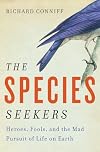
Summary: "It is the subtext to those endless drawers of carefully arranged specimens in museums around the world: Someone had collected each specimen; killed it; skinned it; stuffed it, set it, or put it in preservative; pencil-scratched a label for it; carried it cross-country; shipped it home; studied it; and classified it - and then repeated this ritual over and over, countless millions of times. For each specimen, someone had gone hungry and sleepless. Someone alone in a remote and show more hostile territory had wept. Someone had perhaps drowned, been murdered, suffered malaria, yellow fever, dysentery, or typhus. Someone had certainly cursed and complained, though not so much as we might expect. Someone had said, "Hunh!" And someone had rejoiced." - p. 334.
As suggested by the the quote above, The Species Seekers is the story of the great explosion in natural history, science, worldwide exploration, and species discovery that started in the 1700s with Linneaus and continues to this day. The focus is not so much on the science as on the people involved, those who travelled to the ends of the earth to bring home crates of pinned specimens, and those at home who pored over these treasures in an attempt to bring a sense of order to the vast spans of biodiversity with which the world presented them.
Review: I was expecting to really enjoy this book, just based on its topic, and Conniff didn't disappoint. I've had a growing interest in the history of science, particularly as it relates to exploration, for a while now, and The Species Seekers did a really excellent job of putting a lot of the bits and pieces that I've acquired from other books into a broader context. This book's got the perfect balance of breadth and depth; Conniff brings a number of key figures in natural history to life through chapter-long mini-biographies, but is also always careful to keep each person's story in its relevant social and scientific setting. I also found the timeline very easy to keep straight; I often have trouble when history books jump backwards and forwards through time, but in this case Conniff keeps things mostly linear, and is very good at providing callbacks to previous chapters when necessary.
The writing is also a nice blend, using plenty of historical sources while remaining lively and engaging. It's also full of great anecdotes, and I wound up learning more than I was expecting to. I was familiar with Linneas and Cuvier and Darwin and Wallace, of course, but there were a lot of other names that I'd heard in passing but didn't know the story behind - Bates, of Batesian mimicry, for one - and plenty more cases where the people and stories Conniff included were new to me. There were also a lot of fun trivia facts. For example, even though chimps and gorillas are the most familiar non-human apes today, for a long time, all apes were referred to as "orangs," because the Dutch East India Company meant that Malaysia and Borneo were explored long before Africa was. I also liked the idea that the budding study of human parasitology helped ease the acceptance of evolutionary theory, since people were uncomfortable with the idea that God purposefully created things like liver flukes and roundworms to torment them. And, my favorite: based on the tooth shape (which is all early scientists had to go on), mammoths were originally assumed to be carnivorous, and Thomas Jefferson wrote lengthy descriptions of rampaging mammoths wreaking havoc on an unsuspecting herd of bison and doing battle with twelve-foot-tall lions (based on the claw of what would turn out to be a giant ground sloth).
I did have a few points where I wasn't quite as satisfied as I could have been, however. Primarily, I thought that more time could have been spent discussing the conservation implications of the vast number of specimens that were collected (read: killed) in the name of natural history. Conniff mentions this, of course, but fairly briefly, and I think it's a serious enough issue to merit more space. He also focuses mostly on collectors of living species, rather than fossils (although Mary Anning does get a mention), which I thought was a shame... but that's probably another separate book on its own. For all of the topics that Conniff does cover, however, he covers them in a way that is engaging and totally fascinating. 4 out of 5 stars.
Recommendation: This would be great for history of science or natural history buffs, obviously, but I think it'd also be of interest for people interested in the history of exploration more generally. show less
As suggested by the the quote above, The Species Seekers is the story of the great explosion in natural history, science, worldwide exploration, and species discovery that started in the 1700s with Linneaus and continues to this day. The focus is not so much on the science as on the people involved, those who travelled to the ends of the earth to bring home crates of pinned specimens, and those at home who pored over these treasures in an attempt to bring a sense of order to the vast spans of biodiversity with which the world presented them.
Review: I was expecting to really enjoy this book, just based on its topic, and Conniff didn't disappoint. I've had a growing interest in the history of science, particularly as it relates to exploration, for a while now, and The Species Seekers did a really excellent job of putting a lot of the bits and pieces that I've acquired from other books into a broader context. This book's got the perfect balance of breadth and depth; Conniff brings a number of key figures in natural history to life through chapter-long mini-biographies, but is also always careful to keep each person's story in its relevant social and scientific setting. I also found the timeline very easy to keep straight; I often have trouble when history books jump backwards and forwards through time, but in this case Conniff keeps things mostly linear, and is very good at providing callbacks to previous chapters when necessary.
The writing is also a nice blend, using plenty of historical sources while remaining lively and engaging. It's also full of great anecdotes, and I wound up learning more than I was expecting to. I was familiar with Linneas and Cuvier and Darwin and Wallace, of course, but there were a lot of other names that I'd heard in passing but didn't know the story behind - Bates, of Batesian mimicry, for one - and plenty more cases where the people and stories Conniff included were new to me. There were also a lot of fun trivia facts. For example, even though chimps and gorillas are the most familiar non-human apes today, for a long time, all apes were referred to as "orangs," because the Dutch East India Company meant that Malaysia and Borneo were explored long before Africa was. I also liked the idea that the budding study of human parasitology helped ease the acceptance of evolutionary theory, since people were uncomfortable with the idea that God purposefully created things like liver flukes and roundworms to torment them. And, my favorite: based on the tooth shape (which is all early scientists had to go on), mammoths were originally assumed to be carnivorous, and Thomas Jefferson wrote lengthy descriptions of rampaging mammoths wreaking havoc on an unsuspecting herd of bison and doing battle with twelve-foot-tall lions (based on the claw of what would turn out to be a giant ground sloth).
I did have a few points where I wasn't quite as satisfied as I could have been, however. Primarily, I thought that more time could have been spent discussing the conservation implications of the vast number of specimens that were collected (read: killed) in the name of natural history. Conniff mentions this, of course, but fairly briefly, and I think it's a serious enough issue to merit more space. He also focuses mostly on collectors of living species, rather than fossils (although Mary Anning does get a mention), which I thought was a shame... but that's probably another separate book on its own. For all of the topics that Conniff does cover, however, he covers them in a way that is engaging and totally fascinating. 4 out of 5 stars.
Recommendation: This would be great for history of science or natural history buffs, obviously, but I think it'd also be of interest for people interested in the history of exploration more generally. show less
Lists
Awards


You May Also Like


Associated Authors
Statistics
- Works
- 14
- Also by
- 2
- Members
- 958
- Popularity
- #26,894
- Rating
- 3.9
- Reviews
- 23
- ISBNs
- 59
- Languages
- 9