
Tim Marshall (2) (1959–)
Author of Prisoners of Geography: Ten Maps That Tell You Everything You Need to Know About Global Politics
For other authors named Tim Marshall, see the disambiguation page.
About the Author
Tim Marshall is a former foreign correspondent for Britain's Sky News television. He has reported from thirty countries, including six war zones. After twenty-five years of frontline journalism, he now edits the website TheWhatAndTheWhy.com and lives in London.
Image credit: Tim Marshall (a British journalist and author) at Bellerby & Co, Globemakers in front of The Churchill Globe. By Ollie Dewis - Own work by the original uploader, CC BY 2.0, https://commons.wikimedia.org/w/index.php?curid=63895903
Series
Works by Tim Marshall
Prisoners of Geography: Ten Maps That Tell You Everything You Need to Know About Global Politics (2016) 4,127 copies, 101 reviews
The Future of Geography: How Power and Politics In Space Will Change Our World (2023) 281 copies, 2 reviews
Shadowplay: Behind the Lines and Under Fire: The Inside Story of Europe's Last War (2002) 140 copies, 3 reviews
"Dirty Northern B*st*rds!" And Other Tales From The Terraces: The Story of Britain's Football Chants (2014) 17 copies, 1 review
Tagged
Common Knowledge
- Canonical name
- Marshall, Tim
- Legal name
- Marshall, Timothy John
- Birthdate
- 1959-05-01
- Gender
- male
- Education
- Prince Henry's Grammar School, Otley, Yorkshire, England, UK
- Occupations
- journalist
blogger
broadcaster - Organizations
- thewhatandthewhy.com
Sky News
British Broadcasting Corporation
LBC - Nationality
- UK
- Birthplace
- Leeds, Yorkshire, England, UK
- Places of residence
- Leeds, West Yorkshire, England, UK
Brussels, Belgium
Jerusalem, Israel
London, Middlesex, England, UK - Map Location
- England, UK
Members
Reviews
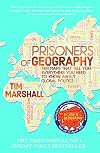
My copy of this book is 5+ years out of date (updated to 2019), but it still made for an informative and enlightening read.
Covering major geographies such as Russia, Europe, Africa, India, Pakistan, China, South America, USA and the Arctic, Marshall explains why the natural geographies of different countries have so heavily influenced politics in different countries, from hundreds of years ago to present day. In this modern age of global connection through air travel, it's easy to dismiss show more how much geographical features still continue to largely determine the economic future of many large countries, as well as heavily influencing military strategy. The interior topography of Brazil, for example, one third of the country being rainforest, has long hampered its agricultural growth, with poor soil in cut-down areas of rainforest only sustaining agricultural use for very short periods. In other countries, such as Russia, the geographical concerns are more around containment (or recapturing) areas key for military defence. Africa, historically suffering from both domestic and foreign exploitation through corruption, civil war and colonialism, continues to experience both scrambling within for economic and political dominance, as well as foreign 'meddling' from the likes of China, which has invested billions into African infrastructure in return for access to its precious resources.
Given the precarious position of current relations between many of the world's superpowers, this book gave me a clear and easy to understand background to the strategy behind many of the political moves being made. Given Trump's current moves towards Greenland, Marshall may have to consider rewriting this section about the Arctic in his next update to this book:
However, there are differences between this situation and the 'Scramble for Africa' in the nineteenth century or the machinations of the great powers in the Middle East, India and Afghanistan in the original Great Game. This race has rules, a formula and a forum for decision-making. The Arctic Council is composed of mature countries, most of them democratic to a lesser or larger degree.
4 stars - whilst it made for dense and not particularly relaxing reading after a long day at work, this was a very worthwhile read and I feel much more informed (and terrified) about the drivers behind modern global politics. show less
Covering major geographies such as Russia, Europe, Africa, India, Pakistan, China, South America, USA and the Arctic, Marshall explains why the natural geographies of different countries have so heavily influenced politics in different countries, from hundreds of years ago to present day. In this modern age of global connection through air travel, it's easy to dismiss show more how much geographical features still continue to largely determine the economic future of many large countries, as well as heavily influencing military strategy. The interior topography of Brazil, for example, one third of the country being rainforest, has long hampered its agricultural growth, with poor soil in cut-down areas of rainforest only sustaining agricultural use for very short periods. In other countries, such as Russia, the geographical concerns are more around containment (or recapturing) areas key for military defence. Africa, historically suffering from both domestic and foreign exploitation through corruption, civil war and colonialism, continues to experience both scrambling within for economic and political dominance, as well as foreign 'meddling' from the likes of China, which has invested billions into African infrastructure in return for access to its precious resources.
Given the precarious position of current relations between many of the world's superpowers, this book gave me a clear and easy to understand background to the strategy behind many of the political moves being made. Given Trump's current moves towards Greenland, Marshall may have to consider rewriting this section about the Arctic in his next update to this book:
However, there are differences between this situation and the 'Scramble for Africa' in the nineteenth century or the machinations of the great powers in the Middle East, India and Afghanistan in the original Great Game. This race has rules, a formula and a forum for decision-making. The Arctic Council is composed of mature countries, most of them democratic to a lesser or larger degree.
4 stars - whilst it made for dense and not particularly relaxing reading after a long day at work, this was a very worthwhile read and I feel much more informed (and terrified) about the drivers behind modern global politics. show less
Reading Tim Marshall’s The Power of Geography while the Russians are invading Ukraine has been an interesting experience.
The sequel to The Prisoners of Geography (which I admit I haven’t read) this book explores the geopolitics of eight countries, a region, and outer space. It’s broken into 10 chapters, each focused on one country or region. In each chapter there’s a summary of the history and an overview of the geography of the area. With those two out of the way Marshall then show more explores and assesses the potential geopolitical ambitions of the countries, keeping their history and geography in mind.
In the first few lines of the Introduction Marshall lays out his world view and defines the premise that underlies his geopolitical analyses. He asserts that the world order that defined the Cold War is but a distant memory, and we are headed back to a Great Powers rivalry, with the “minor players” jockeying for their place.
So, in that context we dive into some really well written, very readable discussions. I really enjoyed the way Marshall used history and geography to outline what are and aren’t options for each country / region he discussed. This includes discussions of the ethnic and religious history of each country, which can shed light on current circumstances and future possibilities.
Spain for example is a mountainous country. Its mountains have divided it into regions whose peoples each have their own dialects or languages. It is a “nation state comprised of nations”. Within Spain the Basque and Catalan regions still have separatist ideas that, if they went too far, could complicate the policies and politics of Spain and the European Union.
Marshall is a retired foreign affairs correspondent for Sky News, and he seems quite expert in these discussions. But also because of that background he seems to be writing mainly for a UK / European audience. The nations he chose to cover are all in or near Europe, with the exception of Australia, which of course has historically close ties to the UK.
The one multinational region he covers, the Sahel of Africa in chapter 7, has the potential of sending refugees flooding into Europe should climate change and religious and ethnic tensions get out of hand. A European target audience might not be as interested in learning about countries not covered, like Japan, Brazil or Thailand, for example, which also have interesting geographies and histories.
I want to return to the Introduction for a minute and Marshall’s assertion of a return to an era of “great powers” and “multiple powers” rivalry. It’s a fairly common assessment of our world since the end of the Cold War in 1991. But any geopolitical assumptions we all may have had for the direction of the arc of history are being tested right now by Putin in Ukraine. Cold War geopolitics may prove to be more appropriate today and in the foreseeable future than could have been anticipated a year ago when this book came out. Even so, there are points in the book that seemed particularly relevant to the events of the last couple of weeks.
The bottom line from me is that this is a well written and very readable discussion of history, geography and geopolitics (which leans toward a European perspective). It's packed with interesting facts and you are sure to learn quite a bit from it. For fans of history and/or geopolitics it's well worth the read. Four Stars ⭐⭐⭐⭐ show less
The sequel to The Prisoners of Geography (which I admit I haven’t read) this book explores the geopolitics of eight countries, a region, and outer space. It’s broken into 10 chapters, each focused on one country or region. In each chapter there’s a summary of the history and an overview of the geography of the area. With those two out of the way Marshall then show more explores and assesses the potential geopolitical ambitions of the countries, keeping their history and geography in mind.
In the first few lines of the Introduction Marshall lays out his world view and defines the premise that underlies his geopolitical analyses. He asserts that the world order that defined the Cold War is but a distant memory, and we are headed back to a Great Powers rivalry, with the “minor players” jockeying for their place.
So, in that context we dive into some really well written, very readable discussions. I really enjoyed the way Marshall used history and geography to outline what are and aren’t options for each country / region he discussed. This includes discussions of the ethnic and religious history of each country, which can shed light on current circumstances and future possibilities.
Spain for example is a mountainous country. Its mountains have divided it into regions whose peoples each have their own dialects or languages. It is a “nation state comprised of nations”. Within Spain the Basque and Catalan regions still have separatist ideas that, if they went too far, could complicate the policies and politics of Spain and the European Union.
Marshall is a retired foreign affairs correspondent for Sky News, and he seems quite expert in these discussions. But also because of that background he seems to be writing mainly for a UK / European audience. The nations he chose to cover are all in or near Europe, with the exception of Australia, which of course has historically close ties to the UK.
The one multinational region he covers, the Sahel of Africa in chapter 7, has the potential of sending refugees flooding into Europe should climate change and religious and ethnic tensions get out of hand. A European target audience might not be as interested in learning about countries not covered, like Japan, Brazil or Thailand, for example, which also have interesting geographies and histories.
I want to return to the Introduction for a minute and Marshall’s assertion of a return to an era of “great powers” and “multiple powers” rivalry. It’s a fairly common assessment of our world since the end of the Cold War in 1991. But any geopolitical assumptions we all may have had for the direction of the arc of history are being tested right now by Putin in Ukraine. Cold War geopolitics may prove to be more appropriate today and in the foreseeable future than could have been anticipated a year ago when this book came out. Even so, there are points in the book that seemed particularly relevant to the events of the last couple of weeks.
The bottom line from me is that this is a well written and very readable discussion of history, geography and geopolitics (which leans toward a European perspective). It's packed with interesting facts and you are sure to learn quite a bit from it. For fans of history and/or geopolitics it's well worth the read. Four Stars ⭐⭐⭐⭐ show less
Prisoners of Geography: Ten Maps That Tell You Everything You Need To Know About Global Politics by Tim Marshall
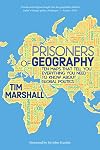
Tim Marshal is fucking great - I will read anything he publishes no matter what. This is the first book of his I read, after hearing him summarize it on an LSE podcast. I have bought and mailed copies to people - its explanations on how navigable water ways effect the development of cultures blew my mind. Its so interesting, his ability to remove the chaff and what you are left with is somehow some perfect proportion of mechanical detail married with being relevant and hilarious. I wish Tim show more Marshal was my dad. Is that too strong? Maybe went too strong with that. But its a great book. show less
The Power of Geography: Ten Maps That Reveal the Future of Our World (Politics of Place Book 4) by Tim Marshall
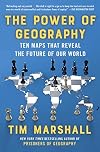
Marshall has written a series of these books. I found this one quite entertaining. His selection of countries was quite interesting. As a journalist he goes into a very readable history about the origins of each of the country's selected and then a chapter on space, perhaps in a reference to Star Wars going back to Reagan from the Cold War or pure science fiction as the next resource for empires to fight over. It is clear that not only will mineral and natural resources be important show more determinants of conflict and war in the 21st century but so too will be population, water, seas and rivers and obviously geography and language and culture and ethnic divisions. The choice of Ethiopia was quite interesting as was Greece and Turkey but it would appear that the area around the Meditteranean and the Middle East will again become a conflict zone and an area for resource conflict in this century. show less
Lists
World (1)
Emily's Reviews (1)
Titoli bestiali (1)
Evan's Wish List (1)
Walls (1)
Asia (1)
Science: Earth (1)
Awards


Prisoners of Geography: Ten Maps That Tell You Everything You Need to Know About Global Politics (Thematic Reading Lists – Geopolitical Trends and the Future – 2021)
The Power of Geography: Ten Maps that Reveal the Future of Our World (Thematic Reading Lists – General Geopolitics and Warfare – 2023)
The Power of Geography: Ten Maps that Reveal the Future of Our World (Thematic Reading Lists – General Geopolitics and Warfare – 2022)
The Future of Geography: How Power and Politics In Space Will Change Our World (Team Favorites – John Fee – Northern Europe Security Analyst – 2024)
Worth Dying For: The Power and Politics of Flags (Thematic Reading Lists – General Geopolitics and Warfare – 2024)
Worth Dying For: The Power and Politics of Flags (Thematic Reading Lists – General Geopolitics and Warfare – 2023)
Worth Dying For: The Power and Politics of Flags (Thematic Reading Lists – General Geopolitics and Warfare – 2022)
Divided: Why We're Living in an Age of Walls (Team Favorites – Archie Hicox – Levant Conflict Analyst – 2019)
Divided: Why We're Living in an Age of Walls (Thematic Reading Lists – General Geopolitics and Warfare – 2023)

You May Also Like


Associated Authors
Statistics
- Works
- 14
- Members
- 6,414
- Popularity
- #3,837
- Rating
- 3.9
- Reviews
- 134
- ISBNs
- 194
- Languages
- 21
- Favorited
- 1