
Taras Shevchenko (1814–1861)
Author of Kobzar
About the Author
Sevcenko is the outstanding Ukrainian romantic poet, creator of the Ukrainian literary language and symbol of the national movement. He was born a serf and educated in St. Petersburg to serve as a portraitist and artist. His freedom was purchased in 1838 by several of his admirers. Sevcenko's first show more eight poems were collected in The Bandura Player. The publication of this collection in 1840 was a literary sensation. This collection was followed in the next three years by The Haidamaks and a series of poems based strongly on folk-song rhythms. The writings composed after his return to the Ukraine in 1843 included strong invectives against serfdom and the baneful role that Russians played in Ukrainian history. For a decade after 1847 Sevcenko was exiled to Central Asia for his participation in the Sts. Cyril and Methodius Society. This clandestine organization advocated the union of all Slavs on the basis of independence and equality. During his exile he wrote several lyrics and novelettes. The poems of the last four years of his life, including Neofity and Mariya, are built on strongly religious themes. (Bowker Author Biography) show less
Image credit: 1858 (or 1859)
Works by Taras Shevchenko
Kobzar'. Stikhotvoreniia i poemy. 3 copies
Poetry 3 copies
Дневник 2 copies
Сова. Дівичії ночі. Сон 1 copy
Тополя 1 copy
Зоре моя вечірняя : Вірші 1 copy
Том 3: Повести 1 copy
Том 4: Повести 1 copy
Поеми : для ст. шк. віку 1 copy
シェフチェンコ詩集 1 copy
コブザール シェフチェンコ詩集 1 copy
マリア 1 copy
Вибране 1 copy
Кобзар. (Ukrainian Edition) 1 copy
Малий кобзар 1 copy
Художник 1 copy
Щоденник 1 copy
Избранное 1 copy
Більша книжка : Автографи поезій Шевченка 1847-1860 рр. [Bilʹsha knyz︠h︡ka : avtohrafy poeziĭ Shevchenka 1847-1860 rr.] (1989) 1 copy
Taras Shevchenko 1 copy
Варнак 1 copy
Malyĭ kobzar 1 copy
Poems, Poésies, Gedichte 1 copy
Virshi (Druhe vydannia) 1 copy
Усi твори в одному томi 1 copy
Balady 1 copy
Stikhotvoreniia. 1 copy
Три літа 1 copy
Мені тринадцятий минало 1 copy
Твори в п'яти томах 1 copy
Поезії 1 copy
Музыкант 1 copy
Три Літа. Three Summers 1 copy
Obras Escogidas 1 copy
Tvory : U 5-ti t 1 copy
Мала Книжка 1 copy
Tarasz Sevcsenko versei 1 copy
Associated Works
Anthology of Modern Slavonic Literature in Prose and Verse: Translated by P. Selver; With an Introduction and Literary Notes (1919) (2009) — Contributor — 2 copies
MHQ: The Quarterly Journal of Military History — Summer 2022 (2022) — Author "Poetry: Still Inspiring Freedom" — 1 copy
Tagged
Common Knowledge
- Canonical name
- Shevchenko, Taras
- Other names
- Shevchenko, Taras Grigoryevich
Тарáс Григóрович Шевчéнко - Birthdate
- 1814-03-09
- Date of death
- 1861-03-10
- Gender
- male
- Education
- St. Petersburg Academy of Art
- Occupations
- poet
artist
serf - Nationality
- Ukraine
- Birthplace
- Moryntsi, Ukraine
- Place of death
- St. Petersburg, Russia
- Map Location
- Ukraine
Members
Reviews

Testament (1845)
My wish is to die and be buried
With a view of a boundless plane -
My beloved Ukraine
With a view of the steep banks of Dnieper
Where roar of the mighty is heard
Waters carrying blood.
When you bury me, get up to fight.
Drop restraint, show no mercy, shed blood
Blood of enemies - winning us freedom
With no freedom I do not need God
In a family loving and caring,
Ukraine's family growing and free
Think of me
Заповіт
Як умру, то поховайте
Мене на show more могилі
Серед степу широкого
На Вкраїні милій,
Щоб лани широкополі,
І Дніпро, і кручі
Було видно, було чути,
Як реве ревучий.
Як понесе з України
У синєє море
Кров ворожу... отойді я
І лани і гори —
Все покину, і полину
До самого Бога
Молитися... а до того
Я не знаю Бога.
Поховайте та вставайте,
Кайдани порвіте
І вражою злою кров’ю
Волю окропіте.
І мене в сем’ї великій,
В сем’ї вольній, новій,
Не забудьте пом’янути
Незлим тихим словом.
(1845) show less
My wish is to die and be buried
With a view of a boundless plane -
My beloved Ukraine
With a view of the steep banks of Dnieper
Where roar of the mighty is heard
Waters carrying blood.
When you bury me, get up to fight.
Drop restraint, show no mercy, shed blood
Blood of enemies - winning us freedom
With no freedom I do not need God
In a family loving and caring,
Ukraine's family growing and free
Think of me
Заповіт
Як умру, то поховайте
Мене на show more могилі
Серед степу широкого
На Вкраїні милій,
Щоб лани широкополі,
І Дніпро, і кручі
Було видно, було чути,
Як реве ревучий.
Як понесе з України
У синєє море
Кров ворожу... отойді я
І лани і гори —
Все покину, і полину
До самого Бога
Молитися... а до того
Я не знаю Бога.
Поховайте та вставайте,
Кайдани порвіте
І вражою злою кров’ю
Волю окропіте.
І мене в сем’ї великій,
В сем’ї вольній, новій,
Не забудьте пом’янути
Незлим тихим словом.
(1845) show less

Унікальна книга, що містить всі твори Кобзаря, в тому числі й повісті російською мовою та "Щоденник". Цікавий дизайн, приємно читати. Прочитала багато цікавих творів Тараса Шевченка, про які й досі не чула. На жаль, проза українського поета не настільки популяризується, як show more поезія. Книга допоможе Вам пізнати прозаїка-Шевченка і зрозуміти, чому саме його називають основоположником сучасної української літературної мови. Ця книга дає можливість осягнути всю творчість Шевченка цілком і відкрити для себе світ великого українського генія-патріота. В книжці опубліковано навіть "Буквар южнорусский", який Тарас Шевченко написав з метою розвитку освіти в українських селах наприкінці свого життя. Більш повного видання творів Шевченка особисто ще не бачила. Ви згадаєте вірші з "Кобзаря", які читали ще в дитинстві, прочитаєте відомі поеми, балади, а також познайомитесь зі спадщиною Кобзаря, яка не настільки відома широкому загалу. Рекомендую книгу всім, хто цікавиться долею та літературною спадщиною Кобзаря, а також тим, хто тільки починає відкривати для себе простори його творчості. Безумовно, 5/5. show less
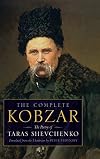
A ‘Kobzar’ was a Ukrainian bard, often blind, who sang religious songs and national epics. It’s an appropriate title for Shevchenko’s work, which he first published in 1840, because his primary concern is with the freedom of his country. This is a beautiful edition, with a striking portrait of Shevchenko by Ivan Kramskoy on the cover, and with many sketches and works of art from Shevchenko’s own hand interspersed throughout, which is great because he was also quite an artist. There show more is also excellent introductory material and footnotes throughout, which really help to explain the historical and cultural references.
I have to say that as poetry goes, the collection is just ‘so-so’ because Shevchenko’s style is not very lyrical, and his themes are too repetitive. These include young maidens taking advantage of by rich lords, usually Russians, mothers being left alone by sons drafted into the Russian army, orphans who suffer tough lives, and acts of violence and revenge, such as burning houses down with people inside. Shevchenko also expresses his own personal bitterness for being a captive in a foreign land, and his longing to once again be in Ukraine. It also reflects his bitterness for the history of Ukraine, which was taken advantage of repeatedly by Russia and Poland. Sometimes in its history there are heroes and courageous men who fight to the death for independence, and at other times there are cowards or incompetents who caused irreparable harm. It gets to be too much of the same thing, and this is made worse by having the Complete Kobzar represented, that is, all of his writings from 1837 to 1861 (the last one just a month before he died, at age 47), including a few re-writes of previous poems. An abridged selection would have been better.
On the other hand, it was quite a history lesson, both for Ukraine and also for Shevchenko himself. This is what pulls it up for me. Some recurring themes in the history lesson: Ukraine losing its independence in 1654 when Hetman Bohdan Khmelnytsky signed the Pereyaslav Treaty with Russia. Ivan Mazepa allying with Sweden and fighting Peter the Great at Poltava in 1709, with the defeat leading to Russia’s rise to power. The Haidamaks rebellions in the mid-18th century against Polish nobility, Catholics, and Jews (which unfortunately leads to some anti-semitic comments from Shevchenko that, while not uncommon at all for 19th century literature, are hard to excuse). The brutal torture and execution of Ivan Gonta, one of the leaders of the 1768 uprising, following his being captured by Russian forces and being turned over to the Poles.
The list of grievances before and after Shevchenko’s life go on and on: Peter the Great forcing Ukrainian Kozaks to work on the construction of St. Petersburg under abysmal conditions, resulting in hundreds of thousands of deaths. Being drafted into the Russian Army, which meant a lifetime in the 18th century, and which was “reduced” to 25 years in 1793, and then to 12 years in 1855. Russians considering Ukrainian a dead language and trying to abolish it. Catherine the Great instituting sefdom by decree in 1783. Imprisonment of political prisoners (and Shevchenko) in the Petropavlovsky Fortress in St. Petersburg. And years later, the last of the Kobzars being summoned to a congress under Stalin and being shot, thus destroying Ukraine’s oral tradition.
Shevchenko’s own story is also striking. He was born in 1814 into a family of serfs, witnessing firsthand and experiencing misery as another person’s property. He left Ukraine with his owner in 1829 at age 15 (ponder the first part of that sentence), and was only freed when a group of intellectuals who recognized his talent befriended him and paid for him in 1838. He was not able to return to Ukraine until 1843, visiting his relatives, all of whom remained serfs. He had the audacity to participate in the Cyril and Methodius Brotherhood, which believed in public education, the abolition of serfdom, and the right of every Slavic nation to develop its own language and culture, which of course was deemed subversive by the czarist regime. His anti-Russian sentiment boiled over in his searing poem “Dream (A Comedy)” in 1844, which is one of my favorites. His personal criticism of Czar Nicolas I (the same repressive dude who cracked down on the Decembrists, censored Pushkin and Lermontov, and sent Dostoevsky to Siberia) and the Czarina Alexandra Feodorovna led to a decade-long exile from 1847 to 1857, a period in which he was also forbidden to write or draw. Clearly he was able to sneak by this at times, since the collection here includes poems in this interval, but the result was to significantly reduce his artistic output, which is a real shame. He was pardoned in 1857 and allowed to return to Ukraine in 1859, but was arrested shortly thereafter and forced back to St. Petersburg, where he would die a mere seven days before the emancipation of the serfs was announced. It’s such a sad life, one that moves you before you even crack open the book to read his words.
Bottom line, Shevchenko is considered Ukraine’s national poet for good reason, and what comes through here is his raw love for Ukraine, and his passion for freedom. It’s no wonder he’s on countless statues in Ukraine, as well as being on the 100 hryvnia banknote, which I just loved to see during my short travels there. Given the events of Ukraine, you can’t help but feel empathy for those trying to keep their country out of Putin’s hands while reading these poems from the 19th century. It’s timely for that reason, and timeless. The struggle goes on. Ще не вмерла Україна, И слава, и воля! show less
I have to say that as poetry goes, the collection is just ‘so-so’ because Shevchenko’s style is not very lyrical, and his themes are too repetitive. These include young maidens taking advantage of by rich lords, usually Russians, mothers being left alone by sons drafted into the Russian army, orphans who suffer tough lives, and acts of violence and revenge, such as burning houses down with people inside. Shevchenko also expresses his own personal bitterness for being a captive in a foreign land, and his longing to once again be in Ukraine. It also reflects his bitterness for the history of Ukraine, which was taken advantage of repeatedly by Russia and Poland. Sometimes in its history there are heroes and courageous men who fight to the death for independence, and at other times there are cowards or incompetents who caused irreparable harm. It gets to be too much of the same thing, and this is made worse by having the Complete Kobzar represented, that is, all of his writings from 1837 to 1861 (the last one just a month before he died, at age 47), including a few re-writes of previous poems. An abridged selection would have been better.
On the other hand, it was quite a history lesson, both for Ukraine and also for Shevchenko himself. This is what pulls it up for me. Some recurring themes in the history lesson: Ukraine losing its independence in 1654 when Hetman Bohdan Khmelnytsky signed the Pereyaslav Treaty with Russia. Ivan Mazepa allying with Sweden and fighting Peter the Great at Poltava in 1709, with the defeat leading to Russia’s rise to power. The Haidamaks rebellions in the mid-18th century against Polish nobility, Catholics, and Jews (which unfortunately leads to some anti-semitic comments from Shevchenko that, while not uncommon at all for 19th century literature, are hard to excuse). The brutal torture and execution of Ivan Gonta, one of the leaders of the 1768 uprising, following his being captured by Russian forces and being turned over to the Poles.
The list of grievances before and after Shevchenko’s life go on and on: Peter the Great forcing Ukrainian Kozaks to work on the construction of St. Petersburg under abysmal conditions, resulting in hundreds of thousands of deaths. Being drafted into the Russian Army, which meant a lifetime in the 18th century, and which was “reduced” to 25 years in 1793, and then to 12 years in 1855. Russians considering Ukrainian a dead language and trying to abolish it. Catherine the Great instituting sefdom by decree in 1783. Imprisonment of political prisoners (and Shevchenko) in the Petropavlovsky Fortress in St. Petersburg. And years later, the last of the Kobzars being summoned to a congress under Stalin and being shot, thus destroying Ukraine’s oral tradition.
Shevchenko’s own story is also striking. He was born in 1814 into a family of serfs, witnessing firsthand and experiencing misery as another person’s property. He left Ukraine with his owner in 1829 at age 15 (ponder the first part of that sentence), and was only freed when a group of intellectuals who recognized his talent befriended him and paid for him in 1838. He was not able to return to Ukraine until 1843, visiting his relatives, all of whom remained serfs. He had the audacity to participate in the Cyril and Methodius Brotherhood, which believed in public education, the abolition of serfdom, and the right of every Slavic nation to develop its own language and culture, which of course was deemed subversive by the czarist regime. His anti-Russian sentiment boiled over in his searing poem “Dream (A Comedy)” in 1844, which is one of my favorites. His personal criticism of Czar Nicolas I (the same repressive dude who cracked down on the Decembrists, censored Pushkin and Lermontov, and sent Dostoevsky to Siberia) and the Czarina Alexandra Feodorovna led to a decade-long exile from 1847 to 1857, a period in which he was also forbidden to write or draw. Clearly he was able to sneak by this at times, since the collection here includes poems in this interval, but the result was to significantly reduce his artistic output, which is a real shame. He was pardoned in 1857 and allowed to return to Ukraine in 1859, but was arrested shortly thereafter and forced back to St. Petersburg, where he would die a mere seven days before the emancipation of the serfs was announced. It’s such a sad life, one that moves you before you even crack open the book to read his words.
Bottom line, Shevchenko is considered Ukraine’s national poet for good reason, and what comes through here is his raw love for Ukraine, and his passion for freedom. It’s no wonder he’s on countless statues in Ukraine, as well as being on the 100 hryvnia banknote, which I just loved to see during my short travels there. Given the events of Ukraine, you can’t help but feel empathy for those trying to keep their country out of Putin’s hands while reading these poems from the 19th century. It’s timely for that reason, and timeless. The struggle goes on. Ще не вмерла Україна, И слава, и воля! show less
Awards

You May Also Like


Associated Authors
Statistics
- Works
- 100
- Also by
- 2
- Members
- 248
- Popularity
- #92,013
- Rating
- 4.2
- Reviews
- 3
- ISBNs
- 76
- Languages
- 6
- Favorited
- 4


