
Andrey Kurkov
Author of Death and the Penguin
About the Author
Andrey Kurkov was born in St. Petersburg and now lives in Kiev. He spent time in the military as a prison warden and has also worked as a journalist and film cameraman. He is now a screenwriter and author of four novels and four childrens books.
Image credit: Andreï Kourkov lors de sa réception du Prix Medicis, le 8 novembre 2022 pour son ouvrage les abeilles grises
Series
Works by Andrey Kurkov
Samson und das Galizische Bad: Kriminalroman (Die seltsamen Fälle von Samson und Nadjeschda) (2025) 4 copies
Prawo ślimaka 2 copies
Ο φίλος του μακαρίτη 1 copy
Quelcom inexistent 2016 1 copy
O osso de prata 1 copy
Щоденна війна 1 copy
Казка про пилососика Гошу 1 copy
Sydän ei ole lihaa 1 copy
Journal de Maïdan 1 copy
L'Ami du défunt 1 copy
Les bains de Kiev 1 copy
Invasioonipäevik 1 copy
Associated Works
Tagged
Common Knowledge
- Legal name
- Kurkov, Andrey Yuryevich
- Other names
- Kurkov, Andrey
Kurkov, Andrei - Birthdate
- 1961-04-23
- Gender
- male
- Education
- Kiev Foreign Languages Institute
- Occupations
- miltary police
prison guard
novelist
screenwriter
film cameraman - Nationality
- USSR (birth)
Ukraine - Birthplace
- Budogoshch, Leningrad oblast, Russia, USSR
- Places of residence
- Leningrad, Russia, USSR
Odessa, Ukraine, USSR
Kiev, Ukraine - Map Location
- Ukraine
- Associated Place (for map)
- USSR
Members
Reviews

"Relax. You're out of it, and if you're not, you're only very indirectly in. Let's have some coffee."
Viktor is an aspiring writer. He lives alone now that his girlfriend left him, except for the penguin he brought home when the zoo closed down the exhibit and gave the animals away. When he attempts to sell one of his short stories to a newspaper, he is instead hired to write obituaries, first he is asked to look at people in the news and prepare obituaries for them, but then he's given lists show more of names and of details to include. This goes well for him, but soon there are signs that all is not well. The first is that one of the contacts he has with the paper has to leave his young daughter with Viktor, just until things calm down. It's clear that while Viktor has no idea what's going, ignorance won't keep him, or anyone around him, safe.
Set in Kyiv in the nineties, well before the Russian invasion, the world Viktor inhabits is one where the structures of society are crumbling and criminal syndicates have their hands in everything. Viktor knows how to be careful, but it's hard to protect oneself when the threat is from people unknown. I think I would have gotten far more from this book if I had a deeper knowledge of what life was like in Ukraine at that time, but this was still a wonderful and unsentimental book with sense of the absurd. Misha the penguin and young Sonya are great characters and Kurkov doesn't sentimentalize them. They both seem to embody a certain kind of stoicism that is necessary to survive in an uncertain world. show less
Viktor is an aspiring writer. He lives alone now that his girlfriend left him, except for the penguin he brought home when the zoo closed down the exhibit and gave the animals away. When he attempts to sell one of his short stories to a newspaper, he is instead hired to write obituaries, first he is asked to look at people in the news and prepare obituaries for them, but then he's given lists show more of names and of details to include. This goes well for him, but soon there are signs that all is not well. The first is that one of the contacts he has with the paper has to leave his young daughter with Viktor, just until things calm down. It's clear that while Viktor has no idea what's going, ignorance won't keep him, or anyone around him, safe.
Set in Kyiv in the nineties, well before the Russian invasion, the world Viktor inhabits is one where the structures of society are crumbling and criminal syndicates have their hands in everything. Viktor knows how to be careful, but it's hard to protect oneself when the threat is from people unknown. I think I would have gotten far more from this book if I had a deeper knowledge of what life was like in Ukraine at that time, but this was still a wonderful and unsentimental book with sense of the absurd. Misha the penguin and young Sonya are great characters and Kurkov doesn't sentimentalize them. They both seem to embody a certain kind of stoicism that is necessary to survive in an uncertain world. show less
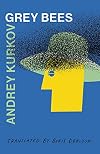
I hadn’t read anything by Kurkov before picking this up and, for no good reason, I wasn’t expecting a great deal from this book. After all, the plot revolves around a retired mine safety inspector-turned-beekeeper leaves his home in a no-man’s land in the war between Russia and Ukraine so his bees can collect their pollen in peace. Not a promising premise, I thought. Besides, the reviews I had seen compared Kurkov’s work to Bulgakov, Murakami, Kafka, Beckett, Pinter, and Vonnegut! I show more am particularly pleased to say I was wrong. Kurkov has written more than a dozen novels, beginning in 2001 and he published Grey Bees in 2018, before Russia’s most recent invasion of Ukraine in 2022. The plotline is precisely what was promised: Sergeyich leaves his home in Little Starhorodivka, a village whose inhabitants have all fled because its location in the “grey zone” places it squarely between Russian and Ukrainian troops. (Actually, they hall fled except for Sergeyich and his “frenemy” Pashka. Kurkov spends some time describing life in a war zone and then follows him as he leaves. But Sergeyich is leaving not because he is concerned for his own safety but simply to better care for his bees. Kurkov’s handling of the conflict is masterful because it is largely implicit; he doesn’t describe Sergeyich’s interactions with Russians, he shows those interactions through the most ordinary daily acts of life. And Kurkov himself embodies the enormously complicated relations between Russians and Ukrainians: Kurkov is a Ukrainian novelist who was born in Russia (St. Petersburg), grew up in Kyiv, and writes in Russian. Indeed, he makes of point of his protagonist not just using but insisting on his Russian given name despite the fact that he lives in Ukraine and considers himself Ukrainian. Sergeyich has two moving “adventures” on the road but the bees are never far from front and center. The book seems almost like a parable and the translation (by Boris Dralyuk) appears to be excellent—it reads beautifully in English. show less
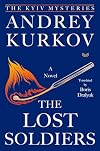
A new Andrey Kurkov is always an event to be celebrated. He carries a mix of humor and cynicism that I find deeply engaging. Set in post-WWI/pre-WWII Ukraine, there's plenty to laugh at and plenty to bemoan. The Czar is dead, Ukraine is now under Russian control, and Ukrainians are walking a very narrow tightrope. It takes very little to wind up against a wall about to be shot. But until that happens, life takes all kinds of outrageous, ridiculous ploys just to keep going.
In a way The Lost show more Soldiers is a novel of resistance, but it's not at all heavy-handed in the way that description might suggest. Our central character, Samson Kolechko, is intellectually nimble—a crucial skill at the time. He never intended to become part of the Ukrainian police force, but here he is, trying to facilitate a kind of justice that will let him sleep at night.
The secondary characters are downright charming, for the most part. His wife Nadezhda works with a bureau determined to tally every X or Y or Z (boat, house, business) in Ukraine to determine which are in appropriately proletariat hands and which are not. Kolechko's partner at work is a former priest who has (mostly) lost his faith and, like Kolechko, has also fallen into policing without meaning to. Kolechko's superior is a former member of the Czar's troops, which means he faces a good bit of bureaucratic suspicison.
If you aren't familiar with this mystery series, get going with it! I would suggest starting with the first volume, [book:The Silver Bone|173956327], in which we learn about a somewhat unusual "superpower" (for want of a better word) that helps Kolchko in his policing.
I received a free electronic review copy of this title from the publisher via NetGalley; the opinions are my own. show less
In a way The Lost show more Soldiers is a novel of resistance, but it's not at all heavy-handed in the way that description might suggest. Our central character, Samson Kolechko, is intellectually nimble—a crucial skill at the time. He never intended to become part of the Ukrainian police force, but here he is, trying to facilitate a kind of justice that will let him sleep at night.
The secondary characters are downright charming, for the most part. His wife Nadezhda works with a bureau determined to tally every X or Y or Z (boat, house, business) in Ukraine to determine which are in appropriately proletariat hands and which are not. Kolechko's partner at work is a former priest who has (mostly) lost his faith and, like Kolechko, has also fallen into policing without meaning to. Kolechko's superior is a former member of the Czar's troops, which means he faces a good bit of bureaucratic suspicison.
If you aren't familiar with this mystery series, get going with it! I would suggest starting with the first volume, [book:The Silver Bone|173956327], in which we learn about a somewhat unusual "superpower" (for want of a better word) that helps Kolchko in his policing.
I received a free electronic review copy of this title from the publisher via NetGalley; the opinions are my own. show less
It’s 2013 and almost everyone has fled the small town of Little Starhorodivka situated in the grey zone between Russia and Ukraine as Russia invade the Crimea.
The exceptions are two men who still live in the otherwise empty town: Sergey Sergeyich, and his ‘frenemy’ Pashka. They endure shelling from both sides, as well as a complete lack of electricity, water, food supplies or doctors. Pashka appears to be a Russian sympathizer; Sergey seems to have no good options to leave; especially show more as he has six hives of honey bees which have provided his living for many years.
We see the daily small interactions of the men and the soldiers who surround them and periodically visit them in their town. The soldiers do small favors for Sergeyich such as charging his cell phone. Sergey in turns worries about them, and covers a body left behind with snow.
Eventually in the spring, Sergey decides to take his hives of bees out of the ruined town to the countryside so they can gather the pollen they need. He heads toward the Crimea and a fellow beekeeper he met one time at a beekeepers' convention many years ago. Eventually he arrives at his friend’s house to discover that the friend has been swallowed up by the Russian prison system. His family is eager for Sergey’s help.
The grey bees are the bees that are no longer healthy. As they are stressed or sicken, they turn from their brilliant yellow, black and orange to grey; usually that means the entire hive is lost.
I loved the story of the daily life of an ordinary civilian caught up in a unique war zone. I found myself cheering Sergey on as he and his hives of bees move through their lives against the background of war. show less
The exceptions are two men who still live in the otherwise empty town: Sergey Sergeyich, and his ‘frenemy’ Pashka. They endure shelling from both sides, as well as a complete lack of electricity, water, food supplies or doctors. Pashka appears to be a Russian sympathizer; Sergey seems to have no good options to leave; especially show more as he has six hives of honey bees which have provided his living for many years.
We see the daily small interactions of the men and the soldiers who surround them and periodically visit them in their town. The soldiers do small favors for Sergeyich such as charging his cell phone. Sergey in turns worries about them, and covers a body left behind with snow.
Eventually in the spring, Sergey decides to take his hives of bees out of the ruined town to the countryside so they can gather the pollen they need. He heads toward the Crimea and a fellow beekeeper he met one time at a beekeepers' convention many years ago. Eventually he arrives at his friend’s house to discover that the friend has been swallowed up by the Russian prison system. His family is eager for Sergey’s help.
The grey bees are the bees that are no longer healthy. As they are stressed or sicken, they turn from their brilliant yellow, black and orange to grey; usually that means the entire hive is lost.
I loved the story of the daily life of an ordinary civilian caught up in a unique war zone. I found myself cheering Sergey on as he and his hives of bees move through their lives against the background of war. show less
Lists
Awards


You May Also Like


Associated Authors
Statistics
- Works
- 69
- Also by
- 5
- Members
- 5,232
- Popularity
- #4,767
- Rating
- 3.8
- Reviews
- 213
- ISBNs
- 323
- Languages
- 22
- Favorited
- 22

