
Antal Szerb (1901–1945)
Author of Journey by Moonlight
About the Author
Works by Antal Szerb
Száz vers görög, latin, angol, francia, német, olasz válogatott költemények eredeti szövege és magyar… (1957) 18 copies, 1 review
Prázdny hrob 1 copy
Journey to Venice 1 copy
Szavak sora 1 copy
A királyné nyaklánca 1 copy
Utas és holdvilág 1 copy
Associated Works
Tagged
Common Knowledge
- Birthdate
- 1901-05-01
- Date of death
- 1945-01-27
- Gender
- male
- Education
- Eötvös Loránd University
Graz University - Occupations
- teacher
literary historian
essayist
translator - Awards and honors
- Baumgarten Prize (1935 +1937)
- Relationships
- Bálint, Klára (spouse)
- Short biography
- Antal Szerb was born in 1901 into a cultivated Budapest family of Jewish descent. Graduating in Hungarian, German and English, he rapidly established himself as an outstanding scholar, publishing books on drama and poetry, studies of Ibsen and Blake, and histories of English, Hungarian, and World Literature. His first novel, the satirical-philosophical The Pendragon Legend, 1934, was set in London and Wales. His acknowledged masterpiece, Journey by Moonlight, appeared in 1937. The Queen’s Necklace was composed, together with a third novel, Oliver VII, amidst the wreckage of war: both were instantly banned. In 1945 Szerb died in a forced-labour camp in Western Hungary. A collection of stories and novellas, Love in a Bottle, and three volumes of his literary-critical essays, were published posthumously. [from pushkinpress.com]
- Cause of death
- forced labour camp
- Nationality
- Hungary
- Birthplace
- Budapest, Hungary
- Places of residence
- Budapest, Hungary
France
Italy
England, UK - Place of death
- Balf, Hungary
- Burial location
- Kerepesi Cemetery, Budapest, Hungary
- Associated Place (for map)
- Hungary
Members
Reviews
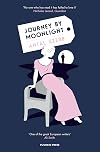
The one book hardly anyone has ever heard of that everyone must read.
Antal Szerb writes in that ironic, self-reflective, clever way of Eastern Europeans brought up on a diet of good literature, music and art. There’s a comfort in the forms of art and the mind. His writing life was spent in between the wars; Journey by Moonlight is a product of that time - the late 1930s. Set in Italy, the protagonist, Mihaliy often asks whether the locals are as happy under the gaze of Il Duce as they show more appear to be. Mihaliy calls the errand boy a little fascista, no artist can resist wise-cracking about the puffed up ideas of dictators and the machinery with which they operate the land. Despite all this, Mihaliy is free to travel around and spend his money; you see he’s on his honeymoon with the beautiful and well brought up Erszi. Italy, with its nostalgic equivocating romance for the past, is the perfect setting for Mihaliy’s actual journey - backwards in time to his own love of beautiful Eva and the friendship group that centred on her house with her brother Tamas. Some of the plot lines are so silly, you wonder how it all comes together. It's as though the novel takes place in a brief, inspired emotionally charged moment of time.
It’s a fun ride, full of lateral story-lines: Erzsi’s ex husband is pursuing her with his own true love for her, too. Despite his 'love' for Erzsi, Mihalyi lives in the half-light of moonlight throughout, an irrational zone of possibilities. He is easily deceived by an old friend who once stole his gold watch, who then tries to steal Erzsi away from him then selling her off to either the ex-husband or a shady Persian opium seller making a movie about how down to earth and decent opium farmers are. The half light world of moonlight stages everything in this novel. Monastary rules prohibit Fr Severius, really an old friend who converted from Judaism to catholicism, meeting Mihalyi until midnight. He too suffered from the love of the past and the beautiful Eva. Perhaps he's in hiding as a monk, living a half-life to forget her. In a fugue moment, Mihaliy leaves a town and spends the night in a forest, ending up half mad with exhaustion.
Umbria and Tuscany are wonderful places to get lost in. No one ends up seeing all the art and architecture on show. Mihayli and Erzsi plan to: it doesn’t happen. Is that a joke, perhaps about honeymooners who supposedly only ever see the inside of their hotel rooms? And there are English speakers everywhere: the doctor who heals Mihayli's exhaustion and the young American art historian on a self-funded tour of everything an art historian must see in Italy. This was all before the era of mass tourism, when an American needed the extensive notes of a teacher to advise where to go, and a copy of Baedeker. Was an Italy controlled by fascists the perfect place for an American to holiday? The Rockefellers loved fascists.
Will Mihaliy ever see Eva again? The real plot-line. It’s all a little soap-opera-ish when you tell it. Most of what happens in this novel is absurd, as was the world at the time. Reminds me of Iron Curtain writing from Czech, Poland and the like. You can’t really describe the world as it is - you’d never get published. But then the world under dictatorships, left or right, doesn't make sense, so how can anyone write realism? The long chapter on Mihaly, Eva and Tamas as teenagers role playing is so weird, only great writing can pull it off. It is so absorbing while simultaneously incredulous. Perhaps that’s what moonlight is like to travel in.
Szerb’s little travel book Red Tower is set on holiday in Italy around 1935 or 36. The attitude is the same about fascism, it’s a great place to take a holiday if you don’t notice the dictatorship.
Szerb is one of those ‘if only’ writers of the 20thC. Had he survived the war, he may be more popular, or well known, or lauded. Certainly any outspoken anti-fascist after WW2 would’ve been highly regarded. Instead he died like everyone else fighting a corrupt world. He’s worth remembering as our own times darken a little every day. show less
Antal Szerb writes in that ironic, self-reflective, clever way of Eastern Europeans brought up on a diet of good literature, music and art. There’s a comfort in the forms of art and the mind. His writing life was spent in between the wars; Journey by Moonlight is a product of that time - the late 1930s. Set in Italy, the protagonist, Mihaliy often asks whether the locals are as happy under the gaze of Il Duce as they show more appear to be. Mihaliy calls the errand boy a little fascista, no artist can resist wise-cracking about the puffed up ideas of dictators and the machinery with which they operate the land. Despite all this, Mihaliy is free to travel around and spend his money; you see he’s on his honeymoon with the beautiful and well brought up Erszi. Italy, with its nostalgic equivocating romance for the past, is the perfect setting for Mihaliy’s actual journey - backwards in time to his own love of beautiful Eva and the friendship group that centred on her house with her brother Tamas. Some of the plot lines are so silly, you wonder how it all comes together. It's as though the novel takes place in a brief, inspired emotionally charged moment of time.
It’s a fun ride, full of lateral story-lines: Erzsi’s ex husband is pursuing her with his own true love for her, too. Despite his 'love' for Erzsi, Mihalyi lives in the half-light of moonlight throughout, an irrational zone of possibilities. He is easily deceived by an old friend who once stole his gold watch, who then tries to steal Erzsi away from him then selling her off to either the ex-husband or a shady Persian opium seller making a movie about how down to earth and decent opium farmers are. The half light world of moonlight stages everything in this novel. Monastary rules prohibit Fr Severius, really an old friend who converted from Judaism to catholicism, meeting Mihalyi until midnight. He too suffered from the love of the past and the beautiful Eva. Perhaps he's in hiding as a monk, living a half-life to forget her. In a fugue moment, Mihaliy leaves a town and spends the night in a forest, ending up half mad with exhaustion.
Umbria and Tuscany are wonderful places to get lost in. No one ends up seeing all the art and architecture on show. Mihayli and Erzsi plan to: it doesn’t happen. Is that a joke, perhaps about honeymooners who supposedly only ever see the inside of their hotel rooms? And there are English speakers everywhere: the doctor who heals Mihayli's exhaustion and the young American art historian on a self-funded tour of everything an art historian must see in Italy. This was all before the era of mass tourism, when an American needed the extensive notes of a teacher to advise where to go, and a copy of Baedeker. Was an Italy controlled by fascists the perfect place for an American to holiday? The Rockefellers loved fascists.
Will Mihaliy ever see Eva again? The real plot-line. It’s all a little soap-opera-ish when you tell it. Most of what happens in this novel is absurd, as was the world at the time. Reminds me of Iron Curtain writing from Czech, Poland and the like. You can’t really describe the world as it is - you’d never get published. But then the world under dictatorships, left or right, doesn't make sense, so how can anyone write realism? The long chapter on Mihaly, Eva and Tamas as teenagers role playing is so weird, only great writing can pull it off. It is so absorbing while simultaneously incredulous. Perhaps that’s what moonlight is like to travel in.
Szerb’s little travel book Red Tower is set on holiday in Italy around 1935 or 36. The attitude is the same about fascism, it’s a great place to take a holiday if you don’t notice the dictatorship.
Szerb is one of those ‘if only’ writers of the 20thC. Had he survived the war, he may be more popular, or well known, or lauded. Certainly any outspoken anti-fascist after WW2 would’ve been highly regarded. Instead he died like everyone else fighting a corrupt world. He’s worth remembering as our own times darken a little every day. show less
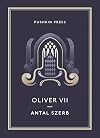
Anybody coming fresh to this novel might assume it was a straightforward comic novel set in some Ruritanian backwater. Many times I found myself thinking that it would make an excellent stage play — its plotting is as complex as a Feydeau farce, and at times it reminded me of Shaw’s Arms and the Man (though the latter is set in Bulgaria rather than an imaginary country). And yet hindsight informs us that this was the Hungarian author’s last work before he was murdered in a Nazi death show more camp in the closing year of the Second World War. It’s confusing then that there is no hint of the bloody turmoil in the European theatre of war from Szerb’s tale, one centred on a bloodless coup and laced with humorous misunderstandings and engineered coincidences.
Sandoval is a painter who, we soon find, is involved in a plot to dethrone the Catholic King of Alturia, Oliver VII. Alturia, financially insolvent, is on the brink of effectively selling itself to a tycoon from Norlandia, a neighbouring Protestant country. A ragbag of Alturian conspirators, owing allegiance to a mysterious figure called the Nameless Captain, infiltrate the palace on the eve of Oliver’s planned marriage to Ortrud, princess of Norlandia; they depose the hapless monarch (who then disappears into exile) whilst also demonstrating the king’s ministers to be incompetent fools and cowards. An aged cousin reluctantly becomes the new King Geront, but the country still slides down a slippery slope towards economic ruin as the treaty to save it remains unsigned.
Thus far the action all takes place in some central European Neverland. The golden sardines which decorate Alturia’s flag — representing one of the country’s remaining industries — however suggest that Szerb is telling us a fishy story. So many little details underline Alturia’s lack of luck over the years — Oliver’s predecessors include Balázs the Unfortunate and Philip the One-Eared — that I am reminded of the troubles in the kingdom of Ruritania in Anthony Hope’s The Prisoner of Zenda and, more recently, the seething unrest in Philip Pullman’s Razkavia in The Tin Princess (the capital of which he tell us he based on Prague). But events are about to take us to a more realistic setting, Venice.
“A lot of people feel at home in Venice,” a character informs us. Certainly Szerb himself felt “more completely myself” there, as he tells us in his travelogue The Third Tower. It is here that ‘Oscar’, the incognito Oliver, has ended up with his faithful aide-de-camp Major Milán Mawiras-Tendal (posing as a ‘Mr Meyer’). Unfortunately Oscar has also fallen in with a group of confidence tricksters led by the unforgettable Oubalde Hippolyte Théramene, Count Saint-Germain (presumably a descendant of one or other of the historical Comtes de Saint-Germain). Into the mix stumbles Sandoval, the painter whom we first met at the beginning of the novel. And it is here in Venice that, after more misunderstandings and confusion, Oliver finds himself faced with the possibility of pretending to be himself.
This is a splendid spin on the usual doppelganger theme that so many novels are based on, not least The Prisoner of Zenda. Along the way this comedy (very Shakespearean, there’s even some cross-dressing) also touches on duty and responsibility, expectations and misdirection, masks and identities. Of course, Venice is the place to have a masquerade, where virtually everyone plays a role, and while — as in many Shakespearean comedies — almost all the disguises are lifted for the audience (though not necessarily for the participants) Szerb still manages to forestall us in at least one instance: one character, about whom lots of ‘clues’ are dropped to suggest she may be other than she appears to be, not only turns out to be exactly what she claimed but also unexpectedly pairs off with another major player. I love the way Szerb plays with our preconceptions, displaying them as possible misconceptions.
I must here also heap praise on Szerb’s translator, Len Rix, who as well as providing a text that reads as though English was the novel’s original language also supplies a commendable and illuminating afterword. Here, for example, he draws attention to common themes in the Hungarian’s three novels, The Pendragon Legend, Journey by Moonlight and Oliver VII, especially the last two.
And now all that’s left to say is left to Rabelais, to whom is attributed this deathbed remark: Tirez le rideau, la farce est jouée.
http://wp.me/s2oNj1-oliver show less
Sandoval is a painter who, we soon find, is involved in a plot to dethrone the Catholic King of Alturia, Oliver VII. Alturia, financially insolvent, is on the brink of effectively selling itself to a tycoon from Norlandia, a neighbouring Protestant country. A ragbag of Alturian conspirators, owing allegiance to a mysterious figure called the Nameless Captain, infiltrate the palace on the eve of Oliver’s planned marriage to Ortrud, princess of Norlandia; they depose the hapless monarch (who then disappears into exile) whilst also demonstrating the king’s ministers to be incompetent fools and cowards. An aged cousin reluctantly becomes the new King Geront, but the country still slides down a slippery slope towards economic ruin as the treaty to save it remains unsigned.
Thus far the action all takes place in some central European Neverland. The golden sardines which decorate Alturia’s flag — representing one of the country’s remaining industries — however suggest that Szerb is telling us a fishy story. So many little details underline Alturia’s lack of luck over the years — Oliver’s predecessors include Balázs the Unfortunate and Philip the One-Eared — that I am reminded of the troubles in the kingdom of Ruritania in Anthony Hope’s The Prisoner of Zenda and, more recently, the seething unrest in Philip Pullman’s Razkavia in The Tin Princess (the capital of which he tell us he based on Prague). But events are about to take us to a more realistic setting, Venice.
“A lot of people feel at home in Venice,” a character informs us. Certainly Szerb himself felt “more completely myself” there, as he tells us in his travelogue The Third Tower. It is here that ‘Oscar’, the incognito Oliver, has ended up with his faithful aide-de-camp Major Milán Mawiras-Tendal (posing as a ‘Mr Meyer’). Unfortunately Oscar has also fallen in with a group of confidence tricksters led by the unforgettable Oubalde Hippolyte Théramene, Count Saint-Germain (presumably a descendant of one or other of the historical Comtes de Saint-Germain). Into the mix stumbles Sandoval, the painter whom we first met at the beginning of the novel. And it is here in Venice that, after more misunderstandings and confusion, Oliver finds himself faced with the possibility of pretending to be himself.
This is a splendid spin on the usual doppelganger theme that so many novels are based on, not least The Prisoner of Zenda. Along the way this comedy (very Shakespearean, there’s even some cross-dressing) also touches on duty and responsibility, expectations and misdirection, masks and identities. Of course, Venice is the place to have a masquerade, where virtually everyone plays a role, and while — as in many Shakespearean comedies — almost all the disguises are lifted for the audience (though not necessarily for the participants) Szerb still manages to forestall us in at least one instance: one character, about whom lots of ‘clues’ are dropped to suggest she may be other than she appears to be, not only turns out to be exactly what she claimed but also unexpectedly pairs off with another major player. I love the way Szerb plays with our preconceptions, displaying them as possible misconceptions.
I must here also heap praise on Szerb’s translator, Len Rix, who as well as providing a text that reads as though English was the novel’s original language also supplies a commendable and illuminating afterword. Here, for example, he draws attention to common themes in the Hungarian’s three novels, The Pendragon Legend, Journey by Moonlight and Oliver VII, especially the last two.
And now all that’s left to say is left to Rabelais, to whom is attributed this deathbed remark: Tirez le rideau, la farce est jouée.
http://wp.me/s2oNj1-oliver show less

This novel was the slightly frivolous by-product of a year Szerb spent doing research in Britain for his work on literary history. It's a bizarre and very entertaining pastiche of half a dozen genres of popular literature, especially gothic novels, murder mysteries and John Buchan/Dornford Yates thrillers.
The narrator, János Bákty, is a Hungarian scholar, working on 17th century English mystics in the British Museum Reading Room and a little bit less wise in the ways of the world than he show more thinks he is, who accidentally gets an introduction to the reclusive Earl of Gwynedd, and is invited to come and have a look at some interesting books in the library at Pendragon Castle.
As is only right and proper, he gets an anonymous phone call warning him not to go, and shortly before setting off for Wales he meets a Suspiciously Friendly Stranger and a Femme Fatale who both happen to be heading that way as well. Evidently he has unwittingly got mixed up in something dangerous...
Things continue with strange occurrences in the middle of the night, ghostly horsemen, stolen manuscripts, secret passages, Rosicrucians, desperate dashes over the mountains in bad weather, a kidnapping, the narrator failing to spot glaringly obvious clues, sexual temptation, and in short just about everything you would want from an adventure story (apart from a proper car chase, perhaps).
There are Dornford-Yates-like levels of crass sexism, but it's transparently there as a joke at the narrator's expense: ... no woman has ever yet taken an interest in an intellectual matter for its own sake. Either she wants to woo the man by a display of attention, or she is seeking to improve her mind, which is even worse. ... But the instant I gauged her true intellectual merit something was released inside me, and I became aware again of how young she was, and how lovely. I can never feel much attraction to a woman whom I consider clever—it feels too much like courting a man. But once I had realised she was just another sweet little gosling, I began to woo her in earnest.
I particularly enjoyed the beefy German woman-of-action, Lene, an Oxford undergraduate who uses Emil und die Detektive as a practical guide to detective work, and has set herself the apparently impossible task of getting an effete upper-class Englishman to have sex with her. (Ultra-violence turns out to be the answer...)
There are all sorts of scholarly allusions and obscure jokes, as you would expect. I was a bit puzzled by the name of the village where Pendragon Castle is situated, Llanvygan. As there's no "v" in the Welsh alphabet, I was starting to suspect that it must be some kind of Hungarian counterpart to Llareggub. But Googling it turns up someone who speculates that it might be meant as an archaic spelling of "Llanfeugan", which would be the church of St Meugan, an early British saint of dubious authenticity sometimes said to have Arthurian connections. However, for the same money you could go further: Wikipedia suggests that variant spellings of Meugan include Mawgan and Machan. Could this be a jokey reference to Arthur Machen buried so deep that only a philologist could find it? Nothing I've learnt about Szerb could rule that sort of thing out...
Great fun, and it does make you think a bit about some of the conventions of sensational fiction. show less
The narrator, János Bákty, is a Hungarian scholar, working on 17th century English mystics in the British Museum Reading Room and a little bit less wise in the ways of the world than he show more thinks he is, who accidentally gets an introduction to the reclusive Earl of Gwynedd, and is invited to come and have a look at some interesting books in the library at Pendragon Castle.
As is only right and proper, he gets an anonymous phone call warning him not to go, and shortly before setting off for Wales he meets a Suspiciously Friendly Stranger and a Femme Fatale who both happen to be heading that way as well. Evidently he has unwittingly got mixed up in something dangerous...
Things continue with strange occurrences in the middle of the night, ghostly horsemen, stolen manuscripts, secret passages, Rosicrucians, desperate dashes over the mountains in bad weather, a kidnapping, the narrator failing to spot glaringly obvious clues, sexual temptation, and in short just about everything you would want from an adventure story (apart from a proper car chase, perhaps).
There are Dornford-Yates-like levels of crass sexism, but it's transparently there as a joke at the narrator's expense: ... no woman has ever yet taken an interest in an intellectual matter for its own sake. Either she wants to woo the man by a display of attention, or she is seeking to improve her mind, which is even worse. ... But the instant I gauged her true intellectual merit something was released inside me, and I became aware again of how young she was, and how lovely. I can never feel much attraction to a woman whom I consider clever—it feels too much like courting a man. But once I had realised she was just another sweet little gosling, I began to woo her in earnest.
I particularly enjoyed the beefy German woman-of-action, Lene, an Oxford undergraduate who uses Emil und die Detektive as a practical guide to detective work, and has set herself the apparently impossible task of getting an effete upper-class Englishman to have sex with her. (Ultra-violence turns out to be the answer...)
There are all sorts of scholarly allusions and obscure jokes, as you would expect. I was a bit puzzled by the name of the village where Pendragon Castle is situated, Llanvygan. As there's no "v" in the Welsh alphabet, I was starting to suspect that it must be some kind of Hungarian counterpart to Llareggub. But Googling it turns up someone who speculates that it might be meant as an archaic spelling of "Llanfeugan", which would be the church of St Meugan, an early British saint of dubious authenticity sometimes said to have Arthurian connections. However, for the same money you could go further: Wikipedia suggests that variant spellings of Meugan include Mawgan and Machan. Could this be a jokey reference to Arthur Machen buried so deep that only a philologist could find it? Nothing I've learnt about Szerb could rule that sort of thing out...
Great fun, and it does make you think a bit about some of the conventions of sensational fiction. show less

Journey by moonlight sometimes reads like Where angels fear to tread as rewritten by someone brought up in the spirit of German romanticism. Mihály is an emotionally-troubled young man who after years of drifting has tried to anchor himself in the bourgeois "real world" by marrying Erszi. Unfortunately, she has married him largely for the opposite reason: she is looking for a Tyger to drag her away from boring respectability. So it's perhaps not such a surprise that when, a week or so into show more their Italian honeymoon, Mihály accidentally gets on the wrong train and loses touch with his new bride, he doesn't make any great effort to find her again.
Mihály is still carrying around a lot of emotional baggage from his claustrophobic teenage friendships with a group of avant-la-lettre goths, addicted to role-playing games and death-imagery. In the meantime one of them has taken his own life (or possibly been murdered), another has become a Franciscan friar, another has adopted the persona of a wheeler-dealer crook, and only Éva, the girl they were all (including her brother) in love with, seems to have turned out halfway normal.
Lots of glorious Italian tourist-trail atmosphere, hardly spoilt by the posters of Mussolini on every wall, lots of romantic longing and fantasising about death, but all set off against common-sense reality with a delightfully ironic detachment. As in Forster, the Italian zest for life is set up in opposition to northern melancholy and over-analytical thinking, but unlike Forster he's clear that work and business belong on the "life" side of the scales, together with sex and pasta, whilst art and love and (mystical-)religion are classified with the other death-wish items. show less
Mihály is still carrying around a lot of emotional baggage from his claustrophobic teenage friendships with a group of avant-la-lettre goths, addicted to role-playing games and death-imagery. In the meantime one of them has taken his own life (or possibly been murdered), another has become a Franciscan friar, another has adopted the persona of a wheeler-dealer crook, and only Éva, the girl they were all (including her brother) in love with, seems to have turned out halfway normal.
Lots of glorious Italian tourist-trail atmosphere, hardly spoilt by the posters of Mussolini on every wall, lots of romantic longing and fantasising about death, but all set off against common-sense reality with a delightfully ironic detachment. As in Forster, the Italian zest for life is set up in opposition to northern melancholy and over-analytical thinking, but unlike Forster he's clear that work and business belong on the "life" side of the scales, together with sex and pasta, whilst art and love and (mystical-)religion are classified with the other death-wish items. show less
Lists
Awards


You May Also Like


Associated Authors
Statistics
- Works
- 28
- Also by
- 1
- Members
- 2,498
- Popularity
- #10,274
- Rating
- 3.9
- Reviews
- 82
- ISBNs
- 185
- Languages
- 17
- Favorited
- 14