
Miklós Bánffy (1873–1950)
Author of They Were Counted
About the Author
Series
Works by Miklós Bánffy
The Transylvanian Trilogy: They Were Found Wanting / They Were Divided, Vol. 2 & Vol. 3 (2013) 145 copies, 3 reviews
Megszámláltattál... I.-II. 1 copy
Emlékeimből 1 copy
Tagged
Common Knowledge
- Canonical name
- Bánffy, Miklós
- Legal name
- Bánffy de Losoncz, Count Miklós
- Birthdate
- 1873-12-30
- Date of death
- 1950-06-06
- Gender
- male
- Occupations
- Foreign Minister (1921-22)
nobleman
author - Nationality
- Hungary
- Birthplace
- Kolozsvár, Austria-Hungary
- Places of residence
- Kolozsvár, Hungary
- Place of death
- Budapest, Hungary
- Associated Place (for map)
- Hungary
Members
Reviews
The Transylvanian Trilogy, Volumes II & III: They Were Found Wanting, They Were Divided; Introduction by Patrick Thursfield (Everyman's Library Contemporary Classics Series, Band 2) by Miklós Bánffy
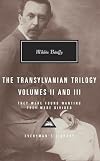
In these second and third volumes the story of Lazslo Gyeroffy — the charismatic, dissipated foil to authorial stand-in and all-round stand-up guy Balint Abady — recedes into the background as its subject hits rock bottom and stays there, leaving the narrative unbalanced and at times approaching autofiction. Still though, it's autofiction of the highest quality. The parallel stories of Balint's star-crossed relationship with Adrienne "married to a madman" Miloth, and the Hungarian and show more broader European political vortex spiralling towards the Great War, are interleaved with immense assurance, and punctuated with scenes of Transylvanian life and landscape that leap off the page. Bánffy's first-hand experience gives the political chapters an assurance and verisimilitude that carry along even a reader as unversed in early twentieth century Austro-Hungarian parliamentary proceedings as me, and it also gives him a feel for human nature and human folly that makes the whole novel feel extraordinarily grown-up. The set-pieces — the society events and especially the domestic politicking — come to seem increasingly bathetic as the Hungarians waltz gaily and blindly into the coming cataclysm. The insanity is allegorised in vignettes like when the secretary of the anti-duelling league has to hide his duelling injuries from its patron, or when Balint visits a reclusive aristocrat holed up in his manor with maps and travel narratives, sailing the world in his imagination. The Trilogy is a bona fide classic, and the English translation by Patrick Thursfield and the author's daughter Katalin Bánffy-Jelen is superb: fluent, consistent and tonally congruent with the dates of the original, i.e. it feels like it was written by a Hungarian Count in the 30's. show less
The Transylvanian Trilogy, Volume I: They Were Counted; Introduction by Hugh Thomas (Everyman's Library Contemporary Classics Series, Band 1) by Miklós Bánffy
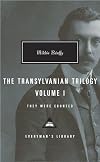
Set among the Transylanian and broader Hungarian nobility a decade or so before WWI, but written in the mid-thirties, this is a Tolstoyan tale of personal and political upheaval. Through the dual foci of Counts (and, like seemingly everyone in the novel, cousins) Balint Abady and Laszlo Gyeroffy, and switching between Kolozsvár (modern Cluj) and Budapest, with excursions into the mountainous, forested Translyvanian backcountry, Banffy illuminates the incestuousness and myopia of the junior show more Hungarian partner in the Austro-Hungarian joint venture. Hungarian parliamentarians bicker about petty symbols of national identity, oblivious to the looming geopolitical stormclouds; provincial gentry divert themselves with the traditional balls, hunts, card games, affairs, and duels while middle-class opportunists and Romanian interlopers take quiet advantage.
This is very much a late flowering of the 19th Century novel. The narrative voice is richly omniscient; elaborate set-piece social gatherings serve as high-intensity incubators of plot, character and setting; the story develops organically and at leisure. Balint tries to live in accordance with a quasi-feudal code of honour, attempting to improve the peasants who occupy his forested estates with progressive schemes a la Levin in Anna Karenina (although he's much more realistic than Tolstoy's deluded alter-ego), while struggling without much success to contain his love for his unhappily-married cousin Adrienne. Banffy's portrayal of the trauma inflicted on her by her "satanic", abusive husband has a surprisingly modern ring to it. Gyeroffy's, also in love with a cousin (you'd need a PhD in genealogy to map the characters in this book), has his life torn apart by a gambling addiction whose progression is described in exquisite, inevitable detail.
I love stories of decline and stories set on the cusp of some great turning point or tragedy, and this is a very superior example of both. It's filled with deep-pocketed eccentrics (another thing I love to read about) and contains some glittering, transcendent, snowy wilderness scenes that made my skin prickle. I can't wait to read volumes II and III. show less
This is very much a late flowering of the 19th Century novel. The narrative voice is richly omniscient; elaborate set-piece social gatherings serve as high-intensity incubators of plot, character and setting; the story develops organically and at leisure. Balint tries to live in accordance with a quasi-feudal code of honour, attempting to improve the peasants who occupy his forested estates with progressive schemes a la Levin in Anna Karenina (although he's much more realistic than Tolstoy's deluded alter-ego), while struggling without much success to contain his love for his unhappily-married cousin Adrienne. Banffy's portrayal of the trauma inflicted on her by her "satanic", abusive husband has a surprisingly modern ring to it. Gyeroffy's, also in love with a cousin (you'd need a PhD in genealogy to map the characters in this book), has his life torn apart by a gambling addiction whose progression is described in exquisite, inevitable detail.
I love stories of decline and stories set on the cusp of some great turning point or tragedy, and this is a very superior example of both. It's filled with deep-pocketed eccentrics (another thing I love to read about) and contains some glittering, transcendent, snowy wilderness scenes that made my skin prickle. I can't wait to read volumes II and III. show less
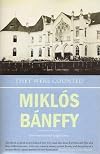
“How simple everything could seem if one looked only at the figures, those cold statistics that took no account of people's feelings and traditions…What of the myriad individual characteristics, passions, aspirations, triumphs and disappointments that together made one people different from another? How could anyone ignore all the different threads of experience that, over the centuries, had formed and deepened the differences that distinguished each nation?”
Published in 1934, this show more book covers a wide swath of Hungarian and Romanian history. It is set in 1905 in Transylvania, which was then part of Austro-Hungarian Empire and is now in Romania. Protagonist Count Balint Abády lives in castle Denestornya, his family’s estate, in the countryside near Kolozsvár. He is part of the upper class and an elected official in Parliament. He is in love with Adrienne, an unhappily married woman. His cousin, Count László Gyeroffy, is in love with the beautiful Klara Kollonich, but his habitual gambling comes between them. It is a sweeping saga of society, love, and the political situation in Austria-Hungary at the time.
There are many characters in this book, but the main storyline focuses on a few, and these few are well-developed. The pace is a bit slow at the start but becomes steady once the characters are introduced. The perspective is third person omniscient, so the reader is privy to their inner thoughts. There are many miscommunications, people out for revenge, duels, hunting parties, balls, gossip, horse races, political intrigue, servants delivering private messages, romantic liaisons, trips abroad, and ventures into rural areas where we see how people of lesser means are living. It portrays the lead-up to WWI and how warning signs were ignored, while the upper classes continued their lavish lifestyles.
This book is wonderfully written. Count Abády is a particularly well-crafted character – he lives by an honor code, wants to help the people living on his land, and struggles with his shortcomings. It is easy to picture the social gatherings – which apparently lasted all night and broke up in the early hours of the morning. It contains beautiful descriptions of the countryside.
“As Balint stood there, motionless, rapt in a new sense of delight and exaltation, seven fallow deer appeared slowly from a group of pines. They were wading knee-high through the morning haze, two does with their fawns and three young females, and if they saw Balint they did not take any notice of him but just walked quietly and sedately on until, after a few moments, they disappeared again into the shadow of the trees. Their sudden appearance in the distance in front of him, and just as sudden disappearance a moment or two later contributed strongly to Balint's sense of wonder and enchantment.”
This book would make a great mini-series. It reminded me of a Hungarian/Romanian version of Downton Abbey. It provides an opportunity to learn about the history of Transylvania in an entertaining manner without the gothic overtones normally attributed to the area. Though it is lengthy at around 700 pages, I was always anxious to pick it up.
4.5 show less
Published in 1934, this show more book covers a wide swath of Hungarian and Romanian history. It is set in 1905 in Transylvania, which was then part of Austro-Hungarian Empire and is now in Romania. Protagonist Count Balint Abády lives in castle Denestornya, his family’s estate, in the countryside near Kolozsvár. He is part of the upper class and an elected official in Parliament. He is in love with Adrienne, an unhappily married woman. His cousin, Count László Gyeroffy, is in love with the beautiful Klara Kollonich, but his habitual gambling comes between them. It is a sweeping saga of society, love, and the political situation in Austria-Hungary at the time.
There are many characters in this book, but the main storyline focuses on a few, and these few are well-developed. The pace is a bit slow at the start but becomes steady once the characters are introduced. The perspective is third person omniscient, so the reader is privy to their inner thoughts. There are many miscommunications, people out for revenge, duels, hunting parties, balls, gossip, horse races, political intrigue, servants delivering private messages, romantic liaisons, trips abroad, and ventures into rural areas where we see how people of lesser means are living. It portrays the lead-up to WWI and how warning signs were ignored, while the upper classes continued their lavish lifestyles.
This book is wonderfully written. Count Abády is a particularly well-crafted character – he lives by an honor code, wants to help the people living on his land, and struggles with his shortcomings. It is easy to picture the social gatherings – which apparently lasted all night and broke up in the early hours of the morning. It contains beautiful descriptions of the countryside.
“As Balint stood there, motionless, rapt in a new sense of delight and exaltation, seven fallow deer appeared slowly from a group of pines. They were wading knee-high through the morning haze, two does with their fawns and three young females, and if they saw Balint they did not take any notice of him but just walked quietly and sedately on until, after a few moments, they disappeared again into the shadow of the trees. Their sudden appearance in the distance in front of him, and just as sudden disappearance a moment or two later contributed strongly to Balint's sense of wonder and enchantment.”
This book would make a great mini-series. It reminded me of a Hungarian/Romanian version of Downton Abbey. It provides an opportunity to learn about the history of Transylvania in an entertaining manner without the gothic overtones normally attributed to the area. Though it is lengthy at around 700 pages, I was always anxious to pick it up.
4.5 show less
The Transylvanian Trilogy, Volume I: They Were Counted; Introduction by Hugh Thomas (Everyman's Library Contemporary Classics Series) by Miklós Bánffy
I really enjoyed the political realm, it wasn't given a lot of attention but it was given enough to be interesting and also works well for Balint's characterisation who doesn't really care about politics despite being a politician. I also really enjoyed Balint's side adventure in developing his lands and the co-operative. The intrigues between Azbej and Simo in how lower level individuals gain power in an aristocratic world. The short but ever present shadowy appearance of Slawata was really show more interesting and really emphasised how scary it must have been for Hungarian nobility to be deprived of their privileges if Austria wanted to enforce direct rule. The Romanian lawyer was also really interesting and his idea on creating a Romanian middle class was fascinating. So there is a lot of meat in this book.
However, most of this book is ultimately a love story. Gyeroffy's story with Klara was great and it showed how a gambling addiction can ultimately ruin everything from your true love to your social status. Balint's story with Adrienne however was infuriating. He should not be with her. I deeply understand why he loves her but he shouldn't be with her when she's so unwilling to be passionate with him and is so reluctant to bring the relationship further. I'm glad they decided to split up and her decision to not commit suicide (as her sister Judith attempted) but to keep on living.
The Wickwitz storyline was interesting as well. He's most certainly the 'villain' in this book but the book does a good job in showing his side of the story and how it's not exactly an easy choice to make if you have debts but still want to be in the position you're in - he didn't lack morals outright, he just approached dealing with his debts in the worst way of trying to get marriage and let them pay off his debts. I suppose that's pretty immoral actually. He was a great character I think.
Balint is a great character, I just didn't like him very much when he was with Adrienne and I think he knows that himself, especially all the instances of wondering if he can break free of her spell. Overall he's a great character.
Great book overall and a great snapshot in 20th century Hungarian aristocracy. show less
However, most of this book is ultimately a love story. Gyeroffy's story with Klara was great and it showed how a gambling addiction can ultimately ruin everything from your true love to your social status. Balint's story with Adrienne however was infuriating. He should not be with her. I deeply understand why he loves her but he shouldn't be with her when she's so unwilling to be passionate with him and is so reluctant to bring the relationship further. I'm glad they decided to split up and her decision to not commit suicide (as her sister Judith attempted) but to keep on living.
The Wickwitz storyline was interesting as well. He's most certainly the 'villain' in this book but the book does a good job in showing his side of the story and how it's not exactly an easy choice to make if you have debts but still want to be in the position you're in - he didn't lack morals outright, he just approached dealing with his debts in the worst way of trying to get marriage and let them pay off his debts. I suppose that's pretty immoral actually. He was a great character I think.
Balint is a great character, I just didn't like him very much when he was with Adrienne and I think he knows that himself, especially all the instances of wondering if he can break free of her spell. Overall he's a great character.
Great book overall and a great snapshot in 20th century Hungarian aristocracy. show less
Lists
Awards


You May Also Like


Associated Authors
Statistics
- Works
- 19
- Members
- 1,487
- Popularity
- #17,271
- Rating
- 4.0
- Reviews
- 42
- ISBNs
- 72
- Languages
- 8
- Favorited
- 4

