
Sándor Márai (1900–1989)
Author of Embers
About the Author
Works by Sándor Márai
1910-1930. Zwanzig Jahre Weltgeschichte in 700 Bildern. (20 Years of World History In 700 Pictures) (1931) 5 copies
Történelmi regények II. 4 copies
Die Gräfin von Parma: Roman 2 copies
As brasas (Portuguese Edition) 2 copies
اللقاء الأخير 2 copies
Die Eifersüchtigen: Roman 2 copies
Történelmi Regények I. 2 copies
Los celosos 1 copy
Gloed (Dutch Edition) 1 copy
Válás Budán regény 1 copy
Wagter 1 copy
Música en Florencia 1 copy
Diarios 1984-1989 1 copy
Księga ziół wyd. 9 1 copy
Posila 1 copy
Svíce dohořívají 1 copy
Nebo i zemlja 1 copy
Četiri godišnja doba 1 copy
Kitepett noteszlapok Marai Sandor osszegyujtott irasai ausztriai es nemetorszagi lapokban (2005) 1 copy
Naplo 1 copy
İŞİN ASLI JUDİTH VE SONRASI 1 copy
A kassai polgárok dráma 1 copy
اللقاء الأخير 1 copy
Divorce A Buda 1 copy
La Herenciade Ezter 1 copy
Bốn mùa - Trời và đất 1 copy
Associated Works
Tagged
Common Knowledge
- Canonical name
- Márai, Sándor
- Legal name
- Grosschmid, Sándor Károly Henrik
- Other names
- Márai, Alexander
- Birthdate
- 1900-04-11
- Date of death
- 1989-02-21
- Gender
- male
- Occupations
- journalist
writer - Cause of death
- suicide
- Nationality
- Hungary
USA (1957) - Birthplace
- Kassa, Kingdom of Hungary, Austria-Hungary (now Košice, Slovakia)
- Places of residence
- Frankfurt am Main, Germany
Paris, France
Budapest, Hungary
Posillipo, Italy
Salerno, Italy
New York, New York, USA (show all 7)
San Diego, California, USA - Place of death
- San Diego, California, USA
- Map Location
- Hungary
Members
Reviews
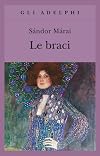
Non avevo idea di adorare le penne degli scrittori ungheresi. Un romanzo corto, ma che ad un certo mi ha fatto realizzare che stavo leggendo il libro in piedi in mezzo alla mia stanza, inquieta e piena di pensieri.
Una chicca da gustare per provare a comprendere cosa l’autore definisce come odio, pietà, vendetta, ma soprattutto amicizia.
Una chicca da gustare per provare a comprendere cosa l’autore definisce come odio, pietà, vendetta, ma soprattutto amicizia.

A puzzling book for the reader, because of the way Márai added to it at widely-spaced intervals and at quite different stages in his development as a writer, apparently without changing what he had previously written, but each time shifting the tone and mood considerably and undermining our confidence in what we have taken from the earlier parts of the book.
The book takes the form of three separate monologues in the voices of Ilonka the First Wife, Peter the Husband, and Judit the Other show more Woman. These are followed by an Epilogue, also a monologue, in the voice of Ede, the musician who was Judit's lover and the addressee of her monologue.
Ilonka and Peter seem to be a normal, troubled bourgeois couple of the sort that we might well find in a novel by Franz Werfel or Stefan Zweig. They give us their (contrasting, conflicting) views on the story of their failed marriage and the role played by Peter's damaging obsession with his mother's maidservant Judit. There is a lot in both their narratives about the details of their everyday life, but very little reference to other people outside the immediate family — with the notable exception of Peter's friend the writer Lázár, who is obviously a kind of alter ego for the author — and no explicit reference at all to social class or historical events. We don't have any obvious way to tell whether we are meant to be in the 1890s or the 1930s, it just doesn't seem to matter. This is a story about what love means, how it can be resolved with everyday life, and what happens when different people have different expectations about it.
But then Márai hits us with Judit's monologue, addressed to her boyfriend of the moment in a hotel room in Rome sometime in the late 1940s, and obviously written after he went into exile. Judit comes from the rural underclass, her family literally sleeping in a ditch in the winter months, and has pulled herself up by her own efforts, first to become a servant in the apartment of Peter's wealthy middle-class parents, then to turn herself into a lady who could live with Peter on something like equal terms. Her analysis of the way the wealthy live and the irrelevance of Peter and Ilonka and their feelings is just disturbing at first, but we are drawn into her way of seeing things when she shows us (painfully) how the experience of the last days of the war in Budapest changed all the rules. There's obviously a lot here that is taken from the author's direct experience, including Lázár's decision that he can't go on writing under fascism and the destruction of his library in the bombardment.
And then we get the epilogue, written some forty years later, which pulls the rug out from under us again, if not quite as spectacularly as Judit has done.
Quite something, and the English translation by George Szirtes blasts along with real energy. show less
The book takes the form of three separate monologues in the voices of Ilonka the First Wife, Peter the Husband, and Judit the Other show more Woman. These are followed by an Epilogue, also a monologue, in the voice of Ede, the musician who was Judit's lover and the addressee of her monologue.
Ilonka and Peter seem to be a normal, troubled bourgeois couple of the sort that we might well find in a novel by Franz Werfel or Stefan Zweig. They give us their (contrasting, conflicting) views on the story of their failed marriage and the role played by Peter's damaging obsession with his mother's maidservant Judit. There is a lot in both their narratives about the details of their everyday life, but very little reference to other people outside the immediate family — with the notable exception of Peter's friend the writer Lázár, who is obviously a kind of alter ego for the author — and no explicit reference at all to social class or historical events. We don't have any obvious way to tell whether we are meant to be in the 1890s or the 1930s, it just doesn't seem to matter. This is a story about what love means, how it can be resolved with everyday life, and what happens when different people have different expectations about it.
But then Márai hits us with Judit's monologue, addressed to her boyfriend of the moment in a hotel room in Rome sometime in the late 1940s, and obviously written after he went into exile. Judit comes from the rural underclass, her family literally sleeping in a ditch in the winter months, and has pulled herself up by her own efforts, first to become a servant in the apartment of Peter's wealthy middle-class parents, then to turn herself into a lady who could live with Peter on something like equal terms. Her analysis of the way the wealthy live and the irrelevance of Peter and Ilonka and their feelings is just disturbing at first, but we are drawn into her way of seeing things when she shows us (painfully) how the experience of the last days of the war in Budapest changed all the rules. There's obviously a lot here that is taken from the author's direct experience, including Lázár's decision that he can't go on writing under fascism and the destruction of his library in the bombardment.
And then we get the epilogue, written some forty years later, which pulls the rug out from under us again, if not quite as spectacularly as Judit has done.
Quite something, and the English translation by George Szirtes blasts along with real energy. show less
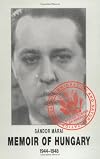
Memoir of Hungary is a fine book by a very talented Hungarian writer who, unfortunately, is not widely translated, yet, into English. Marai wrote over 40 books, but I believe the only other two available in English are Embers, and Casanova at Bolzano; the next is The Rebels, to be released in March/07.
This memoir, written in the 70s, starts with the Russian invasion and occupation of Hungary at the end of WWII, through the early steps and final establishment of the communist government, and show more Marai's decision to leave Hungary for exile to the West. It is, at the same time, an interesting, informed and sensitive contemplation of Hungary as a country, the true tragedy of the war (for Marai) with the death of humanism that was Europe's greatest contribution to civilization, the birth of a superficial, consumer-focused society post-war, the decline of literature, the nature of politics and particularly of communism and its impact on individuals, and the value and strengths of Hungarian literature and language.
The siege and occupation of Budapest by the Red Army is a traumatic event that Marai describes in considerable detail, including his own frequent interactions with soldiers and officers. He is careful not to let any preconceived notions cloud his judgements of the Soviets though he does think of WWII in the longer historical perspective of relations between the east and west. He is continually perceptive in his analysis of politics, trends and events, for instance, echoing George Orwell in his criticism of the fellow-travelling intellectuals of the West:
...the Soviet Union...will throw itself some day on Western Europe, if it will have the opportunity to do so, and the ‘liberal', ‘bridge-building' and ‘coexisting' Western intelligentsia will have paved the way for the undertaking.
Marai takes every opportunity he can to speak with the Soviet soldiers and officers, to try to understand them and their viewpoints. He finds them limited by the Soviet-communist outlook that has shaped their learning and he discerns an even more basic difference:
The men I came to know during these weeks and observed later in many different guises were, on the surface, exactly like the Westerners, but their awareness of their own personalities did still not correspond to Western man's individual self-consciousness.
Marai wrote poetry, which he describes as "rhythmic lines", but he says that he is not a poet:
...missing from my sensibility, from my consciousness, is that distilling power which poetry is and which, with magical sometimes demonic energy, catalyzes in a single word the elements of emotion and reason...the dense and potentially explosive tensile power of poetry...
For Marai, Europe's greatest gift to the mankind's domain is "humanism" which he defines as "the measure of a man"; a belief that the individual is the measure of all things that no system, whether it be political, religious, economic or social can provide. This, he fears, is what has been lost in the "humanity-denying sneer of the Second World War" with no"moral reckoning" of the true meaning of the war to be found anywhere. Everything is falsehood.
Marai visited Switzerland after the war and could have stayed in the West, as did many of his contemporaries at that time. What pulled him back was his love for the Hungarian language, his desire to live and to write in it. But even this was not enough once the communist system started to assert itself, slowly at first, but then reaching into every aspect of life and society. He makes an interesting contrast between the Nazis and the Communists: "The Communists wanted something more and different: they demanded that their victims remain alive and celebrate the system that destroys human sensibility and self-esteem in its victims."
In the end, Marai realized that he had to leave:
I had to leave it [Hungary] not just because the Communists would not let me write freely, but mainly and even much more so because they would not let me be silent freely. In this system, if a writer does not repudiate everything into which he was born...the Communists sometimes make a living corpse, sometimes–as they did out of Russian writers who refused to submit–a real corpse out of him.
A year passed between the time of Marai's decision and when he actually left Hungary. He used the time to immerse himself in the second-order of Hungarian writers, writers he knew he would not find anywhere in the West, but writers who spoke to the Hungarian soul and experience.
Finally, as he was close to leaving, Marai had an epiphany on the nature of the Communist system:
...what would happen if suddenly someone would declare that everything being planned and put into effect is not merely greedy and brutal, but also profoundly, hopelessly, unnecessary and stupid?...anyone who clings to the Letter of a Hundred years is stupid because life is not a letter but a process of change.
An excellent memoir and review of the currents that swept and shaped Europe after the war. show less
This memoir, written in the 70s, starts with the Russian invasion and occupation of Hungary at the end of WWII, through the early steps and final establishment of the communist government, and show more Marai's decision to leave Hungary for exile to the West. It is, at the same time, an interesting, informed and sensitive contemplation of Hungary as a country, the true tragedy of the war (for Marai) with the death of humanism that was Europe's greatest contribution to civilization, the birth of a superficial, consumer-focused society post-war, the decline of literature, the nature of politics and particularly of communism and its impact on individuals, and the value and strengths of Hungarian literature and language.
The siege and occupation of Budapest by the Red Army is a traumatic event that Marai describes in considerable detail, including his own frequent interactions with soldiers and officers. He is careful not to let any preconceived notions cloud his judgements of the Soviets though he does think of WWII in the longer historical perspective of relations between the east and west. He is continually perceptive in his analysis of politics, trends and events, for instance, echoing George Orwell in his criticism of the fellow-travelling intellectuals of the West:
...the Soviet Union...will throw itself some day on Western Europe, if it will have the opportunity to do so, and the ‘liberal', ‘bridge-building' and ‘coexisting' Western intelligentsia will have paved the way for the undertaking.
Marai takes every opportunity he can to speak with the Soviet soldiers and officers, to try to understand them and their viewpoints. He finds them limited by the Soviet-communist outlook that has shaped their learning and he discerns an even more basic difference:
The men I came to know during these weeks and observed later in many different guises were, on the surface, exactly like the Westerners, but their awareness of their own personalities did still not correspond to Western man's individual self-consciousness.
Marai wrote poetry, which he describes as "rhythmic lines", but he says that he is not a poet:
...missing from my sensibility, from my consciousness, is that distilling power which poetry is and which, with magical sometimes demonic energy, catalyzes in a single word the elements of emotion and reason...the dense and potentially explosive tensile power of poetry...
For Marai, Europe's greatest gift to the mankind's domain is "humanism" which he defines as "the measure of a man"; a belief that the individual is the measure of all things that no system, whether it be political, religious, economic or social can provide. This, he fears, is what has been lost in the "humanity-denying sneer of the Second World War" with no"moral reckoning" of the true meaning of the war to be found anywhere. Everything is falsehood.
Marai visited Switzerland after the war and could have stayed in the West, as did many of his contemporaries at that time. What pulled him back was his love for the Hungarian language, his desire to live and to write in it. But even this was not enough once the communist system started to assert itself, slowly at first, but then reaching into every aspect of life and society. He makes an interesting contrast between the Nazis and the Communists: "The Communists wanted something more and different: they demanded that their victims remain alive and celebrate the system that destroys human sensibility and self-esteem in its victims."
In the end, Marai realized that he had to leave:
I had to leave it [Hungary] not just because the Communists would not let me write freely, but mainly and even much more so because they would not let me be silent freely. In this system, if a writer does not repudiate everything into which he was born...the Communists sometimes make a living corpse, sometimes–as they did out of Russian writers who refused to submit–a real corpse out of him.
A year passed between the time of Marai's decision and when he actually left Hungary. He used the time to immerse himself in the second-order of Hungarian writers, writers he knew he would not find anywhere in the West, but writers who spoke to the Hungarian soul and experience.
Finally, as he was close to leaving, Marai had an epiphany on the nature of the Communist system:
...what would happen if suddenly someone would declare that everything being planned and put into effect is not merely greedy and brutal, but also profoundly, hopelessly, unnecessary and stupid?...anyone who clings to the Letter of a Hundred years is stupid because life is not a letter but a process of change.
An excellent memoir and review of the currents that swept and shaped Europe after the war. show less

Set in Hungary in 1940, seventy-five-year-old Henrik is awaiting the arrival of his friend, Konrad, whom he has not seen in forty-one years. Henrik is a general who lives in palatial estate. Konrad is of a lower social position. Henrik and Konrad met at military school in Vienna when they were children. As the story unfolds, it becomes evident that a significant event occurred in the past, which created a rift between these men. Henrik intends to discover the truth of what happened. show more
“Silently, wobbling a little like shadows on a wall, they walk in this ghostly glow from the dining room through one cold salon after another until they reach a room whose only furniture consists of a grand piano with its lid raised and three chairs around a great-bellied stove… The servant sets the coffee on a small table along with cigars and brandy, then places the silver candelabra with the fat church candles on the ledge of the stove. They each light a cigar and sit in silence warming themselves. The heat from the logs in the stove pours out in steady waves and the candlelight dances above their heads... They are alone.”
This book is written in close perspective focused on Henrik and his interactions with a small circle of intimates. The tone is somber. It is filled with psychological tension. It evokes an old-world nostalgia. What starts as a dialogue gradually becomes a monologue, as Henrik presents his deductions and suspicions about what happened on that fateful day long ago. It feels like the third chair is occupied by the reader, listening to this private conversation.
After finishing, I began contemplating the implications of what I had just read. The more I thought about it, the more I appreciated it. This book is a beautifully rendered examination of friendship, betrayal, and what matters in the end. It is a fine piece of writing. show less
“Silently, wobbling a little like shadows on a wall, they walk in this ghostly glow from the dining room through one cold salon after another until they reach a room whose only furniture consists of a grand piano with its lid raised and three chairs around a great-bellied stove… The servant sets the coffee on a small table along with cigars and brandy, then places the silver candelabra with the fat church candles on the ledge of the stove. They each light a cigar and sit in silence warming themselves. The heat from the logs in the stove pours out in steady waves and the candlelight dances above their heads... They are alone.”
This book is written in close perspective focused on Henrik and his interactions with a small circle of intimates. The tone is somber. It is filled with psychological tension. It evokes an old-world nostalgia. What starts as a dialogue gradually becomes a monologue, as Henrik presents his deductions and suspicions about what happened on that fateful day long ago. It feels like the third chair is occupied by the reader, listening to this private conversation.
After finishing, I began contemplating the implications of what I had just read. The more I thought about it, the more I appreciated it. This book is a beautifully rendered examination of friendship, betrayal, and what matters in the end. It is a fine piece of writing. show less
Lists
Awards


You May Also Like


Associated Authors
Statistics
- Works
- 169
- Also by
- 1
- Members
- 10,074
- Popularity
- #2,356
- Rating
- 3.7
- Reviews
- 299
- ISBNs
- 713
- Languages
- 27
- Favorited
- 45

