
Gaito Gazdanov (1903–1971)
Author of The Spectre of Alexander Wolf
About the Author
Image credit: Гайто Газданов. 1950-е годы
Works by Gaito Gazdanov
Том 5: Письма 1 copy
Associated Works
Tagged
Common Knowledge
- Legal name
- Gazdanov, Georgi Ivanovich
- Other names
- Газда́нов, Гайто
Gazdanov, Gaito
Tcherkasov, Georgi (Pseudonnyme) - Birthdate
- 1903-12-06
- Date of death
- 1971-12-05
- Gender
- male
- Occupations
- automobile factory worker
cab driver
author - Organizations
- Radio Liberty
- Cause of death
- Cancer du poumon
- Nationality
- Russia (birth)
France (residence) - Birthplace
- St. Petersburg, Russian Empire
- Places of residence
- Paris, France
Siberia, Russian Empire
Ukraine, Russia - Place of death
- Munich, Germany
- Burial location
- Sainte-Geneviève-des-Bois Russian Cemetery, France
- Map Location
- Russie
Members
Reviews
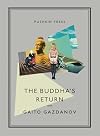
From the book’s inner cover: “A millionaire is killed. A golden statuette of a Buddha goes missing. A penniless student, who is afflicted by dream-like fits, is arrested and accused of murder. Slipping between the menacing dream world of the student’s fevered imagination, and the dark back alleys of the Paris underworld, The Buddha’s Return is part detective novel, part philosophical thriller and part love story.”
My take: this is a book to read for its profound philosophy, not show more necessarily the framework of the plot it’s hung on. There is the sense that the protagonist is out of touch with reality because he sometimes loses his grip on things, an example of which is imagining being imprisoned and interrogated for a crime against the state, and also believing he’s died before. However, I believe one of Gazdanov’s points is that he is actually more in touch with reality than the rest of us – understanding that this world around is illusory, that our individual lives are transient, and that we live in each and every thing around us, as part of a larger whole. Another is to point out the chance that is part of all of our lives, the arbitrariness of fate, and the randomness of being born into privilege in a capitalist world that is not a meritocracy. Pretty impressive stuff, particularly for 1949-50.
Quotes:
On death, and art:
“I tried to envisage everything my mind could envelop in the most comprehensive terms possible – the world as it was right now: the dark sky above Paris, its enormous expanse, thousands upon thousands of kilometers of ocean, the dawn over Melbourne, late evening in Moscow, the rushing of sea foam along the shores of Greece, the midday heat in the Bay of Bengal, the diaphanous movement of air across the earth, and time’s unstoppable march into the past. How many people had died while I had been standing there by the window, how many were now in their last agony as I had this very thought, how many bodies were writhing about in the throes of death – those for whom the inexorable final day of their lives had already dawned? I closed my eyes and before me appeared Michelangelo’s Last Judgement, and for whatever reason I immediately recalled his final epistle, in which he stated he could write no more. As I remembered these lines I felt a chill run down my spine: this hand that was now incapable of writing had carved David and Moses from marble – and yet his genius was dissolving into that very same nothingness from which it had come; each of his works an apparent victory over death and time.”
On demagogues:
“I also thought how state ethics, taken to their logical paroxysm – as the culmination of some collective delirium – would inevitably lead to an almost criminal notion of authority, and that, in such periods of history, power truly belongs to ignorant crooks and fanatics, tyrants and madmen…”
On lost love:
“How could I have thought then that I was unworthy of all this – the summer evenings, the intimacy with Catherine, her voice, her eyes and her diaphanous love? And how was it that these shadowy images, these descents into oblivion, my own shifting silhouette and the swaying instability of my life could seem so overwhelming that, fearing the inescapable illusoriness of existence, I would step into this abstract darkness, leaving that voice and these words behind, on the other side of this hateful expanse? Why did I do it?”
And this one, that sense of the moment gone:
“I had attended this concert at the Pleyel with Catherine; as she sat next to me, her misty tenderness had seemed to accentuate the sense of the melody, heightening the theme of memory in Kreisler’s playing. Attempting to translate the movement of sounds into my poverty of words, the meaning was approximately thus: that the feeling of happy plenitude is short-lived and illusory, it will leave only regret and as such it is sorrowful yet alluring warning. Because of this I knew that the moment could never be repeated, and I keenly sensed, perhaps because it too could never be repeated, the magic of the violin.”
On meaninglessness:
“I knew everyone on this street, just as I knew every odour, the look of every building, the glass of every window pane, and the lamentable imitation of life, intrinsic to each of its inhabitants, which never revealed its greatest secret: what inspired these people in the lives they led? What were their hopes, their desires, their aspirations, and to what end did each of them obediently, patiently repeat the same thing day after day? What could there be in all this – apart from some biological law that they obeyed unknowingly and unthinkingly? What had summoned them to life out of apocalyptic nothingness? The accidental and perhaps momentary union of two human bodies one evening or late one night a few dozen years ago?”
On oneness:
“…or was it that I was part of some vast human collective and the impenetrable membrane that separated me from other people and contained my individuality had suddenly lost its impermeability, allowing something foreign to rush in, like waves crashing into the crevice of a cliff?”
“Later I developed a strange and abiding desire – to vanish into thin air, like a phantom in a dream, like a patch of morning mist, like someone’s distant memory. I wanted to forget everything, everything that constituted me, beyond which it seemed impossible to imagine my own existence, this aggregate of absurd, random conventions – as though I desired to prove to myself that I had not one life, but many, and consequently that the conditions in which I found myself in no way limited my options.”
On religion:
“I once had occasion to read a most edifying encyclical by a pope – I forget which – who argued that one must know how to interpret the Church’s views on wealth and poverty correctly. Specifically, there could be no talk of donating one’s wealth, or even a tenth of it, to the poor: this was a misinterpretation. The tenth pertained to income; capital was never subject to Christian taxation. This is patently ridiculous, and if there is a hell, then I hope this pope, while he’s sat there, roasting for centuries in some gigantic frying pan, has found the time to realize his grievous error concerning the Church’s stance on property.” show less
My take: this is a book to read for its profound philosophy, not show more necessarily the framework of the plot it’s hung on. There is the sense that the protagonist is out of touch with reality because he sometimes loses his grip on things, an example of which is imagining being imprisoned and interrogated for a crime against the state, and also believing he’s died before. However, I believe one of Gazdanov’s points is that he is actually more in touch with reality than the rest of us – understanding that this world around is illusory, that our individual lives are transient, and that we live in each and every thing around us, as part of a larger whole. Another is to point out the chance that is part of all of our lives, the arbitrariness of fate, and the randomness of being born into privilege in a capitalist world that is not a meritocracy. Pretty impressive stuff, particularly for 1949-50.
Quotes:
On death, and art:
“I tried to envisage everything my mind could envelop in the most comprehensive terms possible – the world as it was right now: the dark sky above Paris, its enormous expanse, thousands upon thousands of kilometers of ocean, the dawn over Melbourne, late evening in Moscow, the rushing of sea foam along the shores of Greece, the midday heat in the Bay of Bengal, the diaphanous movement of air across the earth, and time’s unstoppable march into the past. How many people had died while I had been standing there by the window, how many were now in their last agony as I had this very thought, how many bodies were writhing about in the throes of death – those for whom the inexorable final day of their lives had already dawned? I closed my eyes and before me appeared Michelangelo’s Last Judgement, and for whatever reason I immediately recalled his final epistle, in which he stated he could write no more. As I remembered these lines I felt a chill run down my spine: this hand that was now incapable of writing had carved David and Moses from marble – and yet his genius was dissolving into that very same nothingness from which it had come; each of his works an apparent victory over death and time.”
On demagogues:
“I also thought how state ethics, taken to their logical paroxysm – as the culmination of some collective delirium – would inevitably lead to an almost criminal notion of authority, and that, in such periods of history, power truly belongs to ignorant crooks and fanatics, tyrants and madmen…”
On lost love:
“How could I have thought then that I was unworthy of all this – the summer evenings, the intimacy with Catherine, her voice, her eyes and her diaphanous love? And how was it that these shadowy images, these descents into oblivion, my own shifting silhouette and the swaying instability of my life could seem so overwhelming that, fearing the inescapable illusoriness of existence, I would step into this abstract darkness, leaving that voice and these words behind, on the other side of this hateful expanse? Why did I do it?”
And this one, that sense of the moment gone:
“I had attended this concert at the Pleyel with Catherine; as she sat next to me, her misty tenderness had seemed to accentuate the sense of the melody, heightening the theme of memory in Kreisler’s playing. Attempting to translate the movement of sounds into my poverty of words, the meaning was approximately thus: that the feeling of happy plenitude is short-lived and illusory, it will leave only regret and as such it is sorrowful yet alluring warning. Because of this I knew that the moment could never be repeated, and I keenly sensed, perhaps because it too could never be repeated, the magic of the violin.”
On meaninglessness:
“I knew everyone on this street, just as I knew every odour, the look of every building, the glass of every window pane, and the lamentable imitation of life, intrinsic to each of its inhabitants, which never revealed its greatest secret: what inspired these people in the lives they led? What were their hopes, their desires, their aspirations, and to what end did each of them obediently, patiently repeat the same thing day after day? What could there be in all this – apart from some biological law that they obeyed unknowingly and unthinkingly? What had summoned them to life out of apocalyptic nothingness? The accidental and perhaps momentary union of two human bodies one evening or late one night a few dozen years ago?”
On oneness:
“…or was it that I was part of some vast human collective and the impenetrable membrane that separated me from other people and contained my individuality had suddenly lost its impermeability, allowing something foreign to rush in, like waves crashing into the crevice of a cliff?”
“Later I developed a strange and abiding desire – to vanish into thin air, like a phantom in a dream, like a patch of morning mist, like someone’s distant memory. I wanted to forget everything, everything that constituted me, beyond which it seemed impossible to imagine my own existence, this aggregate of absurd, random conventions – as though I desired to prove to myself that I had not one life, but many, and consequently that the conditions in which I found myself in no way limited my options.”
On religion:
“I once had occasion to read a most edifying encyclical by a pope – I forget which – who argued that one must know how to interpret the Church’s views on wealth and poverty correctly. Specifically, there could be no talk of donating one’s wealth, or even a tenth of it, to the poor: this was a misinterpretation. The tenth pertained to income; capital was never subject to Christian taxation. This is patently ridiculous, and if there is a hell, then I hope this pope, while he’s sat there, roasting for centuries in some gigantic frying pan, has found the time to realize his grievous error concerning the Church’s stance on property.” show less

The book is clearly autobiographical. At least it appears to be and I proceed with the review having this assumption in mind.
There are touching descriptions of the author's childhood, beautiful passages devoted to his parents, and an unusually detailed account of the inner word of the protagonist/author. This inner world is composed of daydreams and overlaps with fever induced nightmares creating a somewhat surreal effect. Life of the growing child is strongly anchored to his internal world show more to such an extent that external impressions and events have little effect on forming of his character. He goes through life more like a detached observer than an active participant. This detachment is most evident in the author's matter of fact account of the horrors of the Civil war. This part of the book is perhaps most effective thanks to the observer's point of view. Atrocities and terror find little emotional response in the protagonist submerged in his own internal underworld. This lack of emotions in the description of the bloody carnage serves as an amplification device for the reader.
While looking into the author's mind is an unusual privilege we get in this book, what we see down there is not that pretty. There are interesting ideas and concepts but only a few. The dominating impression is an unjustified feeling of superiority the protagonist feels towards other people with a few notable exceptions. His judgement based on his inner world's presumed richness and his reading experience serves him as a method to easily dismiss people around him as not worthy, inferior. The only people who avoid this kind of treatment are those who themselves have an air of superiority about them: the protagonist's mother, a cold blooded killer and a talented singer Arkady Savin, spoiled and capricious Claire. It is Claire who enters the precarious inner world of the protagonist and her presence there drives his decisions. It is easy to see that Claire is about to lose her mythical position in the protagonist's imaginary hierarchy after he finally gets into her bed...
The impressions from this book support my earlier take on the author as an individual capable of interesting observations and unusual ideas. However, to me he remains somewhat immature, a brilliant adolescent arrested in his development either by brutal circumstances or by choice. Gaito Gazdanov is not an author I intend to read again. show less
There are touching descriptions of the author's childhood, beautiful passages devoted to his parents, and an unusually detailed account of the inner word of the protagonist/author. This inner world is composed of daydreams and overlaps with fever induced nightmares creating a somewhat surreal effect. Life of the growing child is strongly anchored to his internal world show more to such an extent that external impressions and events have little effect on forming of his character. He goes through life more like a detached observer than an active participant. This detachment is most evident in the author's matter of fact account of the horrors of the Civil war. This part of the book is perhaps most effective thanks to the observer's point of view. Atrocities and terror find little emotional response in the protagonist submerged in his own internal underworld. This lack of emotions in the description of the bloody carnage serves as an amplification device for the reader.
While looking into the author's mind is an unusual privilege we get in this book, what we see down there is not that pretty. There are interesting ideas and concepts but only a few. The dominating impression is an unjustified feeling of superiority the protagonist feels towards other people with a few notable exceptions. His judgement based on his inner world's presumed richness and his reading experience serves him as a method to easily dismiss people around him as not worthy, inferior. The only people who avoid this kind of treatment are those who themselves have an air of superiority about them: the protagonist's mother, a cold blooded killer and a talented singer Arkady Savin, spoiled and capricious Claire. It is Claire who enters the precarious inner world of the protagonist and her presence there drives his decisions. It is easy to see that Claire is about to lose her mythical position in the protagonist's imaginary hierarchy after he finally gets into her bed...
The impressions from this book support my earlier take on the author as an individual capable of interesting observations and unusual ideas. However, to me he remains somewhat immature, a brilliant adolescent arrested in his development either by brutal circumstances or by choice. Gaito Gazdanov is not an author I intend to read again. show less
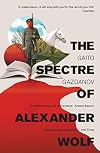
The initial premise to this story is intriguing – during the Russian Civil War, a 16-year-old encounters an enemy soldier alone in the woods and shoots him, an event that changes him forever. It would be too simple to say he’s haunted by it, but as traumatic memories will do, it floats into his consciousness unprovoked years later, even after he’s settled in Paris as an émigré. The first line grabs you: “Of all my memories, of all life’s innumerable sensations, the most onerous show more was that of the single murder I had committed.” While no one was a witness, eerily enough he comes across a description of the encounter in a book, and seeks out the author, Alexander Wolf.
While Gazdanov meanders in the plot from there in ways that may be dissatisfying to the reader, there is an ephemeral, dream-like quality to his writing, and as in one of his other books, ‘The Buddha’s Return’, this one is highly philosophical. The narrator has a sense of detachment, a little cynicism, and a heightened awareness of the transience of life and the “constant, icy proximity to death”, even as he’s going through his ‘normal life’, reporting on boxing matches, sitting in cafes, and having a love affair. We wonder about the mystery behind Alexander Wolf, and whether he is a split personality, an actual ghost, or some symbol of life ending at pivotal moments and starting again anew. Meanwhile, the actual point of the book seems to be in dualities: randomness and coincidence, life and death, isolation and interconnectedness, chance and fate, passion and intellect, and of course, the narrator and Alexander Wolf. One gets the sense that Gazdanov himself didn’t know where to take his initial premise, but the book succeeds for me because of the intelligence of his ruminations.
Quotes:
On chance, and unforgettable moments:
“Right then, I was struck by the thought that if I wanted to explain fully why this had happened, how it had been possible and how I now came to find myself in the forest on a summer’s night, in the rain, with a woman of whose existence I had known nothing only a few months before (and yet without whom I was now unable to imagine my life), I would have to spend years labouring and taxing my memory. I would probably be able to write a few volumes on it into the bargain. How was it all possible, the steady rhythm of the rain, the feeling of this head resting in my lap – my muscles already begun to get used to the imprint made by this round, tender weight on them – this face I was looking at in the darkness, as if leaning over my own fate, and this unforgettable feeling of blissful plenitude?”
On the cycle of a day:
“When I wake up every morning, I think to myself, Today my life will begin in earnest. I’ll feel as though I’m not much older than sixteen again, and that man who has known so much tragedy and sadness, he who fell asleep in my bed the previous night, will seem alien and distant, and I’ll comprehend neither his inner weariness nor his frustration. Then, as I go to sleep every night, I feel as though I’ve lived a long life, and yet all I’ve taken from it is the loathing and burden of lingering years. And so the day passes.
On happiness:
“If we’re possessed of that tragic, ferocious courage that forces man to live with his eyes open, can we really ever be happy? It’s impossible even to imagine that the world’s most extraordinary people were happy. Shakespeare couldn’t have been happy. Nor could Michelangelo.”
On interconnectedness:
“Every human life is connected to other human lives, those in turn are connected with others, and when we reach the logical end of this sequence of interrelations, we approach the sum total of people inhabiting the vast surface of the terrestrial globe. The constant threat of death in all its endless diversity hangs over every man, every life: catastrophe, train crash, earthquake, tempest, war, illness, accident, all manifestations of a blind and merciless power, a peculiarity of which consists in our inability ever to predict the moment when it – this instantaneous break in the history of the world – will happen.”
On love:
“’Every love affair is an attempt to thwart fate; it’s a naïve illusion of brief immortality,’ he once said. ‘Nevertheless, it’s probably the best thing that we’re ever given to know.’”
On passion:
“She was lying supine, her arms behind her head, without the slightest hint of modesty, gazing at my face with her impossibly serene eyes – it seemed almost incredible. Even when I felt (and not for the first time in my life) that inexplicable synthesis of pure emotion and physical sensation filling not only my entire consciousness, but everything, everything without exception, even the farthest muscles of my body; even then, when she said, ‘You’re hurting me,’ with so languorous an intonation that it seemed entirely misplaced, betraying neither complaint nor protest; and even then, when she gave a spasmodic shudder – her eyes remained just the same: deathly still.” show less
While Gazdanov meanders in the plot from there in ways that may be dissatisfying to the reader, there is an ephemeral, dream-like quality to his writing, and as in one of his other books, ‘The Buddha’s Return’, this one is highly philosophical. The narrator has a sense of detachment, a little cynicism, and a heightened awareness of the transience of life and the “constant, icy proximity to death”, even as he’s going through his ‘normal life’, reporting on boxing matches, sitting in cafes, and having a love affair. We wonder about the mystery behind Alexander Wolf, and whether he is a split personality, an actual ghost, or some symbol of life ending at pivotal moments and starting again anew. Meanwhile, the actual point of the book seems to be in dualities: randomness and coincidence, life and death, isolation and interconnectedness, chance and fate, passion and intellect, and of course, the narrator and Alexander Wolf. One gets the sense that Gazdanov himself didn’t know where to take his initial premise, but the book succeeds for me because of the intelligence of his ruminations.
Quotes:
On chance, and unforgettable moments:
“Right then, I was struck by the thought that if I wanted to explain fully why this had happened, how it had been possible and how I now came to find myself in the forest on a summer’s night, in the rain, with a woman of whose existence I had known nothing only a few months before (and yet without whom I was now unable to imagine my life), I would have to spend years labouring and taxing my memory. I would probably be able to write a few volumes on it into the bargain. How was it all possible, the steady rhythm of the rain, the feeling of this head resting in my lap – my muscles already begun to get used to the imprint made by this round, tender weight on them – this face I was looking at in the darkness, as if leaning over my own fate, and this unforgettable feeling of blissful plenitude?”
On the cycle of a day:
“When I wake up every morning, I think to myself, Today my life will begin in earnest. I’ll feel as though I’m not much older than sixteen again, and that man who has known so much tragedy and sadness, he who fell asleep in my bed the previous night, will seem alien and distant, and I’ll comprehend neither his inner weariness nor his frustration. Then, as I go to sleep every night, I feel as though I’ve lived a long life, and yet all I’ve taken from it is the loathing and burden of lingering years. And so the day passes.
On happiness:
“If we’re possessed of that tragic, ferocious courage that forces man to live with his eyes open, can we really ever be happy? It’s impossible even to imagine that the world’s most extraordinary people were happy. Shakespeare couldn’t have been happy. Nor could Michelangelo.”
On interconnectedness:
“Every human life is connected to other human lives, those in turn are connected with others, and when we reach the logical end of this sequence of interrelations, we approach the sum total of people inhabiting the vast surface of the terrestrial globe. The constant threat of death in all its endless diversity hangs over every man, every life: catastrophe, train crash, earthquake, tempest, war, illness, accident, all manifestations of a blind and merciless power, a peculiarity of which consists in our inability ever to predict the moment when it – this instantaneous break in the history of the world – will happen.”
On love:
“’Every love affair is an attempt to thwart fate; it’s a naïve illusion of brief immortality,’ he once said. ‘Nevertheless, it’s probably the best thing that we’re ever given to know.’”
On passion:
“She was lying supine, her arms behind her head, without the slightest hint of modesty, gazing at my face with her impossibly serene eyes – it seemed almost incredible. Even when I felt (and not for the first time in my life) that inexplicable synthesis of pure emotion and physical sensation filling not only my entire consciousness, but everything, everything without exception, even the farthest muscles of my body; even then, when she said, ‘You’re hurting me,’ with so languorous an intonation that it seemed entirely misplaced, betraying neither complaint nor protest; and even then, when she gave a spasmodic shudder – her eyes remained just the same: deathly still.” show less
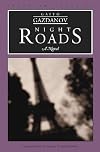
I have Covid, so read at your own risk. And, my review may be influenced by Covid brain fog. At least that's my excuse for what otherwise might sound like nonsense.
"Night Roads" is a wonderful little book. It is written in an easy to read style but this doesn't minimize its ability to examine the human condition in a very touching manner. The novel is based on the author's real life experiences driving a Paris taxi at the early stages of the 20th Century.
He relates very personal and often show more sad stories of people he meets in the course of his travels around the city. He often postures as a judgmental soul highlighting people's all too evident shortcomings. For me however, the author slowly reveals his compassion, respect, and concern for the unlucky people he meets. Tragic stories abound. But these stories are not presented for entertainment or simple pity. The author attempts to understand these life stories and use them to further enlighten his own life. A compassionate man who often seems to pretend to be an impartial viewer of people's misfortunes.
A simple but surprisingly human story. show less
"Night Roads" is a wonderful little book. It is written in an easy to read style but this doesn't minimize its ability to examine the human condition in a very touching manner. The novel is based on the author's real life experiences driving a Paris taxi at the early stages of the 20th Century.
He relates very personal and often show more sad stories of people he meets in the course of his travels around the city. He often postures as a judgmental soul highlighting people's all too evident shortcomings. For me however, the author slowly reveals his compassion, respect, and concern for the unlucky people he meets. Tragic stories abound. But these stories are not presented for entertainment or simple pity. The author attempts to understand these life stories and use them to further enlighten his own life. A compassionate man who often seems to pretend to be an impartial viewer of people's misfortunes.
A simple but surprisingly human story. show less
Lists
Awards


You May Also Like


Associated Authors
Statistics
- Works
- 27
- Also by
- 3
- Members
- 918
- Popularity
- #27,945
- Rating
- 3.7
- Reviews
- 28
- ISBNs
- 95
- Languages
- 12
- Favorited
- 4
