
Yasushi Inoue (1907–1991)
Author of The Hunting Gun
About the Author
Inoue Yasushi is considered to be the last of the Japanese masters, heir to the traditions of classical Chinese and Japanese literature. This journalist-turned-novelist writes poetry, historical fiction set in China and old Japan, and novels of modern Japan. His first fiction was published in 1948, show more and his choice of settings continues to reveal a superb feel for other times, places, and peoples. (Bowker Author Biography) show less
Image credit: The Japan Foundation, Sydney
Series
Works by Yasushi Inoue
盛装 3 copies
魔の季節 3 copies
Το Κυνηγετικό Όπλο 3 copies
オリーブ地帯 3 copies
天平の甍 3 copies
風と雲と砦 3 copies
河口 3 copies
わだつみ 第3部 2 copies
揺れる耳飾り 2 copies
わだつみ 第2部 2 copies
読書と私 : 書下しエッセイ集 2 copies
わだつみ 第1部 2 copies
しろばんば 2 copies
兵鼓 2 copies
春の嵐・通夜の客 2 copies
波濤 2 copies
夏草冬濤 2 copies
猟銃・闘牛 2 copies
敦煌 2 copies
断崖 2 copies
その人の名は言えない 2 copies
青衣の人 2 copies
白い牙 : 他一篇 2 copies
井上靖集 2 copies
楼蘭 2 copies
わが母の記 2 copies
崑崙の玉 2 copies
群舞 2 copies
黒い蝶 2 copies
花壇 2 copies
傾ける海 2 copies
崖. 下 2 copies
崖. 上 2 copies
幼き日のこと 青春放浪 2 copies
楊貴妃傳 2 copies
氷壁 2 copies
燭台 2 copies
Twee novelles 1 copy
Jagdgewehr, Das 1 copy
Le maitre de thé 1 copy
Kita no umi 2 (北の海 下) 1 copy
Kita no umi 1 (北の海 上) 1 copy
Tenpei no iraka (天平の甍) 1 copy
Bedil Perburuan 1 copy
Ryōjū,Tōgyū 1 copy
Loulan kaj Fremdregionano 1 copy
白い炎 = shiroihono 1 copy
月光 1 copy
満ちて来る潮 1 copy
天平の甍 1 copy
流砂(上) 1 copy
美しきものとの出会い 1 copy
西域物語 1 copy
歴史の光と影 1 copy
道・ローマの宿 1 copy
蒼き狼 風濤 (井上靖小說全集 16) 1 copy
古寺巡礼 近江 1 聖衆来迎寺 1 copy
井上靖文庫〈第26〉詩集・随筆・紀行 1 copy
新発掘報告 中国の美術と考古 1 copy
古寺巡礼 京都 3 醍醐寺 1 copy
流沙(下) 1 copy
Associated Works
Tagged
Common Knowledge
- Canonical name
- 井上 靖
- Legal name
- 井上 靖
- Other names
- Yasushi, Inoue
- Birthdate
- 1907-05-06
- Date of death
- 1991-01-29
- Gender
- male
- Occupations
- novelist
- Awards and honors
- Akutagawa Prize, 1950
Ministry of Education Prize for Literature, 1957
Mainichi Press Prize, 1959 - Nationality
- Japan
- Birthplace
- Asahikawa, Hokkaido, Japan
- Places of residence
- Tokyo, Japan
- Place of death
- Tokyo, Japan
- Burial location
- Kumanoyama Kyodo Bochi Memorial Park, Yugashima, Izu-city, Shizuoka, Japan
- Map Location
- Japon
- Associated Place (for map)
- Japan
Members
Reviews
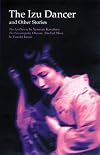
an odd collection of translated short stories from Tuttle, with one written by Yasunari Kawabata followed by three from Yasushi Inoue. Kawabata is one of my favourite writers ever; his delicate and unstated social transactions between parties speaks very little of the emotions governing the principals, but dwells on every gesture, every hesitation, every observation until the reader becomes a third party to every transaction, and the meaning is contained in what is never said. add this to show more the Japanese tendency in such stories, describing an old Japan hardly aware of yet colliding with the new before and after 1945, never to let the authorial voice in any way summarize or interpret the relationships, and every story becomes a painting of spare figures in a naturalistic world, a momentary breeze rippling a pond. allusive, evocative, burrowing into the ma concept of time and space that in these stories cannot quite be caught in the moment of meeting.
and this way of working at the world can come as a shock to the western mind, which wants the author to supply more hints about both what happened and what it meant. very subtle, this stuff, and plainly producing art. but also it describes context and complexity in very different formal terms - as a series of japanese tea ceremonies, say, deconstructed - that hardly seem to register on the page, yet become indelible in the mind's eye long after the story has been set aside. here the written story displays as art, composed with a calligraphic brush on a ricepaper page. which in general terms conveys beauty, runs an metaphysical expense account, and radiates solitude. but the meaning has been left for the reader to decipher.
Inoue, whom i had not read before, approaches his similar subjects a little differently, owing apparently to his own cast of mind. somewhat younger than Kawabata, with the same poetic pen but with more of a detail-oriented temperament, he tells stories that seem at first glance to be more matter-of-fact, but are not necessarily about what they seem to be about. consider his lead subject in "The Counterfeiter", a man who seems mere background detail in a story about an artist, until the biographer narrator seizes on him while trying to straighten out the detail of the artist's life for a biographical intro to his work. as he proceeds, there are any number of facts to find, yet they can hardly all be crammed into one tidy chronological narrative. he is compelled to become a detective. the timeline originally seems straightforward, but in the field he finds it difficult to straighten out the kink. how will he resolve these difficulties in order to continue? and do we as readers come to the same private conclusions about what the story means? the artist may not be the artist. there are questions of authenticity. yet neither the poet-writer nor the narrator really live in a world which sets out to solve such mysteries, so instead it's the nature of the encounters between the two principals that matters and yet cannot be altogether authenticated. none of this is ever stated, but between the straightforward account of the search and the unknowable truth behind it, there is a gap, creating a texture to the work that is simple yet very dense. very like, perhaps, what an artist does with pigment.
and so every story is painted onto a ricepaper scroll, rolled up by the writer and then unrolled by the reader. but beware, there is no gloss available for all the beyond that is buried on the page. and with both authors, the stage, every meeting, is set in the natural world, which holds a lot of the emotion that is not otherwise expressed. welcome to the ground of the japanese school of painting, literature, philosophy. there is a setting (here: mountains), time passes (in both directions), there are two people, there is a moment. but do they ever really meet? profound changes can occur if they do, but the tableau itself does not record much movement. every encounter is all built from allusion, down to the tiniest detail. yet bells are ringing somewhere in that empty sky. show less
and this way of working at the world can come as a shock to the western mind, which wants the author to supply more hints about both what happened and what it meant. very subtle, this stuff, and plainly producing art. but also it describes context and complexity in very different formal terms - as a series of japanese tea ceremonies, say, deconstructed - that hardly seem to register on the page, yet become indelible in the mind's eye long after the story has been set aside. here the written story displays as art, composed with a calligraphic brush on a ricepaper page. which in general terms conveys beauty, runs an metaphysical expense account, and radiates solitude. but the meaning has been left for the reader to decipher.
Inoue, whom i had not read before, approaches his similar subjects a little differently, owing apparently to his own cast of mind. somewhat younger than Kawabata, with the same poetic pen but with more of a detail-oriented temperament, he tells stories that seem at first glance to be more matter-of-fact, but are not necessarily about what they seem to be about. consider his lead subject in "The Counterfeiter", a man who seems mere background detail in a story about an artist, until the biographer narrator seizes on him while trying to straighten out the detail of the artist's life for a biographical intro to his work. as he proceeds, there are any number of facts to find, yet they can hardly all be crammed into one tidy chronological narrative. he is compelled to become a detective. the timeline originally seems straightforward, but in the field he finds it difficult to straighten out the kink. how will he resolve these difficulties in order to continue? and do we as readers come to the same private conclusions about what the story means? the artist may not be the artist. there are questions of authenticity. yet neither the poet-writer nor the narrator really live in a world which sets out to solve such mysteries, so instead it's the nature of the encounters between the two principals that matters and yet cannot be altogether authenticated. none of this is ever stated, but between the straightforward account of the search and the unknowable truth behind it, there is a gap, creating a texture to the work that is simple yet very dense. very like, perhaps, what an artist does with pigment.
and so every story is painted onto a ricepaper scroll, rolled up by the writer and then unrolled by the reader. but beware, there is no gloss available for all the beyond that is buried on the page. and with both authors, the stage, every meeting, is set in the natural world, which holds a lot of the emotion that is not otherwise expressed. welcome to the ground of the japanese school of painting, literature, philosophy. there is a setting (here: mountains), time passes (in both directions), there are two people, there is a moment. but do they ever really meet? profound changes can occur if they do, but the tableau itself does not record much movement. every encounter is all built from allusion, down to the tiniest detail. yet bells are ringing somewhere in that empty sky. show less

Íme egy tipikus japán klisé, képzeljük el mondjuk falfestményként: sápadt gésa áll selyem kimonóban a virágzó cseresznyefák alatt, háttérben magányos hókupolás hegy magasodik*. Ugyanez, ami az irodalmat illeti: szertartásosság, merev formák, finom mondatok, erősen letompított mesélő kedv, valamint lágyan rajzolt természeti képek. Inoue Jaszusi három elbeszélésére mindez igaz, de van bennük valami, ami túlmutat ezen – a szerző ugyanis rábök a falikép show more bal alsó sarkában egy rejtekajtóra, kitárja azt, és az olvasó betekinthet a külcsín mögé, családi tragédiát talál ott, eltitkolt szerelmet, privát fájdalmakat, amelyek szétfeszítik a festett kép kereteit. Látjuk a fogaskereket, miközben a gép mozog. Emlékezetes kis kötet.
A címadó elbeszélés (Utazás a Fudaraku-paradicsomba) pedig nemcsak az egyik legjobb japán írás, amit valaha olvastam, de egyáltalán: az egyik legjobb szöveg, amit a kételyről valaha írtak.
* Vagy mindez haikuban:
Selyem gésa áll
hókupolás hegy előtt
cseresznyevirág. show less
A címadó elbeszélés (Utazás a Fudaraku-paradicsomba) pedig nemcsak az egyik legjobb japán írás, amit valaha olvastam, de egyáltalán: az egyik legjobb szöveg, amit a kételyről valaha írtak.
* Vagy mindez haikuban:
Selyem gésa áll
hókupolás hegy előtt
cseresznyevirág. show less

In 1026, Chao Hsing-te falls asleep in a courtyard and misses his call for an all-important examination that will land him a coveted job in the Chinese civil service. With his life plans turned upside down, he wanders aimlessly and then a chance encounter makes him decide to travel westward so he can learn the language of the Hsi-hsias, a neighboring people who are threatening the western boundaries of China. Over the subsequent years, he wanders, frequently changing course on what seems to show more be spur of the moment: fighting battles with the vanguard Chinese unit of the Hsi-hsia army, falling in love with a princess caught in a captured city, learning to write the Hsi-hsia language and creating a Hsi-hsia - Chinese dictionary, traveling with an arrogant and successful trader, studying and becoming enamored of Buddhism. All of this leads up to his role in an actual historic event, hiding thousands of Buddhist scrolls in the caves at Tun-huang, scrolls that were not rediscovered until the 20th century.
While I found Hsing-te's personality a little difficult to understand and Inoue's focus on the nobility of characters with royal blood a little irritating, I really enjoyed the depiction of the environment, people, and the interactions among warriors, traders, and scholars in the western regions of China and central Asia nearly 1000 years ago. And it is an adventure story too; I definitely kept wanting to find out what was going to happen Inoue's writing is deceptively simple, but well suited to what reads almost like a history, a history with fascinating characters. show less
While I found Hsing-te's personality a little difficult to understand and Inoue's focus on the nobility of characters with royal blood a little irritating, I really enjoyed the depiction of the environment, people, and the interactions among warriors, traders, and scholars in the western regions of China and central Asia nearly 1000 years ago. And it is an adventure story too; I definitely kept wanting to find out what was going to happen Inoue's writing is deceptively simple, but well suited to what reads almost like a history, a history with fascinating characters. show less
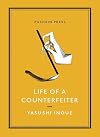
This volume, issued in the attractive "Pushkin Collection" series, includes three stories by Yasushi Inoue (1907-1991), one of the leading Japanese authors of the 20th Century. Two of the pieces - "Reeds" and "Mr Goodall's Gloves" appear in English for the first time in a translation by Michael Emmerich, who also provides a new translation of "Life of a Counterfeiter".
"Life of a Counterfeiter" is the longest - and by far the most compelling - of the featured tales. Its narrator is an Osaka show more arts journalist who is commissioned to write the biography of the artist Onuki Keigaku. The task turns out to be more difficult than envisaged and years pass without the narrator concluding his job. During his research he comes across the shadowy figure of Hara Hosen, a one-time friend of Keigaku who falls out with him after Hosen starts forging Keigaku's works. Ironically, it is Hosen who takes hold of the narrator's imagination, displacing Keigaku who should be the subject of the biography. Through a mixture of dogged research and serendipitous discoveries, the narrator starts piecing together the story of Hara Hosen and his life's obsessions - art for a start but, later, also fireworks manufacturing and the quest for an elusive sort of deep-violet 'chrysantemum' firework.
The story is conceptually interesting and well-executed. The contrast between the "authentic" art and forgeries prompts ruminations about fact and fiction, memory and authorship. As the narrator teases out more details about Hosen, our perception starts changing - from a roguish, despicable figure Hosen almost takes on the stature of a tragic anti-hero. "Life of a Counterfeiter" is also likely the first story I ever read which made me feel some of the excitement which leads fireworks manufacturers to risk life and limb in pursuit of their dreams.
The other two pieces included in this collection have similar themes but are more autobiographical in nature. This time it is the author himself who sifts through half-forgotten childhood memories, trying to understand and, possibly, retain a grip, on a past which is slipping out of reach. Unfortunately, however, I did not warm to these two vignettes. Inoue's approach here seems rambling and erratic and whilst this was also partly the case with "Life of a Counterfeiter", there was an overarching thrust to that story which I thought missing in "Reeds" and "Mr Goodall's Gloves". I found myself thinking - rather unreasonably and unfairly, I admit - that there could have been a good reason why they had remained untranslated to date... show less
"Life of a Counterfeiter" is the longest - and by far the most compelling - of the featured tales. Its narrator is an Osaka show more arts journalist who is commissioned to write the biography of the artist Onuki Keigaku. The task turns out to be more difficult than envisaged and years pass without the narrator concluding his job. During his research he comes across the shadowy figure of Hara Hosen, a one-time friend of Keigaku who falls out with him after Hosen starts forging Keigaku's works. Ironically, it is Hosen who takes hold of the narrator's imagination, displacing Keigaku who should be the subject of the biography. Through a mixture of dogged research and serendipitous discoveries, the narrator starts piecing together the story of Hara Hosen and his life's obsessions - art for a start but, later, also fireworks manufacturing and the quest for an elusive sort of deep-violet 'chrysantemum' firework.
The story is conceptually interesting and well-executed. The contrast between the "authentic" art and forgeries prompts ruminations about fact and fiction, memory and authorship. As the narrator teases out more details about Hosen, our perception starts changing - from a roguish, despicable figure Hosen almost takes on the stature of a tragic anti-hero. "Life of a Counterfeiter" is also likely the first story I ever read which made me feel some of the excitement which leads fireworks manufacturers to risk life and limb in pursuit of their dreams.
The other two pieces included in this collection have similar themes but are more autobiographical in nature. This time it is the author himself who sifts through half-forgotten childhood memories, trying to understand and, possibly, retain a grip, on a past which is slipping out of reach. Unfortunately, however, I did not warm to these two vignettes. Inoue's approach here seems rambling and erratic and whilst this was also partly the case with "Life of a Counterfeiter", there was an overarching thrust to that story which I thought missing in "Reeds" and "Mr Goodall's Gloves". I found myself thinking - rather unreasonably and unfairly, I admit - that there could have been a good reason why they had remained untranslated to date... show less
Lists
Awards


You May Also Like


Associated Authors
Statistics
- Works
- 166
- Also by
- 4
- Members
- 2,641
- Popularity
- #9,721
- Rating
- 3.8
- Reviews
- 57
- ISBNs
- 293
- Languages
- 15
- Favorited
- 6
