
Eiji Yoshikawa (1892–1962)
Author of Musashi
About the Author
Series
Works by Eiji Yoshikawa
De steen en de sabel 6 copies
親鸞 ( 二)= Shinran (2) 3 copies
吉川英治全集. 第2巻 (鳴門秘帖) 3 copies
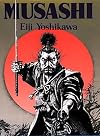
Musashi by Eiji Yoshikawa 2 copies
Sangokushi 6 (三国志 6) 1 copy
Pot meča 1 copy
大岡越前 (吉川英治歴史時代文庫) 1 copy
黒田如水 1 copy
宮本武蔵(8) 1 copy
宮本武蔵(7) 1 copy
宮本武蔵(6) 1 copy
新・水滸伝 (4) (吉川英治文庫 (123)) 1 copy
新・水滸伝 (2) (吉川英治文庫 (121)) 1 copy
吉川英治全集 40. 私本太平記 2. 1 copy
吉川英治全集 36. : 新・平家物語 4. 1 copy
吉川英治全集 38. : 新・平家物語 6. 1 copy
吉川英治全集 37. : 新・平家物語 5. 1 copy
新・平家物語 完全版 1 copy
【無料体験】 宮本武蔵 (Kindle 連載) 1 copy
Shin Suikoden 2 1 copy
Óoka Echizen (大岡越前) 1 copy
Sangokushi 1 (三国志 1) 1 copy
Sangokushi 2 (三国志 2) 1 copy
Miyamoto musashi : 1 1 copy
Povestea familiei Heike 1 copy
新・水滸伝 (3) (吉川英治文庫 (122)) 1 copy
සමුරායි රණබිම 1 copy
Sangokushi 3 (三国志 3) 1 copy
Sangokushi 4 (三国志 4) 1 copy
Sangokushi 5 (三国志 5) 1 copy
Sangokushi 8 (三国志 8) 1 copy
Sangokushi 7 (三国志 7) 1 copy
宮本武蔵 02 地の巻 1 copy
宮本武蔵 5 = miyamotomusashi 5 1 copy
Associated Works
Swords and Sorcerers: Stories from the Worlds of Fantasy and Adventure (2002) — Contributor — 18 copies
Tagged
Common Knowledge
- Canonical name
- Yoshikawa, Eiji
- Legal name
- Yoshikawa, Hidetsugu
- Other names
- Kijiro
- Birthdate
- 1892-08-11
- Date of death
- 1962-09-07
- Gender
- male
- Occupations
- writer
journalist - Awards and honors
- Cultural Order of Merit (1960)
Order of the Sacred Treasure
Mainichi Art Award - Short biography
- Born in Kanagawa Prefecture, August 11, 1892. Hidetsugu Yoshikawa received only a primary school education. At the age of 18 he became interested in Haiku. In 1914 he released the novel "Tale of Enoshima" winning his first award. He was sponsored by Kodansha and in 1921 he joined Maiyu Shimbum newspaper and he published serializations. In 1923 he married Yasu Akazawa and in the following years he wrote various stories which were published by Kodansha. He had a total of 19 psuedonyms before settling on Eiji Yoshikawa and after writing the "Road of Naruto" his name became more well known. His writing styles changed over the years, in 1930 his style become more personal but in 1935 he wrote "Musashi" which settled his style of historical adventures. In 1937 when the war the China began he was sent in as a reporter of the war. During this he remarried to Fumiko Ikedo and continued writing novels with more inspiration from Chinese culture. When the war ended he retired to Yoshino and lived a quiet life. His last work was "A Private Record of the Pacific Was" in 1958. He died from cancer complications on September 7, 1962.
- Cause of death
- cancer
- Nationality
- Japan
- Birthplace
- Kanagawa prefecture, Japan
- Place of death
- Tokyo, Japan
- Associated Place (for map)
- Japan
Members
Reviews

Musashi is Japan's "Gone with the Wind" for scope, size, status and content. It is a Japanese historical fiction epic written in the 1930s, celebrating the samurai mystique without becoming overly melodramatic about it. Many of its characters, including Musashi himself, are drawn from life. Unlike the heroes of western fiction, these are refreshingly sensitive to shame and conscious of responsibility. It's lightweight fast-paced fare that relies on dialogue, action and humour. My copy is the show more 1980s American paperback edition, published in five parts.
In part three, Musashi's growth is more evident as he begins to appreciate a broader range of powers besides those of the sword. It is his steady growth and how he learns that really drives the plot, since there's no way to imagine he doesn't win in the end. Consequently the Yoshioka school begins to remind me of a gambling addict that doesn't know when to walk away from the table. The well portrayed setting, random bits of humour and secondary plots provide plenty of fuel to keep things interesting. show less
In part three, Musashi's growth is more evident as he begins to appreciate a broader range of powers besides those of the sword. It is his steady growth and how he learns that really drives the plot, since there's no way to imagine he doesn't win in the end. Consequently the Yoshioka school begins to remind me of a gambling addict that doesn't know when to walk away from the table. The well portrayed setting, random bits of humour and secondary plots provide plenty of fuel to keep things interesting. show less

Musashi is Japan's "Gone with the Wind" for scope, size, status and content. It is a Japanese historical fiction epic written in the 1930s, celebrating the samurai mystique without becoming overly melodramatic about it. Many of its characters, including Musashi himself, are drawn from life. Unlike the heroes of western fiction, these are refreshingly sensitive to shame and conscious of responsibility. It's lightweight fast-paced fare that relies on dialogue, action and humour. My copy is the show more 1980s American paperback edition, published in five parts.
In part two, Musashi's fervent desire to prove his skills becomes obnoxious to guests who only wish him well, proving that true wisdom still lies beyond his grasp. Greater illumination is shed on the difference the Tokugawa Shogunate is making to society, as the contrast between samurai and the merchant class becomes a more level playing field. By the end of this part Musashi has at least progressed to the point where he seems satisfied to defeat his rivals without killing them. show less
In part two, Musashi's fervent desire to prove his skills becomes obnoxious to guests who only wish him well, proving that true wisdom still lies beyond his grasp. Greater illumination is shed on the difference the Tokugawa Shogunate is making to society, as the contrast between samurai and the merchant class becomes a more level playing field. By the end of this part Musashi has at least progressed to the point where he seems satisfied to defeat his rivals without killing them. show less

Musashi is Japan's "Gone with the Wind" for scope, size, status and content. It is a Japanese historical fiction epic written in the 1930s, celebrating the samurai mystique without becoming overly melodramatic about it. Many of its characters, including Musashi himself, are drawn from life. Unlike the heroes of western fiction, these are refreshingly sensitive to shame and conscious of responsibility. It's lightweight fast-paced fare that relies on dialogue, action and humour. My copy is the show more 1980s American paperback edition, published in five parts.
In part four Musashi's wisdom grows by leaps and bounds, heralded by his realizing his past foolishness and how very far he has yet to go. Whereas the early parts had me wondering whether this reading was actually worthwhile, now I'm fully invested in the journey. Things are coming to a head between Musashi and his nemesis. The switch to the Edo setting has also added interest, expanding the number of important players in Musashi's life and providing even more insight into 17th century Japan. show less
In part four Musashi's wisdom grows by leaps and bounds, heralded by his realizing his past foolishness and how very far he has yet to go. Whereas the early parts had me wondering whether this reading was actually worthwhile, now I'm fully invested in the journey. Things are coming to a head between Musashi and his nemesis. The switch to the Edo setting has also added interest, expanding the number of important players in Musashi's life and providing even more insight into 17th century Japan. show less
Loved it even though I hated so many of the characters….mind you, that was kind of inevitable. The book opens at the battle of Segikahara, just when Shogun ends - so I was able to easily catch my bearings in the world and float along for the rest of it. Slog yes, but an enjoyable one.
Lists
Awards


You May Also Like


Associated Authors
Statistics
- Works
- 170
- Also by
- 13
- Members
- 4,177
- Popularity
- #6,025
- Rating
- 4.3
- Reviews
- 75
- ISBNs
- 233
- Languages
- 16
- Favorited
- 16
