
Alexander Lernet-Holenia (1897–1976)
Author of Baron Bagge
About the Author
Image credit: Photograph © ÖNB/Wien
Works by Alexander Lernet-Holenia
Greta Garbo. Ein Wunder in Bildern 2 copies
I re magi di Totenleben 2 copies
Die neue Atlantis, Erzählungen 2 copies
Greta Garbo : ein Wunder in Bildern 2 copies
Riviera 2 copies
Der wahre Werther 1 copy
Der 20. Juli. Erzählung 1 copy
Il conte di Saint Germain 1 copy
Mona Lisa 1 copy
L'étendard 1 copy
Il Conte di Saint-Germain 1 copy
The glory is departed 1 copy
Germanien = Germania 1 copy
Associated Works
50 seltsame Geschichten — Contributor — 1 copy
Tagged
Common Knowledge
- Legal name
- Lernet, Alexander Marie Norbert
- Other names
- Dampierre, G. T. (pseudonym)
- Birthdate
- 1897-10-21
- Date of death
- 1976-07-03
- Gender
- male
- Education
- University of Vienna
- Occupations
- dramatist
poet
novelist - Organizations
- Deutsche Akademie für Sprache und Dichtung
- Awards and honors
- Literaturpreis der Stadt Wien (1951)
Kleist Prize (1926)
Goethe Prize (1927)
Großes Verdienstkreuz der Bundesrepublik Deutschland (1958)
Großer Österreichischer Staatspreis (1961)
Österreichisches Ehrenzeichen für Wissenschaft und Kunst (1968) - Relationships
- Vollbach, Eva (wife)
- Nationality
- Austria
- Birthplace
- Vienna, Austria
- Place of death
- Vienna, Austria
- Associated Place (for map)
- Vienna, Austria
Members
Reviews
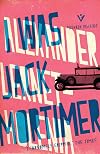
To each his own, but I seriously don't get the low ratings for this book. Maybe there's something wrong with me in the sense that I prefer well-written, older novels to much of what's on today's crime fiction shelves, but this book from the 1930s runs rings around a lot of newer stuff I've read recently. It's suspenseful, is a really good story, and, since I read mainly to discover what makes people tick or what drives people to make the choices they make, it also works nicely as a character show more study. Evidently, though, my high opinion of this novel isn't shared by a lot of readers, who in general give it an average overall rating mainly because of the plot. Well, this book is a prime example of what you can miss when plot and story arc are the main things on your mind.
For example, I've seen this novel labeled as a thriller, and I suppose there are a number of thriller-type elements, but I got much more of a noir sort of flavor from it -- the hapless Joe who's in the wrong place at the wrong time, looking for a way out of his predicament only to discover that he just may be trapped by fate and his own choices. It really doesn't take that long to figure out just how much the main character's life is spiraling out of control, along with the lives of those who fall within his immediate orbit. In this case, we have our main character caught smack in the middle of a collision course between the past and the present.
Both this book and the 1935 German film I watched earlier today are definite yesses. Trust me, there's nothing average about this book at all -- it's another fine example of an old book that has been largely forgotten, and thanks to Pushkin Vertigo, it's now widely available. Once again I'll say that I do understand that crime from 1930s may not be everyone's cup of tea, but I seem to be encountering a lot of these old novels that are really, really good and which definitely ought to be part of every serious crime fiction reader's repertoire.
Recommended to all crime readers, but most especially to readers who love these old books as much as I do.
for more on plot, etc.: click here show less
For example, I've seen this novel labeled as a thriller, and I suppose there are a number of thriller-type elements, but I got much more of a noir sort of flavor from it -- the hapless Joe who's in the wrong place at the wrong time, looking for a way out of his predicament only to discover that he just may be trapped by fate and his own choices. It really doesn't take that long to figure out just how much the main character's life is spiraling out of control, along with the lives of those who fall within his immediate orbit. In this case, we have our main character caught smack in the middle of a collision course between the past and the present.
Both this book and the 1935 German film I watched earlier today are definite yesses. Trust me, there's nothing average about this book at all -- it's another fine example of an old book that has been largely forgotten, and thanks to Pushkin Vertigo, it's now widely available. Once again I'll say that I do understand that crime from 1930s may not be everyone's cup of tea, but I seem to be encountering a lot of these old novels that are really, really good and which definitely ought to be part of every serious crime fiction reader's repertoire.
Recommended to all crime readers, but most especially to readers who love these old books as much as I do.
for more on plot, etc.: click here show less
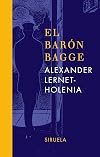
El austriaco Alexander Lernet-Holenia (1897-1976) combatió en ambas guerras mundiales y tuvo una vida militar ejemplar, carrera que abandonó para dedicarse por completo a la escritura. Entre otros colegas y amigos escritores austriacos, se encuentran Stefan Zweig y Leo Perutz. Actualmente está considerado como uno de los escritores austriacos con más renombre. Entre su obra destaca ‘El estandarte’, ‘Las dos Sicilias’, ‘El joven Moncada’ o ‘El Conde Luna’, siendo entre las show more más apreciadas dentro de su producción las de corte fantástico, como es ‘El barón Bagge’.
La historia de ‘El barón Bagge’ es sencilla. En pleno invierno de 1915, un destacamento de ciento veinte jinetes del imperio austro-húngaro, entre los que se encuentra el narrador, el barón Bagge (que ya al principio cuenta que fue el único superviviente), avanzan por los Cárpatos en busca de enemigos rusos. Atraviesan llanuras desoladas y heladas, bajo un cielo plomizo, densas y cenicientas nieblas, soportando nevadas, viento y lluvia. Pese a que el enemigo parece inalcanzable, el obstinado jefe al mando se empeña en avanzar.
Entre lo onírico y lo real, transcurre esta narración, donde lo que en un principio parece sosegado y cotidiano, se va tornando extraño y fantástico. Parábola entre la vida y la muerte, donde destacaría la última parte de la novela, que deja un regusto melancólico y poético. Magnífica novela. show less
La historia de ‘El barón Bagge’ es sencilla. En pleno invierno de 1915, un destacamento de ciento veinte jinetes del imperio austro-húngaro, entre los que se encuentra el narrador, el barón Bagge (que ya al principio cuenta que fue el único superviviente), avanzan por los Cárpatos en busca de enemigos rusos. Atraviesan llanuras desoladas y heladas, bajo un cielo plomizo, densas y cenicientas nieblas, soportando nevadas, viento y lluvia. Pese a que el enemigo parece inalcanzable, el obstinado jefe al mando se empeña en avanzar.
Entre lo onírico y lo real, transcurre esta narración, donde lo que en un principio parece sosegado y cotidiano, se va tornando extraño y fantástico. Parábola entre la vida y la muerte, donde destacaría la última parte de la novela, que deja un regusto melancólico y poético. Magnífica novela. show less
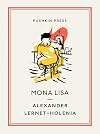
A beautifully illustrated edition of a novella (really almost more a short story) by Alexander Lernet-Holenia, in which we get a little bit of a satirical caper set around the painting of the Mona Lisa in the early 16th century. Wry, tragicomic, tongue-in-cheek.
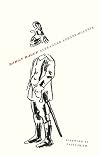
Like a Central European Ambrose Bierce fantasy. A ghost story of World War One set in the wintry foothills of the Carpathians. Excellent. The book is padded out with two letters from the author to Stefan Zweig and one in the other direction.
Lists
Schwob Nederland (1)
You May Also Like


Associated Authors
Statistics
- Works
- 54
- Also by
- 4
- Members
- 840
- Popularity
- #30,424
- Rating
- 3.9
- Reviews
- 16
- ISBNs
- 104
- Languages
- 7
- Favorited
- 4