
Tommaso Landolfi (1908–1979)
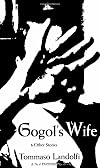
Author of Gogol's Wife: & Other Stories
About the Author
Works by Tommaso Landolfi
La muta: due racconti 6 copies
I grandi racconti russi 5 copies
Breve canzoniere 3 copies
Faust 67 3 copies
Racconto d’autunno 2 copies
(Untitled) {short story} 2 copies
Racconti 2 copies
In società 1 copy
Reina de cancer 1 copy
Acaso 1 copy
HIl Iprincipe infelice 1 copy
月ノ石 (Modern & Classicシリーズ) 1 copy
La muta Mano rubata 1 copy
Twee oude vrijsters 1 copy
Gogol's Wife [short fiction] 1 copy
Relato de otoño 1 copy
Racconti russi 1 copy
Landolfo VI di Benevento 1 copy
Mano rubata: due racconti 1 copy
Opere 1 copy
Unmögliche Geschichten 1 copy
Opere II (1960-1971) 1 copy
Tommaso Landolfi 1 copy
Morze Karaluchów 1 copy
Associated Works
The Art of the Tale: An International Anthology of Short Stories (1986) — Contributor — 381 copies, 3 reviews
Tagged
Common Knowledge
- Canonical name
- Landolfi, Tommaso
- Legal name
- Landolfi, Tommaso
- Birthdate
- 1908-08-09
- Date of death
- 1979-07-08
- Gender
- male
- Education
- University of Florence
- Occupations
- author
translator
literary critic - Nationality
- Italy
- Birthplace
- Pico, Frosinone, Lazio, Italy
- Places of residence
- Pico (Frosinone), Italy
- Place of death
- Ronciglione, Viterbo, Lazio, Italy
- Map Location
- Italië
- Associated Place (for map)
- Lazio, Italy
Members
Reviews

Tales of obsession and the grotesque combined with the Gothic, anyone? If you enjoy such stories as those penned by Edgar Allen Poe, H. P. Lovecraft, Thomas Legotti, and Jorge Luis Borges, you are in for a real treat with this Tommaso Landolfi love story, perhaps the most bizarre love story I’ve ever encountered, a much overlooked classic published as part of the prestigious Eridanos Library, the only novel by the author to be translated into English.
Landolfi has been referred to as show more “that Italian weirdo” which contains a modicum of truth since much of the author’s fiction is as weird as weird can be. For example, in his short story The Labrenas, an aristocratic first person narrator relates how he has always been terrified at the prospect of an invasion by small reptilian creatures, labrenas, overrunning his house. One pitch-black night, while settling down for sleep, he imagines the labrenas approaching; he falls into such a physical paralysis his family takes him for dead and arranges his funeral. Once in the casket downstairs in the parlor (all through this ordeal, he has maintained full awareness), he is driven mad – a labrena has found a way to sneak into his casket so it can scrutinize him face-to-face with its round, bulging, glittering eyes.
Gogol’s Wife tells the tale of how the wife of Nikolai Gogol is not a woman at all, or, for that matter, a human being; rather Nikolai Gogol’s wife is a life-size inflatable flesh-colored rubber doll, nude in all seasons. Things goes well for the couple, at least for a time, before Nikolai Vasilyevich becomes progressively more disgusted and agitated with his wife who refuses to conduct herself in a gentile manner, even when entertaining house guests.
With the tale Uxoricide another aristocrat tells us how easy it is to murder people – case in point, he explains in exquisite detail how he murdered his wife by gagging her and binding her to a chair before engaging in a perfectly rational conversation outlining her faults and shortcomings, a conversation where all she could offer, by way of modest objection, was a constant, obnoxious “Mmmmmm” before succumbing to a massive heart attack.
And lastly, in Cancerqueen yet again another aristocrat recaps his boredom on earth leading him to join a half-mad space explorer blasting off in a rocket ship. Joris-Karl Huysmans’ novel of French decadence Against Nature meets Star Trek – wildly weird in the extreme.
Turning now to An Autumn Story, in a mountainous forest in Italy, fleeing both rebel and foreign troops, the narrator, a soldier, seeks refuge in a centuries-old isolated mansion inhabited by an aging reclusive aristocrat and his two huge wolfhounds. But the old man’s crumbling home contains much more, the entire atmosphere of this dark labyrinthine mansion is bathed in the gloomy Gothic. And there’s something even more foreboding – an unseen mysterious presence. It’s as if Tommaso Landolfi took his usual fistful of weirdness from his tales and spread it throughout this novel, creating what could be seen as a fresh combination: the weird Gothic.
Although the narrator first approaches the hidden mansion as a desperate, fatigued, half-starved soldier, we come to learn he also possesses the heart of both an aristocrat and a romantic poet. In his initial exploration of the rooms from the outside, peering through the large, iron-grilled windows at two wolfhounds with ferocious faces, we read: “I thought I noticed something desperate deep in the eyes of the hounds, and my agitated nerves made me detect that same desperation in their howling, almost as if they were miserable creatures or souls in torment, bound to that place by some cruel spell.”
Insanity, madness, obsession, sorcery, spirit possession play their part in this Landolfi tale but more than anything, all one-hundred-fifty pages are coated with a haunting atmosphere, a most peculiar brooding tinged with menace. At one point, the narrator contemplates a portrait of a woman on the wall in a downstairs dinning room. After describing her clothing and jewelry, her haughty bearing and pale skin and delicate features, he observes: “However, the most vivid and disturbing element was her huge dark eyes. Their deep gaze seemed to have the same character as the old man’s gaze and, hence, that of the dogs: It was animated by the same gloom, indeed a more imperious one, and, simultaneously, by the same remote and pitiable bewilderment, if not desperation.”
For Italo Calvino the first rule of the game in reading Tommaso Landolfi is to expect a surprise that will rarely be pleasant or soothing. Curiously, from what I have written above, you might not think An Autumn Story could be a love story. But it is a love story. How the love story unfolds is the surprise.
Tommaso Landolfi (1908-1979) – Italian author, translator and aristocrat par excellence. Susan Sontag considered Landolfi’s fiction a cross between Jorge Luis Borges and Isak Dinesen. show less
The narrator of this war-time tale is a fugitive. As the novella opens the narrator is being chased and after going further and further into forest clad ravines that are foreign and strange to him he encounters an eerie mansion in the woods. He explores around the grounds and almost immediately encounters two ferocious wolfhounds. Ultimately an old man appears and lets him enter. The strangeness of the place grows slowly with the fugitive narrator soon feeling that the house itself was show more alive:
"Climbing over a mountain, the sun had finally reached the window. But the window seemed, if I may put it this way, surprised and annoyed by that torrent of light. Every single object appeared virtually stupefied--I might almost say: bewildered." (36)
The fugitive is allowed to stay by the old man and later he has a chance to explore "every nook and cranny of the place." His exploration leads him to a room with a large portrait of a woman that almost instantly mesmerizes him. He describes the portrait in detail but finds "the most vivid and disturbing element was her huge, dark eyes. Their deep gaze seemed to have the same character as the old man's gaze and, hence, that of the dogs: It was animated by the same gloom, indeed a more imperious one, and, simultaneously, by the same remote and pitiable bewilderment,if not desperation. The common character, therefore had to be due to a more subtle kinship than that of blood, if man and beast were on a par here. And yet her gaze spoke on infinity of other languages to the senses and the heart! Her eyes seemed intensely magnetic, and I was unable to look away."(45-46)
This is only one third of the way into the story, and the mysteries continue to build as the fugitive has further encounters with the presence of this eldritch place at the edge of the world. The motifs of eyes, gazes, gloom, and disturbance abound as the enigmatic experiences of the fugitive heighten the tension. We gradually learn more about the background of the old man, and more about his strange mansion, and the discovery of a woman in the mansion:
"Curling, twisting, thickening, the smoke gave way to a large female figure emerging from the brazier. Hovering in mid-air, the figure still vaguely undulated all over, but then coagulated, rapidly fixing into a precise image, with alternate streams of light, or rather smoke, pouring through it. As if the smoke were the figure's visible blood." (103)
Whether this is a dream or reality the women of this strange place become just another piece of the mystery. For just as the fugitive searches following paths are compared to the "thread of Ariadne", the reality of the place and its inhabitant(s) come into question. The catastatis of the narrative provides complexities sufficient to make this one of the most competent novellas of its kind. That is a story of adventure, Eros, and mystery combined with a deeper sense of the spirit of the unknown.
The author, Tommaso Landolfi has justly been compared to Poe, but I found the eeriness of the story more subtle than most tales by Poe. This story was tinged with the aura of Kafka and Borges making it a rich reading experience that rewards those who love the unusual in literature. show less
"Climbing over a mountain, the sun had finally reached the window. But the window seemed, if I may put it this way, surprised and annoyed by that torrent of light. Every single object appeared virtually stupefied--I might almost say: bewildered." (36)
The fugitive is allowed to stay by the old man and later he has a chance to explore "every nook and cranny of the place." His exploration leads him to a room with a large portrait of a woman that almost instantly mesmerizes him. He describes the portrait in detail but finds "the most vivid and disturbing element was her huge, dark eyes. Their deep gaze seemed to have the same character as the old man's gaze and, hence, that of the dogs: It was animated by the same gloom, indeed a more imperious one, and, simultaneously, by the same remote and pitiable bewilderment,if not desperation. The common character, therefore had to be due to a more subtle kinship than that of blood, if man and beast were on a par here. And yet her gaze spoke on infinity of other languages to the senses and the heart! Her eyes seemed intensely magnetic, and I was unable to look away."(45-46)
This is only one third of the way into the story, and the mysteries continue to build as the fugitive has further encounters with the presence of this eldritch place at the edge of the world. The motifs of eyes, gazes, gloom, and disturbance abound as the enigmatic experiences of the fugitive heighten the tension. We gradually learn more about the background of the old man, and more about his strange mansion, and the discovery of a woman in the mansion:
"Curling, twisting, thickening, the smoke gave way to a large female figure emerging from the brazier. Hovering in mid-air, the figure still vaguely undulated all over, but then coagulated, rapidly fixing into a precise image, with alternate streams of light, or rather smoke, pouring through it. As if the smoke were the figure's visible blood." (103)
Whether this is a dream or reality the women of this strange place become just another piece of the mystery. For just as the fugitive searches following paths are compared to the "thread of Ariadne", the reality of the place and its inhabitant(s) come into question. The catastatis of the narrative provides complexities sufficient to make this one of the most competent novellas of its kind. That is a story of adventure, Eros, and mystery combined with a deeper sense of the spirit of the unknown.
The author, Tommaso Landolfi has justly been compared to Poe, but I found the eeriness of the story more subtle than most tales by Poe. This story was tinged with the aura of Kafka and Borges making it a rich reading experience that rewards those who love the unusual in literature. show less

Il sottotitolo "scene della vita di provincia" certo non fa presagire il viaggio in un mondo notturno, animalesco, sensuale e violento in cui il racconto, dopo un esordio folgorante, conduce. C'è il folklore popolare, l'orrore alla Poe e la trasformazione della donna in fiera (negli stessi anni '30 vedi anche, curiosamente, il Soldati de La verità sul caso Motta). E c'è il controllo totale di una lingua poetica, ironica, allusiva.
Religion in such a one is being certain that the last end of a bad thing will not come to such a one. — Gertrude Stein, The Making of Americans
"Everyone's Tattoo'd!"
Gogol has a written a very humorous story (The Overcoat) in which a meek clerk, because something very bad is done to him, has been granted reprieve from oblivion. He is later seen in ghostly form tugging the sleeve of a well-dressed pedestrian, uttering with characteristic circumspection: "I've come to you, Petrovitch, sort of show more . . ." It's a movement of great Bathos in which we recognize our clerk still pursuing his stolen overcoat from beyond the grave. Gogol is perhaps superior to other writers because he allows such moments to ferment back into Pathos. If death is not the end of experience (in the eschatological sense), why not grant this reprieve also to our little clerk, who is doing a labor of Orpheus for a Eurydice in the form of fine fabric. Every ghost story is a catasterism. (i.e. "The process by which a hero is turned into a constellation or celestial object; a placing among the stars," see the constellation Lyra.)
Landolfi has written a light satire (Gogol's Wife) in a style almost a precursor of the salacious mid-century form that would reach its apogee in Joseph Heller and Philip Roth (both already very tiresome). Though such work reads as quite tame in the modern age in which, beneath every fine overcoat, one already expects to meet a rubber spouse with a big tattoo. Though Gogol is perhaps suggesting a piece of eternity for the poorly clothed civil servant, Landolfi is working to redeem a class even meeker. His farce of the literary critic confronted with three poems written in a Borgesian "unknown language" presents an impasse that suggests an eternity of stagnation. This is a way of praising, indirectly, those contemporary literary critics ("old white haired [men] / insensate beyond belief") who have made it to the top of the small heap of the world of Criticism (no matter if filled with hot air to the point of bursting). For them, the impassible problem is a kind of divine providence that ensures their work, on things about which nothing more can be said, might endure a small eternity. We are beginning to understand why this collection comes so highly recommended by Harold Bloom. show less
"Everyone's Tattoo'd!"
Gogol has a written a very humorous story (The Overcoat) in which a meek clerk, because something very bad is done to him, has been granted reprieve from oblivion. He is later seen in ghostly form tugging the sleeve of a well-dressed pedestrian, uttering with characteristic circumspection: "I've come to you, Petrovitch, sort of show more . . ." It's a movement of great Bathos in which we recognize our clerk still pursuing his stolen overcoat from beyond the grave. Gogol is perhaps superior to other writers because he allows such moments to ferment back into Pathos. If death is not the end of experience (in the eschatological sense), why not grant this reprieve also to our little clerk, who is doing a labor of Orpheus for a Eurydice in the form of fine fabric. Every ghost story is a catasterism. (i.e. "The process by which a hero is turned into a constellation or celestial object; a placing among the stars," see the constellation Lyra.)
Landolfi has written a light satire (Gogol's Wife) in a style almost a precursor of the salacious mid-century form that would reach its apogee in Joseph Heller and Philip Roth (both already very tiresome). Though such work reads as quite tame in the modern age in which, beneath every fine overcoat, one already expects to meet a rubber spouse with a big tattoo. Though Gogol is perhaps suggesting a piece of eternity for the poorly clothed civil servant, Landolfi is working to redeem a class even meeker. His farce of the literary critic confronted with three poems written in a Borgesian "unknown language" presents an impasse that suggests an eternity of stagnation. This is a way of praising, indirectly, those contemporary literary critics ("old white haired [men] / insensate beyond belief") who have made it to the top of the small heap of the world of Criticism (no matter if filled with hot air to the point of bursting). For them, the impassible problem is a kind of divine providence that ensures their work, on things about which nothing more can be said, might endure a small eternity. We are beginning to understand why this collection comes so highly recommended by Harold Bloom. show less
Lists
Awards


You May Also Like


Associated Authors
Statistics
- Works
- 76
- Also by
- 14
- Members
- 1,152
- Popularity
- #22,303
- Rating
- 3.8
- Reviews
- 23
- ISBNs
- 109
- Languages
- 8
- Favorited
- 2