
Magnus Mills
Author of The Restraint of Beasts
About the Author
Magnus Mills lives in London. (Publisher Provided) Magnus Mills is the author of A Cruel Bird Came to the Nest and Looked In and six other novels, including The Restraint of Beasts, which won the McKitterick Prize and was shortlisted for both the Booker Prize and the Whitbread (now the Costa) First show more Novel Award in 1999. His most recent novel, A Cruel Bird Came to the Nest and Looked In, was published to great critical acclaim. His books have been translated into twenty languages. His title, The Field of the Cloth of Gold, made the Goldsmiths Prize shortlist 2015. (Bowker Author Biography) show less
Image credit: Magnus Mills (1954) Book cover
Series
Works by Magnus Mills
an early bath for thompson 3 copies
the assembly of the swans 2 copies
Associated Works
Tagged
Common Knowledge
- Birthdate
- 1954
- Gender
- male
- Education
- Wolverhampton Polytechnic
- Occupations
- bus driver
fence builder - Agent
- David Miller (Rogers, Coleridge & White)
- Nationality
- UK
- Birthplace
- Birmingham, England, UK
- Places of residence
- Birmingham, England, UK (birth)
Bristol, Gloucestershire, England, UK
London, England, UK - Associated Place (for map)
- England, UK
Members
Reviews

What a bizarre little story. Definitely the first time I've read a comic novel about laborers putting up fencing in a near Kafkaesque situation where severe deeds matter little and minor events have seemingly cataclysmic ramifications. Lots of "What...?!" moments and a few laughs - the result of the joiner's work (eh?!) and Tam's tattoo spring to mind - and the end result is an odd little story with much information about high-tensile wire and some insights into menial labor, which is hardly show more menial, and its effect on the minds of some very special people. show less
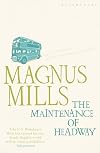
After a detour into a slightly more fantastical landscape for a couple of books, Mills brings it home to his trademark understated everyday absurdsim again. This slim volume, dealing with the fragile, odd construction that is the British bus system is probably way more documentary than you’d like to think. As usual, Mills has a perfect eye for the million little things that can complicate something as presumeably straightforward as taking a bus from part of a city to the other. There’s show more the clash between the drivers’ wish to run slightly early and the officials’ preferreance for running slightly late. There’re the sudden changes in route. There are hapless water work workers placing temporary traffic lights with badly calibrated intervals. There’s red tape, fraction making and endless theory making in the lunch room. And of course ”the maintenance of headway”, that illusive, impossible to reach principle of exactly eight minutes between each bus on a route.
This is a kind of novel I don’t know of anybody but Mills being able to pull off. While Mills’ usual themes ofi ndividual, collective and corruption are all present, here he is operating on a smaller scale than ever. There’s virtually nothing in here that isn’t mundande or petty, but everything is told in great, earnest detail. The result isn’t his finest work by a long shot – but perhaps his most uncompromising yet. show less
This is a kind of novel I don’t know of anybody but Mills being able to pull off. While Mills’ usual themes ofi ndividual, collective and corruption are all present, here he is operating on a smaller scale than ever. There’s virtually nothing in here that isn’t mundande or petty, but everything is told in great, earnest detail. The result isn’t his finest work by a long shot – but perhaps his most uncompromising yet. show less
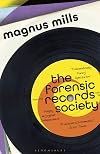
Sitting down to read another Magnus Mills novel is for me a real treat. The Forensic Records Society has some of the elements I expect in his novels, we have seemingly eccentric male characters taking life just a little bit too seriously, this time with vinyl records. The action happens in the Half Moon, the favourite pub of the novel's unnamed narrator and his friend James. The two of them both have large record collections and like to listen to records together without comment and in show more silence. They decide others might want to join them and The Forensic Records Society is born, meeting on a Monday night in the back room. Records (singles no LPs) are played from each person in rotation, they are listened to in silence and no comments are allowed. These strict rules are too much for some members and soon splinter groups have emerged. The Confessional Records Society is a different beast altogether and what of the Perceptive Records Society. Magnus Mills has lots of fun with records, quotes lots of titles, some of which I have never heard, some lyrics and has an ethereal demo that is stunning. I couldn't make any sense of the ending but that is part of its charm. show less
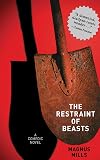
My copy from 1999 does not contain "comedic" in the title, as it is listed here. This book is like you combined Kafka and silent screen comedy. It's not laugh-out-loud funny, but consistently amusing in its deadpan black comedy. When one approaches the ending, a queasy and ominous feeling is evoked that signals that things are going to go very wrong for our fence crew. (It has to do with a certain feature of their last fence.) Mills leaves it to our imagination what will happen to them, show more which is perfect. show less
Lists
Awards


You May Also Like


Associated Authors
Statistics
- Works
- 22
- Also by
- 1
- Members
- 3,325
- Popularity
- #7,693
- Rating
- 3.7
- Reviews
- 137
- ISBNs
- 144
- Languages
- 14
- Favorited
- 25